
投研能力

Search documents
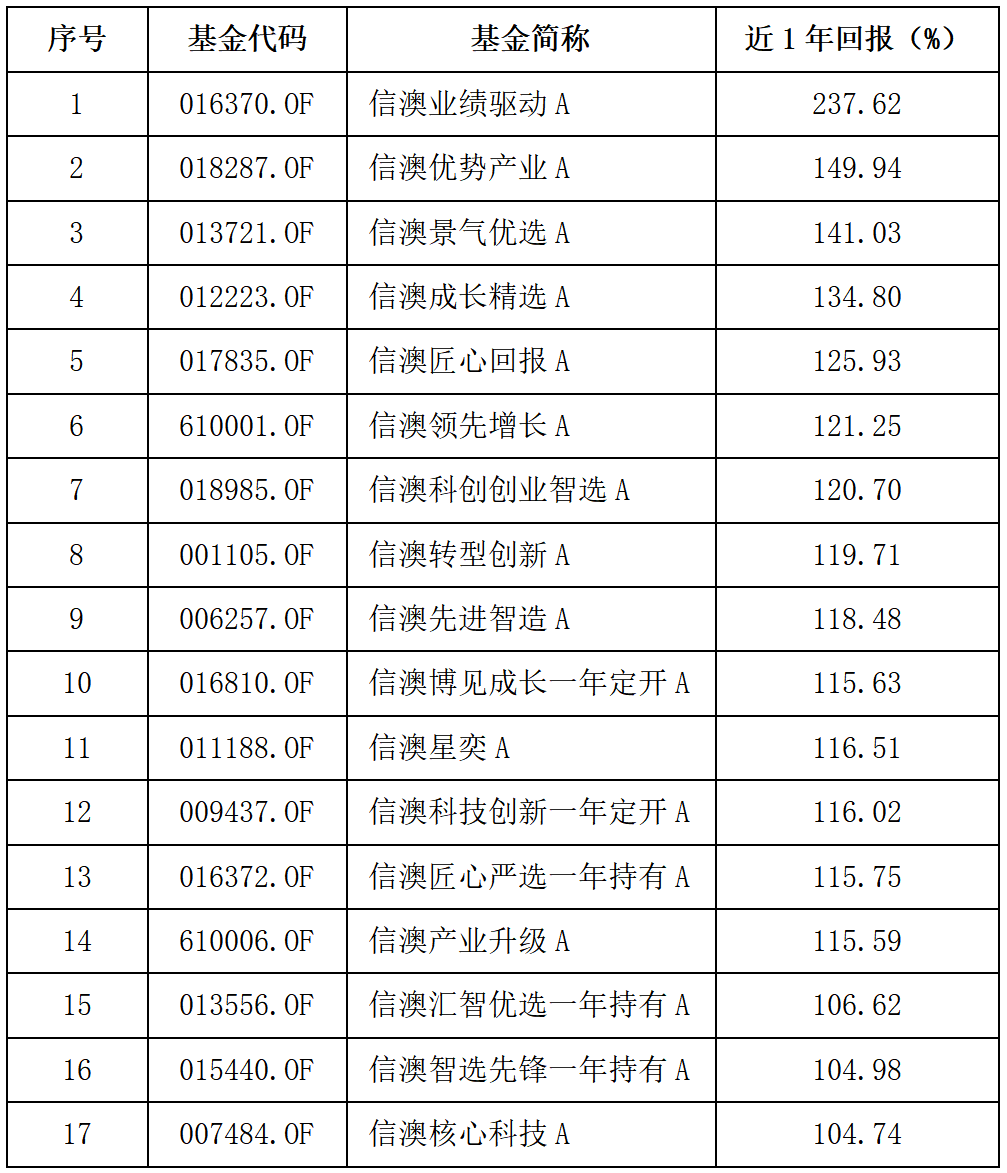
信达澳亚产品业绩持续发力近一年44只产品收益超30%
Zhong Guo Ji Jin Bao· 2025-09-19 01:58
Core Insights - The A-share market has shown strong performance over the past year, with public fund industry returns significantly increasing, and Xinda Australia has demonstrated exceptional active management capabilities with many of its products achieving over 30% returns [1][2] Performance Highlights - Xinda Australia has 44 products with nearly a year-to-date return exceeding 30%, including 35 products with over 50% gains, 32 products with over 70% gains, and 17 products achieving a doubling of returns [1] - Specific fund performances include Xinda Performance Driven A with a return of 237.62%, Xinda Advantage Industry A at 149.94%, and Xinda Prosperity Selection A at 141.03% [1] Research and Strategy - The company has a deep investment research capability and continuously optimizes its product strategies, focusing on key sectors such as technology, pharmaceuticals, new energy, consumption, and manufacturing [2] - Xinda Australia employs a diversified product matrix to meet different investor risk preferences and investment goals, with specific funds targeting high-growth opportunities and economic cycle patterns [2] Risk Management - Xinda Australia integrates risk management into its product DNA, establishing a multi-dimensional risk control system covering credit, market, and liquidity risks [2] - The company maintains a balance between opportunity capture and risk mitigation, ensuring investment actions remain within a safety margin [2] Industry Rankings - According to Guotai Junan Securities, as of June 30, 2025, Xinda Australia ranked 47th in equity product returns (17.86%) and 8th in fixed income product returns (24.46%) among 137 fund companies [3] - Over a seven-year period, the company achieved 149.24% in equity returns, ranking 2nd among 115 fund companies, and 39.28% in fixed income returns, ranking 9th [3]
信达澳亚产品业绩持续发力 近一年44只产品收益超30%
Zhong Guo Ji Jin Bao· 2025-09-19 01:24
Core Insights - The A-share market has shown strong performance over the past year, with public fund industry returns significantly increasing, leading to impressive results from Xinda Aoya's actively managed funds [1][2][3] Fund Performance - Xinda Aoya has 44 products with over 30% returns in the past year, including 35 products with gains exceeding 50%, and 32 products with gains over 70%, with 17 products achieving over 100% returns [1][2] - Notable funds include: - Xinda Performance Driven A: 237.62% - Xinda Advantage Industry A: 149.94% - Xinda Prosperity Selection A: 141.03% [1][2] Investment Strategy - The company focuses on core sectors such as technology, pharmaceuticals, new energy, consumption, and manufacturing, employing a research team that integrates macro research, industry analysis, and stock selection [2][3] - Xinda Aoya's diversified product matrix caters to different risk preferences and investment goals, with specific funds targeting high-growth opportunities and economic cycle trends [3] Risk Management - The company incorporates risk management into its product design, establishing a multi-dimensional risk control system covering credit, market, and liquidity risks [3] - This balanced approach allows the company to capture opportunities while effectively mitigating risks in volatile markets [3] Long-term Performance - According to Guotai Junan Securities, Xinda Aoya's equity and fixed income products achieved returns of 17.86% and 24.46% over five years, ranking 47th and 8th among 137 fund companies, respectively [3] - Over seven years, the returns for equity and fixed income products were 149.24% and 39.28%, placing them 2nd and 9th among 115 fund companies [3]

上半年近20家上市券商资管业务营收正增长
Shang Hai Zheng Quan Bao· 2025-09-04 23:26
Core Insights - The report reveals that nearly 20 A-share listed securities firms achieved positive year-on-year growth in asset management revenue for the first half of 2025, indicating a trend of "the strong getting stronger" [1] - The asset management business of securities firms is focusing on a dual strategy of fixed income and equity investments, continuing to strengthen fixed income products while actively exploring equity market investments [1] - Looking ahead, enhancing active management and diversified investment capabilities is crucial for business breakthroughs, with securities firms continuing to promote public offering transformation and improving their investment research capabilities [1]
沪指新高!广发基金旗下131只产品近一年涨幅超30%
Zhong Guo Ji Jin Bao· 2025-08-13 07:57
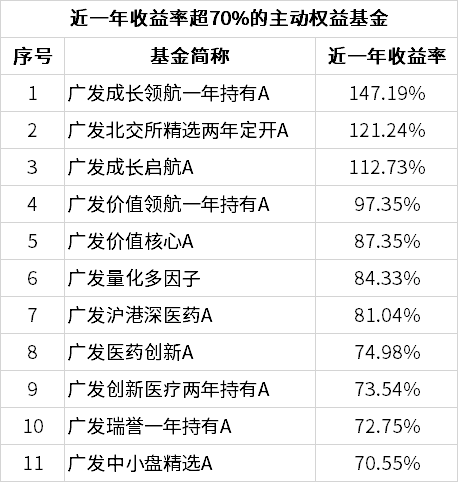
Core Viewpoint - The A-share market has been performing strongly, with the Shanghai Composite Index reaching new highs for the year, leading to significant performance gains for certain fund companies, particularly GF Fund, which has seen many of its products achieve substantial returns [1][2]. Active Management - Among the 131 products of GF Fund that have gained over 30% in the past year, active management products account for a significant portion, showcasing the company's ability to capture both specific styles and overall market alpha [2][4]. - Notable active equity products include GF Growth Navigator A, GF North Exchange Select A, and GF Growth Initiation A, which achieved returns of 147.19%, 121.24%, and 112.73% respectively over the past year [2][3]. - The performance of active equity products reflects GF Fund's diverse investment style and deep research capabilities, covering various investment styles and industry themes [4]. Passive Tools - GF Fund positions its passive tools as efficient vehicles for capturing market beta, complementing its active management strategies to meet diverse investor needs [5]. - The company has developed a comprehensive index product line since 2008, covering various asset classes including A-shares, Hong Kong stocks, US stocks, bonds, and commodities [5][6]. - Notable passive products include GF North Exchange 50 A, which achieved a return of 123.87%, and GF Hong Kong Innovative Medicine ETF, with returns of 118.71% and 104.58% for its linked product [6][7]. Future Outlook - GF Fund aims to enhance its professional capabilities and product competitiveness to better meet the wealth management needs of residents, focusing on creating sustainable quality returns for clients [8].
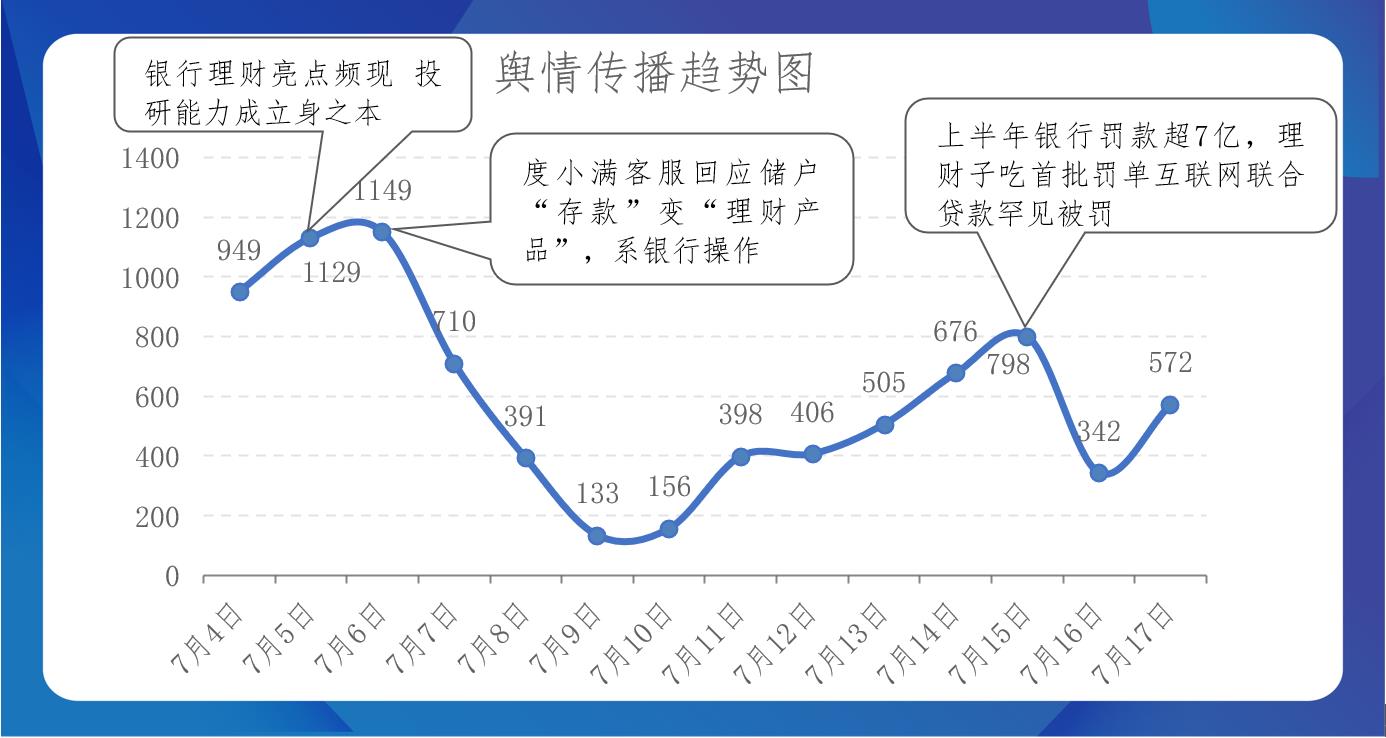
银行理财子公司正面舆情影响力榜(7月4日——7月17日)
Xin Hua Wang· 2025-08-12 06:20
Core Insights - The article discusses the monitoring of public sentiment regarding bank wealth management subsidiaries, highlighting the creation of a reputation risk management platform aimed at enhancing the management of corporate reputation in the financial sector [1] Summary by Sections Public Sentiment Overview - From July 4 to July 17, 2022, a total of 8,313 effective media reports were monitored, involving 22 entities, with an estimated reach of over 26.55 million people. Positive and neutral reports accounted for 7,963 articles, representing 95.79% of the total [2] - The industry sentiment health index for bank wealth management subsidiaries was 91 points, with over 92.31% of companies exceeding the industry average, although two companies still require improvement in sentiment management [2] Key Focus Areas of Public Sentiment - The highest peak in public sentiment occurred on July 6, primarily driven by the incident where "Du Xiaoman customer service responded that depositors' 'savings' turned into 'wealth management products' due to bank operations" [3] Popular Sentiment Keywords - Key terms that garnered significant media and public attention included "bank wealth management," "research," "investment research capability," "equity investment," and "Du Xiaoman" [5] Industry Risk Analysis - The primary risk identified in the bank wealth management sector was "operational risk," accounting for 76%, mainly related to reports of penalties imposed on wealth management companies [7] Comprehensive Communication Impact - The overall communication impact of the wealth management sector was assessed based on breadth, depth, and speed. The breadth of communication included a total of 8,313 original and reprinted articles, with high-authority media such as China Economic Net (24 articles), China News Network (14 articles), and Xinhua Net (7 articles) participating [10] - The average speed of new articles added to the discussion was 25 articles per hour across the internet [10] Positive Sentiment Impact Rankings - The top positive sentiment events included: 1. "Second Quarter Bank Wealth Management Company Research" with an impact reach of 292.01 million [11] 2. "Bank Wealth Management Highlights Frequent, Investment Research Capability as Foundation" with an impact reach of 198.45 million [13] 3. "T+0 Changes to T+1! Quick Redemption Amount Reduced to 10,000! Another Bank Adjusts Cash Wealth Management Product Redemption Rules" with an impact reach of 167.21 million [13]
6.1万亿元!银行系公募廿载观察:建信招商领先,下半场如何出招?
Hua Xia Shi Bao· 2025-08-09 09:57
Core Insights - The establishment of the first bank-affiliated fund company, ICBC Credit Suisse, marked the beginning of a significant trend in China's public fund industry, which has now grown to 15 institutions with a total asset management scale of approximately 6.1 trillion yuan, accounting for about 18% of the market [1][2] Group 1: Market Position and Growth - As of the second quarter of 2025, bank-affiliated public funds have a total asset management scale of approximately 6.1 trillion yuan, reflecting a growth of about 5.1% from the previous quarter [1] - The leading bank-affiliated fund company, Jianxin Fund, has an asset management scale of 920.49 billion yuan, followed closely by招商基金 with 889.10 billion yuan and 工银瑞信基金 with 784.31 billion yuan [1][2] - The industry shows significant disparity in scale, with top institutions like 招商基金 being approximately 54 times larger than smaller players like 恒生前海基金 [2] Group 2: Product Structure and Investment Preferences - Bank-affiliated public funds exhibit a strong preference for low-risk assets, with money market funds making up 47.6% (approximately 2.91 trillion yuan) and bond funds 40.9% (approximately 2.50 trillion yuan), together accounting for 88.5% of total scale [2] - Equity products are relatively limited, with stock funds comprising only 5.9% (approximately 0.36 trillion yuan) and mixed funds 4.9% (approximately 0.30 trillion yuan) [3] Group 3: Market Share Trends - Despite stable growth in absolute scale, the market share of bank-affiliated public funds has been declining since reaching a peak in 2020, indicating a shift in market dynamics [3][4] - The decline in market share may be attributed to changes in market structure and the characteristics of their product lines, as competition from brokerages and internet-based channels increases [4] Group 4: Future Competitive Landscape - The future competition for bank-affiliated public funds will focus on enhancing research capabilities and adapting to market changes, particularly in the context of declining yields and increased volatility in fixed-income products [5][6] - The development of passive products and fixed-income plus products is expected to become a focal point in the asset management sector, with investors increasingly prioritizing fee structures and liquidity [5]
广发基金:在时代浪潮中坚守初心,以专业书写成长篇章
Sou Hu Cai Jing· 2025-08-05 05:09
Core Viewpoint - The article highlights the growth and evolution of GF Fund over the past 22 years, emphasizing its commitment to professional value creation and customer-centric service, leading to a significant increase in asset management scale and investor base [1][5][12]. Group 1: Company Growth and Development - GF Fund has grown from a nascent industry with a management scale of less than 200 billion yuan to a large asset management company with over 1 trillion yuan in assets and serving more than 173 million investors [1][12]. - The company has developed a comprehensive product matrix that includes both active and passive investment strategies, adapting to the evolving needs of investors and the capital market [1][3][5]. Group 2: Product Strategy and Quality Improvement - Since its inception, GF Fund has prioritized building a high-quality product line, focusing on active equity products in its early years and expanding to a diverse range of investment strategies [2][3]. - The company has established a robust product quality management system, ensuring that product positioning, investment operations, and performance evaluations are aligned to enhance customer profitability [4][10]. Group 3: Research and Investment Capability - GF Fund has continuously iterated its research and investment capabilities, transitioning from a value investment focus to a multi-style investment approach, covering various sectors and strategies [7][8][9]. - The company emphasizes a professional and platform-based investment research system, enhancing the stability of investment performance through specialized teams and technological support [9][10]. Group 4: Customer-Centric Services - GF Fund has implemented initiatives like the "Heart Bridge Journey" to enhance customer engagement and understanding of investment processes, serving millions of investors over the years [11][12]. - The company leverages digital tools to create a customer satisfaction management loop, ensuring that client needs are met with tailored solutions and investment guidance [11][12]. Group 5: Future Strategic Direction - Looking ahead, GF Fund aims to create sustainable and high-quality investment experiences for clients, focusing on enhancing asset management capabilities and refining customer service strategies [13][14]. - The company plans to adapt its service offerings to meet the diverse needs of different investor segments, particularly younger investors who prioritize convenience [13][14].
广发基金:在时代浪潮中坚守初心,以专业书写成长篇章
券商中国· 2025-08-05 04:20
Core Viewpoint - The article highlights the growth and evolution of Guangfa Fund over 22 years, emphasizing its commitment to professional value creation and customer-centric service, leading to a significant asset management scale exceeding 1 trillion yuan and serving over 173 million investors [1][2]. Product-Driven Development - Guangfa Fund views its product line as the core of its survival and development, establishing a diverse range of active equity products since its inception in 2003, which has contributed to strong investor returns [2][3]. - The company has developed a comprehensive product system covering multiple assets, strategies, and markets, including alternative assets like gold and oil, and has established a strong presence in overseas investments [3]. Continuous Improvement in Product Quality - The company has implemented a closed-loop product quality management system, focusing on product positioning, process management, and performance evaluation to enhance customer profitability and investment supply quality [4][5]. Research and Investment Capability - Guangfa Fund has continuously iterated its research and investment capabilities, transitioning from value investing to a multi-style approach, and has built a robust research framework covering various investment strategies and asset classes [6][7][8]. - The company emphasizes the importance of a stable and professional talent pool, with over 70% of fund managers being internally trained, which supports its investment performance [8]. Customer-Centric Approach - The company has initiated various customer service programs, such as the "Heart Bridge Journey," to enhance investor understanding and optimize their investment behavior, serving millions of investors through numerous events [10][11]. - Guangfa Fund aims to transform its operational model towards a more advisory-focused approach, enhancing customer experience through tailored solutions and promoting long-term investment habits [11][12]. Future Strategic Direction - The company is committed to creating sustainable and high-quality investment experiences for clients, focusing on enhancing its asset management capabilities and refining its product offerings to meet evolving customer needs [12][13]. - Guangfa Fund plans to leverage technology, including AI, to improve operational efficiency and enhance service delivery, aiming to create greater value for investors [13].

估值整改年中考核在即:理财公司“缩久期”降波动
Zhong Guo Zheng Quan Bao· 2025-06-10 20:51
Core Viewpoint - The regulatory requirements for the valuation of wealth management products are being implemented steadily, with many institutions reporting that they have completed about half of the necessary adjustments by the end of June [1][2]. Group 1: Valuation Rectification Progress - Regulatory authorities have mandated that wealth management companies rectify their valuation methods by the end of June, focusing primarily on closing price valuations [1][2]. - The rectification involves prohibiting the use of closing prices, smoothing valuations, and self-built valuation models, requiring companies to adopt valuations provided by recognized financial institutions [1][2][3]. - The main focus of the rectification is on closing price valuations, which have been used to smooth daily net value fluctuations of products, particularly for illiquid assets [3][4]. Group 2: Impact on Asset Allocation - As the rectification progresses, net value fluctuations of wealth management products are expected to increase, prompting companies to adjust their asset allocation strategies [3][5]. - Companies are likely to shorten bond durations, adjust leverage, and select investment targets more carefully to mitigate overall portfolio volatility [5][6]. - The demand for multi-asset and multi-strategy products is anticipated to rise as companies adapt to the changing landscape [6][7]. Group 3: Enhancing Research and Investment Capabilities - Despite the increased volatility in net values, wealth management products still possess a diversified asset allocation advantage compared to public funds [6][7]. - Companies are focusing on improving their research and investment capabilities to maintain competitiveness in a net value-driven market [6][7]. - The ability to innovate and manage risks effectively is becoming a crucial competitive edge for wealth management firms, with leading institutions likely to capture a larger market share [6][7].
化解主动权益基金发展“痛点”
Zhong Guo Ji Jin Bao· 2025-04-27 13:41
Core Insights - The active equity fund industry is facing significant challenges, particularly in investor trust and experience, leading to a decline in fund sizes over the past three years [1][2][3] - Key issues include performance volatility, style drift, high fees, and insufficient investor education, which have collectively contributed to a lack of confidence among investors [2][3] - Industry stakeholders are actively seeking solutions through fee structure optimization, enhanced research capabilities, and improved post-investment services to positively impact the industry ecosystem [1][4] Investor Experience Challenges - Current active equity funds exhibit critical shortcomings in investor trust and experience, primarily due to performance volatility, style drift, and high fees [2][3] - Fund managers' excessive focus on relative rankings can hinder stable returns for investors, while a lack of timely adjustments to holdings can negatively impact fund performance [2] - The industry suffers from a lack of systematic management and reliance on individual fund manager capabilities, which can further erode investor trust [2][3] Product and Service Improvement - The fund industry is striving to enhance investor satisfaction by optimizing fee structures, strengthening research capabilities, and improving post-investment services [4] - Key measures include lowering management and custody fees to reduce investor costs and enhance actual returns [4] - Fund companies are encouraged to build robust research teams to improve decision-making accuracy and stability, thereby reducing performance volatility [4] Recommendations for Enhancing Investor Experience - Establishing a shared interest framework between fund managers and investors can enhance trust [5] - Creating an educational support system that actively communicates with clients can improve their understanding of products [5] - Implementing transparent operational mechanisms and regular disclosures can increase investor engagement in decision-making [5] Collaborative Efforts to Improve Investor Experience - Distribution channels such as banks, brokerages, and third-party platforms play a crucial role in guiding investors to make rational fund selections [7] - Collaboration between channels and fund companies can leverage customer insights and market data to better meet investor needs [7] - Utilizing digital operations and internet strategies can help reach underserved clients, encouraging more investors to participate in the market [7]