政策分化

Search documents
IC外汇平台:美国CPI延迟发布制约欧元区间波动,欧元涨势如何?
Sou Hu Cai Jing· 2025-11-13 09:53
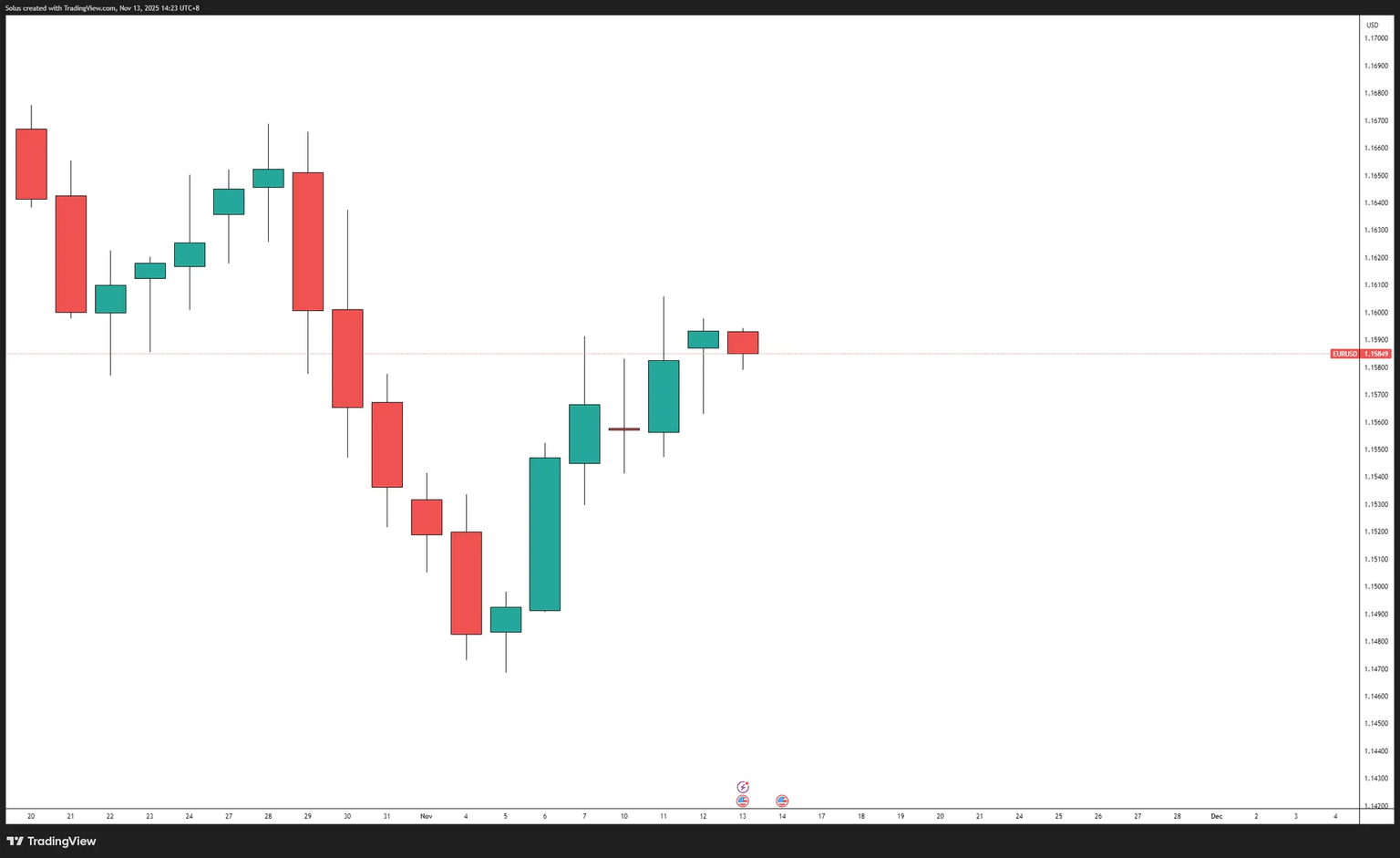
Core Viewpoint - The delay in the release of U.S. CPI data has weakened the dollar and created uncertainty in the market, allowing the euro to maintain its structural strength and range-bound movement against the dollar [1][5][10]. Summary by Sections Market Dynamics - The euro to dollar exchange rate is currently in a narrow range, with clear resistance at 1.16059 and support at 1.15627, reflecting indecision among traders as they await the delayed CPI data [3][14]. - The postponement of the CPI data has removed a crucial directional guide for the dollar, leading to a weakening sentiment towards the dollar while the euro has managed to hold onto recent gains [3][5]. Impact of CPI Delay - The delay in U.S. CPI data is a key factor affecting the euro to dollar exchange rate, as uncertainty leads to a reduction in dollar long positions, providing natural support for the euro [5]. - The forex market is currently in a "neutral mode," with traders managing expectations in the absence of new information, which tends to impact the dollar more than the euro [6]. Technical Analysis - The euro to dollar pair is in a consolidation phase, with a potential breakout expected after the CPI data is released, rather than before [7]. - The current technical outlook suggests that a breakout above 1.16059 could lead to targets at 1.16350 and 1.16688, while a drop below 1.15627 could trigger a deeper correction towards 1.15400 or lower [16][18]. Fundamental Drivers - The euro's resilience is attributed to several macroeconomic factors, including a narrowing policy divergence between the Federal Reserve and the European Central Bank, which diminishes the dollar's yield advantage [8][10]. - Improvements in European market sentiment, service activity, and industrial demand are providing support for the euro, with stability becoming an advantage rather than a weakness [9]. - The reduction of risk premiums related to energy concerns, bond vulnerabilities, and geopolitical issues has made the euro a safer choice when the dollar is under pressure [10]. Overall Outlook - The current macro environment allows the euro to maintain stability without needing to exhibit strong performance, as this stability is sufficient to support an upward trend when the dollar is weak [11].

全球金融市场波动加剧:债务风险、政策分化与地缘博弈下多维挑战
Sou Hu Cai Jing· 2025-05-06 02:05
Core Viewpoint - The global financial market is experiencing turbulence due to a combination of sovereign debt crises, divergent monetary policies, geopolitical conflicts, and commodity price fluctuations, creating a complex risk transmission chain [1] Debt Risk - Global public debt has reached 93.2% of GDP in 2023, an increase of 9 percentage points since before the pandemic, with Argentina, Turkey, Egypt, Pakistan, and Japan identified as the most likely candidates for financial crises in the next 6-12 months [3] - High-debt countries are pressured to refinance existing debt, but rising global interest rates are increasing financing costs and compressing fiscal space, which could lead to a liquidity crunch if emerging markets experience a wave of defaults [4] Policy Divergence - There is an increasing divergence in global monetary policy, characterized by the Federal Reserve maintaining a tight stance while other central banks are forced to adjust their policies [5] - The tightening of dollar liquidity and potential crises in Japanese bonds could exacerbate pressures on highly leveraged financial institutions [6] Geopolitical Risks - Geopolitical conflicts are impacting financial markets through energy price volatility and supply chain disruptions [9] - The price of gold reached a historical high of $3,440 per ounce in May 2025, reflecting investor concerns about tail risks associated with geopolitical tensions [10] Market Performance - Global stock markets are showing mixed performance, with safe-haven assets and risk assets diverging significantly [11] - The Hong Kong stock market is benefiting from expectations of a recovery in Chinese domestic demand and improved US-China trade relations, while commodities are under pressure due to weak demand and insufficient hedging against geopolitical risks [12] Investment Strategies - The financial market is currently navigating through debt risks, policy divergence, and geopolitical tensions, necessitating a dynamic perspective to identify transformation opportunities [13] - Energy prices are experiencing "zigzag fluctuations" due to the Russia-Ukraine conflict and escalating Middle Eastern tensions, with WTI crude oil prices down 23.47% year-on-year [14] - The Hong Kong stock market's Hang Seng Tech Index rose by 3.08%, with technology and new energy vehicle companies leading the gains [15]