
教育发展

Search documents
“十五五”民生蓝图:就业、收入、教育等将迎哪些红利?
Yang Shi Xin Wen· 2025-10-28 12:53
Employment and Income Distribution - The proposal emphasizes the implementation of an employment-first strategy to promote high-quality and sufficient employment, focusing on creating a job-friendly development model [3][4] - It aims to enhance the coordination between industry and employment, support the cultivation of new jobs, and improve the human resources supply-demand matching mechanism [4] - The income distribution system will be improved to increase the proportion of residents' income in national income distribution and enhance labor remuneration in primary distribution [8][12] Education Development - The proposal outlines the implementation of a moral education project, integrating ideological and social education, and enhancing physical, aesthetic, and labor education [13][15] - It aims to expand the coverage of free education and explore extending the duration of compulsory education [15][16] - The focus is on improving vocational education and expanding high-quality higher education enrollment [17][19] Social Security System - The proposal calls for the establishment of a nationwide basic pension insurance system and the development of a multi-tiered pension insurance system [22][24] - It emphasizes the need to expand unemployment and work injury insurance coverage and improve the social security transfer and connection policies [23][24] - The aim is to enhance the social assistance system and provide better services for vulnerable groups such as the elderly and disabled [27][28] Real Estate Development - The proposal seeks to accelerate the construction of a new model for real estate development, optimizing the supply of affordable housing to meet the basic housing needs of urban workers and disadvantaged families [32][33] - It emphasizes the importance of implementing safety and quality improvement projects for housing [34] Health and Population Development - The proposal promotes a health-first development strategy, enhancing public health capabilities and improving the healthcare system [35][36] - It aims to address population aging by developing a coordinated policy mechanism for elderly care and optimizing basic elderly services [42][43] - The focus is on improving maternal and child health services and promoting family-friendly policies to reduce the cost of child-rearing [41][39]
重庆教育发展总体水平进入西部第一方阵
Zhong Guo Xin Wen Wang· 2025-10-20 07:01
Core Insights - Chongqing's education indicators show significant progress, with preschool enrollment rate at 93.5%, high school enrollment rate at 98.47%, and higher education enrollment rate at 64.25%, all exceeding national averages [1][2] Group 1: Education Development Achievements - The number of various schools in Chongqing has reached 9,177, with a total student population of 6.398 million and 506,000 teaching staff [1] - The coverage rate of inclusive kindergartens in the city is 95.2%, with public kindergartens accounting for 57.03% of enrolled children, addressing the needs for nearby schooling [1] - The "teaching community" coverage rate has reached 85%, with a consolidation rate of 98.3% for compulsory education and 75% for quality high school resources [1] Group 2: Special Education and Talent Supply - During the "14th Five-Year Plan" period, 41 special education schools were established, achieving a 98.99% enrollment rate for disabled children in compulsory education [2] - The admission rate for regular universities has increased by 5% year-on-year, with a total of 117,000 graduate students currently enrolled [2] - Chongqing has supplied a total of 1.85 million talents to society, indicating a strong focus on talent cultivation [2] Group 3: Future Plans - Chongqing aims to integrate education development, technological innovation, and talent cultivation to create significant outcomes that enhance its national standing and regional leadership [2]
深圳教育“短板”,打破了广州的骄傲
Hu Xiu· 2025-08-16 07:52
Core Viewpoint - Shenzhen has made significant progress in education over the past decade, transforming its previously criticized educational shortcomings into strengths that attract talent, particularly in comparison to Guangzhou [2][3][37]. Education Performance - Shenzhen's high school admission plan for 2025 includes 137,000 slots, with 74,000 for public high schools, leading to a public high school admission rate of over 52% and an overall admission rate of 73%, which is the highest in Guangdong province [4][5][7][13]. - In contrast, Guangzhou's public high school admission plan is estimated to be below 70%, indicating that Shenzhen's students have a better chance of entering ordinary high schools [9][11][13]. - Shenzhen Middle School achieved a record of 85 students admitted to Tsinghua and Peking University in 2025, dominating the admissions in Guangdong and positioning itself among the top schools nationally [15][19][20]. University Landscape - Shenzhen's universities, including Southern University of Science and Technology and Shenzhen University, have surpassed traditional institutions in Guangzhou in terms of admission scores, with the highest scores being 666 for Hong Kong University of Science and Technology (Shenzhen) [25][26][34]. - The rising admission scores of Shenzhen universities reflect their growing influence and attractiveness to students from other provinces, indicating a shift in the educational landscape [35][36]. Comparison with Guangzhou - While Shenzhen's educational achievements are commendable, it still faces challenges compared to Guangzhou, such as a lower number of universities and students enrolled [39][40]. - The disparity in educational resources and the need for a more balanced distribution of educational opportunities remain areas for improvement in Shenzhen's education system [39][42][44].

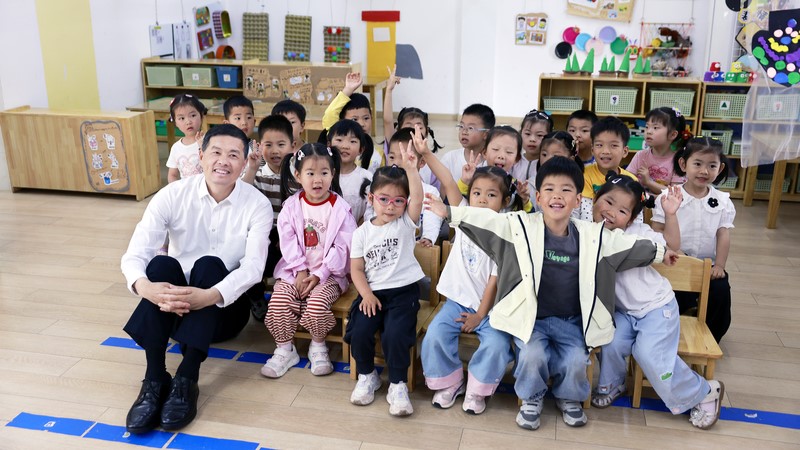
苏州市领导开展“六一”国际儿童节走访活动
Su Zhou Ri Bao· 2025-05-30 00:29
Group 1 - The article highlights the celebration of International Children's Day, with city leaders visiting schools and kindergartens to extend holiday wishes to children and encourage their growth and development [1][4][5] - City leaders emphasized the importance of adhering to Xi Jinping's teachings regarding the development of children, promoting a nurturing environment for their healthy growth and comprehensive development [4][5][6] - The visits included interactions with students, observations of educational activities, and discussions on enhancing educational quality and teacher development to ensure a well-rounded upbringing for children [5][6][7] Group 2 - The article underscores the commitment to improving early childhood education and ensuring quality and balanced compulsory education, focusing on the physical and mental health of students [4][5] - Leaders expressed the need for schools to leverage local cultural resources and implement educational philosophies that foster moral, intellectual, physical, aesthetic, and labor development among students [5][6] - The importance of innovative teaching methods and the cultivation of creative talents was also highlighted during the visits to various educational institutions [6][7]
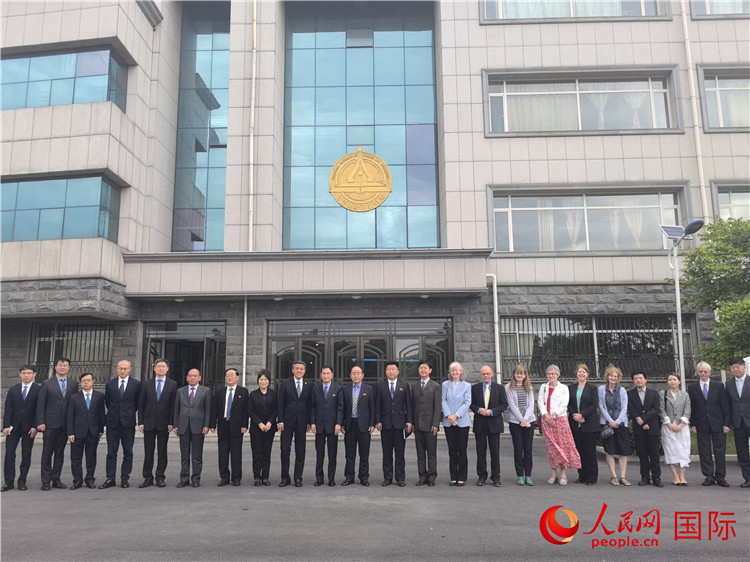
中国驻朝鲜使馆参访平壤科技大学
人民网-国际频道 原创稿· 2025-05-19 01:51
Core Viewpoint - The visit of Chinese Ambassador Wang Yajun to Pyongyang University of Science and Technology highlights the importance of education and talent development in North Korea, emphasizing the collaboration between China and North Korea in these sectors [1][2]. Group 1: Education and Talent Development - Pyongyang University of Science and Technology has produced a significant number of graduates, with over a thousand students entering various government and educational roles in North Korea [1]. - The university is recognized as North Korea's only international university, excelling in natural sciences and contributing to the country's socialist development [1][2]. - The recent launch of the HSK (Chinese Proficiency Test) at the university marks a significant step in enhancing Chinese language education in North Korea [1][2]. Group 2: Diplomatic Engagement - The visit included a tour of the university's facilities, such as multimedia classrooms, student dormitories, and dining areas, showcasing the institution's infrastructure [1][3]. - Ambassador Wang Yajun's interactions with students and faculty during the HSK exam launch reflect the ongoing diplomatic and educational ties between China and North Korea [1][4]. - The emphasis on strengthening cooperation in education and technology between the two countries indicates a strategic partnership aimed at mutual development [1].
一体推进教育发展科技创新人才培养
Jing Ji Ri Bao· 2025-05-06 22:02
Group 1 - The core viewpoint emphasizes the interdependence of education, technology, and talent as foundational elements for China's modernization strategy, highlighting the need for a coordinated approach to advance these areas together [1][2][3] - Education serves as the primary support for technological innovation and talent cultivation, with a focus on high-quality, multi-level education systems that foster original and disruptive innovations [2][3] - Current challenges include a lack of synergy among education, technology, and talent, with issues such as weak foundational education, insufficient innovation, and a disconnect between educational outcomes and societal needs [3][4] Group 2 - Higher education is identified as a critical area for strengthening technological innovation, requiring alignment with scientific advancements and optimization of academic programs to meet national strategic needs [4][5] - The cultivation of strategic talent is crucial for maintaining competitiveness in high-tech fields, with an emphasis on developing young scientists and engineers who can lead innovation efforts [5][6] - Systematic reforms in resource allocation, evaluation mechanisms, and management structures are necessary to enhance the integration of education, technology, and talent development [6][7]