
社会保障体系完善

Search documents
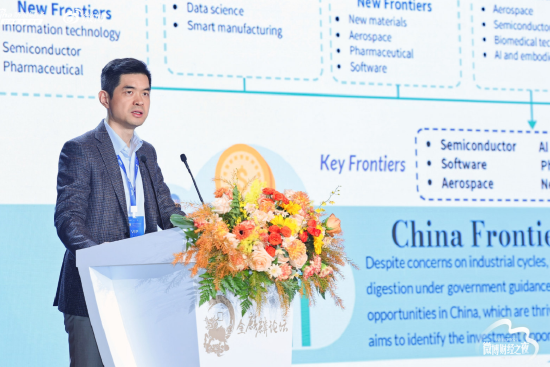
摩根士丹利邢自强:建议提升农民及农民工社保补贴水平,从每月200余元提升至2030年的1000元
Xin Lang Cai Jing· 2026-01-15 11:42
Core Viewpoint - The current focus should be on breaking the low-price cycle and addressing consumption deficiencies through significant reforms and adjustments [1][4]. Group 1: Consumption and Economic Reforms - Consumption should not solely rely on government subsidies, which may have short-term effects; long-term solutions require improvements in the social security system and stabilization of the real estate market [3][6]. - Enhancing the social security system is crucial to alleviate residents' concerns and encourage spending, thereby unlocking consumption potential [3][6]. - The real estate market has not yet stabilized, with historical data suggesting that economies typically take seven years to reach a stable state after significant fluctuations; China is currently in its fifth year of this cycle [3][6]. Group 2: Real Estate Market Strategies - Strategies to stabilize the real estate market include inventory reduction, maintaining key stakeholders, and implementing mortgage subsidies to lower the cost of mortgages for residents [3][6]. - Evidence from international experiences indicates that when mortgage rates are significantly lower than rental yields, it can improve public expectations for home purchases, fostering a positive cycle in the real estate market [3][6]. - Recommendations for the 2026 real estate policy include the implementation of mortgage subsidies to enhance affordability and stimulate market activity [3][6]. Group 3: Social Security Enhancements - A proposal to significantly increase social security subsidies for farmers and migrant workers from approximately 200 yuan per month to 1,000 yuan by 2030 aims to address consumer concerns and boost spending [3][6].

吴晓求:严刑峻法拆解资本市场“雷点” 构建消费扩张三重路径
2 1 Shi Ji Jing Ji Bao Dao· 2025-11-28 05:21
Core Viewpoint - The primary concern in the capital market is the presence of hidden risks ("雷"), and the goal for the "十五五" period is to eliminate these risks through stringent legal measures [1][3]. Group 1: Consumption Expansion - The first path to address consumption expansion is to increase income levels, which fundamentally relies on job creation through the development of both private and state-owned economies [2]. - The second path involves effectively protecting and appreciating existing wealth, particularly as real estate prices decline, which significantly impacts consumer spending since it constitutes 60% of household wealth [2]. - The third path is to improve the social security system, as residents' concerns about future uncertainties suppress current consumption; reallocating fiscal resources towards social welfare is recommended [2][3]. Group 2: Capital Market Reform - The goal for the capital market during the "十五五" period is to ensure there are no hidden risks, which requires the implementation of the strictest legal deterrents against fraud [1][3]. - Proposed legal reforms include amending criminal laws to impose severe penalties on fraudsters and establishing a civil compensation mechanism based on group litigation to ensure significant financial repercussions for offenders [3]. - Emphasizing the importance of optimizing consumption scenarios, the increasing number of high-net-worth individuals necessitates tailored consumption environments, as consumption upgrades are seen as vital for economic growth [3]. Group 3: Investment Strategy - Investment should focus more on industrial upgrades and iterations, with a recommendation to allocate more investments to social capital, which is better positioned to identify excesses and future directions [3]. - The transition from scarcity to surplus in the Chinese economy requires systemic reforms to establish a new dynamic balance, ensuring long-term and healthy economic growth [3].
第二十二届北大赛瑟论坛在京举行
Zhong Guo Jing Ji Wang· 2025-11-11 04:59
Core Insights - The 12th "Peking University Saisir Forum 2025" was held at Peking University, focusing on the theme "Looking Ahead to the 14th Five-Year Plan: Strategic Opportunities and Risks" [1] - The forum gathered over 200 experts from regulatory bodies, universities, financial and insurance institutions, and research organizations to discuss opportunities and challenges in economic and social development during the 14th Five-Year Plan period [1] Group 1 - The 14th Five-Year Plan period is a critical stage in China's progress towards achieving socialist modernization, with the recent approval of the "Suggestions on Formulating the 14th Five-Year Plan for National Economic and Social Development" by the 20th Central Committee [1] - The forum aims to gather diverse insights to promote high-quality development in the insurance industry, improve the social security system, and facilitate coordinated economic and social development [1] Group 2 - The opening speech was delivered by Sun Qixiang, Honorary Director of the China Insurance and Social Security Research Center at Peking University, followed by a keynote address from Liang Tao, former Vice Chairman of the China Banking and Insurance Regulatory Commission, emphasizing high-quality development and the alignment of insurance with economic needs [2] - Experts including Chen Wenhui, former Vice Chairman of the National Social Security Fund Council, and others discussed topics such as digital transformation in insurance, healthcare reform, and new challenges in pension insurance [2] Group 3 - A roundtable forum on the development of the Chinese insurance industry was held, featuring the launch of the "China Insurance Industry Development Report 2025," with discussions on enhancing health insurance services, building risk management systems, and applying actuarial techniques [2] - The forum included eight sub-forums covering various topics such as insurance and economic growth, pension insurance, healthcare insurance, and family risk management, with over thirty scholars presenting their research findings [3] Group 4 - The forum concluded with a summary speech by Suo Lingyan, Vice Dean of the School of Economics at Peking University, expressing gratitude to participating experts and organizations, and reaffirming the forum's role as a platform for government, industry, academia, and research collaboration [3] - Since its establishment in 2003, the China Insurance and Social Security Research Center has focused on bridging academic research and policy practice, actively serving national strategies and promoting continuous innovation and institutional improvement in the insurance and social security sectors [3]
关键词读懂“十五五”丨@所有人 你关心的都在规划里!
Yang Guang Wang· 2025-10-30 14:03
Core Viewpoint - The Central Committee of the Communist Party of China has released recommendations for the 15th Five-Year Plan, focusing on various measures to enhance employment, income, education, and social security in the realm of public welfare [1]. Employment Strategies - Implementation of an employment-first strategy and improvement of employment promotion mechanisms [5]. - Active cultivation of new professions and job positions, supporting enterprises in stabilizing and expanding jobs [6]. - Establishment of a lifelong vocational skills training system [6]. - Focus on stabilizing and expanding employment for key groups such as college graduates, migrant workers, and veterans [6][7]. - Promotion of flexible employment and healthy development of new employment forms [6]. Income Distribution - Increase the proportion of residents' income in national income distribution [10]. - Enhance labor remuneration in the primary distribution of income [10]. - Improve the mechanism for determining initial distribution based on market evaluation of contributions [10]. - Implement a plan to increase income for urban and rural residents [10]. Education Improvements - Expand educational resources for the net inflow of school-age population into urban areas [15]. - Gradually expand the scope of free education and explore extending the duration of compulsory education [15]. - Enhance the capacity of vocational schools and build distinctive higher vocational colleges [15]. Social Security Enhancements - Improve and implement a nationwide basic pension insurance system [17]. - Accelerate the development of a multi-level, multi-pillar pension insurance system [17]. - Optimize the medical insurance payment and drug procurement policies [17]. Housing Policies - Optimize the supply of affordable housing to meet the basic housing needs of urban wage earners and low-income families [22]. - Implement housing quality improvement projects and enhance property service quality [22]. - Establish a safety management system for the entire lifecycle of housing [22]. Health and Family Support - Optimize fertility support policies and incentives, effectively reducing family upbringing costs [27]. - Implement a maternity leave system and enhance the maternity insurance system [30]. - Develop integrated services for childcare and early education [30].

“十五五”民生蓝图:就业、收入、教育等将迎哪些红利?
Yang Shi Xin Wen· 2025-10-28 12:53
Employment and Income Distribution - The proposal emphasizes the implementation of an employment-first strategy to promote high-quality and sufficient employment, focusing on creating a job-friendly development model [3][4] - It aims to enhance the coordination between industry and employment, support the cultivation of new jobs, and improve the human resources supply-demand matching mechanism [4] - The income distribution system will be improved to increase the proportion of residents' income in national income distribution and enhance labor remuneration in primary distribution [8][12] Education Development - The proposal outlines the implementation of a moral education project, integrating ideological and social education, and enhancing physical, aesthetic, and labor education [13][15] - It aims to expand the coverage of free education and explore extending the duration of compulsory education [15][16] - The focus is on improving vocational education and expanding high-quality higher education enrollment [17][19] Social Security System - The proposal calls for the establishment of a nationwide basic pension insurance system and the development of a multi-tiered pension insurance system [22][24] - It emphasizes the need to expand unemployment and work injury insurance coverage and improve the social security transfer and connection policies [23][24] - The aim is to enhance the social assistance system and provide better services for vulnerable groups such as the elderly and disabled [27][28] Real Estate Development - The proposal seeks to accelerate the construction of a new model for real estate development, optimizing the supply of affordable housing to meet the basic housing needs of urban workers and disadvantaged families [32][33] - It emphasizes the importance of implementing safety and quality improvement projects for housing [34] Health and Population Development - The proposal promotes a health-first development strategy, enhancing public health capabilities and improving the healthcare system [35][36] - It aims to address population aging by developing a coordinated policy mechanism for elderly care and optimizing basic elderly services [42][43] - The focus is on improving maternal and child health services and promoting family-friendly policies to reduce the cost of child-rearing [41][39]
美国加征关税冲击亚太地区贸易
Jing Ji Ri Bao· 2025-10-21 22:00
Core Insights - The trade landscape in the Asia-Pacific region is rapidly restructuring due to the impact of U.S. tariffs, significantly affecting countries heavily reliant on the U.S. market [1][4] - Vietnam and Cambodia are identified as the most severely impacted economies, with export declines projected at 19.2% and 23.9% respectively, far exceeding the regional average of 6.4% [1][2] - The report emphasizes the urgent need for market diversification and internal strengthening strategies for affected countries [3][5] Group 1: Economic Impact - Vietnam's economy is heavily dependent on exports, with 36.6% of its exports directed to the U.S., primarily in low-value-added sectors like apparel and electronics [1] - Cambodia's exports are 58% reliant on the U.S., with significant portions in labor-intensive industries such as clothing and footwear, which are directly targeted by U.S. tariffs [2] - Other vulnerable economies in the region, such as Fiji and Sri Lanka, are also facing substantial export declines of 19.6% and 15% respectively due to their concentrated export structures [2] Group 2: Strategies for Adaptation - Market diversification is critical, with Vietnam seeking to enhance cooperation with economies like South Korea and the EU, while Cambodia aims to expand exports to the EU under the EBA initiative [3] - Regional economic integration within ASEAN is highlighted as a potential buffer, although challenges such as non-tariff barriers and infrastructure gaps remain [3] - Both Vietnam and Cambodia are attempting to increase industrial value through technological innovation and investment in high-tech sectors, despite facing significant obstacles in talent development and infrastructure [3] Group 3: Social Safety Nets - Strengthening social security systems is essential, with Vietnam revising labor laws to expand unemployment insurance and Cambodia implementing cash transfer programs for vulnerable families [4] - The current social safety nets in both countries are inadequate to cope with large-scale unemployment and economic shocks [4][5] - The challenges faced by Vietnam and Cambodia reflect broader trends in the Asia-Pacific region, where economies highly dependent on external markets are encountering unprecedented difficulties [4][5]