
教育资源配置

Search documents
下好教育这步重要先手棋
Zhong Guo Jing Ji Wang· 2025-11-20 23:20
Core Viewpoint - The "14th Five-Year Plan" emphasizes the importance of education in achieving national strength and prosperity, highlighting the need for a comprehensive approach to educational reform and resource allocation to meet the evolving demands of society and the economy [1][2]. Group 1: Educational Development and Achievements - All 2,895 counties in China have achieved basic balanced development in compulsory education, and higher education has produced 55 million graduates, showcasing the significant progress made during the "14th Five-Year Plan" period [2]. - The national smart education public service platform has expanded its reach to over 200 countries and regions, reflecting the global impact of China's educational initiatives [2]. Group 2: Challenges and Future Directions - While the quantity of education has improved, the focus is now shifting to enhancing the quality of education, addressing the urgent need for better educational outcomes as the demand for quality education rises [2][3]. - The "15th Five-Year Plan" suggests expanding free education and exploring the extension of compulsory education years, aiming to provide more equitable and high-quality educational services across different stages of education [3]. - The plan also emphasizes the need to cultivate innovative and interdisciplinary talents through higher education reforms, which will contribute to both educational equity and quality improvement [3]. Group 3: Strategic Goals and Vision - The overarching goal is to establish an education powerhouse by 2035, requiring proactive measures and strategic planning to ensure continuous intellectual support and talent resources for modernization efforts [3]. - The plan aims to address the urgent needs of the populace and enhance overall human development through a series of new deployments in education, technology, and talent development [2].
去年小学专任教师减少6.62万 ,农村“富余”的老师去哪里
Di Yi Cai Jing· 2025-11-15 09:03
Group 1 - The number of full-time teachers in urban primary schools increased by 87,800 last year, while the number of teachers in town and rural primary schools decreased by 36,000 and 118,000 respectively [1][2] - In 2024, the total number of full-time primary school teachers in China is expected to decrease by 66,200 compared to the previous year, with 11 provinces reporting an increase in primary school teachers [1][2] - The decline in the number of teachers is attributed to changes in birth rates, which have already impacted kindergarten education, with a reduction of 412,300 teachers from 3,244,200 in 2022 to 2,831,900 in 2024 [1] Group 2 - The shift of population from rural areas to urban centers is leading to a surplus of primary school teachers while creating a shortage of middle school teachers, prompting some regions to reassign teachers from primary to middle schools [3] - For instance, Xiamen's Tong'an District Education Bureau plans to select primary school teachers to teach in middle and high schools starting in June 2024 to optimize teacher allocation without increasing fiscal burden [3] - This internal resource optimization is seen as a strategy to address the imbalance in teacher distribution between primary and middle schools [3]
多地小学和初中共享校舍
第一财经· 2025-11-11 11:35
Core Viewpoint - The article emphasizes the need to adapt educational resource allocation mechanisms in response to changing population structures, highlighting the importance of promoting educational equity and supporting high-quality population development [3]. Population Trends and Educational Resource Allocation - The current demographic trends in China include declining birth rates, aging populations, and regional population disparities, which necessitate adjustments in educational resource allocation [3]. - The number of students enrolled in junior high schools increased by 941,200 in 2024, marking four consecutive years of growth, while elementary school enrollment decreased by 2.6125 million to 16.1663 million [4]. Educational Resource Configuration Mechanisms - The "14th Five-Year Plan" aims to optimize the layout of basic education resources, including monitoring changes in school-age populations and enhancing resource supply in urban areas experiencing population influx [5][6]. - Various regions are implementing shared use of school facilities between elementary and junior high schools to address changes in school-age populations [6][7]. Management System Reforms - The article discusses the establishment of a "city-county combined" management system for basic education, encouraging localities to enhance resource allocation and funding [7]. - The article highlights the need for educational management reforms to address the disparities in educational resources between urban and rural areas [7]. Teacher Resource Optimization - Teachers are identified as a critical educational resource, and the article suggests optimizing the management of teachers through a "county-managed, school-hired" system [8]. - Some regions are reallocating teachers from elementary to junior high schools to address the imbalance in teacher supply [8]. Higher Education Resource Supply - The article notes that the school-age population for higher education is expected to continue rising, necessitating efforts to meet the demand for quality higher education [9].


如何适应人口变化动态调配教育资源?怀进鹏解读“十五五”
Nan Fang Du Shi Bao· 2025-11-03 13:58
Group 1 - The core viewpoint of the news is the emphasis on education in the "15th Five-Year Plan," highlighting the exploration of extending compulsory education and expanding free education [1][2][3] - The plan mentions the need to enhance the accessibility and quality of public education services, focusing on balanced development in compulsory education and expanding resources for ordinary high schools [2][3] - The proposal to extend compulsory education from 9 years to potentially 12 or 15 years is a significant strategic shift in China's education policy, responding to demographic changes and societal needs [3][4] Group 2 - The plan includes a focus on expanding the enrollment of high-quality undergraduate programs to address the increasing number of college applicants, which is projected to reach 13.42 million in 2024 [4][5] - The government aims to optimize higher education structure and improve quality through targeted enrollment increases in urgently needed disciplines [4][5] - There is a call for collaboration between education, technology, and talent development, emphasizing the importance of building a strong innovation ecosystem and enhancing international academic exchanges [5][6]
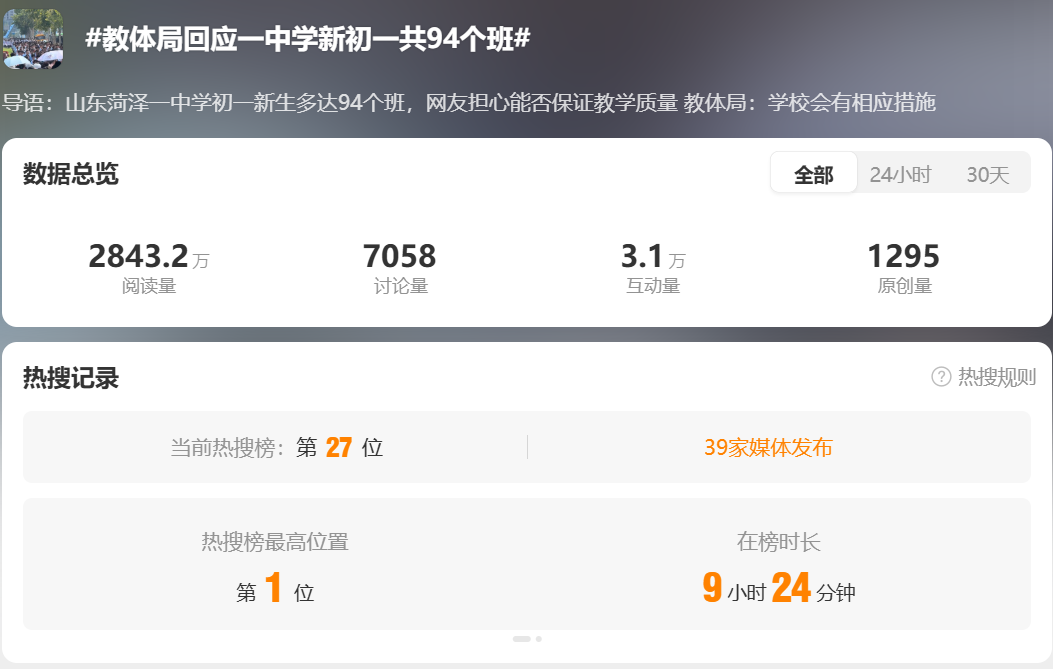
山东一中学初一新生招了94个班,放学时人山人海!当地教体局:招生巅峰期,会有措施保证教学质量!多地遴选小学教师转岗初中
Mei Ri Jing Ji Xin Wen· 2025-09-06 02:38
Core Viewpoint - The recent enrollment of 94 classes for the first year at Shandong Heze City's Mudan District No. 22 Junior High School has sparked widespread attention and concern regarding the school's ability to maintain teaching quality amidst such high student numbers [1][3][6]. Enrollment Details - The school confirmed the enrollment of 94 classes for the current academic year, with the district's education bureau acknowledging that the number of students has reached a peak in recent years [1][5][6]. - The Mudan District education bureau's 2025 enrollment plan indicates that No. 22 Junior High School plans to enroll 5,700 students across 114 classes, a significant increase from 3,750 students in 2022 [5]. Context of Enrollment Trends - Nationwide, junior high school enrollment has been steadily increasing, with 18.49 million students enrolled in 2024, up from 17.55 million in 2023 [7]. - The number of junior high schools has been decreasing, leading to a rising student-to-teacher ratio, which is approaching 13:1 by 2024 [7][8]. Teacher Resource Allocation - In response to the increasing enrollment and teacher shortages, various regions are adjusting educational resources, including transferring primary school teachers to junior high schools to meet the demand [9].
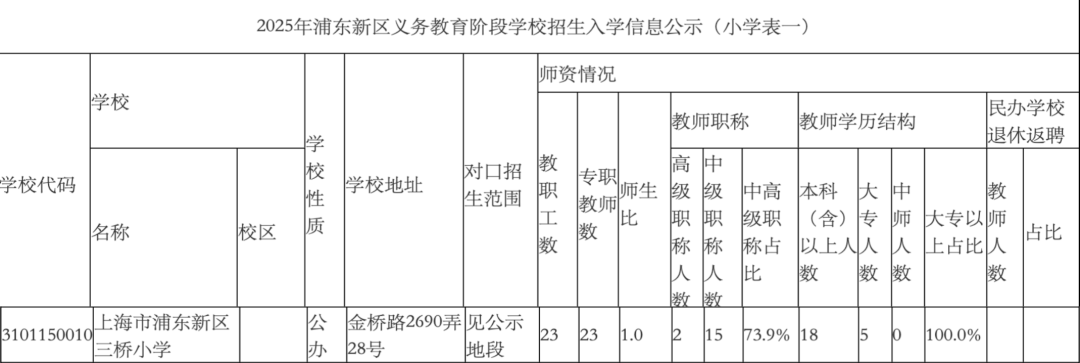
上海一小学全校仅22名学生,配了23名老师分5个班,教育部门回应:适龄儿童就这么多,该地段多个小区已动迁
Mei Ri Jing Ji Xin Wen· 2025-08-28 08:32
Core Viewpoint - The news highlights the unusual situation at Shanghai Pudong New District Sanqiao Primary School, where the number of teachers (23) exceeds the number of students (22), raising questions about resource allocation in education amidst declining student populations in China [1][2][3]. Group 1: School Situation - Sanqiao Primary School has 5 classes and 22 students, resulting in a student-teacher ratio of 1.0 [1][2]. - The school is located in a district where many residential areas have been demolished, leading to a decrease in the number of eligible students [2][3]. - The school plans to enroll only one class of first graders in 2025, indicating a significant reduction in student intake [1]. Group 2: National Education Trends - The Ministry of Education reported a decline in the school-age population, with a decrease of over 10 million children in kindergartens over two years and a peak in primary school enrollment in 2023 [3][4]. - In 2024, the total number of primary school students is projected to be 161.66 million, a decrease of 2.61 million from the previous year [4]. - The number of primary schools in China has decreased by 7,200, with a total of 136,300 primary schools remaining [4]. Group 3: Teacher Resource Allocation - Various regions are adjusting teacher allocations in response to declining student numbers, with some areas selecting primary school teachers to teach in middle schools [5][6][7]. - For instance, Longyan City in Fujian Province is reallocating 30 primary school teachers to middle schools to address teacher shortages [5]. - This trend reflects a broader strategy to balance teacher resources across different educational stages amid changing demographics [7].
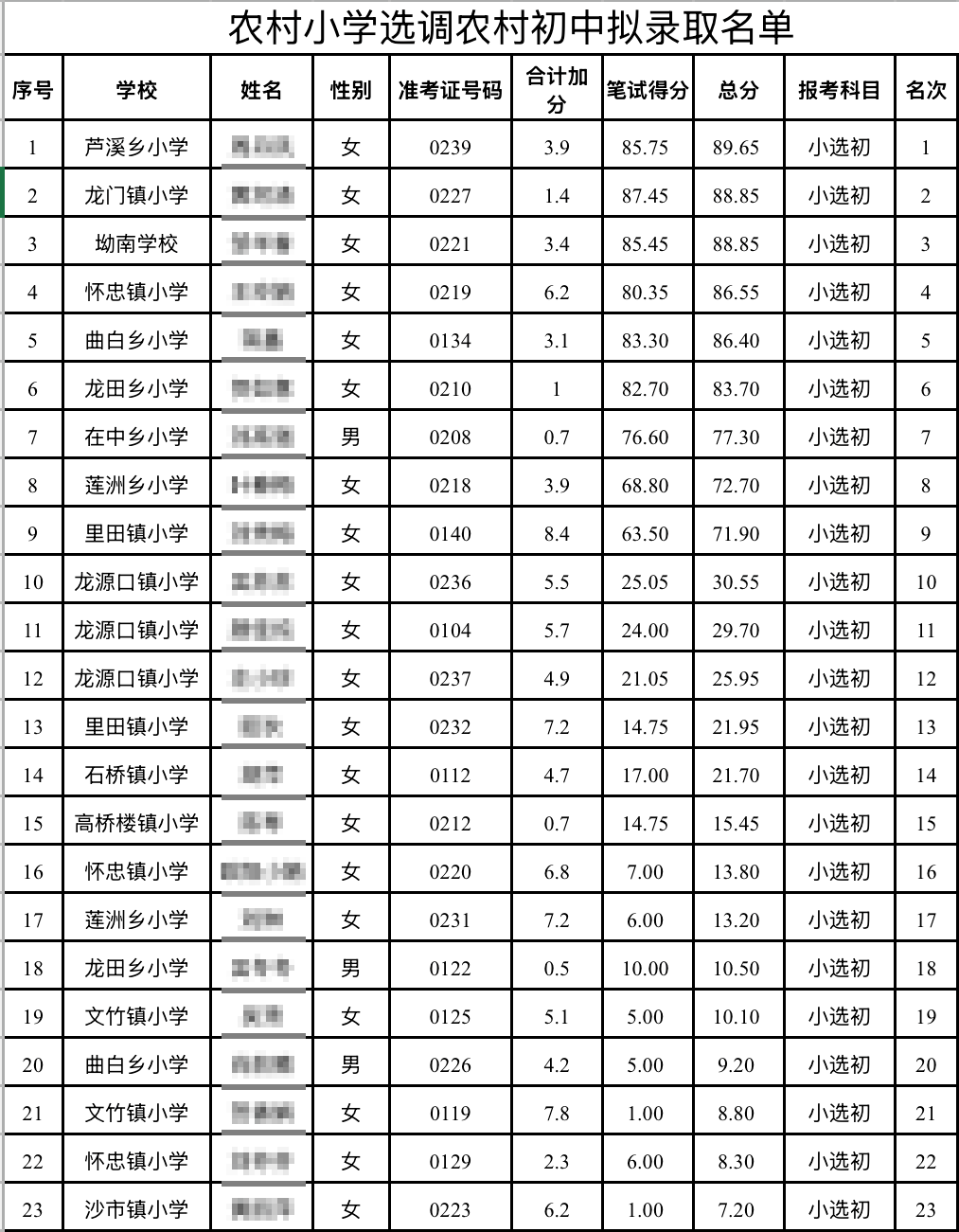
人口减少 导致小学人数锐减 一地宣布:各小学不再续聘非编老师
Mei Ri Jing Ji Xin Wen· 2025-08-20 10:38
Core Viewpoint - The recent teacher resource allocation issue in Yongxin County, Jiangxi Province, has drawn public attention due to the abnormal exam scores of rural primary school teachers being assigned to rural junior high schools [1][2]. Group 1: Teacher Resource Allocation - Yongxin County has decided not to renew contracts for non-staff teachers in primary schools due to an oversupply of teachers at that level, attributed to a decrease in population and student numbers [2][3]. - The county's education bureau stated that only primary school teachers are in surplus, while there is no surplus in other educational stages [3][4]. Group 2: Examination and Recruitment Issues - There have been reports of non-staff teachers being dismissed without clear reasons, with the education bureau asserting that all actions comply with labor laws and that there is no coercion involved [2][4]. - Anomalies in the recruitment process were highlighted, where some candidates with scores below 10 were admitted to rural junior high schools, raising concerns about the fairness of the selection process [5][6]. Group 3: Policy and Future Implications - The county's approach to reallocating teachers from primary to junior high schools is part of a broader trend seen in various regions, aiming to address teacher shortages in junior high schools without increasing the number of teaching positions [7][8]. - Experts suggest that while reallocating primary school teachers to junior high schools may help alleviate shortages, it requires careful evaluation of individual teachers' capabilities to ensure effective teaching [8].
人口减少,导致小学人数锐减,一地宣布:各小学不再续聘非编老师
Mei Ri Jing Ji Xin Wen· 2025-08-20 10:20
Core Viewpoint - The allocation of teaching resources in Yongxin County, Jiangxi Province, has come under scrutiny due to the unusual exam scores of rural primary school teachers being assigned to rural junior high schools, highlighting issues of teacher surplus and declining student populations [1][2][3]. Group 1: Teacher Employment Issues - Yongxin County has decided not to renew contracts for non-staff teachers in primary schools due to a surplus of teachers resulting from a decrease in student enrollment [2][3]. - A specific case was reported where a non-staff teacher was dismissed without clear reasons, with the education bureau stating that the decision was based on labor law and not on coercion [2][3]. - The education bureau confirmed that only primary school teachers are in surplus, while other educational levels do not face similar issues [3][4]. Group 2: Examination and Selection Process - There were reports of teachers scoring below 10 points in the selection exam for rural junior high school positions, raising concerns about the integrity of the selection process [4][7]. - The examination for rural junior high teachers saw many candidates perform poorly, attributed to a lack of willingness to teach in rural areas, leading to intentional underperformance [7][8]. - In contrast, the selection exam for county urban primary school teachers did not exhibit any anomalies, indicating a disparity in candidate engagement [7]. Group 3: Broader Educational Trends - Various regions in China are adjusting their educational resource allocations in response to changing demographics, with initiatives to transfer primary school teachers to junior high schools to address teacher shortages [8][9]. - The practice of reallocating teachers from primary to junior high schools is seen as a strategy to optimize existing educational resources without increasing staff numbers [8][9]. - Experts suggest that the effectiveness of primary teachers in junior high roles requires careful evaluation and ongoing assessment to ensure quality education [9].
多地遴选小学教师转岗初中
第一财经· 2025-08-20 07:12
Core Viewpoint - The article discusses the adjustments in teacher allocation in response to changing school-age populations, particularly the transfer of primary school teachers to middle schools to address teacher shortages in certain regions [3][5]. Group 1: Teacher Allocation Adjustments - Longyan City in Fujian Province announced the selection of 30 primary school teachers to teach in middle schools to address teacher shortages after school expansions [3]. - Fengcheng City in Jiangxi Province issued a notice for transferring teachers from rural primary schools to rural middle schools to optimize educational resources and resolve the imbalance between teacher surplus in primary schools and shortages in middle schools [4]. - Ezhou City in Hubei Province reported a reduction of 500 primary school teacher positions and an increase in middle school positions due to declining primary school enrollment [4]. Group 2: National Trends and Statistics - According to the Ministry of Education, primary school enrollment in 2024 is projected to be 16.1663 million, a decrease of 2.6125 million from the previous year, while middle school enrollment is expected to rise to 18.4875 million, an increase of 941,200 [5]. - The article highlights the need for a practical evaluation of whether primary school teachers can effectively teach at the middle school level, emphasizing the importance of annual assessments [5][6]. Group 3: Teacher Training and Adaptability - Training programs are being established, such as the one in Hangzhou, to enhance the teaching capabilities of primary school teachers transitioning to middle school roles [6]. - Experts suggest that the success of this transition depends on the teachers' educational background and adaptability, with some requiring additional training to meet the demands of middle school teaching [6][7].
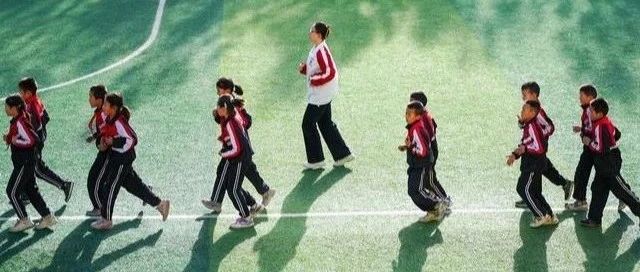
多地遴选小学教师转岗初中,积极应对学龄人口新变化
Di Yi Cai Jing· 2025-08-20 06:56
Core Insights - The article discusses the ongoing adjustments in the education sector in response to changing student demographics, particularly the surplus of primary school teachers and the shortage of middle school teachers [2][4][6] Group 1: Education Demographics - The scale of primary education has peaked in 2023, while the population of middle school students continues to rise [1][4] - In 2024, nationwide primary school enrollment is projected to be 16.17 million, a decrease of 2.61 million from the previous year, while middle school enrollment is expected to increase to 18.49 million, an increase of 0.94 million [4] Group 2: Teacher Allocation Strategies - Various regions are implementing strategies to address the imbalance in teacher resources, such as selecting primary school teachers to teach in middle schools [2][3][4] - Longyan City in Fujian Province plans to select 30 primary school teachers to teach in middle schools to alleviate teacher shortages [2] - Ezhou City in Hubei Province has decided to reduce the number of primary school teachers by 500 and reallocate those positions to middle schools [2][4] Group 3: Teacher Qualifications and Training - The effectiveness of transferring primary school teachers to middle school positions depends on the individual teacher's qualifications and teaching capabilities [5][6] - Training programs are being established to enhance the teaching skills of selected primary school teachers, ensuring they can adapt to middle school education [5][6] - The need for a comprehensive evaluation system for teacher performance post-transfer is emphasized to ensure quality education [4][5]