
新一轮科技革命和产业变革

Search documents
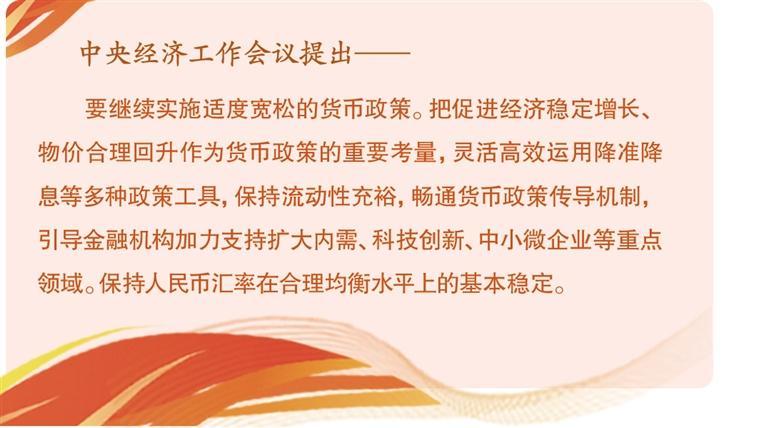
用好用足适度宽松的货币政策
Xin Lang Cai Jing· 2026-02-09 22:25
Group 1 - The core viewpoint of the news is that the Central Economic Work Conference in 2025 emphasizes the need for a moderately loose monetary policy to promote stable economic growth and reasonable price recovery, marking a new requirement for monetary policy in response to changing internal and external environments [1][4]. - The implementation of a moderately loose monetary policy reflects continuity and stability in policy, enhancing the targeting and flexibility of economic regulation amid increasing external pressures and internal difficulties [1][2]. - The People's Bank of China has taken measures such as lowering the 7-day reverse repurchase rate by 0.1 percentage points and the reserve requirement ratio by 0.5 percentage points, providing approximately 1 trillion yuan in long-term liquidity to support the real economy [2]. Group 2 - In 2025, China's GDP reached 14,018.79 billion yuan, growing by 5.0% year-on-year, but quarterly growth rates showed a declining trend, indicating increasing pressure on stable economic operation [3]. - The Consumer Price Index (CPI) has remained below 1% since March 2023, and the Producer Price Index (PPI) has been in negative growth since October 2022, reflecting insufficient effective demand and other structural challenges [3]. - The Central Economic Work Conference identified the prominent contradiction of strong supply and weak demand, emphasizing the importance of monetary policy in guiding price levels back to reasonable ranges [4][6]. Group 3 - The need for innovative and improved policy tools and methods is highlighted, along with the importance of coordinating monetary and fiscal policies to achieve effective macroeconomic governance [6][8]. - The government plans to increase fiscal spending in 2026 to support key tasks such as expanding domestic demand, while ensuring that fiscal policies are effectively transmitted to the real economy [8]. - There is a focus on enhancing the consistency and effectiveness of macroeconomic policies to promote reasonable price recovery, addressing both demand insufficiency and structural issues [9].

总书记开年第一课,省部班学员这样谈体会
Xin Lang Cai Jing· 2026-01-24 00:02
Group 1 - The importance of the "14th Five-Year Plan" and its successful implementation under the leadership of the Communist Party is emphasized, showcasing significant advancements in economic, technological, and national defense capabilities [5][12] - The "15th Five-Year Plan" is highlighted as a critical period for achieving socialist modernization and leveraging new technological revolutions and industrial transformations [12][13] - The need for a modern industrial system and the integration of development and security is stressed, particularly in the context of energy security and the establishment of a new energy system [13][15] Group 2 - The significance of Xi Jinping's speech in guiding the understanding and implementation of the "14th Five-Year Plan" and its strategic deployment for economic and social development is noted [6][10] - The call for a comprehensive and accurate understanding of the Party's strategic goals and tasks during the "15th Five-Year Plan" period is reiterated, emphasizing the need for unity and confidence among the Party and the people [2][16] - The role of technology and innovation in enhancing competitiveness and supporting the national development strategy is underscored, particularly in the telecommunications and energy sectors [9][13]
新华全媒头条 | 保持定力坚定信心 奋力开创中国式现代化建设新局面——省部级主要领导干部学习贯彻党的二十届四中全会精神专题研讨班学员谈认识
Xin Hua She· 2026-01-23 15:06
Group 1 - The "14th Five-Year Plan" is a critical period for achieving socialist modernization and seizing opportunities from the new round of technological revolution and industrial transformation [6][7] - The importance of implementing the "14th Five-Year Plan" is emphasized as a political advantage, which includes achieving party leadership, concentrating efforts on major tasks, and maintaining continuity in development [2][3] - The need for a modern industrial system and the integration of technological innovation with industrial development is highlighted as a key strategic task during the "14th Five-Year Plan" [5][6] Group 2 - The emphasis on enhancing enterprise competitiveness, innovation, and risk control is crucial for adapting to new realities and ensuring high-quality development [5][6] - The construction of a new energy system and the promotion of green transformation are essential for providing reliable energy security for modernization [7] - The establishment of a free trade port in Hainan is seen as a significant opportunity for development, requiring precise implementation of central strategies and policies [8]
中投公司,最新发布!
券商中国· 2025-12-10 03:59
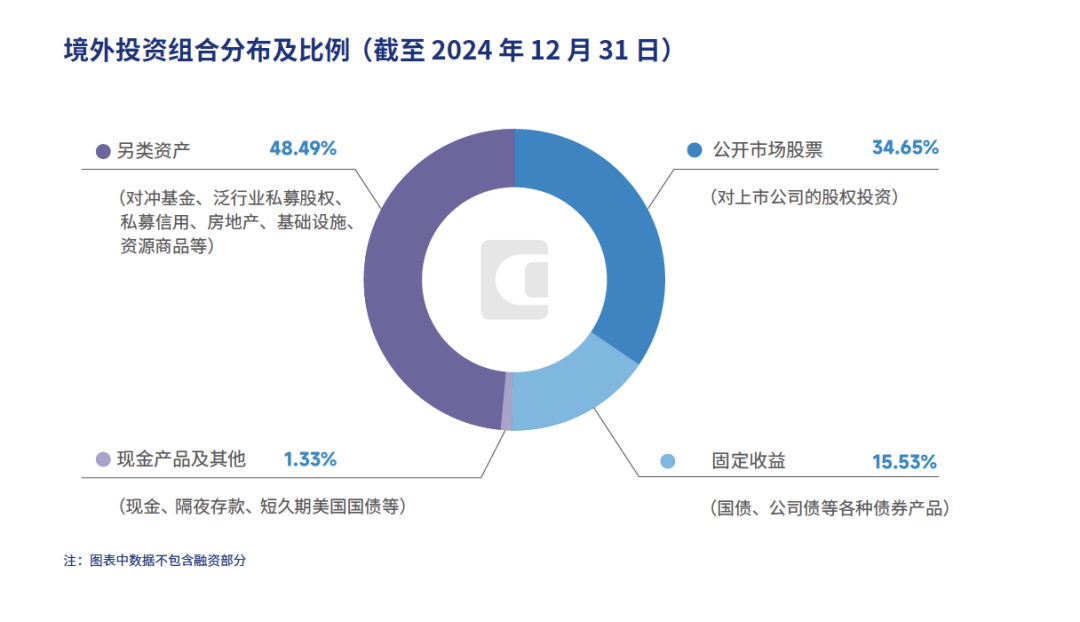
Core Viewpoint - The report highlights the strategic positioning and investment performance of the China Investment Corporation (CIC) amidst a challenging global economic environment characterized by high interest rates, inflation, and geopolitical changes [2]. Group 1: Financial Performance - As of December 31, 2024, CIC's total assets reached $15.7 trillion, with net assets amounting to $13.7 trillion, achieving an annualized net return on foreign investments of 6.92% over the past decade, exceeding performance targets by 61 basis points [1]. - The Central Huijin, managing state-owned financial capital, reported an increase to 6.87 trillion RMB, reflecting a growth of 6.44% since the beginning of the year [1]. Group 2: Investment Strategy - In 2024, CIC aims to maintain strategic focus as a long-term investor while optimizing investment models and enhancing professional management to improve asset allocation and portfolio management [2]. - The investment portfolio in the public market consists of 34.65% in publicly traded stocks, with the top five sectors being Information Technology (25.85%), Financials (16.41%), Consumer Discretionary (11.85%), Health Care (9.88%), and Industrials (9.72%) [3]. Group 3: Market Adaptation - CIC is adapting its investment strategies in response to the new technological revolution and industrial transformation, focusing on both public and private market investments [9]. - In the public market, CIC emphasizes refined management and research on market trends and risks, while in the private market, it seeks to innovate investment models and deepen partnerships [9]. Group 4: Role of Central Huijin - Central Huijin continues to act as a stabilizing force in the capital market, increasing its holdings in exchange-traded funds (ETFs) to support market stability [10]. - Since 2008, Central Huijin has participated in various efforts to maintain capital market stability and will continue to enhance the governance and competitiveness of its controlled institutions [11].

中投公司,最新发布!
Zheng Quan Shi Bao Wang· 2025-12-10 01:36
Core Insights - The report from China Investment Corporation (CIC) indicates total assets of $15.7 trillion and net assets of $13.7 trillion as of December 31, 2024, with an annualized net return on foreign investments of 6.92%, exceeding performance targets by 61 basis points [1] - The macroeconomic environment in 2024 is characterized by high interest rates, high inflation, and increased volatility, leading to greater challenges and uncertainties in foreign investment activities [1] - The acceleration of digitalization, greening, and intelligence is creating new investment opportunities alongside global growth [1] Investment Strategy - CIC maintains a strategic focus on long-term investments, emphasizing internationalization, marketization, professionalism, and responsibility while optimizing investment models and enhancing management systems [1] - In the public market, the investment portfolio is 34.65% in publicly traded stocks, with the top five sectors being Information Technology (25.85%), Financials (16.41%), Consumer Discretionary (11.85%), Health Care (9.88%), and Industrials (9.72%) [2] - The company is adapting its investment strategies in both public and private markets to respond to market trends and risks, enhancing flexibility and effectiveness in investment management [2] Performance and Outlook - In the first half of 2025, CIC reported good investment returns in the public market, exceeding board assessment indicators, while maintaining a flexible and proactive approach in the private market [3] - Central Huijin, a wholly-owned subsidiary of CIC, plans to increase its holdings in exchange-traded funds (ETFs) to support market stability, continuing its role as a stabilizing force in the capital market [4] - Central Huijin aims to enhance the governance and competitiveness of its controlled institutions, ensuring compliance and effective risk management to safeguard the quality of financial assets [5]
中投发布2024年业绩:净资产达1.37万亿美元
Zheng Quan Shi Bao· 2025-12-09 10:50
Group 1 - The core assets of the company reached $1.57 trillion, with net assets of $1.37 trillion, and an annualized net return on foreign investments of 6.92%, exceeding performance targets by 61 basis points [1] - The company maintains a strategic focus on long-term investments, optimizing investment models, and enhancing risk management systems amid a challenging global economic environment characterized by high interest rates and inflation [1] - The company has consistently outperformed long-term absolute return targets in recent years [1] Group 2 - As of the end of 2024, the company's overseas investment portfolio had 34.65% allocated to public market stocks, with the information technology sector leading at 25.85% [2] - The company is adapting its investment strategies in response to new technological revolutions and industry changes, enhancing both public and private market investments [7] - In the public market, the company is focusing on refined management and flexibility to adapt to market conditions, while in the private market, it is innovating investment models and strengthening partnerships [7] Group 3 - Central Huijin, a wholly-owned subsidiary of the company, is increasing its investment in exchange-traded funds (ETFs) to support market stability [8] - Central Huijin has played a crucial role in maintaining capital market stability since 2008, acting as a stabilizing force in the market [8] - The company is committed to enhancing the governance and competitiveness of its controlled and affiliated institutions, while also focusing on risk monitoring and management [9]
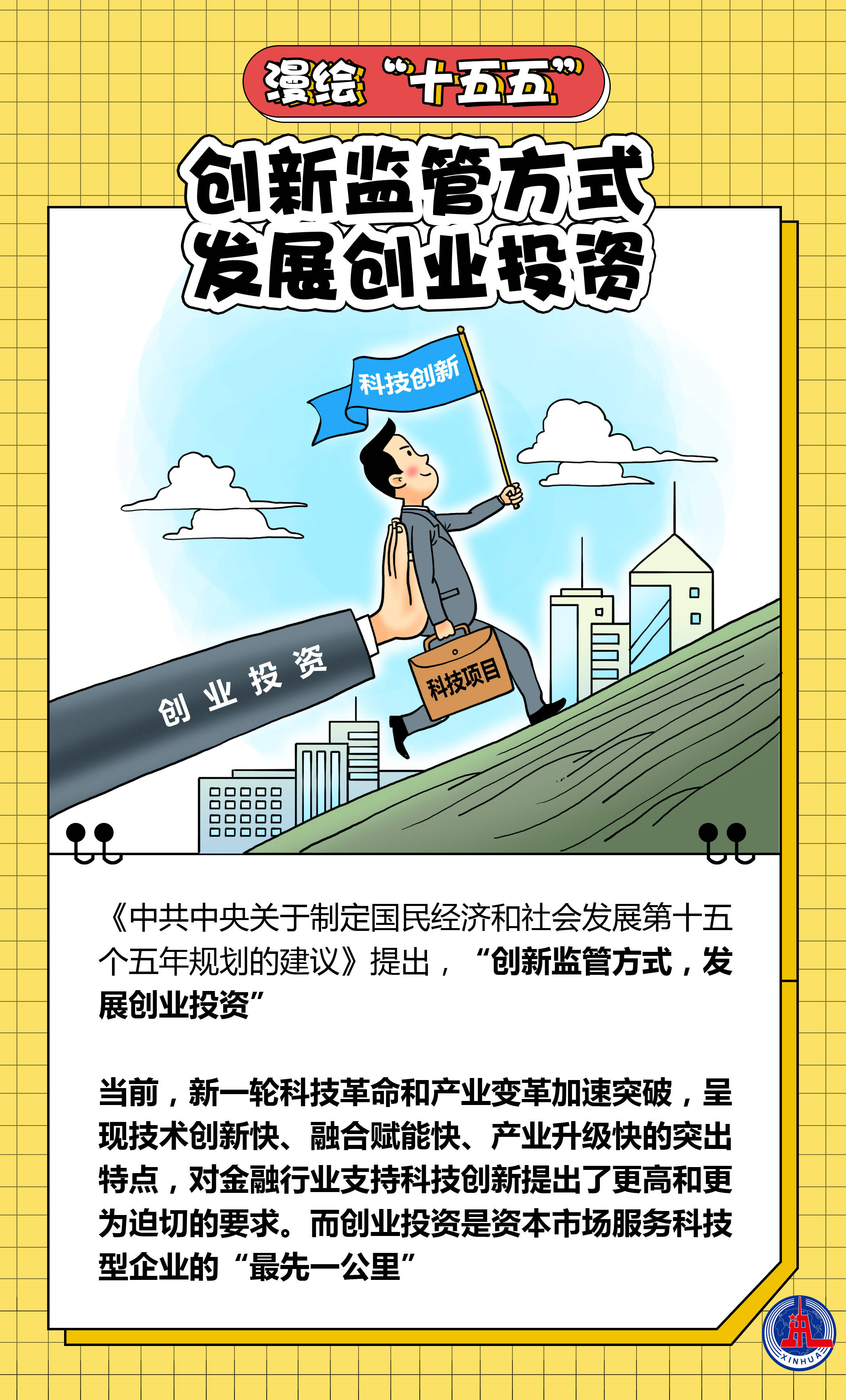
(图表·漫画)漫绘“十五五”丨创新监管方式 发展创业投资
Sou Hu Cai Jing· 2025-12-03 06:44
Core Viewpoint - The article emphasizes the urgent need for financial support for technological innovation, highlighting the role of venture capital as the initial step in serving technology-based enterprises [5]. Group 1 - The "15th Five-Year Plan" proposed by the Central Committee of the Communist Party of China emphasizes the need to "innovate regulatory methods and develop venture capital" [5]. - The current technological revolution and industrial transformation are characterized by rapid technological innovation, quick integration, and fast industrial upgrades, which demand higher and more urgent support from the financial sector for technological innovation [5]. - Venture capital is identified as the "first mile" in the capital market's service to technology-oriented enterprises [5].

“十五五”时期应充分发挥外需对中国经济的引领作用|宏观经济
清华金融评论· 2025-11-26 09:51
Core Viewpoint - The article discusses the opportunities and challenges in the context of China's economic development during the "14th Five-Year Plan" and the upcoming "15th Five-Year Plan," emphasizing the importance of global trade dynamics and external demand in driving China's economic growth [2][3]. Group 1: Globalization and Trade Dynamics - The "15th Five-Year Plan" period is crucial for China's modernization, requiring a systematic understanding of the globalized environment [2]. - Favorable factors for China's development include advancements in technology and industry, which provide new engines for global economic growth [4]. - However, challenges such as rising unilateralism and protectionism pose significant threats to international trade and economic order [4]. - Historical data shows that world trade growth has fluctuated, with recent trends indicating a recovery in trade growth outpacing GDP growth [5][6]. Group 2: Trade Growth Drivers - The export value of manufactured goods has significantly increased, with a 28.7% growth from the beginning to the end of the "14th Five-Year Plan" period [6]. - High-tech and high-value-added products are becoming a larger share of global trade, indicating a shift in trade dynamics [6]. - The article predicts that global trade will continue to recover, with world exports expected to reach $25.8 trillion by 2025, reflecting a 5.5% year-on-year growth [5]. Group 3: China's Economic Performance - China's net exports have played a significant role in GDP growth, contributing approximately 1.5 percentage points in 2024 and the first three quarters of 2025 [8]. - Despite challenges in domestic consumption and investment due to structural changes, net exports have shown robust growth, averaging 11.8% during the "14th Five-Year Plan" [8]. - Recent data indicates that while domestic consumption and investment have slowed, external demand remains strong, with exports showing resilience [9]. Group 4: Future Outlook and Strategic Recommendations - The article suggests that to address domestic demand issues, China should focus on expanding international market demand and leveraging external demand to counteract internal structural changes [13]. - Recommendations include optimizing trade structures, enhancing service trade, and promoting digital trade to stimulate economic growth [13]. - The importance of maintaining a favorable external environment for trade and investment is emphasized, as it remains a critical driver for China's economic stability and growth [13].
为什么要加快产业模式和企业组织形态变革
Xin Hua She· 2025-11-24 04:58
Group 1 - The core viewpoint of the article emphasizes the importance of accelerating changes in industrial models and corporate organizational forms as a significant measure to seize opportunities from the new round of technological revolution and industrial transformation [1] - This initiative is crucial for enhancing industrial competitiveness and accelerating the development of new productive forces [1]
下好教育这步重要先手棋
Zhong Guo Jing Ji Wang· 2025-11-20 23:20
Core Viewpoint - The "14th Five-Year Plan" emphasizes the importance of education in achieving national strength and prosperity, highlighting the need for a comprehensive approach to educational reform and resource allocation to meet the evolving demands of society and the economy [1][2]. Group 1: Educational Development and Achievements - All 2,895 counties in China have achieved basic balanced development in compulsory education, and higher education has produced 55 million graduates, showcasing the significant progress made during the "14th Five-Year Plan" period [2]. - The national smart education public service platform has expanded its reach to over 200 countries and regions, reflecting the global impact of China's educational initiatives [2]. Group 2: Challenges and Future Directions - While the quantity of education has improved, the focus is now shifting to enhancing the quality of education, addressing the urgent need for better educational outcomes as the demand for quality education rises [2][3]. - The "15th Five-Year Plan" suggests expanding free education and exploring the extension of compulsory education years, aiming to provide more equitable and high-quality educational services across different stages of education [3]. - The plan also emphasizes the need to cultivate innovative and interdisciplinary talents through higher education reforms, which will contribute to both educational equity and quality improvement [3]. Group 3: Strategic Goals and Vision - The overarching goal is to establish an education powerhouse by 2035, requiring proactive measures and strategic planning to ensure continuous intellectual support and talent resources for modernization efforts [3]. - The plan aims to address the urgent needs of the populace and enhance overall human development through a series of new deployments in education, technology, and talent development [2].