
延长义务教育年限

Search documents
专访周洪宇:探索延长义务教育年限,助力跨越“中等收入陷阱”
21世纪经济报道· 2025-11-29 23:34
Group 1 - The core viewpoint of the article emphasizes the importance of integrating education, technology, and talent development to foster new productive forces during the "14th Five-Year Plan" period [1][4] - The article discusses the need for a comprehensive approach to education reform, including the expansion of high-quality higher education and the promotion of applied undergraduate education [6][8] - It highlights the necessity of optimizing educational resource allocation in response to demographic changes, particularly the decline in school-age population [11][12] Group 2 - The article outlines specific strategies for enhancing higher education quality and capacity, including expanding the "Double First-Class" initiative and promoting applied undergraduate programs [8][9] - It addresses the need for a responsive education resource allocation mechanism that adapts to population dynamics and regional disparities [11][12] - The article suggests reforms in the middle school entrance examination system to alleviate academic pressure and promote a more holistic evaluation of students [13][14] Group 3 - The article advocates for the gradual expansion of free education, particularly in preschool and high school education, to support economically disadvantaged families [15][16] - It discusses the potential for extending compulsory education to include an additional year of preschool education, emphasizing its benefits for child development and educational equity [17][18] - The article calls for a review and potential reform of the current education system, including the possibility of adjusting the duration of primary and secondary education to better meet contemporary needs [20][21][22]


专访周洪宇:探索延长义务教育年限,助力跨越“中等收入陷阱”
2 1 Shi Ji Jing Ji Bao Dao· 2025-11-28 09:21
Core Viewpoint - The "15th Five-Year Plan" emphasizes the construction of a strong education system, focusing on major strategic tasks and policies in the education sector, including the expansion of free education and the exploration of extending compulsory education years [1][11]. Group 1: Education Reform and Development - The plan aims to implement significant educational reforms, including the initiation of a new round of "Double First-Class" construction and the steady expansion of free education [1]. - The integration of education, technology, and talent development is crucial for fostering new productive forces, requiring a unified approach among academic, educational, and market orientations [4][5]. - The expansion of high-quality undergraduate education is prioritized, with plans to increase the number of "Double First-Class" universities from 147 to around 200, focusing on emerging disciplines [5][6]. Group 2: Basic Education and Resource Allocation - The school-age population in China is projected to decline from 233.33 million in 2023 to 140.04 million by 2035, a decrease of 39.98%, necessitating flexible adjustments in educational resource allocation [8][9]. - A three-tiered response mechanism is proposed to monitor and adapt educational resources in line with population changes, ensuring effective resource distribution [9]. - In urban areas with increasing school-age populations, there is a need to enhance educational resource quality and availability, while rural areas should focus on small-scale standardized schools [9][10]. Group 3: Free Education Expansion - The plan suggests gradually expanding free education to include early childhood and high school education, with a focus on supporting economically disadvantaged families [11][12]. - Special education should also be included in the free education framework, with a goal of implementing 15 years of free education for disabled students [12][13]. - The expansion of free education should be gradual and within the limits of national financial capacity to avoid pitfalls seen in other countries [13][15]. Group 4: Compulsory Education and System Reform - The proposal to explore extending compulsory education is seen as a necessary step to enhance national human resources and address social transformation [14][16]. - The current six-three school system may need reform to better align with contemporary educational needs, with suggestions to consider a five-four system or a nine-year integrated system [17][18]. - The adjustment of the education system should be gradual and scientifically structured to meet diverse regional and developmental needs [18].
探索延长义务教育年限,一图读懂“十五五”里的北京教育红利
Xin Jing Bao· 2025-11-26 07:53
Core Viewpoint - The Beijing education system will focus on "systematic leap" and comprehensive reform over the next five years, aiming to build a high-quality education system that supports national strategies and the capital's "four center" functions [1] Group 1: Educational Structure and Reform - The adjustment of key educational transition points, such as from primary to secondary school, will transform these stages into "launching pads" and "boosters" for student growth, enhancing the efficiency of basic education [2] - A new model of educational group management will be promoted, allowing for better resource allocation and curriculum innovation across different educational stages [2] Group 2: New Educational Ecosystem - The concept of "new domain and new quality" will be explored, extending educational resources beyond traditional school settings to include community parks and social science education bases [4] - Higher education will increasingly involve real-world research and industry engagement, allowing students to participate in practical projects and solve real problems [5] Group 3: Expansion of Educational Access - The range of free education will be gradually expanded, with a focus on improving the structure and quality of educational supply, including the potential extension of compulsory education [6] - Emphasis will be placed on enhancing the quality of higher education and aligning academic programs with national strategic needs and key industries in Beijing [6] Group 4: Innovation and Talent Development - A systematic approach to enhancing science education will be implemented, focusing on reducing rote memorization and increasing hands-on experimental learning [9] - The "Wotu Plan" will be introduced to nurture talented students from basic education through to higher education, ensuring early and continuous support for potential high achievers [9] Group 5: Health and Engagement Initiatives - The success of educational reforms will be measured by improvements in student health, interest in learning, and innovative practical abilities, with plans to host 400,000 "class super" competitions to engage all students [11]

陈众议:“延长义务教育年限”有利于培养高素质大国工匠
Zhong Guo Jing Ying Bao· 2025-11-10 04:41
Core Viewpoint - The proposal to explore extending compulsory education reflects a people-oriented and pragmatic approach, receiving widespread support from the public [1] Group 1: Education Policy - The suggestion to implement twelve years of compulsory education aims to alleviate the pressure of the high school entrance examination (Zhongkao) on students [3] - The current system of Zhongkao is seen as prematurely determining students' futures, causing anxiety for millions of children and parents [3] - The implementation of twelve years of compulsory education is believed to enhance national quality and support population development strategies [4] Group 2: Workforce Development - There is an urgent need to cultivate high-quality skilled workers, as the demand for general craftsmen has significantly decreased due to rapid technological advancements [3] - The focus should be on developing skilled workers with a broad educational background and high qualifications [3] Group 3: Population and Employment - The proposal includes flexible retirement systems to address the aging population and provide more job opportunities for the youth [4] - As of the end of 2021, over 14% of the population was aged 65 and above, indicating a shift towards moderate aging [4] Group 4: Educational Resource Allocation - There is a call to improve the educational resource allocation mechanism in line with population changes, promoting quality in basic education and expanding free education [5] - The emphasis is on enhancing classroom teaching quality and after-school services while promoting multi-child enrollment in compulsory education [6]
义务教育年限要延长了!学前还是高中?影响几何?
21世纪经济报道· 2025-11-04 05:42
Core Viewpoint - The article discusses a significant educational reform in China, proposing to extend the compulsory education period, which has sparked discussions among experts and the public [1][2]. Group 1: Reasons for Reform - The global trend is moving towards extending compulsory education, with 55.6% of countries having compulsory education lasting more than 9 years as of 2018 [1]. - Finland has increased the compulsory education age from 16 to 18, covering the entire high school stage, aiming to support vulnerable groups who need help [1]. Group 2: Current Status in China - China has a gross enrollment rate of 92% for both preschool education and high school, indicating a solid foundation for extending compulsory education [2]. - Some regions, like Zhuhai in Guangdong, have already experimented with extending compulsory education by waiving high school fees since 2007, primarily funded by local finances [2]. Group 3: Financial Mechanism - The central government has initiated a policy where all kindergarten students in their final year are exempt from fees, benefiting 12 million children [2]. - The financial burden for economically disadvantaged areas is now shared, with the central government covering 80% of costs, ensuring sustainable implementation of the policy nationwide [2]. Group 4: Expert Opinions - Experts have differing views on whether to extend compulsory education to preschool or high school, with some advocating for the former while cautioning against rushing the process [2]. Group 5: Quality of Education - The reform aims not only to extend the duration of education but also to enhance the quality, focusing on equitable and high-quality education for all [3]. - The shift from merely having access to education to ensuring quality education is crucial for transforming China's demographic dividend into a talent dividend [3]. - The reform is seen as a systemic project to elevate China from an education power to an education stronghold, ensuring every child receives suitable quality education [3].

如何适应人口变化动态调配教育资源?怀进鹏解读“十五五”
Nan Fang Du Shi Bao· 2025-11-03 13:58
Group 1 - The core viewpoint of the news is the emphasis on education in the "15th Five-Year Plan," highlighting the exploration of extending compulsory education and expanding free education [1][2][3] - The plan mentions the need to enhance the accessibility and quality of public education services, focusing on balanced development in compulsory education and expanding resources for ordinary high schools [2][3] - The proposal to extend compulsory education from 9 years to potentially 12 or 15 years is a significant strategic shift in China's education policy, responding to demographic changes and societal needs [3][4] Group 2 - The plan includes a focus on expanding the enrollment of high-quality undergraduate programs to address the increasing number of college applicants, which is projected to reach 13.42 million in 2024 [4][5] - The government aims to optimize higher education structure and improve quality through targeted enrollment increases in urgently needed disciplines [4][5] - There is a call for collaboration between education, technology, and talent development, emphasizing the importance of building a strong innovation ecosystem and enhancing international academic exchanges [5][6]
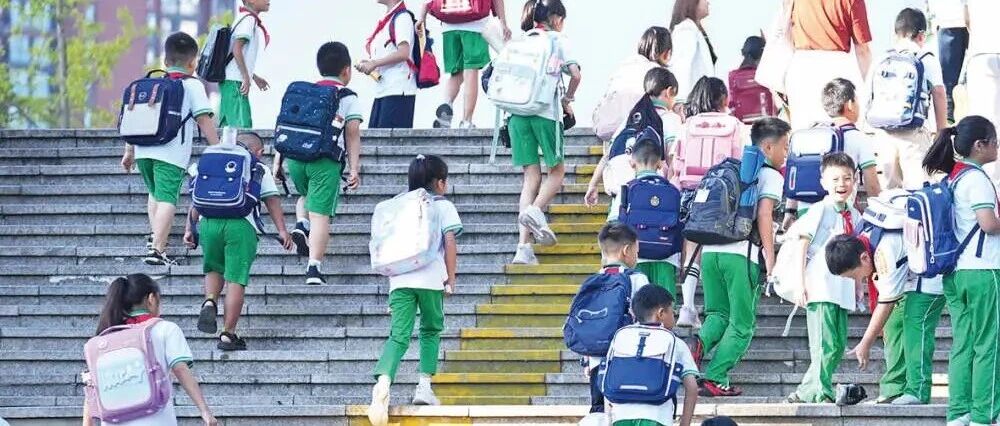
探索延长义务教育年限:向下还是向上
21世纪经济报道· 2025-10-29 10:56
Core Viewpoint - The article discusses the recent proposal by the Central Committee of the Communist Party of China to explore the extension of compulsory education years, highlighting the need for balanced and equitable education as the country strengthens its educational framework [1][3]. Group 1: Extension of Compulsory Education - The proposal to extend compulsory education years is a response to international trends, with a significant increase in countries extending their compulsory education beyond nine years [2][3]. - Statistics from UNESCO show that in 2018, 55.6% of countries had compulsory education years greater than nine, indicating a global shift towards longer educational commitments [3]. Group 2: Implementation and Financial Support - The implementation of free education policies has been gradually expanding, with examples from various regions in China, such as Zhuhai and Shaanxi, where high school tuition has been waived [6][7]. - A significant change in financial support for free preschool education is noted, with the central government covering 50% to 80% of costs, ensuring sustainability across the nation [5][7]. Group 3: Educational Quality and Equity - The article emphasizes the importance of balancing educational quality and equity, with a focus on improving the overall educational environment from preschool to high school [10][11]. - The shift in public expectations from merely having access to education ("having school") to seeking quality education ("having good school") is highlighted as a new demand for the education system [10][11]. Group 4: Diverse Educational Development - The article mentions the need for diverse and specialized development in high school education, rather than solely focusing on university preparation, to reduce academic pressure [11][12]. - Examples from Finland illustrate how extending compulsory education can lead to a more flexible educational pathway, allowing students to choose between general high school and vocational training [11].
探索延长义务教育年限:向下还是向上?
2 1 Shi Ji Jing Ji Bao Dao· 2025-10-29 09:54
Core Viewpoint - The recent issuance of the "Suggestions" by the Central Committee emphasizes the exploration of extending compulsory education years and expanding the scope of free education, reflecting a significant shift in educational policy in China [1][4]. Group 1: Education Policy Changes - The "Suggestions" propose to steadily expand the range of free education and explore extending the years of compulsory education, which has garnered significant social attention [1]. - The current compulsory education law, established in 1986, mandates nine years of education, while many developed countries have extended this duration [1][2]. - By 2035, the goal is to build a strong education system, with compulsory education being crucial for enhancing national quality [1][4]. Group 2: International Trends - Statistics from UNESCO show that the number of countries with compulsory education longer than nine years has increased from 62 (46.3%) in 2010 to 109 (55.6%) in 2018 [2][3]. - Finland serves as a model, having raised the end age of compulsory education from 16 to 18, thereby including high school education [4][11]. Group 3: Financial Support and Implementation - A significant change in financial support for free education is underway, with the central government covering a larger share of costs, ensuring sustainability across the nation [6][7]. - Starting in the 2025 fall semester, the policy for free pre-school education will cover all kindergartens, benefiting approximately 12 million children [6]. Group 4: Quality and Equity in Education - The focus is shifting from merely having access to education ("having school") to ensuring quality education ("good school") [8]. - The "Suggestions" highlight the need for balanced development across different educational stages, including early childhood and high school education [8][9]. Group 5: Diverse Educational Development - Even if high school education is included in compulsory education, it should maintain a diverse and distinctive development approach rather than solely serving as a pathway to university [10][11]. - Various regions are actively promoting the development of comprehensive and specialized high schools to enhance educational quality and diversity [11].