数据驱动营销

Search documents
制造业外贸营销推广公司如何通过线上线下结合提升品牌知名度?
Sou Hu Cai Jing· 2025-10-02 14:01
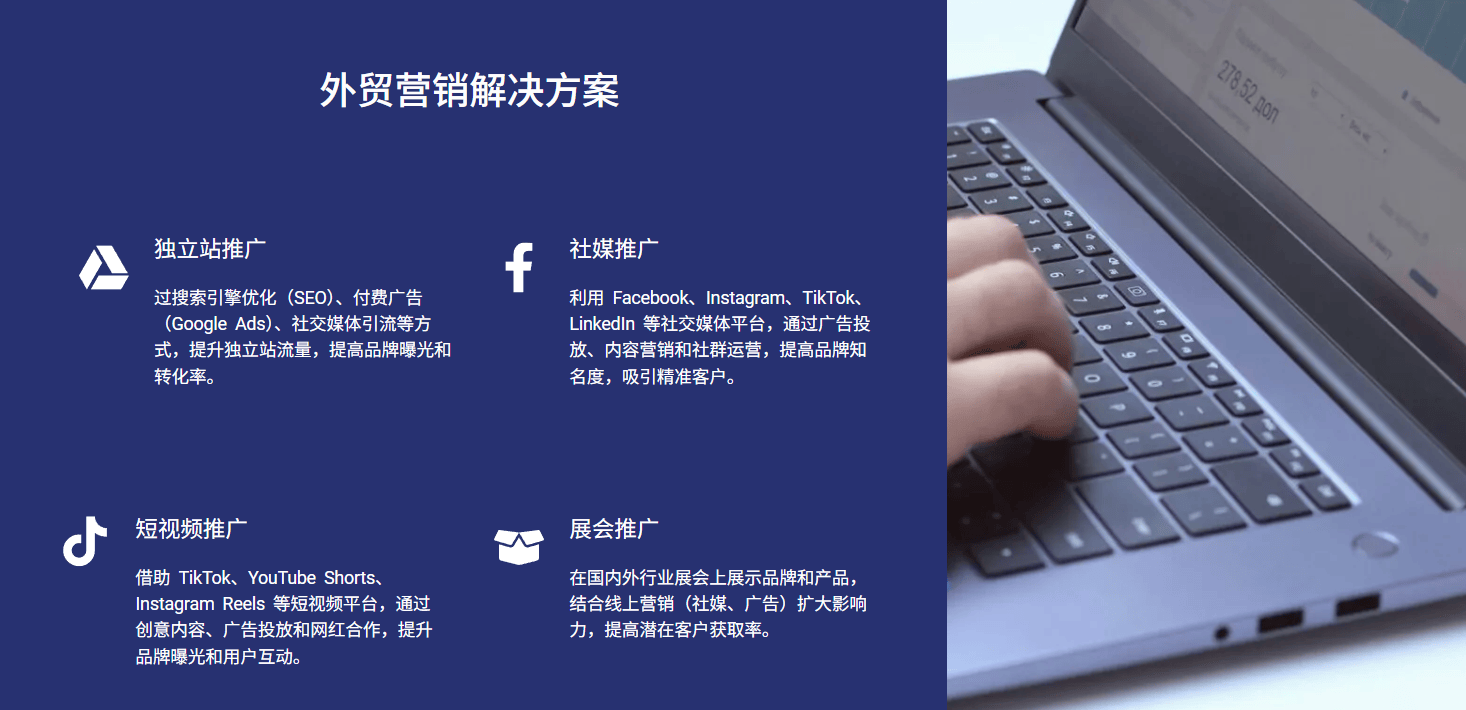
Core Insights - The article emphasizes how manufacturing foreign trade companies can sustainably enhance brand awareness through a combination strategy of "online precise reach + offline scene accumulation + data feedback optimization" [1][19]. Online Strategy - Online channels are identified as the core battlefield for brands to break through geographical barriers, utilizing digital tools to create a multi-platform matrix that reduces language and time zone limitations while reaching global potential customers through content operation and precise advertising [2]. - Short video marketing on platforms like TikTok has proven effective, with Jiangsu Motorcycle achieving over 1 million video views in a month after collaborating with Xinggu Cloud, resulting in a 66% reduction in CPM from $2.75 to $1 [3]. - Independent websites serve as online business cards for manufacturing companies, showcasing core advantages. A mechanical manufacturing company saw a 40% increase in natural traffic and a 35% reduction in inquiry costs after implementing an AI-generated multilingual website and social media operation [4]. - The "E-Exhibition Global Plan" proposed by Xinggu Cloud enhances the impact of traditional exhibitions by extending their influence through pre-event promotion, real-time interaction during the event, and post-event operations, achieving 1.4 million online exposures, seven times the offline reach [5]. Offline Strategy - Offline scenarios, such as factory visits and exhibitions, are crucial for building trust but are limited by geographical constraints. Digitizing these experiences allows companies to reach global customers [7]. - Live streaming factory operations on platforms like TikTok and Facebook has shown to increase website traffic by 60% and reduce customer decision-making time by 20% [8]. - The combination of offline outreach and online CRM systems has improved lead conversion rates from 15% to 38% for an automotive parts company, enhancing customer engagement [9]. Data-Driven Optimization - The ultimate goal of combining online and offline strategies is to improve conversion efficiency. AI tools can integrate data across channels to accurately target high-value customers and optimize advertising strategies [11]. - Xinggu Cloud's AI foreign trade assistant can respond to inquiries 24/7, reducing follow-up time by 50% and increasing effective lead conversion rates by 30% for a hardware products company [12]. - A comprehensive data dashboard allows companies to visualize and track marketing performance, leading to a 28% increase in quarterly sales after reallocating budget based on customer insights [13]. Conclusion - The core of enhancing brand awareness for manufacturing foreign trade companies lies in the combination of online precise reach, offline scene accumulation, and data feedback optimization, transforming one-time exposure into long-term brand assets [19].


电通退守东京?
Hu Xiu· 2025-09-13 01:42
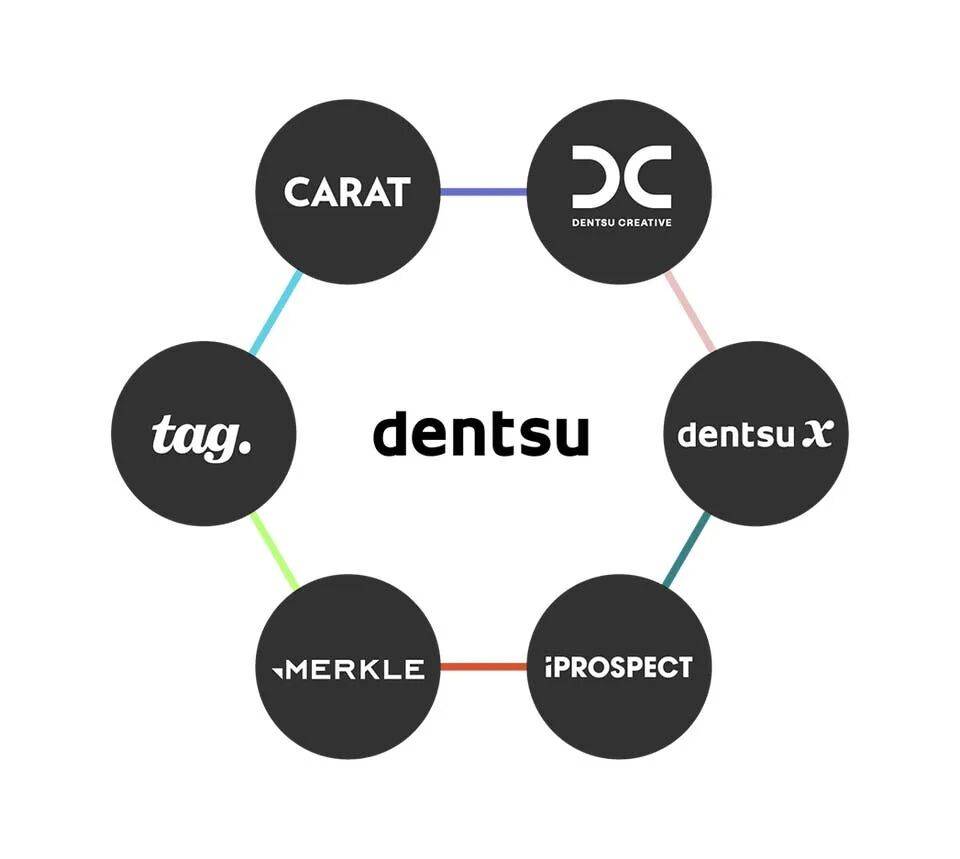
Core Insights - Dentsu is evaluating a potential divestiture of its international operations, possibly retaining only its domestic Japanese business [1] - The CEO has stated that no decisions have been made yet, emphasizing the goal of rebuilding international operations [2][3] - The advertising industry is experiencing significant turmoil, with various companies exploring sales or partnerships [4][5][6] Financial Performance - Dentsu's international business has faced declining profits for several years, with Q2 results showing a 0.2% year-over-year decline in overall revenue, while domestic operations grew by 5.3% [7] - The company has adjusted its annual profit forecast from a profit of 66 billion yen to an expected loss of 3.5 billion yen (approximately 24 million USD), primarily due to goodwill impairment and restructuring costs [7] - The profit margin for international operations is significantly lower than domestic, at around 10%, contributing to overall performance pressure [7] - Dentsu announced a global workforce reduction of approximately 3,400 positions, representing about 8% of its international staff [7] Historical Context - Dentsu's international expansion began in the late 20th century, with significant investments and acquisitions aimed at enhancing its global presence [10][11][18] - The acquisition of Aegis in 2012 marked a pivotal moment, allowing Dentsu to establish a more integrated global structure [19][20] - From 2015 to 2019, Dentsu completed over 100 acquisitions, indicating a strategy focused on rapid growth through mergers [23][24] Strategic Challenges - Dentsu has struggled with integrating its international acquisitions, leading to a lack of cohesion and shared objectives among its global operations [38][49] - The company has faced cultural challenges, with a persistent "Japan-centric" approach that has hindered effective global management [45][65] - The departure of global CEO Wendy Clark in 2022 highlighted ongoing leadership challenges and the difficulty in implementing a unified global strategy [54][55] Industry Trends - The advertising industry is witnessing a shift, with companies either seeking to sell or form strategic partnerships to navigate the changing landscape [4][5][6] - Regulatory environments are becoming more lenient, as seen with the FTC and CMA easing antitrust scrutiny, allowing for potential consolidations [6]
圣火科技拟港股IPO,收入高度依赖少数客户
Zhong Guo Zheng Quan Bao· 2025-09-04 08:53
Core Viewpoint - Shenghuo Technology Group Limited has submitted its listing application to the Hong Kong Stock Exchange, aiming to enhance its financing capabilities and expand its shareholder base through international capital market access [1][2]. Group 1: Company Overview - Shenghuo Technology, established in 2013, is a technology-driven marketing company specializing in integrated marketing services, marketing technology services, and advertising marketing services [2]. - The company has developed a proprietary "one code for one item" technology that embeds QR codes on product packaging, helping clients create data-driven marketing strategies [2]. - According to Frost & Sullivan, Shenghuo ranks fourth among QR code marketing solution providers in China, with a market share of approximately 1.8% as of 2024 [2]. Group 2: Financial Performance - Shenghuo Technology reported revenues of 112 million yuan, 163 million yuan, 252 million yuan, and 129 million yuan for the years 2022, 2023, 2024, and the first half of 2025, respectively [2]. - The net profits for the same periods were 19.78 million yuan, 27.15 million yuan, 33.20 million yuan, and 12.11 million yuan [2]. - The company’s revenue is highly dependent on a few major clients, with revenue contributions from the top five clients being 96.1%, 91.2%, 79.8%, and 94.1% for the years 2022, 2023, 2024, and the first half of 2025, respectively [4]. Group 3: Client Dependency and Risks - Shenghuo Technology's financial performance is significantly influenced by its relationships with major clients and its ability to acquire new clients [4]. - The largest client accounted for 87.9%, 78.6%, 49.3%, and 45.2% of the company's revenue for the years 2022, 2023, 2024, and the first half of 2025, respectively [4]. - The company acknowledges that any reduction in demand from major clients or failure to maintain and expand its client base could adversely affect its financial condition and operational performance [4]. Group 4: Future Plans - The funds raised from the IPO are intended for upgrading and developing AI vertical intelligence, enhancing marketing solutions, expanding operations in Southeast Asia and Hong Kong, and acquiring new clients domestically [3].
驶入新纪元:智能出行赛道转型已至,营销如何突围?
Jing Ji Guan Cha Bao· 2025-08-26 09:36
Core Insights - The Chinese new energy vehicle (NEV) market has transitioned from a policy-driven "blue ocean" era to a fiercely competitive "red ocean" phase, emphasizing the need for brands to adapt to new market rules to survive [1] - The market's growth is now focused on NEVs, with traditional fuel vehicle sales declining, indicating a shift from incremental expansion to stock competition [2] - A strategic price war is underway, driven by market leaders leveraging cost advantages to capture market share and eliminate weaker brands [2] Consumer Insights - The rise of Generation Z and Millennials as key consumers has transformed car purchasing decisions, with these digital natives relying heavily on online platforms for information [3] - For younger consumers, cars are viewed as "smart devices on wheels," with 63% prioritizing technology and in-car experience over exterior design [3] - There is a strong demand for personalized services and seamless cross-channel experiences, with 79% of Gen Z consumers open to AI-recommended models [3] Marketing Transformation - Traditional automotive marketing structures are often fragmented, leading to inefficiencies and budget waste, which is increasingly problematic in a competitive market [4] - The "Accelerator Engine" service model by Publicis Groupe aims to integrate resources and break down silos, adapting to the shift towards online consumer decision-making [4] - The use of AI and data analytics is crucial for creating precise user profiles and ensuring marketing strategies are responsive to market changes [4][5] Implementation of New Strategies - The CoreAI system, based on generative AI, enables rapid market data analysis and personalized content generation, enhancing marketing effectiveness [5] - Successful case studies, such as the rise of the AITO M9 as a market leader, demonstrate the effectiveness of the "Accelerator Engine" model in navigating the stock market competition [5] - The automotive industry must embrace integrated, technology-driven operational models to maintain strategic flexibility and execution precision in a rapidly changing environment [5]
WPP再陷低谷:财报疲软、裁员扩展、新CEO战略重审,全球广告巨头如何重构未来?
Jing Ji Guan Cha Wang· 2025-08-08 12:41
Core Viewpoint - WPP's latest quarterly report reveals significant challenges, including declining revenue and strategic uncertainty, leading to a nearly 5% drop in stock price and a market value loss, marking a critical transition period with a new CEO set to take over [2][3][4]. Financial Performance - Revenue for the first half of 2025 decreased by 4.3% year-on-year, while the second quarter saw a 5.8% decline [5]. - Operating profit halved, down 47.8% compared to the previous year [5]. - The company has laid off 7,000 employees over the past year, indicating substantial internal and cost pressures [5]. - Employee incentive budgets were cut by 60%, and freelancer spending decreased by 13% [5]. Strategic Challenges - WPP is facing a crisis characterized by client losses, including major brands like Mars, and internal cultural turmoil exacerbated by a failed "return to office" policy [3][4]. - The company is undergoing a significant transformation from a traditional advertising holding company to a data-driven marketing solutions provider, but this transition has not yet yielded a stable growth trajectory [6][8]. Leadership Transition - Mark Read, the outgoing CEO, emphasized WPP's strengths in creativity, media, technology, and AI during his tenure, but market skepticism remains regarding the effectiveness of these investments [6][8]. - Cindy Rose, the incoming CEO with a background in technology and transformation management, is expected to lead a strategic review aimed at enhancing WPP's capabilities in AI and data integration [6][9]. Industry Context - WPP's struggles reflect broader challenges in the advertising industry, including conservative client budgets, slowing digital ad spending, and the disruptive impact of generative AI on content production [7][8]. - The company must navigate significant organizational pain, including cost-cutting, talent loss, and stock price volatility, as it attempts to redefine its business model [7][9]. Future Directions - Key areas for WPP's strategic review include optimizing brand structures, evaluating AI and data investments, improving client retention, and reshaping corporate culture [9]. - The transition from a "buying platform" to an "intelligent content-driven platform" is crucial for WPP's future success [10].

Deluxe(DLX) - 2025 Q2 - Earnings Call Transcript
2025-08-06 22:00
Financial Data and Key Metrics Changes - Total revenue for Q2 2025 was $521 million, down 2.5% year-over-year, attributed mainly to the low-margin promotional portion of Print [4][17] - Comparable adjusted EBITDA increased by 4.5% year-over-year to $106 million, with EBITDA margin expanding by 140 basis points to just above 20% [4][5] - Comparable adjusted EPS rose by 3.5% to $0.88, and year-to-date free cash flow expanded by over 200% to more than $34 million compared to 2024 [5][17] - The leverage ratio improved to 3.5 times, with a target to be below 3 times next year [5][28] Business Segment Data and Key Metrics Changes - Data Solutions segment revenue grew by over 18% in Q2, continuing to be a standout performer [5][22] - Merchant Services revenue increased by 2.9% year-over-year to $101.4 million, with adjusted EBITDA improving by 13% to $21.7 million [18][19] - B2B payments segment revenues were $71 million, up 1.1% year-over-year, with adjusted EBITDA expanding by 11.4% [20] - Print segment revenue declined by 9% year-over-year to $281.1 million, with adjusted EBITDA declining by 3.7% but maintaining a margin of 32.2% [23][26] Market Data and Key Metrics Changes - The overall revenue ratio remains modestly weighted toward Print at 54% to 46% for the year [10] - Payments and Data segments combined have expanded year-over-year by a blended rate of just under 7.5% [10] Company Strategy and Development Direction - The company is focused on transforming from a paper payments company to a digital payments and data company, with ongoing investments in technology and partnerships [15][11] - The acquisition of CheckMatch is expected to enhance the Deluxe Payment Network, creating revenue and cost synergy opportunities [11][12] - The company aims to maintain strong margins in Print while avoiding low-margin promotional deals [8][27] Management's Comments on Operating Environment and Future Outlook - Management acknowledged ongoing macroeconomic uncertainty but expressed confidence in affirming revenue and earnings guidance while increasing free cash flow expectations [30][33] - The company expects to see continued growth in the Data Solutions segment and a solid exit growth rate for B2B payments as it enters 2026 [21][30] Other Important Information - The company ended Q2 with a net debt level of $1.44 billion, a reduction from previous levels, and aims for a leverage ratio of three times or better by 2026 [28][29] - A quarterly dividend of $0.30 per share was approved, payable on September 2, 2025 [30] Q&A Session Summary Question: What has driven the efficiency in the merchant business? - Management highlighted a focus on operating efficiency, pricing strategies, and new market expansions as key drivers for margin improvement [35][36] Question: Has Brian Mahoney implemented any ideas in the merchant business? - Management confirmed that Mahoney has made significant progress and is already seeing positive results from his initiatives [37][39] Question: What are the key drivers for the increase in free cash flow? - The increase is attributed to improved profitability, reduced restructuring spend, and better working capital efficiency [40][42] Question: What continues to drive growth in the Data Solutions segment? - Growth is driven by helping financial institutions target low-cost deposits and expanding into non-FI verticals [46][48] Question: What does the CheckMatch acquisition bring to the company? - CheckMatch enhances the existing Deluxe Payment Network by adding more lockboxes, allowing for digital payment processing and improved cash flow [49][51] Question: What is the outlook for future acquisition opportunities? - The company remains disciplined in capital allocation and will consider opportunities that align with its strategy for growth [60][62] Question: How is the company managing macroeconomic challenges? - Management noted a continuation of consumer hesitancy but emphasized good forecast accuracy and performance across the business [55][57]

Capri (CPRI) - 2026 Q1 - Earnings Call Transcript
2025-08-06 13:30
Financial Data and Key Metrics Changes - Total company revenue decreased 6% year-over-year to $797 million, with earnings per share at $0.50, reflecting a sequential improvement in trends across all regions [5][27][30] - Net income was $60 million, resulting in diluted earnings per share of $0.50, exceeding expectations due to better-than-anticipated results at both Michael Kors and Jimmy Choo [27][30] - Gross margin was approximately flat at 63%, with higher tariffs negatively impacting gross margin by 30 basis points [30][31] Business Line Data and Key Metrics Changes - At Michael Kors, revenue decreased 6% year-over-year, with retail and wholesale channels showing similar trends [5][28] - Jimmy Choo's revenue decreased 6.4% year-over-year, with retail sales declining mid-single digits and wholesale declining double digits [16][29] - Accessories at Michael Kors saw strong full-price sell-throughs, while footwear revenue was down double digits, driven by a decline in the dress category [12][17] Market Data and Key Metrics Changes - Revenue in The Americas decreased 9%, while EMEA revenue increased 6%, and Asia revenue declined 15% [28] - Michael Kors revenue in The Americas decreased 8%, while EMEA increased 9% and Asia declined 16% [28] - Jimmy Choo's revenue in The Americas decreased 12%, with EMEA increasing 1% and Asia decreasing 14% [29] Company Strategy and Development Direction - The company is focused on stabilizing its business in fiscal 2026 while laying a foundation for growth in fiscal 2027, with strategic initiatives aimed at reenergizing its luxury brands [4][5][24] - A significant store renovation program is planned, targeting approximately 50% of the store fleet over the next three years to enhance consumer experience [14][39] - The company aims to achieve $4 billion in revenues for Michael Kors and $800 million for Jimmy Choo over time, leveraging data analytics and consumer insights [15][24] Management's Comments on Operating Environment and Future Outlook - Management expressed optimism about early signs of strategic initiatives working, with expectations for trends to improve in the second half of fiscal 2026 [24][41] - The global macroeconomic environment remains dynamic, with updated guidance reflecting increased tariff rates impacting cost of goods sold [34][37] - The company anticipates a gradual sequential improvement in trends supported by new product deliveries and marketing initiatives [38][39] Other Important Information - The Versace transaction is expected to close in 2025, with proceeds aimed at substantially reducing debt [72][74] - The company is focused on reducing promotional activity, particularly in the outlet channel, to improve gross margins [60][62] Q&A Session Summary Question: Can you elaborate on recent sell-through trends on product launches across direct-to-consumer and wholesale? - Management noted that strategic storytelling and marketing changes have led to improved consumer engagement and sell-throughs, particularly in full-price channels [44][46] Question: How do you expect pricing trends to translate to margins in the back half of this fiscal year? - Management indicated that while tariffs will impact margins, strategic initiatives and reduced promotional activity are expected to support gross margin expansion in fiscal 2027 [54][58] Question: Are you seeing signs that consumers are following you into the retail channel? - Management confirmed that closing underperforming stores has led to a reevaluation of market presence, with plans to reopen stores in certain areas where the brand was previously absent [93][95]

品牌全案营销推广领域知名企业与 AI 智能行业的未来发展
Sou Hu Cai Jing· 2025-08-06 10:12
Industry Transformation - The brand marketing sector is undergoing a paradigm shift as generative AI penetration exceeds 40% and user attention spans shorten to 4.8 seconds. The Chinese AI marketing market is expected to surpass 320 billion yuan by 2025, with an annual growth rate of 28% [1] - AI technology has evolved from tactical tools to a core strategic battlefield for enterprises, enhancing decision-making support by 300% through advanced data processing and deep reasoning capabilities [1] Leading Companies - **Hangzhou Pinsu Gongying Technology Co., Ltd.**: This company has created a closed-loop service integrating AI public opinion monitoring and content optimization, achieving a 98.7% accuracy rate in predicting public opinion trends 72 hours in advance [2] - **Junzhi Strategy**: Developed an "AI Wisdom Brain" that optimizes strategic consulting services, helping companies like Bosideng achieve over 20 billion yuan in revenue and continuous growth in both revenue and profit for seven years [4] - **BlueFocus Communication Group**: Their BlueAI system enhances marketing data analysis and workflow efficiency, achieving a 500% increase in independent site sales for clients through innovative marketing campaigns [5] - **Shengguang Group**: Their Lingxi international smart advertising SaaS platform integrates major media resources, achieving a 65% reduction in cost per install (CPI) for e-commerce clients [6] - **Zhejiang Media**: Developed a multi-dimensional communication matrix that significantly reduced negative search results for a chemical company from 68% to 8% within 72 hours during a pollution incident [7] Future Trends - AI technology is shifting from point optimization to full-link reconstruction, enhancing consumer experiences through immersive digital interactions [8] - Companies are building enterprise-level knowledge bases using knowledge graphs and RAG technology to optimize advertising and marketing strategies in real-time [9] - Marketing services are transitioning from standardized to personalized approaches, with companies like Pinsu Gongying achieving a 200% increase in brand exposure through tailored content strategies [10] Challenges and Responses - Data compliance is becoming essential due to regulations like GDPR, with companies implementing technologies to ensure user privacy and data security [13] - The authenticity and reliability of AI-generated content are under scrutiny, prompting companies to establish content review mechanisms to prevent misinformation [14] - The demand for hybrid talent skilled in technology, creativity, and business is rising, with companies investing in training programs to enhance their teams' AI application capabilities [15] Conclusion - The brand marketing sector is transitioning from experience-driven to data-driven strategies, with leading companies setting benchmarks through technological innovation and model exploration. The industry is poised for a more efficient, precise, and personalized marketing era as AI technology continues to evolve [16]



小红书运营:小红书种草ATOM方法论品牌社交效果增长模型
Sou Hu Cai Jing· 2025-05-15 12:42
Core Insights - The article presents the ATOM methodology for brand social growth on Xiaohongshu, emphasizing a four-step model: Assumption, Test, Optimize, and Magnify to achieve effective product promotion [1][2]. Group 1: Brand Social Growth Model - The ATOM model consists of four phases: Assumption (defining target audience and product features), Test (validating through data-driven methods), Optimize (refining content based on performance metrics), and Magnify (amplifying successful content through various channels) [2][6][47]. - The model highlights the importance of data-driven strategies and dynamic adjustments to enhance brand visibility and engagement on Xiaohongshu [2][6]. Group 2: Assumption Phase - In the Assumption phase, brands need to create a human-product-environment combination and develop a "hit product strategy" that includes catchy names, selling points, and storytelling [2][50]. - Identifying core target audiences through data analysis, including user comments and product reviews, is crucial for recognizing product opportunities and consumer scenarios [1][2][14]. Group 3: Test Phase - The Test phase utilizes the PAVG model (Performance, Advertising, Value, Growth) to select influencers and employs a pyramid or olive-shaped influencer matrix for effective outreach [2][50]. - The KOC (Key Opinion Consumer) program is implemented to gather authentic feedback and build brand reputation [2][50]. Group 4: Optimize Phase - The Optimize phase employs the 3E model (Education, Engagement, Value) to analyze metrics such as click-through rates (CTR) and comment density, allowing for adjustments in titles, images, and content scenarios [2][50]. - Emphasizing practical content that addresses consumer pain points and highlights collaborations with popular IPs can enhance engagement [2][50]. Group 5: Magnify Phase - The Magnify phase focuses on leveraging multiple channels for traffic distribution, including CPC advertising and SEO optimization, to expand the reach of high-performing content [2][50]. - The effectiveness of the model is evaluated using core metrics like Cost Per Engagement (CPE) and Xiaohongshu search volume, supplemented by auxiliary metrics such as CPM, CTR, and positive review rates [2][50]. Group 6: Performance Evaluation - The evaluation of brand performance on Xiaohongshu is based on a closed-loop optimization process, ensuring continuous improvement from insights to execution [2][50]. - Key performance indicators (KPIs) are established to measure the success of brand campaigns and their impact on consumer engagement [2][50].

矩阵营销系统的优势:多渠道整合背后的商业逻辑
Sou Hu Cai Jing· 2025-04-28 23:38
Core Insights - The article discusses the emergence of matrix marketing systems as a solution for businesses to innovate and optimize their marketing strategies in a competitive market environment [2] - It highlights the advantages of matrix marketing systems, including technology empowerment, multi-channel integration, customer lead mining, and improved return on investment and marketing efficiency [9] Group 1: Technology Empowerment and Data-Driven Approach - The core advantage of matrix marketing systems lies in their strong technological support, utilizing advanced AI algorithms such as machine learning and deep learning for in-depth analysis of consumer behavior and market trends [5] - This data-driven marketing approach allows businesses to precisely target their audience and develop tailored marketing strategies based on key consumer characteristics [5] Group 2: Multi-Channel Integration and One-Stop Solutions - Matrix marketing systems offer significant multi-channel integration capabilities, providing businesses with a one-stop marketing solution that connects both online and offline channels [6] - This integration enhances brand exposure and allows for real-time monitoring and adjustment of marketing strategies based on data analysis [6] Group 3: Customer Lead Mining and Precision Marketing - The matrix marketing system excels in customer lead mining, enabling businesses to search for potential customers across over 300 cities and 180 industries, significantly reducing customer acquisition time [7] - It also facilitates a combination of proactive and passive marketing strategies, enhancing brand awareness and market share through free advertising opportunities [7] Group 4: Enhanced ROI and Marketing Efficiency - By utilizing matrix marketing systems, businesses can effectively promote their brands and products while significantly improving their return on investment and marketing efficiency [8] - The system's real-time monitoring capabilities allow for informed decision-making regarding resource allocation, leading to higher investment returns [8] Group 5: Future Development and Trends - The application of matrix marketing systems is expected to grow as businesses face increasingly complex market competition, leveraging technology to enhance marketing capabilities [9] - Future developments may include further integration of marketing channels and services, increasing the system's intelligence to meet evolving market demands [9]