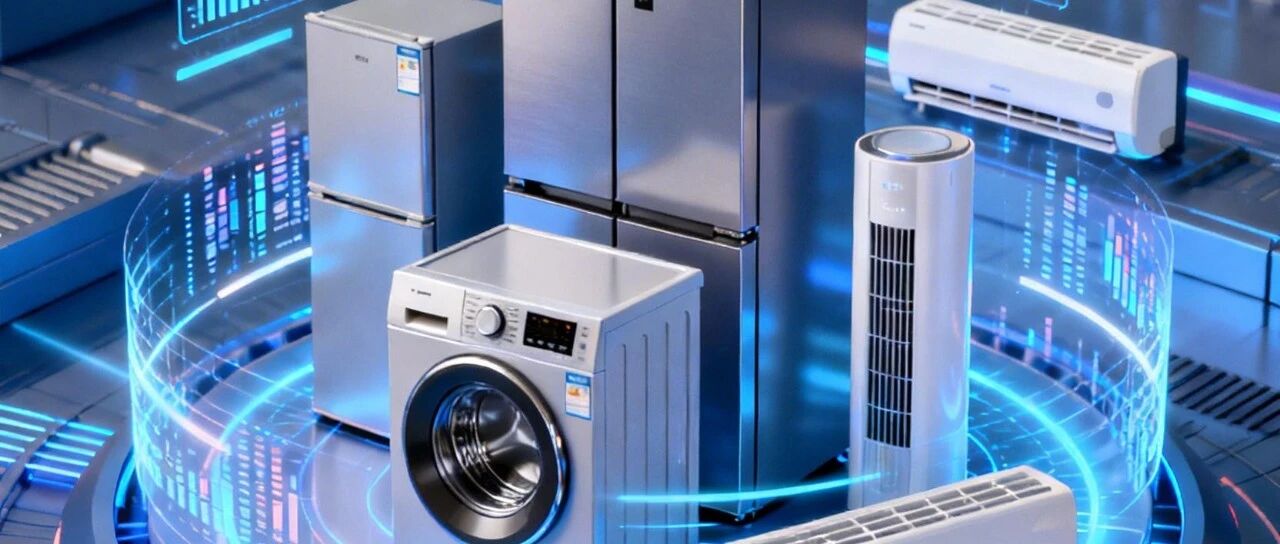
数码和智能产品购新补贴

Search documents
济南将启动新一轮家电数码补贴活动
Qi Lu Wan Bao· 2026-01-01 16:25
Core Viewpoint - The Jinan Municipal Bureau of Commerce has announced the initiation of a new round of subsidies for the replacement of old home appliances and the purchase of new digital and smart products in 2026, following national guidelines [1][2]. Group 1: Subsidy Details - The subsidy program includes two main categories: home appliances and digital/smart products [1]. - For home appliances, consumers purchasing energy-efficient refrigerators, washing machines, televisions, air conditioners, computers, or water heaters will receive a subsidy of 15% of the product's sales price, capped at 1,500 yuan per item, with a limit of one item per category per consumer [1]. - For digital and smart products, consumers purchasing mobile phones, tablets, smartwatches, or smart glasses (with a sales price not exceeding 6,000 yuan) will also receive a subsidy of 15% of the product's sales price, capped at 500 yuan per item, with a limit of one item per category per consumer [1]. Group 2: Program Timeline - The start date for the subsidy program will be announced on the Jinan Municipal Bureau of Commerce's official website, while the program will conclude on December 31, 2026 [1].
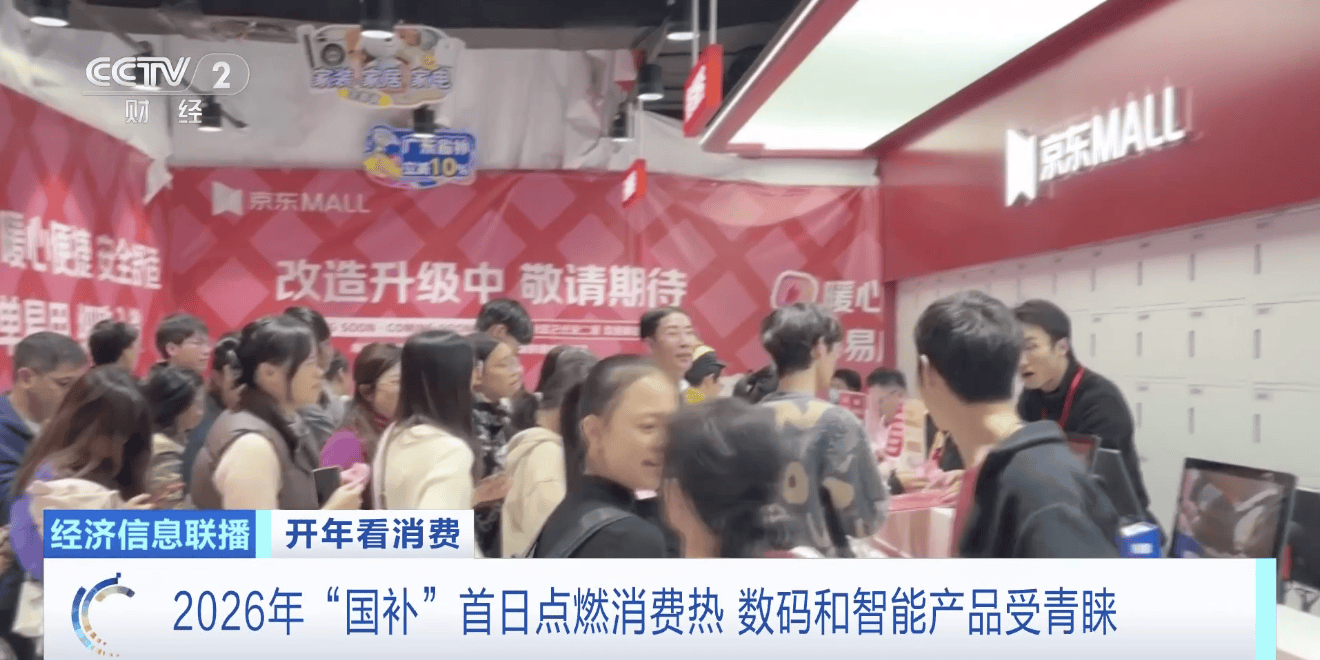
2026年“国补”首日点燃消费热 数码和智能产品受青睐
Sou Hu Cai Jing· 2026-01-01 15:11
Core Viewpoint - The launch of the 2026 "National Subsidy" program for replacing old appliances has generated significant consumer interest, with increased foot traffic in retail stores across the country [5][9]. Group 1: National Subsidy Program Details - The 2026 "National Subsidy" program officially began on January 1, 2026, with the first order completed in Guangzhou [1][3]. - The program offers subsidies for purchasing energy-efficient home appliances and digital products, including refrigerators, washing machines, televisions, air conditioners, water heaters, computers, smartphones, tablets, smartwatches, and smart glasses [7]. - The subsidy is set at 15% of the final sales price after discounts, with a maximum of 1500 yuan for home appliances and 500 yuan for digital products [7]. Group 2: Consumer Response and Sales Impact - There was a notable increase in customer traffic at electronics stores nationwide, indicating strong consumer interest in the subsidy program [5]. - On the first day of the subsidy program, sales increased by 175% compared to the daily average sales in December 2025, with cities like Beijing, Chengdu, Shanghai, Chongqing, and Guangzhou being the most active in terms of consumption [9].

商务部:将指导各地抓紧细化制定2026年本地区家电以旧换新、数码和智能产品购新落实举措
Di Yi Cai Jing· 2025-12-31 10:23
Core Viewpoint - The Ministry of Commerce is implementing a new policy for the recycling and subsidy of home appliances and digital products in 2026, aiming to enhance consumption, promote transformation, and benefit people's livelihoods, following significant achievements in 2025 [1] Group 1: Policy Implementation - In 2025, the Ministry of Commerce, along with various regions and departments, successfully implemented the recycling and subsidy policy for home appliances and digital products, resulting in over 220 million units sold and sales exceeding 700 billion yuan, benefiting more than 160 million people [1] - The new policy is designed to optimize the implementation of the "two new" policies, focusing on the positive impact of recycling policies on people's livelihoods and consumption [1] Group 2: Future Actions - The Ministry of Commerce will collaborate with relevant departments to guide local governments in formulating specific measures for the implementation of the recycling and subsidy policy for home appliances and digital products [1] - The goal is to ensure that the policy is effectively executed and delivers tangible results as soon as possible [1]
最新部署!关于2026年家电以旧换新、数码和智能产品购新补贴
Zheng Quan Ri Bao Wang· 2025-12-31 07:28
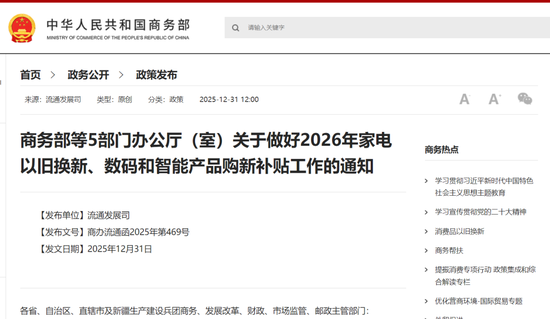
Core Viewpoint - The Ministry of Commerce and other departments have issued a notification regarding the implementation of subsidies for the replacement of old home appliances and the purchase of new digital and smart products starting January 1, 2026, aimed at promoting consumer spending and supporting the retail sector [1][2]. Group 1: Subsidy Details - The subsidy applies to six categories of home appliances (refrigerators, washing machines, televisions, air conditioners, water heaters, and computers) and four categories of digital and smart products (mobile phones, tablets, smartwatches, and smart glasses) [1]. - The subsidy standard is set at 15% of the final sales price after discounts, with a maximum subsidy of 1,500 yuan for home appliances and 500 yuan for digital and smart products, limited to one item per category per person [1]. Group 2: Implementation and Funding - Local authorities are required to develop a scientific plan for the use and disbursement of subsidy funds, ensuring a balanced monthly usage and smooth transitions between weeks and months [2]. - The notification encourages the use of pre-allocated and rolling disbursement methods to simplify the funding approval process and alleviate the financial burden on participating businesses [2]. Group 3: Supervision and Compliance - Strengthened supervision and management measures are mandated, including the establishment of a monitoring mechanism for the use of subsidy funds [3]. - Non-compliance with subsidy requirements will lead to immediate corrective actions, including the suspension of participation qualifications and potential legal consequences for violations [3]. - The notification emphasizes the need for a healthy competitive environment and the prevention of price wars among brands in the home appliance and mobile phone sectors [3].
品类、范围和标准明确!2026年这些产品享受补贴
Zhong Guo Xin Wen Wang· 2025-12-31 06:31
Core Points - The Chinese government has announced a subsidy program for the purchase of certain home appliances and digital products starting January 1, 2026, aimed at promoting consumer spending and supporting the economy [1][2]. Group 1: Subsidy Categories and Standards - The subsidy will apply to six categories of home appliances: refrigerators, washing machines, televisions, air conditioners, water heaters, and computers, all of which must meet a 1st-level energy or water efficiency standard [2] - Additionally, four categories of digital products, including smartphones, tablets, smartwatches (bands), and smart glasses, with a single item price not exceeding 6000 yuan, will also be eligible for subsidies [2] - The subsidy amount will be 15% of the final sales price after discounts, with a maximum of 1500 yuan for home appliances and 500 yuan for digital products per item [2] Group 2: Support for Retail Development - Local authorities are encouraged to implement the subsidy program effectively, utilizing both online and offline sales channels to enhance consumer experience [3] - There is a focus on supporting physical retail stores, including brand specialty stores and professional shops, to maximize their potential in driving consumer spending [3] Group 3: Rural Consumer Access - Measures will be taken to ensure that rural residents, especially in remote areas, can access the subsidy program through increased offline retail presence and online channel guidance [4] - The program will support local commercial centers and encourage large supermarkets and specialty stores to reach rural markets through various outreach methods [4] Group 4: Policy Implementation Optimization - Local governments are required to publish and update the list of participating businesses and ensure compliance with regulations to maintain the integrity of the subsidy program [5] - The program will support various payment methods and allow consumers to change their payment channels if necessary [5] Group 5: Sales Regulation of Subsidized Products - Businesses participating in the subsidy program must adhere to fair pricing practices and provide transparent pricing information to consumers [6] - There are strict prohibitions against price inflation prior to subsidies and mandatory bundling of non-subsidized products [6] Group 6: Funding and Payment Management - Local authorities are tasked with creating a balanced subsidy fund usage plan and ensuring timely disbursement of funds to eligible businesses [7] - The program allows for flexible funding disbursement methods to alleviate financial pressure on participating businesses [7] Group 7: Digital Monitoring and Risk Management - There will be enhanced data collection and monitoring of subsidy products to ensure compliance and prevent fraudulent activities [8] - The use of big data and AI technologies will be employed to detect and prevent irregular transactions [8] Group 8: Logistics and Delivery Management - Delivery companies are required to manage the distribution of subsidized products carefully to prevent fraud and ensure accurate delivery [10] - Monitoring of delivery addresses for unusual patterns will be implemented to detect potential abuse of the subsidy program [10] Group 9: Waste Recycling System Improvement - The program encourages the establishment of a robust recycling system for old appliances, promoting a one-stop service for consumers [11] - Collaboration between sales, production, and recycling companies is encouraged to facilitate the exchange of old for new appliances [11] Group 10: Supervision and Compliance - Local authorities must strengthen oversight and establish mechanisms for monitoring the use of subsidy funds [12] - Violations of the subsidy program will result in penalties, including the suspension of participation and recovery of funds [13] Group 11: Public Awareness and Engagement - There will be efforts to promote the subsidy program widely to increase public awareness and participation [14] - Financial institutions are encouraged to provide support to businesses involved in the subsidy program, enhancing their operational capabilities [14]
2026年家电以旧换新:兼顾售新与收旧
Xin Hua She· 2025-12-31 05:45
Group 1 - The Ministry of Commerce and other departments issued a notice on December 31 regarding the implementation of a subsidy program for replacing old home appliances and purchasing new digital and smart products in 2026 [1] - The notice emphasizes the need for participating businesses to provide a one-stop service for selling new appliances and collecting old ones, while also encouraging promotional activities that offer discounts to consumers who trade in old products [1] - The policy aims to enhance the participation of rural residents, especially in remote areas, by ensuring that they can access the subsidy program and encouraging various commercial entities to extend their services to these regions [1] Group 2 - Starting from January 1, 2026, consumers will receive a subsidy of 15% off the final sales price for purchasing specific energy-efficient home appliances and digital products, with a cap of 1,500 yuan for home appliances and 500 yuan for digital products [2] - The eligible products include six categories of home appliances such as refrigerators, washing machines, televisions, air conditioners, water heaters, and computers, as well as four categories of digital products like smartphones and smartwatches, with a price limit of 6,000 yuan per item [2]
六类家电四类数码智能产品2026年起享购新补贴
Sou Hu Cai Jing· 2025-12-31 05:31
Group 1 - The Ministry of Commerce, National Development and Reform Commission, Ministry of Finance, State Administration for Market Regulation, and State Post Bureau jointly issued a notice regarding the implementation of a new subsidy program for replacing old home appliances and purchasing new digital and smart products starting January 1, 2026 [1][3] - The subsidy program includes six categories of home appliances: refrigerators, washing machines, televisions, air conditioners, water heaters, and computers, which must meet first-level energy efficiency or water efficiency standards to qualify for subsidies [3] - Consumers can receive a subsidy of 15% of the final sales price after all discounts for eligible products, with a cap of 1,500 yuan for home appliances and 500 yuan for digital and smart products [3]
最高补贴1500元,品类、范围和标准明确!2026年这些家电享受补贴
Xin Lang Cai Jing· 2025-12-31 05:19
Core Viewpoint - The Ministry of Commerce and other departments have issued a notice regarding the implementation of a subsidy program for the replacement of old home appliances and the purchase of new digital and smart products starting January 1, 2026, aimed at boosting consumer spending and supporting retail development. Group 1: Subsidy Categories and Standards - The subsidy will apply to six categories of home appliances (refrigerators, washing machines, televisions, air conditioners, water heaters, and computers) that meet energy efficiency or water efficiency standards, as well as four categories of digital and smart products (mobile phones, tablets, smartwatches, and smart glasses) with a single sales price not exceeding 6,000 yuan. The subsidy will be 15% of the final sales price after discounts, with a maximum of 1,500 yuan for home appliances and 500 yuan for digital products per item [2][15]. Group 2: Support for Retail Development - Local authorities are encouraged to implement the subsidy program effectively by leveraging both online and offline sales channels, enhancing the potential of physical retail stores, and creating diverse consumer experiences to stimulate local consumption [16]. Group 3: Rural Consumer Access - Measures will be taken to ensure that rural residents, especially those in remote areas, can access the subsidy program. This includes increasing offline retail presence in rural areas and encouraging online platforms to cater to rural consumers [3][17]. Group 4: Policy Implementation Optimization - Local governments must regularly update and adjust the list of participating businesses, ensuring compliance with regulations. Businesses found violating rules will be disqualified from the subsidy program. The program will support various payment methods to enhance consumer choice [4][18]. Group 5: Sales Regulation of Subsidized Products - Participating businesses must adhere to fair pricing practices, maintain transparency in pricing, and provide proper invoices. They are prohibited from raising prices before offering subsidies or bundling non-subsidized products with subsidized ones [5][20]. Group 6: Accelerating Fund Disbursement - Local authorities are tasked with creating a balanced plan for the use and disbursement of subsidy funds, ensuring timely payments to eligible businesses and reducing their financial burden [6][21]. Group 7: Digital Monitoring and Warning Systems - There will be an emphasis on collecting necessary information about subsidized products and utilizing technology for monitoring transactions to prevent fraud and ensure the authenticity of consumer identities [8][22]. Group 8: Compliance of Participating Businesses - Businesses must operate legally and ethically, ensuring the protection of consumer rights and timely reporting of product data to relevant platforms [9][23]. Group 9: Logistics and Delivery Management - Delivery companies will be required to manage the distribution of subsidized products carefully, monitoring for unusual patterns that may indicate fraud [10][24]. Group 10: Waste Appliance Recycling System - The program will promote the establishment of a recycling system for old appliances, encouraging businesses to offer one-stop services for exchanging old products for new ones [11][25]. Group 11: Strengthening Supervision and Management - There will be a coordinated effort among departments to monitor the use of subsidy funds and enforce compliance with regulations, with strict penalties for violations [12][27]. Group 12: Creating a Positive Environment - Efforts will be made to raise awareness of the subsidy program and encourage financial institutions to support participating businesses, while also providing channels for public feedback and reporting of violations [13][28].
最高补贴1500元,品类、范围和标准明确!2026年这些家电享受补贴
21世纪经济报道· 2025-12-31 05:04
Group 1 - The article outlines a subsidy policy effective from January 1, 2026, for consumers purchasing energy-efficient home appliances and certain digital products, providing a 15% subsidy on the final sales price, with specific caps on the amount per item [1] - The policy aims to support the development of physical retail by promoting trade-in programs for old appliances and encouraging diverse sales channels, both online and offline [2] - It emphasizes ensuring that rural residents can access the subsidy by increasing offline retail presence and guiding online channels to serve rural areas effectively [3] Group 2 - The implementation of the subsidy policy will be optimized by regularly updating the list of participating businesses and ensuring compliance with legal standards, with strict penalties for violations [4] - There are guidelines for the sale of subsidized products, requiring transparency in pricing and prohibiting practices like price inflation before subsidies [5] - The article stresses the importance of timely fund allocation and auditing processes to alleviate financial pressure on participating businesses [6] Group 3 - Digital monitoring systems will be established to track subsidy product information and prevent fraudulent activities, utilizing big data and AI for anomaly detection [7] - Participating businesses must adhere to ethical practices and protect consumer information, ensuring data integrity and compliance with subsidy regulations [8] - Logistics and delivery management will be enhanced to prevent fraud, with a focus on monitoring unusual delivery patterns [9] Group 4 - The article discusses the need for a robust recycling system for old appliances, encouraging businesses to offer one-stop services for new purchases and old appliance recycling [10] - It highlights the importance of supervisory measures to ensure compliance with subsidy regulations, including penalties for non-compliance and illegal activities [11] - A positive public atmosphere will be fostered through widespread promotion of the subsidy policy and the establishment of complaint channels for consumers [13]
2026年家电数码以旧换新补贴最新安排来了
第一财经· 2025-12-31 04:36
Core Viewpoint - The article discusses the implementation of a subsidy program for the replacement of old home appliances and the purchase of new digital and smart products, effective from January 1, 2026, aimed at promoting consumer spending and supporting the retail sector. Group 1: Subsidy Details - The subsidy applies to six categories of home appliances and four categories of digital and smart products, with a subsidy rate of 15% of the final sale price after discounts, capped at 1500 yuan for home appliances and 500 yuan for digital products per item [1][2] - Each individual can receive a subsidy for one item per category, with specific price limits for eligible products [1] Group 2: Support for Retail Development - Local authorities are encouraged to leverage both online and offline sales channels to implement the subsidy policy effectively, enhancing the potential of physical retail stores [1] - The initiative aims to stimulate local consumption and support the development of various retail formats, including brand specialty stores and professional shops [1] Group 3: Rural Consumer Access - Measures will be taken to ensure that rural residents, especially in remote areas, can access the subsidy program through increased offline retail presence and online channel guidance [1] - The program encourages large supermarkets and specialty stores to penetrate rural markets using mobile sales units and local markets [1] Group 4: Policy Implementation Optimization - Local governments are required to maintain updated lists of participating businesses and ensure compliance with legal standards, with penalties for violations [2] - The subsidy application process will support various payment methods and allow for flexibility in unbinding and reassigning subsidy qualifications [2] Group 5: Product Sales Regulation - Participating businesses must adhere to fair pricing practices, publicly disclose pricing information, and avoid practices like price inflation before subsidies [2] - Strict invoicing requirements are established to ensure transparency in transactions related to subsidized products [2] Group 6: Funding and Monitoring - A structured plan for subsidy fund usage and disbursement is mandated, with an emphasis on timely payments to reduce financial pressure on participating businesses [4] - Digital monitoring systems will be implemented to track transactions and prevent fraudulent activities, ensuring the integrity of the subsidy program [4] Group 7: Logistics and Recycling Management - Enhanced management of logistics and delivery services is necessary to prevent fraud in the distribution of subsidized products [5] - The establishment of a robust recycling system for old appliances is encouraged, promoting a one-stop service for consumers [5] Group 8: Supervision and Compliance - A collaborative approach among departments is essential for effective supervision of subsidy fund usage, with strict penalties for non-compliance [6] - Continuous monitoring and enforcement of regulations are crucial to maintain the integrity of the subsidy program and protect consumer rights [6] Group 9: Public Awareness and Support - Broad promotion of the subsidy policy is necessary to increase public awareness and participation, with financial institutions encouraged to support participating businesses [7] - Establishing channels for public feedback and reporting violations is vital for maintaining transparency and accountability in the subsidy program [7]