日本修宪

Search documents
高市早苗的两个挑战和三个冲动
Jing Ji Guan Cha Wang· 2026-02-09 07:48
Core Viewpoint - The article discusses the significant electoral victory of Japan's Prime Minister, Sanae Takaichi, and the implications of her leadership on Japan's political landscape, particularly focusing on her challenges and ambitions regarding constitutional amendments, nuclear policy, and Taiwan Strait issues. Political Landscape - On February 8, 2026, Takaichi's Liberal Democratic Party (LDP) won 316 seats in the House of Representatives, surpassing the previous 198 seats and achieving a two-thirds majority necessary for constitutional amendments [1] - This victory marks the best performance for the LDP since its establishment in 1955, indicating a return to a dominant one-party system in Japan [1] Challenges Faced - Takaichi faces two main challenges: political and economic [2] - The political challenge was the lack of a majority in the previous government, which she overcame by dissolving the House and calling for new elections [2] - The economic challenge includes stagnant GDP growth, a government debt exceeding 250% of GDP, and rising consumer prices alongside declining real wages [4] Economic Strategy - Takaichi's economic strategy involves aggressive fiscal policies, including continued borrowing, maintaining low interest rates, and investing in strategic industries, which may be termed "Takaichi Economics" [4] - This approach is seen as a double-edged sword, potentially stimulating growth but also risking financial disaster [4] Constitutional Amendments - A hidden ambition of Takaichi is to amend the constitution, specifically to abolish the pacifist Article 9, which prohibits Japan from maintaining military forces for warfare [5] - Public support for constitutional amendments has risen, with 68% of respondents in a 2024 survey favoring changes, the highest since the survey began in 2018 [5] Nuclear Policy - Takaichi's second hidden ambition relates to nuclear policy, as there are calls from right-wing factions in Japan to reconsider the "Three Non-Nuclear Principles" [7] - Although she has not explicitly advocated for nuclear armament since taking office, her associates continue to push for Japan to consider nuclear capabilities [7] Taiwan Strait Issues - Takaichi's third hidden ambition involves the Taiwan Strait, where she has suggested that Japan might intervene militarily if China takes non-peaceful actions regarding Taiwan [8] - Her statements have drawn strong protests from China, yet she has not retracted her comments, indicating a persistent inclination to engage in Taiwan-related issues [11]
陈冰:高市早苗“政治豪赌”能够得逞的五大关键因素
Xin Lang Cai Jing· 2026-02-08 15:29
Core Viewpoint - The recent Japanese election results indicate a significant victory for the ruling Liberal Democratic Party (LDP) and the Japan Innovation Party, with implications for political stability and policy direction in Japan, particularly in foreign relations with China and the United States [1][2]. Group 1: Election Results and Implications - The ruling coalition of the LDP and the Japan Innovation Party has secured 273 seats, with expectations to surpass the critical threshold of 310 seats in the House of Representatives [1][2]. - Four key seat thresholds are identified: 233 for government continuity, 243 for a stable majority, 261 for an absolute stable majority, and 310 for constitutional amendment capabilities [1]. Group 2: Political Strategy and Leadership - The term "political gamble" is used to describe the election strategy, where leaders seek voter support to legitimize their policies amid challenges [5]. - High-profile political figures, such as former UK Prime Minister Theresa May, illustrate the risks of early elections, contrasting with the successful gamble of Prime Minister Kishi, who capitalized on unexpected timing and popular policies [6]. Group 3: Policy Focus and Challenges - High's policies, including a $135 billion economic stimulus and a two-year suspension of an 8% consumption tax on food, have garnered public support but face criticism for lack of detail and practicality [7][9]. - Key challenges for the new administration include stagnant wages, a weak yen, and rising living costs, which may quickly diminish the initial electoral victory's momentum [9]. Group 4: Foreign Relations Outlook - The election outcome may provide an opportunity for High to improve relations with China, as Japan's economy is closely tied to China's supply chain [10]. - In contrast, relations with the U.S. may strengthen, particularly in military cooperation, as High aims to enhance Japan's defense capabilities and constitutional amendments regarding the Self-Defense Forces [10][11]. - The future of Japan-China relations will hinge on High's approach to Taiwan, with potential for improvement or deterioration based on her stance on Taiwan-related issues [11].


刘和平:一旦高市压倒性胜选,日本军国主义复活将再无障碍
Xin Lang Cai Jing· 2026-02-07 15:37
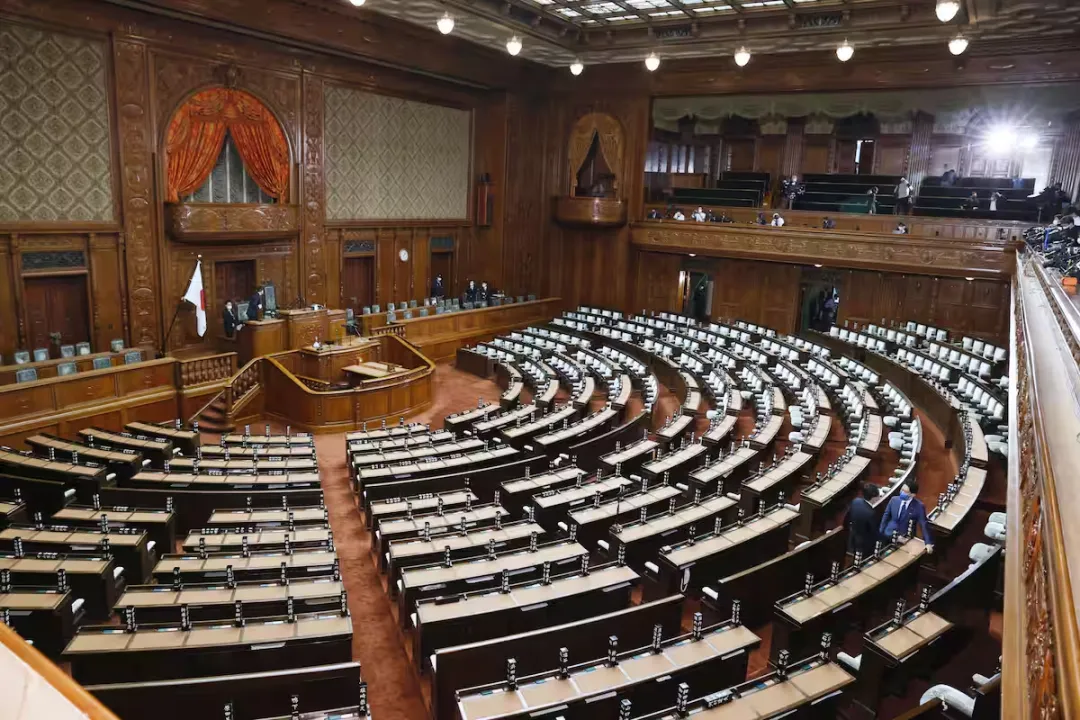
Group 1 - The core observation of the upcoming Japanese House of Representatives election is that the ruling coalition led by the Liberal Democratic Party (LDP) and the Japan Innovation Party is expected to surpass the majority threshold, with the real question being how many seats they will win, particularly whether they will achieve a two-thirds majority [2][3] - Achieving a two-thirds majority would allow Prime Minister Kishi Nobuo to push for amendments to Japan's "Peace Constitution," indicating a significant shift in Japan's political landscape and public sentiment towards constitutional reform [2][3] - The election is not only crucial for Kishi's political future but also for Japan's national trajectory and the future dynamics of the Asia-Pacific region [3] Group 2 - If the ruling coalition secures a significant victory, it could further entrench the LDP's dominance in Japanese politics, undermining hopes for a competitive multi-party system that emerged during the last election when the LDP lost its majority [5][6] - The LDP's historical dominance, particularly under a right-wing agenda, raises concerns about the long-term implications for Japan's political ecology and the potential resurgence of militaristic nationalism [6] - The support from U.S. President Trump for Kishi ahead of the election suggests a strategic alignment between the U.S. and Japan's right-wing politics, potentially reinforcing military alliances and shifting regional power dynamics [8][9] Group 3 - The potential for a strong LDP victory could signify a shift in U.S. strategy, with Trump possibly looking to Japan to take a more assertive role in countering China, thereby allowing the U.S. to focus on domestic issues [11][12] - The removal of barriers to constitutional reform in Japan could lead to a revival of militarism, with the possibility of heightened tensions with neighboring countries being used to rally domestic support for such changes [12]
日本民众举行集会 反对高市政权推动修宪
Yang Shi Xin Wen Ke Hu Duan· 2026-02-06 06:00
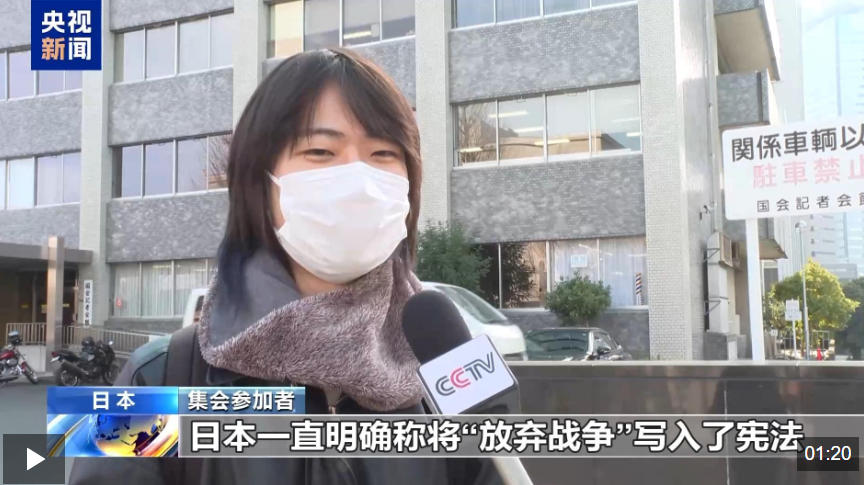
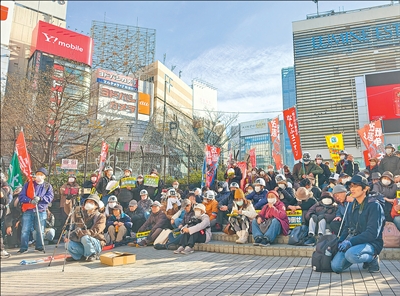
Core Viewpoint - Japanese Prime Minister Sanae Takaichi intends to amend the constitution to include the Self-Defense Forces, which has sparked public protests against the ruling party's constitutional revision efforts [2][4]. Group 1: Public Response - A gathering of Japanese citizens took place in front of the Prime Minister's residence, expressing opposition to the constitutional amendments proposed by the ruling party [2]. - Participants in the protest emphasized that Japan's constitution clearly states a commitment to "renounce war," and they believe this should guide the country's diplomatic strategy to foster good relations with neighboring countries [2]. - Concerns were raised about the government's decision to increase defense spending starting January 2027 through income tax hikes, which protesters argue will negatively impact daily life [2]. Group 2: Constitutional Amendments - The Liberal Democratic Party and the Japan Innovation Party have previously discussed amending Article 9 of the Japanese constitution and establishing emergency provisions [4]. - Protesters claim that the Takaichi administration's aim to amend the constitution is a pathway to enable war, which they strongly oppose [4]. - The proposed "emergency provisions" are viewed as a means to restrict citizens' rights once the cabinet declares a state of emergency, raising fears about potential limitations on public discourse and the possibility of war [6].
挑衅行径不可接受 扩武无法换来和平(国际视点)
Ren Min Ri Bao· 2026-02-05 02:29
Core Viewpoint - The recent protests in Japan against Prime Minister Kishi's remarks on Taiwan highlight significant public concern regarding Japan's military expansion and its impact on Sino-Japanese relations [2][3]. Group 1: Protests and Public Sentiment - A gathering organized by the "Inheritance and Development of the Murayama Statement" in Tokyo condemned Prime Minister Kishi's remarks on Taiwan, asserting they severely damage Sino-Japanese relations and escalate regional tensions [2]. - Participants, including former Prime Minister Yukio Hatoyama, criticized Kishi's statements as a deviation from the Japan-China Joint Statement, emphasizing that Taiwan is an internal matter for China [2][3]. - Local citizens expressed that Kishi's remarks pose a significant danger and reflect a serious historical misunderstanding, labeling them as a provocation against China [3]. Group 2: Political Implications - The protest leaders indicated that Kishi's statements serve as a pretext for Japan's intervention in the Taiwan Strait, influenced by extreme right-wing factions within the ruling party [3]. - Kishi's recent decision to dissolve the House of Representatives and call for early elections is viewed as an attempt to solidify his political base to further his militaristic agenda [4]. - Concerns were raised that if Kishi aligns with other right-wing parties to secure a two-thirds majority in the Diet, it could lead to dangerous constitutional amendments, particularly regarding Japan's pacifist constitution [4][5]. Group 3: Economic Consequences - The deterioration of Sino-Japanese relations is expected to have severe economic repercussions, including a decline in Chinese tourists to Japan and potential disruptions in key material imports [6]. - Analysts warn that ongoing populist policies could push Japan towards economic collapse, with the depreciation of the yen and rising long-term bond rates exacerbating the situation [6].
日本首相扬言将自卫队“入宪” 外交部:敦促日方深刻反省侵略历史
Xin Lang Cai Jing· 2026-02-04 19:29
"我们注意到上述消息。"林剑表示,二战期间,日本军国主义给地区和世界带来了深重灾难。《开罗宣 言》《波茨坦公告》和《日本投降书》等具有国际法效力的文件,明确了日本作为战败国的国际义务, 这也是日本重返国际社会的政治和法律前提。正因如此,日本修宪问题一直受到国际社会和亚洲邻国高 度关注。 "我们敦促日方深刻反省侵略历史,倾听国内民众和平反战的声音,坚持走和平发展道路,以实际行动 取信于亚洲邻国和国际社会。"林剑说。 文/本报记者 董鑫 日本首相高市早苗近日声称有意将自卫队写入宪法。对此,外交部发言人林剑昨日表示,中方敦促日方 深刻反省侵略历史,倾听国内民众和平反战的声音,坚持走和平发展道路,以实际行动取信于亚洲邻国 和国际社会。 当日例行记者会上,有记者问:本周早些时候,日本首相高市早苗在竞选活动上称,她有意修改宪法以 明确承认日本自卫队。民调显示,高市早苗有望获得多数席位。高市本人也毫不掩饰其想要加强日本军 事力量的意图。中方认为这对中国和本地区意味着什么? ...
外交部:敦促日本以实际行动取信亚洲邻国和国际社会
Yang Shi Xin Wen· 2026-02-04 07:39
林剑表示,我们注意到了上述消息。二战期间,日本军国主义给地区和世界带来了深重灾难。《开罗宣 言》《波茨坦公告》和《日本投降书》等具有国际法效力的文件,明确了日本作为战败国的国际义务, 这也是日本重返国际社会的政治和法律前提。正因如此,日本的修宪问题一直受到国际社会和亚洲邻国 的高度关注。 2月4日,外交部发言人林剑主持例行记者会。有记者就日本修宪提问。 (总台央视记者 申杨) 我们敦促日方深刻反省侵略历史,倾听国内民众和平反战的声音,坚持走和平发展道路,以实际行动取 信亚洲邻国和国际社会。 ...
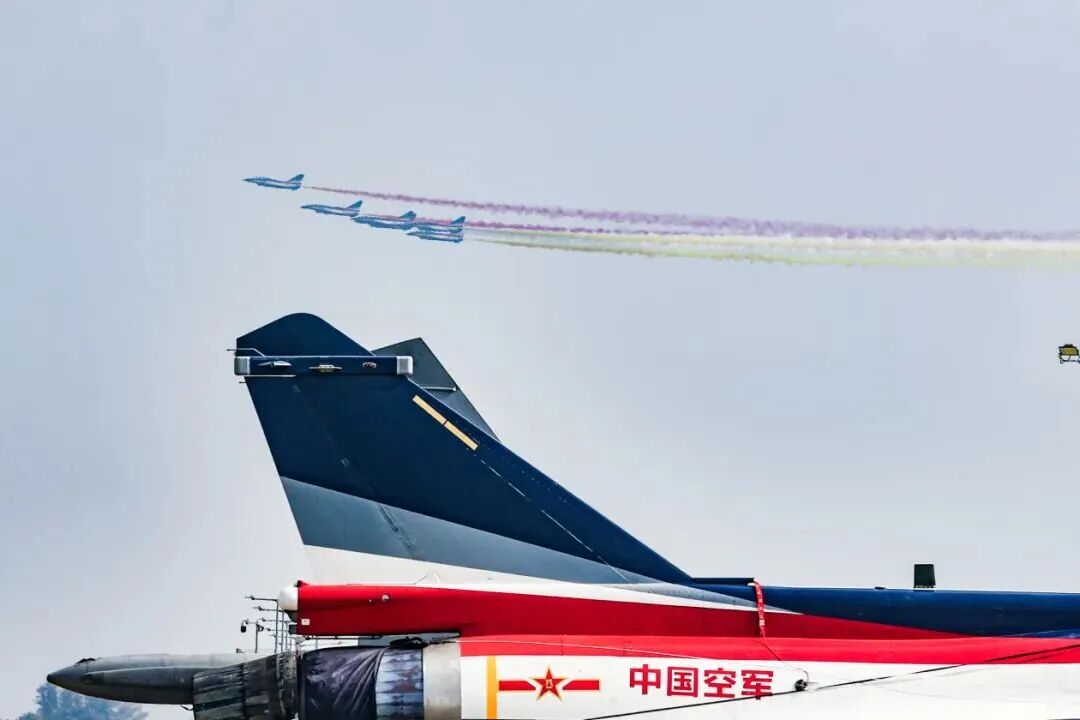
歼-10C亮相新加坡!
Xin Lang Cai Jing· 2026-02-04 05:07
Core Viewpoint - The Singapore Airshow showcases significant Chinese aerospace advancements, with the J-10C and J-35A aircraft drawing considerable attention, highlighting China's growing influence in the global aviation market [1][2][4]. Group 1: Event Overview - The 10th Singapore Airshow commenced on the 3rd of this month, featuring over a thousand companies from more than 50 countries, with an expanded exhibition area [2]. - The Chinese Air Force's August 1st Aerobatic Team made a notable return after six years, performing complex maneuvers with the J-10C fighter jet [2][3]. - The J-35A model was prominently displayed, alongside commercial aircraft like the C919 and C909, marking a significant presence of Chinese-made aircraft at the event [1][4]. Group 2: Aircraft Performance and Features - The J-10C demonstrated advanced maneuverability and operational capabilities, which are critical in modern aerial combat scenarios, including beyond-visual-range engagements [3][8]. - The J-35A is characterized as a multi-role stealth fighter with capabilities for air, ground, and naval operations, emphasizing its advancements in stealth, information technology, and automation [4][15]. - The C919 is positioned as a potential market leader in Southeast Asia, being the only single-aisle jet to perform at the airshow this year, aiming to capture a larger market share in the region [3][8]. Group 3: Market Implications - The J-35A is viewed as a cost-effective alternative to the F-35, with optimistic export prospects due to China's stable international relations and the aircraft's fully indigenous development [5][15]. - The Asia-Pacific region is projected to experience the fastest growth in air travel, driven by China and India, with passenger volumes expected to increase by 7.3% by 2026 [3][8]. - The C909 aircraft has already been operational in Indonesia, Laos, and Vietnam, with over 20 routes established, indicating a successful entry into the regional aviation market [3][8].
图谋让自卫队“入宪”,高市遭猛批
Xin Lang Cai Jing· 2026-02-04 05:07
Core Viewpoint - The upcoming Japanese House of Representatives election on October 8 is marked by Prime Minister Fumio Kishida's expressed desire to amend the constitution to include the Self-Defense Forces, which has sparked significant public criticism due to existing constitutional restrictions on military forces [1][2][3]. Group 1: Constitutional Amendment Intent - Prime Minister Kishida articulated the need to amend the constitution to recognize the Self-Defense Forces, emphasizing the importance of their dignity and strength [1][2]. - Kishida indicated that to advance discussions on constitutional amendments, the ruling party must increase its number of seats in the House of Representatives and secure the position of the chair of the Constitutional Review Committee [1][3]. Group 2: Legislative Challenges - The proposal for constitutional amendment faces procedural hurdles, as it requires support from more than two-thirds of all members in both houses of the National Diet [1][2]. - Following the ruling party's poor performance in the 2024 House of Representatives election, even with support from parties like the Japan Innovation Party and the Democratic Party for the People, the total number of pro-amendment lawmakers is unlikely to reach the required two-thirds [1][3]. Group 3: Opposition and Criticism - Opposition leaders, including Noda Yoshihiko from the Center-Left Reform Coalition, reaffirmed their commitment to the "Three Non-Nuclear Principles," advocating for a nation that does not provoke or engage in war [1][2]. - Criticism from local politicians, such as Yasunori Yamazaki from the Tokyo Metropolitan Assembly, highlighted concerns that a majority win for the ruling party could lead to aggressive military expansion and a reevaluation of the "Three Non-Nuclear Principles" [1][3]. Group 4: Regional Implications - Analysts suggest that Kishida's push for constitutional reform may serve as a political breakthrough, but it poses risks of destabilizing regional peace and security due to potential misinterpretations of historical context by right-wing factions in Japan [1][2]. - The Chinese International Studies Institute's expert emphasized that regardless of Japan's chosen path, it will bear the consequences, asserting China's confidence and capability to maintain its security and regional stability [1][3].
视频丨日本学者对政坛日益右倾化深表忧虑
Yang Shi Xin Wen Ke Hu Duan· 2026-01-20 13:32
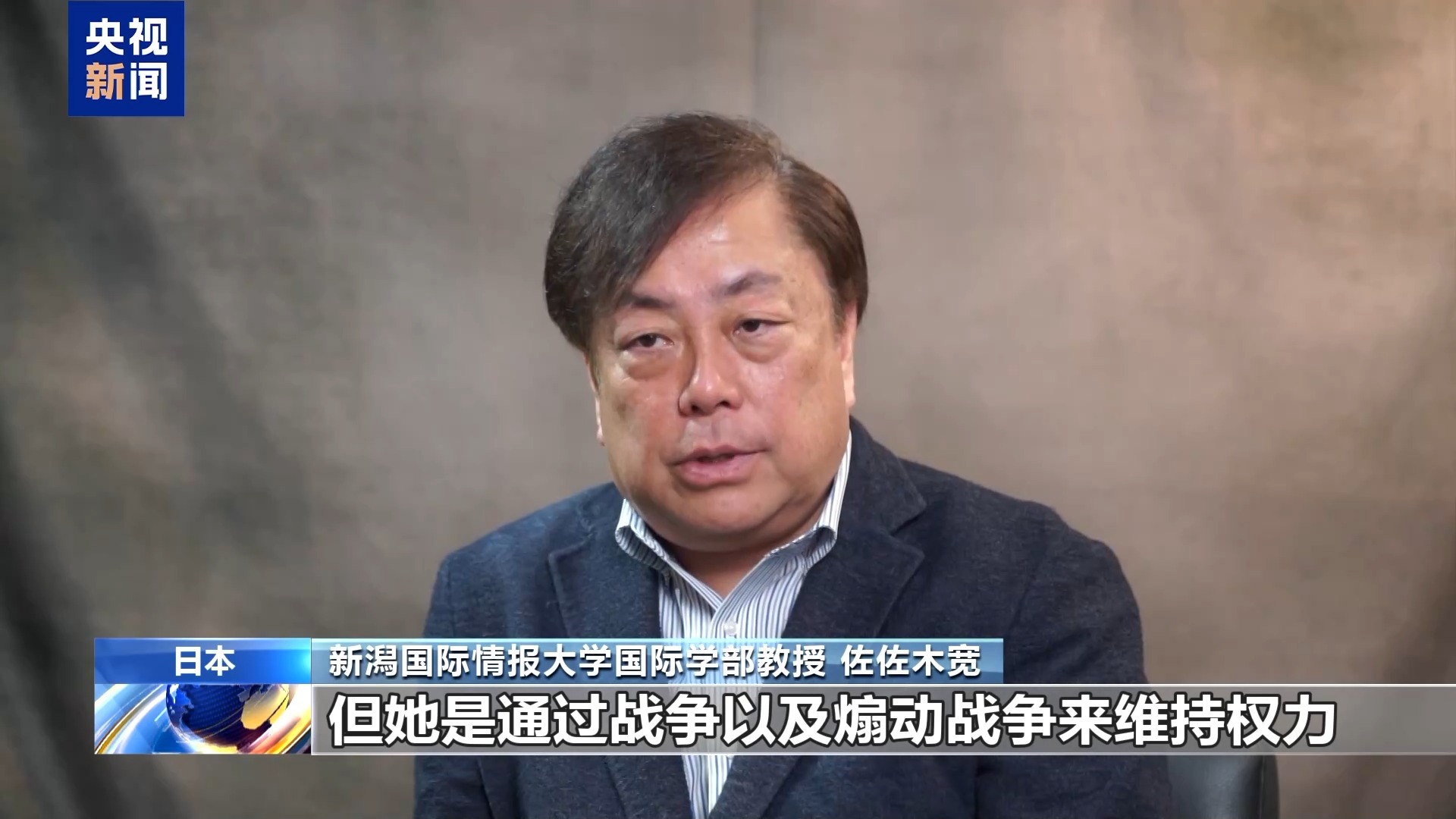
0:00 当地时间19日,日本首相高市早苗表示,将于23日解散众议院。日本学者表示,高市早苗上台以来,不仅公然发表错误言论,同时通过渲染战争危机,大幅 增加防卫费,推进修改"和平宪法",右倾化日趋严重,令人担忧。 新潟国际情报大学国际学部教授 佐佐木宽:她认为只要强硬表态"绝不撤回",国民就会支持她,无能的政客靠战争来维持权力,有能力的政治家创造和 平,遗憾的是虽然高市是日本首相,但她是通过战争以及煽动战争来维持权力,所以我认为她是无能的。 佐佐木宽还指出,在物价持续上涨、民众生活压力不断加重的背景下,高市政权却决定解散众议院,将重心放在政治博弈和权力运作上,这种罔顾民生、只 考虑自身政治盘算的做法,使日本政治的未来走向令人深感忧虑。 新潟国际情报大学国际学部教授 佐佐木宽:内阁成立三个多月 ,实际上她还什么都没有做。如果今后以经济政策为中心,却看不到什么成果,那么她的支 持率很可能会迅速下降。现在党内基础薄弱,又是参众两院的少数执政党,在这种情况下,她只能拼命吸收社会舆论的右翼及不安情绪,勉强维持权力。为 了维持她自己的权力,可能在自民党内部也没有充分沟通,几乎是她个人决定解散众议院,连自民党的国会议员们都 ...