普惠托育

Search documents
广州托育服务实现“一街(镇)一普惠”全覆盖 托位总数超12万个
Nan Fang Ri Bao Wang Luo Ban· 2026-01-14 08:40
Core Insights - Guangzhou has over 120,000 childcare spots available, with a ratio of more than 5.8 spots per 1,000 residents, and 85,000 of these are inclusive childcare spots, benefiting more families [1][2] Group 1: Childcare Services Overview - The comprehensive childcare service center in Yuexiu District is designed for children aged 0-3, featuring low washbasins, age-appropriate classrooms, and soft play areas [1] - The center operates under the "one street (town) one inclusive" model, providing accessible childcare services to nearby families [1] - Professional and continuous care services are emphasized, with staff including infant care specialists, caregivers, and qualified teachers, along with community health service center doctors involved in health management [1] Group 2: Market Trends and Developments - The increasing number of dual-income families and limited elder care capabilities are driving more families to seek nearby, affordable, and professionally managed childcare institutions [2] - Guangzhou is establishing a "1+11+N" childcare service network, which includes one municipal-level and eleven district-level comprehensive childcare centers, achieving full coverage with the inclusive model [2] - The city has created seven national love childcare employers and 17 provincial-level model childcare institutions, maintaining the largest service scale in the province [2] - The Guangzhou Health Commission aims to enhance the quality and efficiency of inclusive childcare services by focusing on management standardization, quality improvement, talent development, and integration of medical and educational services [2]
南通普惠托育提质扩容 3.7万个托位守护“幼有所育”
Jiang Nan Shi Bao· 2026-01-12 23:31
Core Viewpoint - The article highlights the development and significance of inclusive childcare services in Nantong, emphasizing the establishment of a supportive environment for families with children under three years old, which is crucial for enhancing the quality of life and population growth in the region [1][2][3] Group 1: Inclusive Childcare Services - The Gu Jia Nursery in Nantong offers a "full-day service + personalized care" model, operating year-round without breaks, catering to over 50 children [1] - The nursery collaborates with local health institutions to provide regular health check-ups and community activities, enhancing children's learning experiences [1][2] - The monthly fee for care is 800 yuan, with a daily meal cost of 9 yuan, making it a cost-effective option for families [2] Group 2: Policy and Development - Inclusive childcare is a key component of Nantong's social development strategy, included in the city's priority list for three consecutive years starting in 2023 [2] - The city has established a "1+1+N" childcare service system, aiming to create a comprehensive network of childcare facilities, with 618 institutions and a capacity of 37,000 spots by the end of the 14th Five-Year Plan [3] - The proportion of inclusive childcare spots has reached 70%, with a usage rate of 50%, and the enrollment rate for children aged 0-3 has increased to 18% [3] Group 3: Safety and Regulation - Nantong has implemented a digital monitoring platform for childcare services, with 98% of institutions currently under real-time supervision, ensuring safety and transparency for parents [3] - The platform allows parents to easily access information about childcare institutions, make reservations, and learn about child-rearing practices [3]
连云港海州:托育服务提质扩容 让 “带娃难” 变 “带娃暖”
Yang Zi Wan Bao Wang· 2026-01-07 11:00
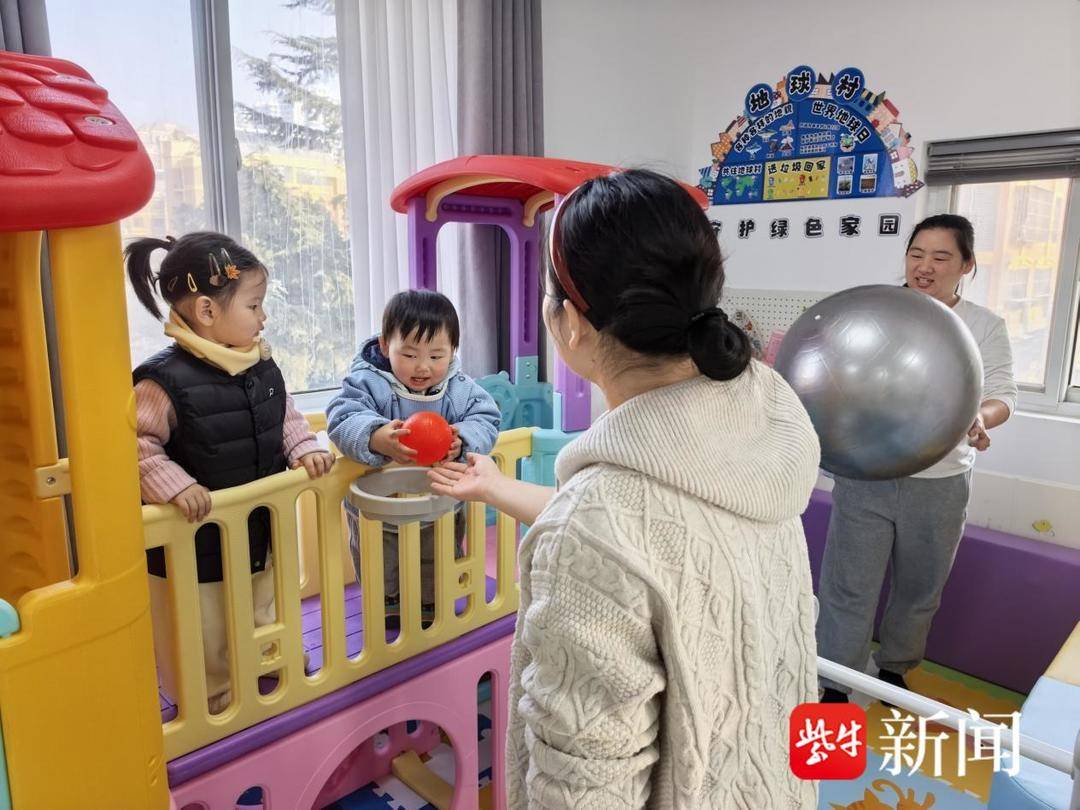
Core Insights - The newly opened childcare center in Lianyungang's Haizhou District has become a popular spot for parents seeking relief from childcare challenges, providing a space for children to play and socialize while allowing parents to manage their own tasks [3] Group 1: Development of Childcare Services - The establishment of the childcare center is part of Haizhou District's initiative to address the "one elderly, one child" social issue, aiming to alleviate the difficulties families face in childcare [3][5] - Since the implementation of the "Implementation Measures for Promoting Childcare Services for Children Under Three" in May 2021, the district has significantly improved the supply of childcare services, with 82 institutions now available, including 60 integrated childcare and education institutions and 22 pure childcare institutions [5] - The district has achieved a coverage of 4.5 childcare spots per thousand people, leading the city in the number of registered childcare institutions [5] Group 2: Infrastructure and Community Engagement - The childcare center features environmentally friendly materials and is designed with various functional spaces, including reading areas and creative play zones, to cater to different developmental needs of children [6] - The center has an indoor area of approximately 200 square meters and shares a 500 square meter public activity space, providing 20 childcare spots to ease the burden on dual-income families [6] - Haizhou District is also developing the first fully furnished childcare facility in a new residential area, expected to be completed by the end of 2026, further expanding the childcare network [6]


【西安】细微之处照见民生温度
Shan Xi Ri Bao· 2025-12-29 22:38
Group 1 - The core focus of Xi'an is to enhance the "one elderly, one child" service system as a priority for improving people's livelihoods, with a commitment to building a comprehensive childcare service network [2][4] - In 2024, Xi'an successfully applied for central government funding to support the development of inclusive childcare services, planning to establish various childcare centers within two years [2] - The first public comprehensive childcare service center in Xi'an has been established, covering an area of 2,270 square meters and providing 145 childcare spots, addressing the needs of working families [2][3] Group 2 - As of now, there are 928 childcare institutions in Xi'an, with a total of 62,600 childcare spots, and the proportion of inclusive spots stands at 37.9% [3] - The elderly population in Xi'an is projected to reach 2.5045 million by the end of 2024, accounting for 19.02% of the total population, highlighting the urgency of improving elderly care services [4] - The transformation of an old factory into a warm elderly care center demonstrates Xi'an's commitment to enhancing the quality and accessibility of elderly care services [5][6]
今年新增普惠托位近90万,国家将积极推动托育服务立法
Di Yi Cai Jing· 2025-12-26 11:03
Core Viewpoint - The Chinese government has made significant progress in improving childcare services during the "14th Five-Year Plan" period, addressing issues of accessibility and affordability in childcare, with a focus on legislative support and enhanced healthcare services for children [1][4][5]. Group 1: Childcare Service Development - Since the beginning of the "14th Five-Year Plan," nine provinces have implemented subsidy systems for childcare services, with a central government financial support of 3 billion yuan aimed at developing inclusive childcare services [1][4]. - The average price of full-day childcare has decreased by nearly 30%, alleviating the issues of "difficult and expensive childcare" [1][4]. - The number of childcare service institutions has reached 126,000, with a total of 6.66 million childcare spots available, marking a 110% increase in institutions and a 132% increase in spots since the "14th Five-Year Plan" began [3][4]. Group 2: Legislative and Policy Support - A draft law on childcare services has been submitted for review, representing a significant step in addressing family "child-rearing anxiety" through legislative measures [1][5]. - The National Health Commission is actively promoting childcare service legislation and developing supporting policies to reduce the financial burden on families [1][5]. - The government has introduced various policies to lower operational costs for childcare institutions, including tax exemptions and subsidies for service providers [3][4]. Group 3: Healthcare Integration - Approximately 80,000 childcare institutions have signed agreements with healthcare facilities to provide professional health guidance and establish health records for children [5]. - All secondary and tertiary public hospitals in China now offer pediatric services, enhancing the overall healthcare support for children [3][6]. - The government is focusing on improving pediatric service supply and addressing the shortage of pediatricians through training and incentive programs [6][8]. Group 4: Future Directions - The "15th Five-Year Plan" suggests further optimization of fertility support policies and the integration of childcare services, aiming to strengthen health services for women and children [1][2][5]. - The National Health Commission plans to continue expanding inclusive childcare service supply and improve the quality of services through a comprehensive service network [5].
北京发放育儿补贴,首批28.6万人已领每孩每月300元icon_voice_onicon_voice
Xin Lang Cai Jing· 2025-12-11 08:34
炒股就看金麒麟分析师研报,权威,专业,及时,全面,助您挖掘潜力主题机会! 针对近期备受关注的0至3岁婴幼儿育儿补贴发放问题,记者从首都"十四五"规划高质量收官系列主题新 闻发布会——全面深化改革专场上了解到,首批审核通过的28.6万人已经领取到每孩每月300元资金补 贴。 北京率先明确普惠托育价格标准及财政支持试点政策,市区财政按实际收托数为普惠托育机构发放每孩 每月1000元生均补助和每天每平方米不超过5元的租金补助,试点后普惠托育机构收费价格平均3000元 左右,是试点前市场平均价格的一半。同时,本市积极推动落实托育机构水电气热执行居民类价格优惠 政策;将托育用地纳入新修订的《北京市居住公共服务设施配置指标》,强化托育用地保障;连续3年 给予爱心托育用人单位每年每家12万元的资金支持。通过各项措施组合拳,促进了普惠托育机构的可持 续发展,同时减轻了婴幼儿家庭入托负担。 在方便可及上,本市在构建和完善以公办幼儿园托班为主渠道,社区嵌入式托育和社会化托育机构为重 要依托,单位办托为有效补充的多元供给格局基础上,大力推进托幼一体化,着力提高供给精准性,按 照就近就便原则大幅增加群众认可度高的公办幼儿园托班和社区 ...
迈向“十五五”的民生图景:就近入托 托起幸福
Ren Min Ri Bao· 2025-12-10 00:04
Core Viewpoint - The article emphasizes the development of inclusive childcare services and the integration of childcare and early education, highlighting the importance of improving related systems to support families and enhance children's development [1]. Group 1: Childcare Services - The article describes the experience of a mother, Li Jie, who enrolled her son in a childcare center, noting significant improvements in her child's communication and self-care skills after attending the center [2]. - The childcare center, Youyou Home, is recognized as an inclusive institution by the government, offering services at a cost significantly lower than hiring a nanny, making it accessible for families [4]. - The center has undergone upgrades supported by government funding to better cater to children aged 0-3, ensuring a conducive environment for early development [4]. Group 2: Policy and Support - Urumqi city has established a supportive policy framework for inclusive childcare, including community-based childcare services and integrated childcare-education models, with 20 inclusive institutions recognized and 1,730 childcare spots available [5]. - The local health department has implemented measures to reduce operational costs for inclusive childcare institutions, such as applying residential pricing for utilities, which helps lower expenses for these centers [4].
就近入托 托起幸福(迈向“十五五”的民生图景)
Ren Min Ri Bao· 2025-12-09 22:32
Core Viewpoint - The article highlights the development of inclusive childcare services and the integration of childcare and education, emphasizing the importance of supportive policies and community-based solutions for parents in need of childcare options [1][4]. Group 1: Childcare Services - The "Youyou Home" childcare center in Urumqi provides a supportive environment for children aged 0-3, with a focus on developing self-care skills and independence [3]. - The center is recognized as a public welfare childcare institution, offering services at a cost significantly lower than hiring a nanny, making it accessible for families [3]. - The Urumqi Municipal Health Commission has implemented policies to support the development of inclusive childcare, including subsidies for utilities, which help reduce operational costs for childcare institutions [3][4]. Group 2: Parental Perspectives - Parents like Li Jie express concerns about childcare options, particularly when family support is unavailable, leading them to seek out childcare centers [2][4]. - There is a growing recognition among parents of the benefits of structured childcare methods, which can help children transition smoothly to preschool by enhancing their self-care abilities and establishing routines [4]. - The article notes that the demand for childcare services is driven by both necessity and the desire for quality care, with parents increasingly valuing scientific approaches to childcare [4]. Group 3: Policy and Development - Urumqi has established a supportive policy framework for inclusive childcare, recognizing 20 public welfare childcare institutions and opening 1,730 childcare spots [4]. - The local government is actively promoting community-based childcare solutions, including family-run childcare points and employer-sponsored childcare services [4].
全国总工会今年支持1000个用人单位办托项目
Ren Min Ri Bao· 2025-11-29 22:11
本报北京11月29日电 (记者易舒冉)全国总工会近期印发通知,开展支持用人单位办托工作,2025年 支持1000个符合条件的用人单位办托项目,全力打造工会托育服务品牌。符合条件的用人单位办托项 目,涵盖2025年以来用人单位新建托育机构、实施"托幼一体"改造或对托育机构升级扩容,且主要服务 于本单位职工子女的项目。 近年来,全国总工会推出多项有力工作措施,要求各级工会主动推动将用人单位办托纳入政府托育工作 大盘子,构建政府推动、工会促进、用人单位落实、社会参与的四方联动机制;推动把普惠托育纳入企 事业单位职工福利体系,全国总工会设立专项补贴,每家符合条件的项目补助1万元。 《 人民日报 》( 2025年11月30日 02 版) (责编:白宇、卫嘉) ...
通辽市经济开发区:普惠托育 “托”起家庭幸福未来
Nei Meng Gu Ri Bao· 2025-11-13 09:45
Core Insights - The establishment of childcare services like Yiyou Baby Nursery and Zhihui Future Childcare Center in Tongliao City addresses the needs of working parents, providing peace of mind and professional care for their children [1][9][14] - The local government has invested significantly in childcare infrastructure and subsidies, enhancing the accessibility and affordability of these services for families [14][15] Group 1: Yiyou Baby Nursery - Yiyou Baby Nursery offers flexible childcare services, including hourly care, which has been beneficial for working parents like Yaoyao's mother [1][8] - The nursery has a capacity of 60 spots, with 59 children enrolled as of September this year, and has served nearly 500 children since its inception [8][14] - Monthly fees are set at 1150 yuan for childcare and 600 yuan for meals, making it a cost-effective option for families [8] Group 2: Zhihui Future Childcare Center - Zhihui Future Childcare Center, a public facility, focuses on integrating medical and educational services, supported by local health authorities [9][13] - The center has a capacity of 65 spots and has served 908 children through its half-day and parent-child classes [13] - A professional health management team is in place to ensure comprehensive care for children, including specialized health records for each child [13] Group 3: Government Support and Investment - The Tongliao Economic Development Zone has allocated 11.44 million yuan for childcare services, including subsidies and training programs [14] - The average cost of urban childcare services is 27% of urban residents' disposable income, while it is 11% for rural residents, indicating a focus on affordability [14] - The area has seen a steady increase in birth rates, with 2,112 births in 2023, leading to a growing demand for childcare services [15]