月均价期货

Search documents
进一步完善塑料期货品种工具体系
Qi Huo Ri Bao Wang· 2025-10-26 16:14
Core Viewpoint - The introduction of monthly average price futures for linear low-density polyethylene, polyvinyl chloride, and polypropylene on October 28 is expected to enhance risk management and pricing strategies across the plastic industry, addressing the gap in current pricing mechanisms and trade risk management [1][2][3]. Industry Insights - The new monthly average price futures will allow for more effective risk management, transitioning from "point-to-point" to "face-to-face" strategies, thereby reflecting the average price over a month rather than a specific point in time [1][2]. - This tool is anticipated to smooth out short-term market fluctuations and align with the emerging monthly settlement model in spot trading, providing a more accurate reflection of overall price levels [1][2]. - Companies like Mingri Holdings have already successfully utilized existing futures tools for hedging in domestic spot trading, but face challenges in import trading due to reliance on international monthly average pricing [1][2]. Benefits for Different Stakeholders - Upstream producers can embed "monthly average hedging costs" into their pricing models, enhancing their appeal to large clients by locking in profits without worrying about specific selling points [4]. - Midstream traders can stabilize profits by locking in price differentials between upstream and downstream, moving away from the traditional model of speculating on price movements [4]. - Downstream processing companies, especially smaller firms, will benefit directly from the new futures, allowing them to stabilize processing profits and manage raw material costs more effectively [4][5]. Market Dynamics - The monthly average price futures are expected to facilitate a shift from "rough pricing" to "refined pricing" within the plastic industry, promoting long-term contracts and reducing negotiation costs [3][5]. - The introduction of this tool is likely to encourage more companies to participate in the market, enhancing the overall pricing signals and risk management capabilities within the industry [6].
建信期货每日报告-20251024
Jian Xin Qi Huo· 2025-10-24 12:33
1. Report Industry Investment Rating - No relevant content provided 2. Core View of the Report - The launch of monthly average price futures contracts (covering LLDPE, PVC, and PP) by the Dalian Commodity Exchange is an important innovation for the futures market to serve the real economy. It fills the gap in the domestic average price futures contract type, enriches the domestic derivatives market products, and promotes the diversified and refined development of the futures market [7][12]. - Monthly average price futures can provide a price reference for the stable production and operation of the spot industry, help smooth price fluctuations, and meet the diverse risk management needs of enterprises. It simplifies the hedging process, reduces operating risks and costs, and improves the flexibility of capital use [12]. 3. Summary According to Relevant Catalogs 3.1 Average Price Futures Contract Listing - Average price futures are contracts based on the average price, settled in cash at maturity. The monthly average price futures contracts for three chemical products (LLDPE, PVC, and PP) will be listed for trading at 21:00 on October 28, 2025, with night trading available. The initial listed contracts are for the 2602, 2603, and 2604 months, and new contracts will be added monthly to cover six near - month contracts. The listing benchmark price is the settlement price on October 28, 2025 [7]. 3.2 Background of the Listing of Monthly Average Price Futures Contracts 3.2.1 International Overview of Monthly Average Price Futures - Internationally, monthly average price futures are mainly concentrated in industries where spot trading uses average price pricing, such as crude oil, petrochemical products, and non - ferrous metals. Multiple international exchanges have launched monthly average price futures to meet the pricing and hedging needs of the industry. For example, CME launched WTI crude oil monthly average price futures in 2006, ICE launched monthly average price futures contracts for Brent crude oil and natural gas in 2008, and LME launched non - ferrous metal monthly average price futures in 2014. International average price futures are divided into two types based on price sources: those using futures prices and those using spot prices [8]. 3.2.2 Plastic Product Trade Pricing Model - In international trade, plastic products such as polyethylene widely use the average price trade model. Overseas producers and traders often prefer to use the average price model to sign contracts with downstream customers. In domestic trade, the pricing models are more diverse, including "fixed price", "basis point pricing", weekly and monthly average prices. The average price trade can smooth short - term fluctuations [9][10]. 3.2.3 Domestic Chemical Futures Foundation and Conditions for Launching Monthly Average Price Contracts - The futures of polyethylene, polyvinyl chloride, and polypropylene were launched on the Dalian Commodity Exchange in 2007, 2009, and 2014 respectively. In 2024, their average daily trading volumes were 340,000 lots, 1.06 million lots, and 340,000 lots respectively, and the average daily open interests were 510,000 lots, 1.12 million lots, and 520,000 lots respectively. The proportion of legal entity customer positions in these three chemical futures was relatively high, laying a good foundation for the launch of monthly average price futures contracts [11]. 3.3 Significance of the Listing of Monthly Average Price Futures Contracts - It fills the gap in the domestic average price futures contract type, enriches the domestic derivatives market products, and promotes the diversified and refined development of the futures market. - It provides a relatively stable price reference for the market, helps smooth price fluctuations, and improves the stability of the petrochemical industry chain. In 2024, the annualized volatility of the daily prices of polyethylene, polyvinyl chloride, and polypropylene futures was 7.8%, 14.4%, and 7.4% respectively, while that of the monthly average prices was 4.3%, 7.6%, and 4.3% respectively. - It simplifies the hedging process, reduces operating risks and costs, and improves the flexibility of capital use [12]. 3.4 Settlement Method of Average Price Futures Contracts - Monthly average price futures contracts use a three - stage settlement method: before the month before the contract month, the daily settlement price is the daily settlement price of the corresponding physical delivery futures contract; in a trading day of the month before the contract month, the daily settlement price is calculated as the average of the daily settlement prices of the corresponding physical delivery futures contract in all trading days of that month, giving a higher weight to the latest trading day; on the last trading day of the monthly average price, the daily settlement price is the arithmetic average of the daily settlement prices of the corresponding physical delivery futures contract in all trading days of the month before the contract month, and cash settlement is carried out on the last trading day [13][14]. 3.5 Interpretation of the Content of Monthly Average Price Futures Contracts 3.5.1 Trading Code - The trading codes for the monthly average price futures contracts of linear low - density polyethylene, polypropylene, and polyvinyl chloride are "L Contract Month F", "PP Contract Month F", and "V Contract Month F" respectively. The contract months are from January to December. Other aspects such as trading unit, trading time, handling fee, margin, and price limit are the same as those of the corresponding physical delivery futures contracts [18]. 3.5.2 Last Trading Day and Delivery Date - The last trading day and delivery date of the monthly average price futures contracts for linear low - density polyethylene, polypropylene, and polyvinyl chloride are the last trading day of the month before the contract month. For physical delivery futures contracts, the last trading day is the 10th trading day of the contract month, and the last delivery date is the 3rd trading day after the last trading day [19]. 3.5.3 Delivery Method - The three chemical monthly average price futures contracts use cash settlement, where the exchange settles the profits and losses of both parties based on the settlement price and closes the open contracts at maturity without physical transfer [20]. 3.5.4 Position Limit - The position limits of the three chemical monthly average price futures contracts and physical delivery futures contracts are set separately. The position limit standard for the monthly average price futures contracts is set to one - fifth of the original physical delivery futures contract limit standard, and the position limit standard for the physical delivery futures contracts in non - delivery months is adjusted to four - fifths of the original standard. The position limit for individual customers in the delivery month is 0 [21].
三个化工品月均价期货将于本月底上市
Jin Rong Shi Bao· 2025-10-23 01:21
Core Points - The Dalian Commodity Exchange has officially announced the launch of monthly average price futures for LLDPE, PVC, and PP, starting from October 28 [1] - This launch fills a gap in domestic average price risk management tools and introduces an innovative cash settlement mechanism, facilitating long-cycle trade in the chemical industry [1] - The trading unit for these futures is set at 5 tons per contract, with a minimum price fluctuation of 1 yuan per ton, aligning with existing physical delivery futures contracts [1] Industry Impact - The introduction of monthly average price futures will enrich enterprises' pricing strategies in spot trading, providing a fair average price signal and enabling more diverse risk-hedging strategies [3] - With ongoing capacity releases, the plastic industry is actively exploring export channels, and the launch of these futures offers valuable pricing references, enhancing China's influence in international plastic pricing [3] - The Dalian Commodity Exchange emphasizes that the launch of these futures is a significant step in aligning the futures market with industry demands and innovating service models, aiming to create a more comprehensive chemical derivatives ecosystem [3] Risk Management and Operational Details - The risk control system for the monthly average price futures maintains consistency with existing physical delivery futures in terms of margin ratios and price limits, while imposing stricter position limits [2] - The settlement price mechanism employs a phased calculation model to ensure price fairness and mitigate market manipulation risks [2] - The exchange has conducted extensive preparatory work, including market cultivation activities and system testing, to ensure a smooth launch and stable operation of the new futures [2]
化工品月均价格期货合约及规则介绍
Bao Cheng Qi Huo· 2025-10-21 09:42
Report Industry Investment Rating No relevant content provided. Core Viewpoints of the Report - The listing of the three chemical monthly average price futures fills the gap in domestic average price risk management tools, and its cash - settlement mechanism facilitates long - term trade in the chemical industry, marking a new stage in the ability of China's chemical derivatives market to serve the real economy [10]. - These futures can meet the more refined and diversified risk management needs of industrial enterprises, provide a smoother price reference for the industry, enrich the futures market tool system, and enhance China's influence in plastic pricing [6]. - They will form a "complementary and progressive" pattern with existing physical delivery futures, jointly build a more complete chemical derivatives ecosystem, and further enhance China's international influence on chemical prices [7]. Summary According to the Table of Contents Preface - On October 20, 2025, DCE officially announced the listing of linear low - density polyethylene (LLDPE), polyvinyl chloride (PVC), and polypropylene (PP) monthly average price futures, which will be listed for trading at 21:00 on October 28, 2025. This listing fills the gap in domestic average price risk management tools and marks a new level in the ability of China's chemical derivatives market to serve the real economy [10]. Chapter 1: Futures Product Background and Strategic Significance - As the marketization of the chemical industry increases, the demand for price risk management from upstream and downstream enterprises in the industrial chain becomes more refined. Traditional futures contracts cannot precisely match the actual demand of some enterprises using "monthly average price" for spot trade settlement. - DCE launched monthly average price futures to provide more accurate and efficient hedging tools for enterprises using the average price model for trade. These contracts use a cash - settlement mechanism, which greatly improves the efficiency and accuracy of risk management and helps enhance China's voice in the international chemical pricing system [11]. Chapter 2: Introduction to the Three Chemical Monthly Average Price Futures Products - The three chemical monthly average price futures are based on the monthly average settlement price of the corresponding physical delivery futures contracts and use a cash - settlement mechanism at maturity. They rely on the fair prices of existing physical delivery futures to provide risk management tools suitable for the monthly "average price trade" model. - In 2024, China's polyethylene, polyvinyl chloride, and polypropylene production capacities were 3571000 tons, 2754000 tons, and 4676000 tons respectively. China's plastic exports have been increasing year by year. Internationally, monthly average price futures have become an important tool in major international futures exchanges [12][14]. Chapter 3: Core Elements of the Three Chemical Monthly Average Price Futures Contract Design - **Contract Basic Parameters**: The trading unit is 5 tons/lot, the quotation unit is yuan (RMB)/ton, the minimum price change is 1 yuan/ton, the contract months are from January to December, and the trading code uses the format of "variety code + contract month + F" [16][17]. - **Listing Time and Listing Arrangement**: They will be listed for trading at 21:00 on October 28, 2025, with night trading. The first - listed contracts are announced, and a "rolling listing" mechanism is adopted to cover six near - month contracts [18][21]. - **Listing Benchmark Price**: The listing benchmark price is the settlement price of the corresponding contract on October 28, 2025 [23]. - **Combined Margin**: The contracts participate in combined margin discounts [23]. - **Position Information Publication**: The exchange will publish relevant trading volume and position information after daily settlement [24]. Chapter 4: Innovation in Delivery Mechanism and Settlement Logic - **Cash - Settlement Method**: There is no physical delivery. The profit and loss of both parties are directly transferred by the exchange according to the final delivery settlement price, which is the arithmetic average of the settlement prices of the corresponding physical delivery futures contracts in the "month before the contract month" [26]. - **Last Trading Day and Delivery Day**: They are the same day, which is the last trading day of the "month before the contract month" [27]. - **Settlement Price Pricing Mechanism**: DCE uses a "phased calculation" model. Before the "month before the contract month", the daily settlement price is directly linked to the daily settlement price of the corresponding physical delivery futures contract. After entering the "month before the contract month", it switches to the "average mode" [29]. Chapter 5: Risk Control System and Trading Rules - **Margin and Price Limit**: The trading margin ratio and price limit range are the same as those of the corresponding physical delivery futures contracts and are adjusted synchronously [31]. - **Handling Fee Standard**: The trading handling fee is 1 yuan/lot (one - way), the hedging trading handling fee is 0.5 yuan/lot (one - way), and the delivery handling fee is 1 yuan/lot. Before December 31, 2025, the delivery handling fee is waived (except for high - frequency traders) [32][33]. - **Trading Limit**: The daily opening limit for LLDPE monthly average price futures is 8000 lots/contract, 18000 lots/contract for PVC, and 10000 lots/contract for PP. Hedging and market - making trades are not subject to this limit [34][35][36]. - **Position Limit**: The position limit is more strictly managed in phases. Before the 14th trading day of the "month before the contract month", if the unilateral position is ≤ 200000 lots, the limit for non - futures company members and customers is 4000 lots; if > 200000 lots, it is 2% of the unilateral position. From the 15th trading day of the "month before the contract month", it is uniformly adjusted to 1000 lots [38][39]. Chapter 6: Trading Instructions and Market Function Expansion - The three chemical monthly average price futures support three types of arbitrage trading instructions: same - variety inter - period arbitrage, cross - variety arbitrage, and different delivery method arbitrage. - Starting from the night session on October 28, 2025, they will be included in the list of tradable products for qualified foreign institutional investors (QFIs) [39][40][41]. Chapter 7: Summary - In the context of overall over - capacity and increasing exports in the plastic industry, these futures can meet the risk management needs of enterprises, enrich the pricing strategies of spot trade, and enhance China's influence on international plastic prices. - DCE will continue to track market operations, optimize contract rules, and explore launching similar products for more varieties to improve China's commodity futures product system and serve the high - quality development of the real economy [42][43].
定了!28日挂牌,现金交割!三个化工品月均价期货品种来了
券商中国· 2025-10-21 06:41
Core Viewpoint - The launch of monthly average price futures for LLDPE, PVC, and PP at Dalian Commodity Exchange aims to enhance liquidity and provide a pricing tool that aligns with the purchasing and sales practices of enterprises in the chemical industry [1][2][3]. Group 1: Launch Details - The first three chemical monthly average price futures will be listed on October 28, with contracts for the months of February, March, and April 2026 [1][3]. - The trading unit for these contracts is set at 5 tons per lot, with a minimum price fluctuation of 1 RMB per ton [2][3]. - The contracts will be included in the range of tradable products for qualified foreign institutional investors starting from the night session on October 28 [1]. Group 2: Pricing Mechanism - The pricing mechanism for the monthly average price futures will utilize a "phased calculation" model to ensure price fairness and mitigate market manipulation risks [3]. - During the month prior to the contract month, the daily settlement price will be directly linked to the corresponding physical delivery futures contract's settlement price [3]. - Once in the contract month, the settlement price will be calculated as an arithmetic average of the actual settlement prices and estimated values, reflecting the "monthly average" pricing logic more accurately [3]. Group 3: Industry Impact - The introduction of monthly average price futures is expected to enrich enterprises' pricing strategies in spot trading, providing a fair average price signal and enabling more diverse risk management strategies [5]. - The launch is seen as a significant step for the plastic industry, enhancing China's pricing influence in the international market and supporting high-quality industrial development [5]. - The Dalian Commodity Exchange aims to create a complementary relationship between the new monthly average price futures and existing physical delivery futures, enhancing the overall ecosystem of chemical derivatives [5].

基础概念
Qi Huo Ri Bao· 2025-10-21 01:01
Core Insights - The introduction of monthly average futures for LLDPE, PVC, and PP on October 28 aims to enhance risk management tools in the chemical industry, stabilize supply chains, and improve China's influence on plastic pricing [1] Group 1: Monthly Average Futures Overview - The monthly average futures contracts for LLDPE, PVC, and PP are based on the monthly settlement prices of corresponding physical delivery futures, with cash settlement upon expiration [1] - These contracts provide a risk management tool tailored for "average price trading" on a monthly basis, leveraging the fair prices of existing physical delivery futures [1] Group 2: Supply and Demand Situation - China is the largest producer and consumer of plastics globally, with projected capacities for 2024 being 35.71 million tons for polyethylene, 27.54 million tons for PVC, and 46.76 million tons for polypropylene [2] - The production volumes for 2024 are expected to be 27.91 million tons for polyethylene, 23.44 million tons for PVC, and 34.76 million tons for polypropylene, while consumption is projected at 40.94 million tons, 20.89 million tons, and 35.73 million tons respectively [2] - China's plastic exports have been increasing, with PVC exports rising from 63000 tons in 2020 to 262000 tons in 2024, and polypropylene exports increasing from 43000 tons to 235000 tons in the same period [2] Group 3: Rationale for Launching Monthly Average Futures - The launch of these futures is a response to the oversupply in the plastic industry and increasing exports, catering to the refined and diversified risk management needs of industry enterprises [2] - These futures will provide smoother price references and enrich the futures market toolset, enhancing China's pricing influence in the plastic sector [2] Group 4: International Precedents - The introduction of monthly average futures is not unprecedented, as CME launched WTI crude oil monthly average futures in 2006, followed by several international exchanges adopting similar products [3] - Monthly average futures have become essential tools in major international futures exchanges over the years [3]
定了!大商所三个化工品月均价期货将于10月28日上市
Qi Huo Ri Bao· 2025-10-20 08:15
Core Viewpoint - The Dalian Commodity Exchange (DCE) is set to launch monthly average price futures for linear low-density polyethylene (LLDPE), polyvinyl chloride (PVC), and polypropylene (PP) on October 28, 2023, marking a significant development in domestic commodity futures aimed at average price trading scenarios [1][3]. Group 1: Product Details - The monthly average price futures will fill a gap in domestic average price risk management tools and feature an innovative cash settlement mechanism, facilitating long-cycle trade in the chemical industry [3]. - Each contract will have a trading unit of 5 tons, a quotation unit of RMB per ton, and a minimum price fluctuation of RMB 1 per ton, aligning with existing physical delivery futures contracts [3]. - The initial contracts available for trading will be for the months of February, March, and April 2026, with the base price set according to the settlement price of the corresponding physical delivery futures on October 28 [3]. Group 2: Settlement and Risk Management - The cash settlement method allows for direct profit and loss settlement between parties based on the settlement price, complementing physical delivery futures [4]. - The last trading day and last delivery day for the contracts will be the same, set for the last trading day of the month prior to the contract month [4]. - The risk control framework will maintain consistency with existing physical delivery futures, including margin requirements and price limits, while imposing stricter position limits for non-futures company members [4]. Group 3: Pricing Mechanism - The DCE will implement a "phased calculation" model for settlement prices to ensure fairness and mitigate market manipulation risks [5]. - During the month prior to the contract month, the daily settlement price will be anchored to the corresponding physical delivery futures, transitioning to an average price calculation in the contract month [5]. Group 4: Trading Instructions and Market Preparation - The new futures will support three types of arbitrage trading instructions, enhancing trading strategies for market participants [6]. - The DCE has conducted extensive market preparation activities, including online and offline training sessions, to ensure a smooth launch of the new products [8]. - Industry representatives have indicated that the introduction of monthly average price futures will enhance pricing strategies and risk management for companies in the chemical sector [8]. Group 5: Market Impact - The launch of these futures is seen as a crucial step in aligning the futures market with industry needs and enhancing the international pricing influence of Chinese chemical products [9]. - The DCE aims to create a complementary relationship between the new monthly average price futures and existing physical delivery futures, contributing to a more comprehensive chemical derivatives ecosystem [9].

光控资本:境内首批月均价期货即将上市
Sou Hu Cai Jing· 2025-08-06 03:15
Core Insights - The China Securities Regulatory Commission has approved the registration of monthly average price futures for linear low-density polyethylene, polyvinyl chloride, and polypropylene at the Dalian Commodity Exchange, marking the first cash-settled futures in this category in the domestic commodity futures market [1][3] Group 1 - The newly launched monthly average price futures will be based on the arithmetic average of the settlement prices of the corresponding futures contracts, providing a cash settlement mechanism for expiring open contracts [3] - The introduction of these futures is expected to enhance market dynamics and innovation potential, offering more diversified and precise pricing information and risk management tools [3] - The three chemical products are central to the plastics and chemicals sector, with their market fluctuations closely tied to macroeconomic conditions, supply-demand dynamics, and policy directions [3] Group 2 - The monthly average price futures will improve the accuracy of hedging strategies for spot manufacturers, thereby enhancing their risk management capabilities and operational stability [3] - The Dalian Commodity Exchange aims to enrich the product structure of China's futures market and expand the supply of derivatives through these new contracts [3]

财经深一度|期货衍生品再迎新!境内首批月均价期货将上市
Sou Hu Cai Jing· 2025-08-05 11:28
Group 1 - The China Securities Regulatory Commission has approved the registration of monthly average price futures for linear low-density polyethylene, polyvinyl chloride, and polypropylene at the Dalian Commodity Exchange, marking the first cash-settled futures in the domestic commodity futures market [1][3] - Monthly average price futures are based on the arithmetic average price of the underlying asset over a month, providing a new risk management tool for industries that require stable long-term procurement prices [3][4] - The design of the contract rules for these futures meets the industry's need for risk management while considering market risk prevention, enhancing price fairness and stability [3][4] Group 2 - The introduction of these futures is significant for improving the product structure of China's futures market, enriching derivative supply, and enhancing the resilience of supply chains [4] - The three chemical products are crucial in the plastic chemical industry, with China being a major producer and consumer, facing frequent price fluctuations due to various market factors [4] - Companies have expressed a need for more stable pricing mechanisms, as current point pricing methods are less effective in managing risks associated with price volatility [4][5] Group 3 - The launch of monthly average price futures will provide a more direct and precise risk management tool for companies engaged in average price trading, improving overall risk control strategies and operational stability [5]
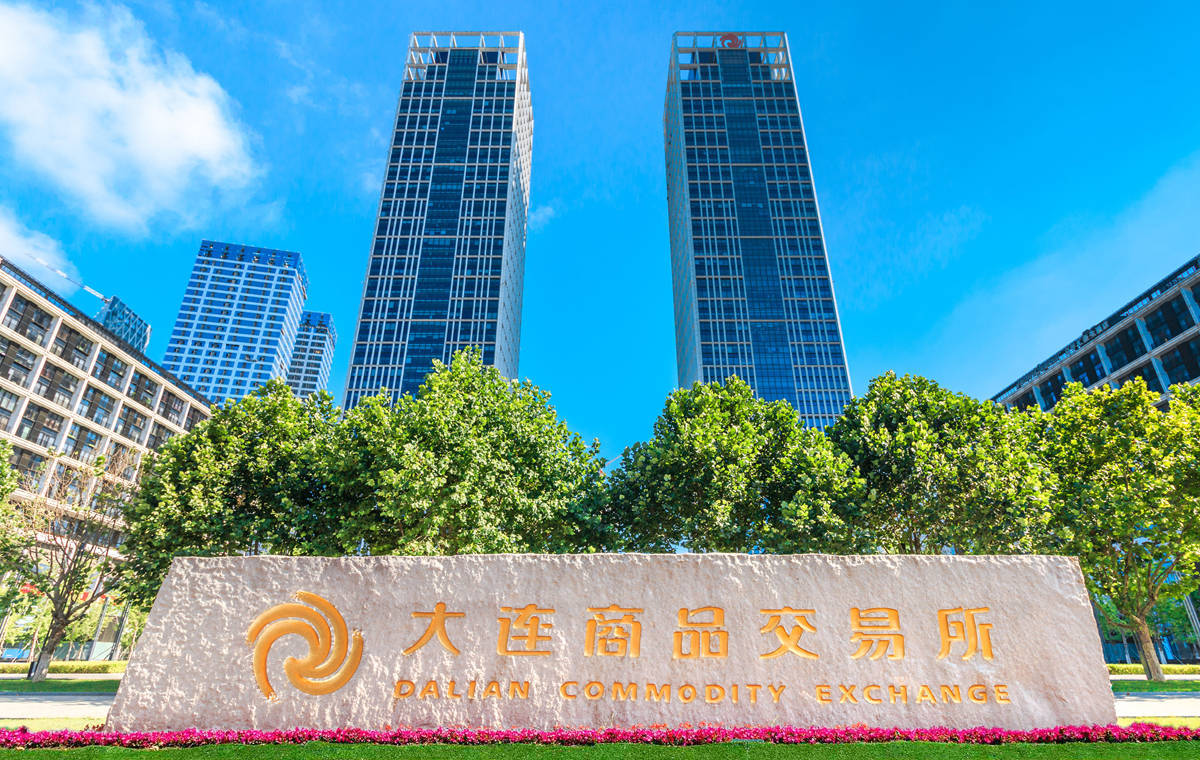
财经深一度丨期货衍生品再迎新!境内首批月均价期货将上市
Xin Hua She· 2025-08-05 11:03
Group 1 - The China Securities Regulatory Commission has approved the registration of monthly average price futures for linear low-density polyethylene, polyvinyl chloride, and polypropylene at the Dalian Commodity Exchange, marking the first cash-settled futures in the domestic commodity futures market [1][4] - Monthly average price futures are based on the arithmetic average price of the underlying asset over a month, providing a new risk management tool for industries that require stable long-term procurement prices [4][5] - The design of the contract rules for these futures meets the industry's need for risk management while considering market risk prevention, enhancing price fairness and stability [4][5] Group 2 - The introduction of these futures is expected to enrich the product structure of China's futures market, stimulate market vitality and innovation potential, and improve the resilience of supply chains [5] - The three chemical products are significant in the plastic chemical industry, with China being a major producer and consumer, facing frequent price fluctuations due to various market factors [5] - Companies have expressed a need for more stable pricing mechanisms, as current point pricing methods are cumbersome and less effective for managing risks associated with price volatility [6][7]