
聚丙烯月均价期货

Search documents
回眸“十四五”:大商所五年精心呵护 服务能化产业高质量发展
Zhong Guo Hua Gong Bao· 2026-02-27 02:54
Core Viewpoint - The Dalian Commodity Exchange (DCE) has made significant strides in enhancing the energy and chemical industry during the "14th Five-Year Plan" period, focusing on high-quality development and providing effective risk management tools and pricing references for enterprises in the energy and chemical sectors [1]. Product Development and Risk Management Tools - DCE has launched four futures and three options products in the energy and chemical sector, enhancing the risk management toolbox for enterprises [2]. - The introduction of ethylene glycol and styrene options has provided comprehensive coverage for physical delivery futures, improving risk management efficiency for enterprises [2]. - By 2025, the average daily trading volume for ethylene glycol options is projected to be 47,000 contracts, with a 75.4% share held by institutional clients, while styrene options are expected to have a daily trading volume of 212,000 contracts and a 51.8% institutional client share [2]. - The launch of pure benzene futures and options has introduced new risk management tools for the aromatic industry, helping to stabilize production profits and enhance China's influence in international trade [3]. Market Functionality and Optimization - DCE has expanded delivery locations and optimized pricing mechanisms to better serve the energy and chemical industries, enhancing the correlation between futures and spot prices [7]. - The introduction of average price futures for linear low-density polyethylene, polyvinyl chloride, and polypropylene has filled a gap in domestic risk management tools, facilitating long-term trade [5]. - By 2025, average daily trading volumes for these new futures are expected to be 4,674 contracts for linear low-density polyethylene, 4,538 for polyvinyl chloride, and 3,242 for polypropylene, with increasing open interest [6]. Enhancing Client Participation - DCE has implemented measures to reduce participation costs for enterprises, such as lowering margin requirements and eliminating inspection costs for over 97% of deliverable products [9][10]. - The exchange has developed a multi-layered service system to enhance industry participation in futures markets, promoting risk management practices among small and medium-sized enterprises [11]. Market Openness and Price Influence - DCE has included several futures and options in the Qualified Foreign Institutional Investor (QFII) trading scope, enhancing the price influence of these products [13]. - The exchange's efforts in promoting internationalization have led to increased recognition of China's futures market among foreign clients, facilitating export pricing based on futures prices [14][15].
把脉产业需求 送上金融“及时雨”
Qi Huo Ri Bao Wang· 2026-02-04 02:09
Group 1 - The Dalian Commodity Exchange (DCE) successfully completed its first cash settlement for linear low-density polyethylene, polyvinyl chloride, and polypropylene monthly average price futures contracts, marking a significant milestone in its operations [1][2] - As of January 30, the monthly average price futures for these chemical products have been running for 66 trading days, with average daily trading volumes of 5,015 contracts for linear low-density polyethylene, 4,558 for polyvinyl chloride, and 3,398 for polypropylene [1] - The cash settlement volumes on the expiration day for the contracts were 46 contracts for L2602F, 400 for V2602F, and 6 for PP2602F, indicating active participation from leading industry players such as Yong'an Guoyou Energy Co., Ltd. and Qiancheng Petrochemical Co., Ltd. [1] Group 2 - The monthly average price futures contracts are designed to meet the industry's demand for risk management tools, allowing for cash settlement based on the arithmetic average of the futures settlement prices [2] - Yong'an Guoyou's chairman emphasized the importance of managing price volatility risks and noted that the new futures contracts align well with their operational and risk management needs, enabling them to lock in PVC monthly average prices [2] - Qiancheng Petrochemical's research director highlighted the efficiency and simplicity of the monthly average price futures, which cater to their clients' pricing models and improve hedging operations [2] Group 3 - The successful cash settlement of these futures contracts represents an important achievement in aligning the futures market with industry needs and innovating service models [2] - The DCE aims to enhance the international influence of China's bulk commodity prices and strengthen the resilience of supply chains through ongoing product and mechanism innovations [2]
大商所三个化工品月均价期货首次现金交割完成
Guo Ji Jin Rong Bao· 2026-02-03 14:19
Group 1 - The Dalian Commodity Exchange successfully completed its first cash settlement for linear low-density polyethylene, polyvinyl chloride, and polypropylene monthly average price futures contracts on January 30, marking a significant milestone in its operations [1] - As of January 30, the average daily trading volumes for the three futures contracts were 5,015 lots for linear low-density polyethylene, 4,558 lots for polyvinyl chloride, and 3,398 lots for polypropylene, with average open interest at 6,232 lots, 5,489 lots, and 5,411 lots respectively [1] - The cash settlement volumes on the expiration date were 46 lots for L2602F, 400 lots for V2602F, and 6 lots for PP2602F, indicating active participation from leading industry players such as Yong'an Guoyou and Qiancheng Petrochemical [1] Group 2 - The introduction of monthly average price futures by the Dalian Commodity Exchange addresses the need for stable long-term procurement prices and precise risk management tools for industry enterprises, which are facing frequent price fluctuations in the plastic chemical sector [2] - Yong'an Guoyou's chairman emphasized the importance of managing commodity price volatility and highlighted that the new futures contracts effectively meet their operational and risk management needs, allowing them to lock in PVC average prices and mitigate operational risks [2] - Qiancheng Petrochemical's research supervisor praised the monthly average price futures for aligning with their clients' pricing habits and simplifying the hedging process, which enhances their supply chain services [2] Group 3 - The Dalian Commodity Exchange plans to leverage the experience gained from this cash settlement to continue product and mechanism innovation, aiming to enhance the international influence of China's bulk commodity prices and provide stronger financial support for supply chain resilience [3]
聚丙烯月均价期货的交易品种是什么
Jin Tou Wang· 2026-01-14 09:35
Core Viewpoint - The article discusses the introduction of polypropylene monthly average price futures on the Dalian Commodity Exchange, highlighting its innovative features and benefits for market participants [2] Group 1: Contract Details - The trading variety of the polypropylene monthly average price futures is explicitly stated as "polypropylene" [2] - The contract is designed to settle based on the arithmetic average of all trading day settlement prices in the month prior to the delivery period, rather than a single closing price [2] - The contract employs a cash settlement mechanism, where the exchange directly pays the profit and loss difference based on the monthly average price at expiration, eliminating the need for physical delivery [2] Group 2: Benefits and Parameters - This innovative design smooths out the impact of daily price volatility, aligning more closely with the commercial practice of "monthly average" settlements in spot trading [2] - The contract parameters include a trading unit of 5 tons per lot, a quotation unit in RMB per ton, a minimum price fluctuation of 1 RMB per ton, and a price limit of 4% based on the previous trading day's settlement price [2] - The introduction of this futures contract is expected to lower storage and logistics costs while improving capital efficiency, thereby attracting more financial institutions and investors [2]


如何参与聚丙烯月均价期货交易
Jin Tou Wang· 2026-01-13 09:37
Core Viewpoint - The article outlines the standardized process for participating in polypropylene monthly average price futures trading, detailing the necessary steps, trading rules, and risk management measures. Group 1: Opening an Account - Participants must open an account through a futures company app or the "Futures Account Cloud" platform, requiring identification, a real-name bank card, and a handwritten signature photo, along with passing a risk assessment (C4 level or above) and video verification before submitting the application [1]. Group 2: Trading Rules - The trading unit for polypropylene monthly average price futures contracts is 5 tons per lot, with a minimum price fluctuation of 1 yuan per ton. Trading hours are set for day sessions from 9:00-11:30 and 13:30-15:00, and night sessions from 21:00-23:00. The first listed contracts are PP2602F, PP2603F, and PP2604F, with additional long-term contracts added after the last trading day of each month [1]. Group 3: Trading Instructions - Traders can select contracts through trading software and use limit orders or market orders to open long or short positions. Closing positions require a reverse operation [1]. Group 4: Margin and Fees - The basic margin ratio set by the exchange is approximately 7%, while futures companies typically charge 8%-10% (negotiable). The trading fee is 1 yuan per lot, with a reduced fee of 0.5 yuan per lot for hedging transactions. Delivery fees are currently waived until December 31, 2025 [1]. Group 5: Risk Control - The limit for a single contract trade is set at 10,000 lots, with a position limit of 1,000 lots starting from the 15th of the month prior to the contract month. Individual investors must close their positions before the delivery month [1]. Group 6: Considerations - The polypropylene monthly average price futures are settled based on monthly average prices, suitable for hedging against price volatility risks. However, liquidity may be lower than that of standard futures, and traders should be aware of market fluctuations and margin call risks. It is recommended to familiarize oneself with the rules through simulated trading before engaging in real transactions [2].
聚丙烯月均价期货采用现金交割吗
Jin Tou Wang· 2026-01-12 09:54
Core Viewpoint - The introduction of polypropylene monthly average price futures with cash settlement enhances risk management tools for the industry by aligning with the common pricing practices in spot trade [1] Group 1: Cash Settlement Mechanism - Cash settlement means that upon contract expiration, the exchange completes profit and loss settlement through cash transfer rather than physical delivery of goods [1] - The settlement price for polypropylene monthly average price futures is the arithmetic average of the settlement prices of the corresponding physical delivery futures for all trading days in the month prior to the contract month [1] Group 2: Market Functionality - The monthly average price futures financialize the commonly used "monthly average" pricing benchmark in spot trade, filling a gap in the domestic futures market regarding average price management [1] - Plastic processing, modification, and trading companies can lock in or hedge against the average procurement costs of raw materials for future months, mitigating the impact of price volatility on production profits [1] - Upstream refining companies can sell the average price in advance, stabilizing their monthly sales revenue [1] Group 3: Liquidity and Participation - The cash settlement mechanism ensures contract liquidity by eliminating warehouse receipt pressure and delivery default risks, encouraging more financial institutions and quantitative funds to participate [1] - Increased participation enhances the depth and breadth of price discovery in the market [1]
什么是聚丙烯月均价期货
Jin Tou Wang· 2026-01-09 09:32
Core Viewpoint - The polypropylene monthly average price futures will officially launch on October 28, 2025, at the Dalian Commodity Exchange, providing a price benchmark tailored for monthly trading scenarios in the industry [2]. Group 1 - The contract code for the polypropylene monthly average price futures will be structured as "PP+Contract Month+F" (e.g., PP2603F for the March 2026 contract) [2]. - This futures contract is one of the first monthly average price futures for chemical products in the domestic market, relying on the fair price of existing physical delivery futures contracts for polypropylene [2]. Group 2 - The settlement price will be calculated as the arithmetic average of the settlement prices on all trading days in the month prior to the contract month, smoothing out the impact of daily price volatility [3]. - The cash settlement mechanism means that at expiration, the exchange will directly settle profits and losses based on the average price, eliminating the need for physical delivery and reducing storage and logistics costs, thereby improving capital efficiency [3].

扩容、提质、增效 期货价格已融入千行百业
Shang Hai Zheng Quan Bao· 2025-12-23 19:06
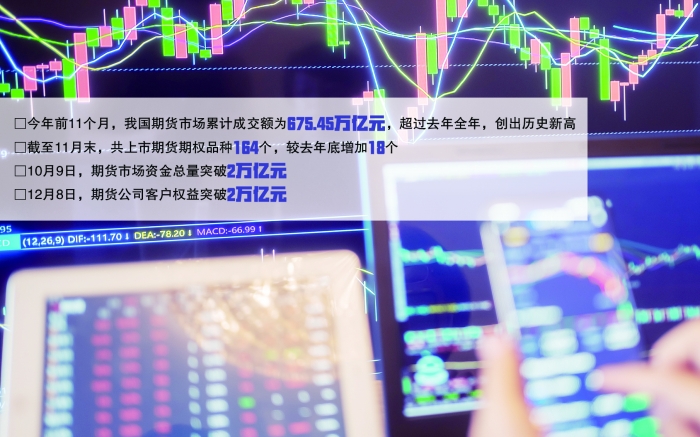
Core Viewpoint - The global commodity market is undergoing significant restructuring in 2025, influenced by trade dynamics and geopolitical competition, leading to a reshaping of the global industrial chain. The year has seen volatile commodity prices, with metals like gold, silver, and copper reaching new highs, while energy and agricultural products remain weak [2]. Market Participation and Trading Volume - In the face of market uncertainties, more entities are engaging in the futures market, with China's cumulative trading volume reaching 67.545 trillion yuan in the first 11 months of the year, surpassing the total for the previous year and setting a historical record. As of October 9, total funds in the futures market exceeded 2 trillion yuan, and by December 8, client equity of futures companies also surpassed 2 trillion yuan [2]. Product Innovation and Expansion - The expansion of product variety is a key focus for the development of China's futures market, with 164 futures and options products listed by the end of November, an increase of 18 from the previous year [3]. - New products are categorized into three types: 1. Filling gaps in existing product lines to enhance risk management across the supply chain, such as the introduction of pure benzene and propylene futures [3]. 2. Innovating contract models to align with trading habits, exemplified by the launch of monthly average price futures for certain chemical products [4]. 3. Accelerating the establishment of a green product system, including the listing of futures for recycled aluminum alloys and precious metals like platinum and palladium [4]. Options Market Development - The acceleration of options coverage is a notable trend, with all new futures products introduced alongside options. Existing products have also seen corresponding options launched, enhancing the risk management tools available to entities [5]. Service Enhancement for the Real Economy - The futures market aims to serve the real economy effectively, with various service models optimized to meet industry needs. For instance, a steel delivery warehouse was established in Northwest China, addressing long-standing delivery challenges for local steel enterprises [6]. - The "insurance + futures" model has evolved over ten years, now involving multiple stakeholders to provide comprehensive risk management for agricultural products [6][7]. Regulatory Improvements and Market Integrity - Since the implementation of the Futures and Derivatives Law in 2022, the regulatory framework for China's futures market has been continuously improved, aligning with the central economic work conference's emphasis on effective regulation [8]. - Recent regulations have focused on enhancing the management of algorithmic trading, internet marketing, and overall industry standards, aiming to create a transparent and efficient futures market [9].
苦练内功 锻造服务实体硬实力
Qi Huo Ri Bao Wang· 2025-12-18 01:15
Core Insights - The Dalian Commodity Exchange (DCE) hosted a training program aimed at enhancing the service capabilities of futures practitioners, focusing on the growing demand for refined and professional derivative tools in the real economy [1][2] - The training emphasized the integration of futures and spot markets, with the launch of the "Futures to Spot" platform being a key highlight, facilitating personalized delivery needs for enterprises [2][3] - The introduction of monthly average price futures for chemical products is expected to provide pricing references and risk management tools for the plastics industry, addressing challenges such as supply-demand imbalances and export risks [3] Group 1: Training Program Overview - The training combined online and offline participation, attracting representatives from 72 futures institutions and over 2,300 practitioners nationwide [1] - DCE's initiative is part of a broader strategy to transition the futures industry from a "channel service" model to a "comprehensive risk management solution provider" [1][2] Group 2: Policy and Market Environment - The regulatory environment for derivatives has improved, with 1,503 listed companies expected to issue hedging announcements in 2024, reflecting a 15.7% year-on-year increase in the first seven months of the year [2] - Futures companies play a crucial role in connecting futures and spot markets, directly influencing the effectiveness of risk management tools [2] Group 3: Risk Management Tools - Options are becoming essential for enterprises to manage risks dynamically, with strategies like buying put options and selling call options being highlighted [5] - DCE plans to launch a series of options contracts in February 2026, providing more precise short-term risk management tools for industries [5] Group 4: Delivery System Enhancements - The training covered differentiated delivery systems, including a digitalized process for live pig delivery and a network for grain and oil products that lowers participation barriers for enterprises [6] - Adjustments to delivery units for certain futures contracts aim to enhance accessibility for small and medium-sized enterprises [6] Group 5: Compliance and Risk Control - Risk control and compliance management were emphasized throughout the training, with a focus on preventing market manipulation and ensuring transparent operations [7] - Companies are encouraged to establish independent risk control departments and implement integrated management systems to track overall risk exposure [7] Group 6: Service Model Evolution - Futures companies are shifting from merely being transaction channels to becoming solution providers, offering tailored services like "insurance + futures" and basis pricing [9] - The training received positive feedback for its blend of policy insights and practical applications, indicating a successful initiative in enhancing industry capabilities [9]
月均价期货上市首月成交额超70亿元
Qi Huo Ri Bao Wang· 2025-12-01 17:00
Core Insights - The launch of monthly average price futures for LLDPE, PVC, and PP has been successful, providing a stable pricing risk management solution for the chemical industry [1][5] - The trading volume and market participation have shown positive trends, indicating a growing acceptance of these financial instruments [1][5] Group 1: Market Performance - As of November 28, the monthly average price futures for the three chemical products have seen a cumulative trading volume of 23 trading days, with PP futures leading at 94,500 contracts and a transaction value of 3.053 billion [1] - The closing prices for the near-month contracts L2602F, V2602F, and PP2602F have decreased by 3.03%, 3.92%, and 3.69% respectively, reflecting market consensus on future monthly averages [2] Group 2: Industry Participation - Major companies like Zhejiang Mingri Holdings and Jingbo Petrochemical have actively engaged in trading these futures, with institutional clients accounting for over 60% of the transaction volume [2][4] - Jingbo Petrochemical has utilized the PP2602F contract for forward hedging, aligning with their long-term sales contracts that are linked to monthly average prices [3] Group 3: Future Outlook - The monthly average price futures are expected to play a significant role in the risk management framework for commodities, with companies expressing optimism about their potential [6] - There is a call for further training and optimization of contract designs to enhance market functionality and broaden participation [6]