
权益法核算

Search documents
AMC布局银行股再落一子 东方资产增持浦发银行
Zhong Guo Zheng Quan Bao· 2025-10-09 21:49
Core Viewpoint - Oriental Asset has increased its stake in Shanghai Pudong Development Bank (SPDB) through the purchase of common shares and convertible bonds, which is expected to improve the financial statements of asset management companies (AMCs) [1][2][3] Group 1: Stake Increase Details - As of September 29, Oriental Asset holds 1.073 billion shares of SPDB, representing a 3.44% stake, and 8.6 million convertible bonds [2] - Oriental Asset was not among the top ten shareholders of SPDB at the end of Q2, indicating a significant increase in holdings during Q3 [2] - The SPDB board has agreed to nominate Ji Hongmei, currently the Party Secretary of Oriental Asset's Shanghai branch, as a candidate for the bank's board [2] Group 2: Financial Reporting Benefits for AMCs - AMCs can improve their financial statements by investing in bank stocks, as they use the equity method for long-term investments in banks [3] - The ability to exert significant influence over the invested bank, such as by appointing board members, allows AMCs to use the equity method for accounting [3] - SPDB's current price-to-book ratio is 0.53, allowing AMCs to acquire bank equity below the fair value of identifiable net assets, which can enhance their operating income [3][4] Group 3: Convertible Bond Redemption Concerns - SPDB's convertible bonds, issued in October 2019, amount to 50 billion yuan, with a maturity date of October 27, 2025, and an outstanding balance of 24.572 billion yuan yet to be converted [5] - Successful conversion of these bonds would supplement the bank's core Tier 1 capital, while failure to convert would require repayment of principal and interest to bondholders [5][6] Group 4: Potential for "Everbright Model" Replication - The "Everbright Model" refers to the significant increase in holdings of Everbright Bank's convertible bonds by China Huarong (now known as CITIC Financial Asset), which alleviated repayment pressure [6] - If Oriental Asset continues to increase its holdings in SPDB's convertible bonds and converts them, it could similarly relieve repayment pressure and positively impact SPDB's core Tier 1 capital [6]

AMC布局银行股再落一子东方资产增持浦发银行
Zhong Guo Zheng Quan Bao· 2025-10-09 20:53
Core Viewpoint - Oriental Asset has increased its stake in Shanghai Pudong Development Bank (SPDB) through the purchase of common shares and convertible bonds, which is expected to improve the financial statements of asset management companies (AMCs) [1][2] Group 1: Stake Increase - As of September 29, Oriental Asset holds 1.073 billion shares of SPDB, representing a 3.44% stake, and 8.6 million convertible bonds [1] - Oriental Asset was not among the top ten shareholders of SPDB as of the end of Q2, indicating a significant increase in holdings during Q3 [1] - The board of SPDB has agreed to nominate Ji Hongmei, currently the Party Secretary of Oriental Asset's Shanghai branch, as a candidate for the bank's board [2] Group 2: Financial Reporting Benefits - AMCs benefit from investing in bank stocks as it can improve their financial statements due to the use of equity method accounting for long-term equity investments [2][3] - The equity method allows AMCs to recognize the difference between the fair value of identifiable net assets and the initial investment cost as non-operating income, positively impacting current profits [3] - As of October 9, SPDB's price-to-book ratio is 0.53, suggesting that Oriental Asset's investment could enhance its non-operating income and improve financial statements [3] Group 3: Convertible Bond Concerns - SPDB issued 50 billion yuan in convertible bonds in October 2019, maturing on October 27, 2025, with an outstanding balance of 24.572 billion yuan yet to be converted [4] - Successful conversion of the bonds would supplement the bank's core Tier 1 capital, while failure to convert would require repayment of principal and interest [4] - The market is closely watching whether Oriental Asset will replicate the "Everbright model" by increasing its stake in SPDB's convertible bonds to alleviate repayment pressure [4]
600000,重要机构增持
Shang Hai Zheng Quan Bao· 2025-10-09 01:41
Core Viewpoint - Recently, Shanghai Pudong Development Bank (SPDB) has received increased shareholding from China Orient Asset Management Co., Ltd. (Orient Asset), which may position Orient Asset among the top five shareholders of SPDB and secure a board seat for them [2][4]. Group 1: Shareholding Details - Orient Asset acquired shares through the secondary market, increasing its ordinary shares from 93,865.40 million shares (3.03% of total ordinary shares) as of September 19 to 107,299.96 million shares (3.44%) by September 29, along with holding 860 million convertible bonds [4]. - The current major shareholders of SPDB include Shanghai International Group (29.09%), Fude Life Insurance (20.04%), and China Mobile Guangdong (17.63%), with Orient Asset potentially surpassing the 3.03% stake held by Xinda Asset [4][9]. Group 2: Board Appointment - The SPDB board has agreed to nominate Ms. Ji Hongmei, recommended by Orient Asset, as a candidate for the board, pending regulatory approval for her qualifications [4]. Group 3: Recent Trends in AMC Investments - The trend of Asset Management Companies (AMCs) increasing their stakes in banks has been notable, with Xinda Asset previously investing over 10 billion yuan in SPDB through convertible bonds, also securing a board seat [2][8]. - Other AMCs, such as Great Wall Asset, have similarly increased their holdings in banks like Minsheng Bank and China Construction Bank, indicating a broader strategy among AMCs to invest in undervalued state-owned bank stocks [11][12]. Group 4: Financial Implications - AMCs are attracted to bank shares due to their potential for significant contributions to current and future profits, as well as the ability to improve financial statements through equity method accounting [13]. - The stable operations and dividend policies of bank stocks, combined with their low valuations, enhance their appeal for asset allocation amid a backdrop of "asset scarcity" [13].

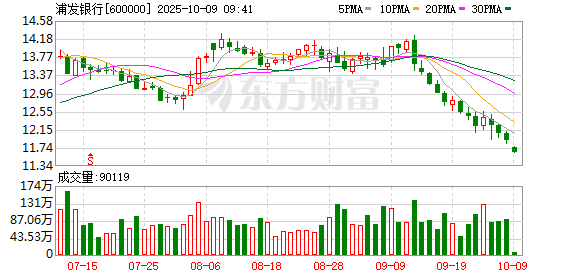
年内AMC频频出手增持银行股
Zheng Quan Ri Bao· 2025-10-08 16:09
Core Viewpoint - Asset Management Companies (AMCs) are actively increasing their stakes in banks, indicating confidence in the banking sector's future performance and a strategic move to enhance their influence within these institutions [1][4]. Group 1: AMC Activities - China Orient Asset Management Co., Ltd. has increased its stake in Shanghai Pudong Development Bank (SPDB) through the purchase of common shares and convertible bonds, raising its ownership from approximately 3.03% to 3.44% [2]. - China Cinda Asset Management Co., Ltd. has also increased its stake in SPDB via convertible bonds, entering the top ten shareholders with a holding of about 3.01% [2]. - Other banks, such as China Everbright Bank and Bank of China, have also seen similar stake increases from AMCs this year [1]. Group 2: Board Representation - Following the increase in shareholding, China Orient Asset has sought a board seat at SPDB, nominating Ji Hongmei for a director position, pending shareholder approval [2]. - Similarly, after increasing its stake, Cinda Investment's chairman was nominated and approved as a director at SPDB [2]. Group 3: Financial Implications - The intensive stake increases by AMCs coincide with the upcoming maturity of SPDB's convertible bonds, which are set to mature on October 27, 2023, with a conversion rate of 50.86% as of September 30 [3]. - The actions of AMCs are expected to bolster SPDB's core tier one capital, alleviating capital adequacy pressures [3][7]. Group 4: Strategic Considerations - Experts suggest that AMCs' investments in bank stocks are driven by financial returns, business synergies, and policy support, aligning with their need for stable assets [5][6]. - By increasing their stakes, AMCs can utilize equity accounting methods to enhance profits and improve performance metrics [5]. - The involvement of AMCs in bank governance may lead to better risk management and decision-making processes, particularly in the area of non-performing asset management [5][7].
新华医疗:持有华检医疗4.437亿股
Sou Hu Cai Jing· 2025-08-18 07:49
Group 1 - The core point of the article is that Xinhua Medical holds a significant stake in Huajian Medical, which has recently seen a rise in its operations related to stablecoins, potentially benefiting Xinhua Medical's investment returns [1] - Xinhua Medical owns 443.7 million shares of Huajian Medical, representing a 27.29% ownership stake [1] - The financial performance of Huajian Medical will impact Xinhua Medical's investment income due to the equity method of accounting used for this subsidiary [1]

中国金融股受追捧,资金买入能走多远?美银路演反馈出炉
Zhi Tong Cai Jing· 2025-07-23 10:53
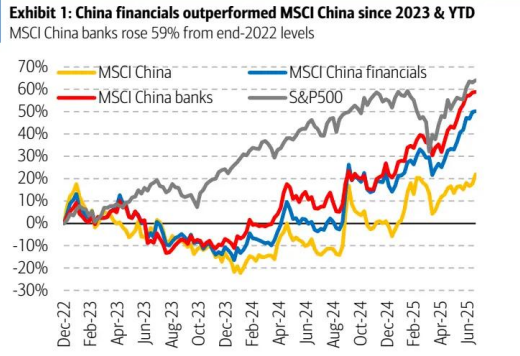
Core Viewpoint - The report highlights a growing interest from overseas investors in Chinese financial stocks, particularly state-owned banks and mid-cap financial stocks, driven by favorable market conditions and potential for higher returns [1][2]. Group 1: Investor Interest and Market Trends - Chinese financial stocks have risen by 23% this year, with their weight in the MSCI China Index increasing from 12.8% in June 2021 to over 19% currently [2]. - There is a notable trend of capital inflow from southbound funds and insurance companies buying bank stocks and high-yield equities [2]. - The participation in Bank of America’s recent roadshow for Chinese financial stocks was significant, with investors from New York, Singapore, and Beijing attending, indicating strong interest [2]. Group 2: Performance Expectations - The second quarter of 2025 is expected to be favorable for Chinese financial stocks, aided by limited declines in net interest margins and improved trading revenues due to lower bond yields and better A-share market performance [3]. - Loan growth slightly increased from 6.7% in May to 6.8% in June, with social financing and narrow money supply growth exceeding expectations [3]. - Despite ongoing asset quality pressures, some banks reported stabilization in new non-performing loans in retail lending during the second quarter [3]. Group 3: Valuation and Investment Strategies - Investors believe that bank stock trading is more influenced by capital flows than by fundamentals, with over a third of inquiries directed at insurance companies regarding their investment strategies in bank stocks [4]. - Asset management companies, including Huarong and Cinda, have also been purchasing Chinese bank stocks, motivated by potential accounting gains from equity accounting [4][22]. - There is speculation on whether bank stock price-to-book ratios will return to 1x, with expectations that insurance companies and asset managers may increase their allocations to high-yield stocks until this threshold is reached [5].

险资年内合计举牌20次已达去年全年水平
Zheng Quan Ri Bao· 2025-07-07 16:52
Core Viewpoint - The trend of insurance capital increasing their stakes in listed companies continues, with a total of 20 instances recorded this year, matching the total from the previous year [1][2]. Group 1: Insurance Capital Activity - Hongkang Life Insurance recently increased its stake in Zhengzhou Bank's H-shares, acquiring 16 million shares at HKD 1.2068 per share, raising its holding to 5.55% [1]. - Following this, on June 30, Hongkang Life further acquired 23 million shares at HKD 1.1804 per share, bringing its total holdings to 135 million shares, or 6.68% of the H-shares [1]. - A total of 10 insurance institutions have participated in the 20 instances of stake increases across 16 listed companies this year [2]. Group 2: Motivations Behind Increased Stakes - The low interest rate environment and supportive policies are driving insurance capital to increase their stakes, with expectations that this trend will continue [1][2]. - The recent policies encouraging long-term funds to enter the market have enhanced the willingness of insurance capital to invest [2]. Group 3: Characteristics of Target Companies - The companies targeted for stake increases are predominantly high-dividend and H-share listed companies, aligning with the long-term investment style of insurance funds [3]. - H-shares are perceived to have a valuation discount compared to A-shares, presenting greater appreciation potential, along with tax benefits through the Hong Kong Stock Connect [3]. Group 4: Future Considerations and Strategies - The upcoming implementation of new accounting standards is prompting more insurance companies to pursue stake increases to achieve equity method accounting, thereby reducing profit volatility [3]. - Insurance companies are advised to focus on stocks with stable dividends, strong fundamentals, and long-term appreciation potential while enhancing their risk management capabilities [3].
中邮保险举牌东航物流,什么催生了今年险资举牌热?
Xin Lang Cai Jing· 2025-05-08 10:16
Core Viewpoint - China Post Life Insurance Co., Ltd. has acquired a 5% stake in Eastern Air Logistics through a block trade, amounting to 869 million yuan, positioning itself as a significant strategic shareholder [1] Group 1: Investment Activity - The acquisition of 79.42 million unrestricted shares makes China Post Insurance an important strategic partner for Eastern Air Logistics, which is a subsidiary of China Eastern Airlines Group [1] - Eastern Air Logistics reported a revenue of 24.056 billion yuan in 2024, a year-on-year increase of 16.66%, and a net profit attributable to shareholders of 2.688 billion yuan, up 8.01% [1] - In Q1 2024, Eastern Air Logistics' net profit attributable to shareholders was 545 million yuan, reflecting a year-on-year decline of 7.40% [1] Group 2: Industry Trends - The investment by China Post Insurance is part of a broader trend of increased equity investments by insurance companies, driven by new accounting standards and changing external environments [2][3] - As of May 8, 2024, seven insurance companies, including China Post Insurance and China Life, have made a total of 13 equity acquisitions, focusing on high-dividend and undervalued sectors such as banking and public utilities [2] - The implementation of the new accounting standard (IFRS 9) has prompted insurance companies to increase their equity stakes to over 5% to apply the equity method of accounting, which helps mitigate profit volatility [3] Group 3: Regulatory Environment - Regulatory support for insurance capital market participation has increased, with new policies aimed at expanding long-term investment reforms and reducing risk factors for equity assets [6] - The reduction of risk factors for stock investments by 10% could significantly enhance the solvency of insurance companies, allowing for greater capital efficiency [6] - The regulatory environment is evolving to facilitate insurance companies' transition towards long-term investments, aligning with the industry's shift towards floating income products [4][6]
