欧美关系

Search documents
德国将向丹麦格陵兰岛派兵
Xin Lang Cai Jing· 2026-01-14 20:46
Group 1 - Germany will send 13 soldiers to Greenland at Denmark's request as part of a joint exploration mission with other European countries [1] - The mission aims to explore potential military measures to enhance security in the region [1] - Sweden and Norway also announced plans to send military personnel to Greenland [1] Group 2 - Recent statements by U.S. President Trump emphasize the strategic importance of Greenland, claiming it is "vital to U.S. security" and that "all options are on the table" for acquiring it [1] - Trump's comments have significantly heightened tensions between the U.S. and Europe [1]
英媒:特朗普批欧洲引分歧 有人劝冯德莱恩“忍气吞声”
Xin Hua She· 2025-12-16 03:22
Group 1 - The core viewpoint of the article highlights the division within the European Union (EU) following U.S. President Trump's sharp criticism of Europe, with concerns that a strong response could hinder the resolution of the Ukraine crisis [1][3] - NATO Secretary General Jens Stoltenberg and others advised EU Commission President Ursula von der Leyen to remain silent in response to Trump's criticisms [1][3] - European leaders are divided on how to respond to U.S. criticism, with some believing that maintaining U.S. involvement in Ukraine negotiations is crucial, while others feel that silence in the face of criticism is frustrating [3] Group 2 - The article mentions that the U.S. national security strategy report released earlier this month sharply criticized European allies, with Trump expressing dissatisfaction over immigration policy and the Ukraine crisis [1] - Discussions among European leaders revolve around three main issues: trade agreements, NATO military spending, and military aid to Ukraine, which are seen as interconnected in the context of keeping the U.S. engaged in Europe [3] - Some officials are even considering bypassing the EU Commission to engage in bilateral negotiations with Trump, reflecting the urgency and complexity of the situation [3]

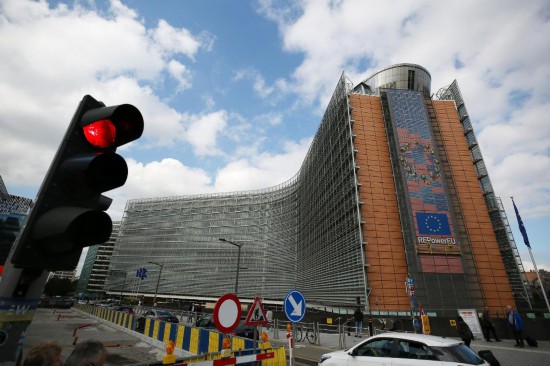
盟友反目?接连被特朗普点名批评后,欧洲将如何应对
第一财经· 2025-12-10 07:59
Core Viewpoint - The article discusses the escalating tensions between the United States and Europe, particularly in light of President Trump's criticisms of European governance and security issues, and the responses from European leaders [3][5][9]. Group 1: Trump's Criticism of Europe - President Trump criticized Europe as a "declining" region with "weak" leadership, particularly highlighting issues related to immigration management [3][5]. - Trump's comments included specific criticisms of European countries, such as labeling Sweden as "very unsafe" and questioning the effectiveness of Ukrainian President Zelensky in peace negotiations with Russia [7]. Group 2: European Response - European leaders, including European Council President António Costa, emphasized the need for mutual respect and cooperation between Europe and the U.S., urging Trump to recognize Europe as an ally [3][8]. - German Chancellor Merz rejected Trump's assertions, calling parts of the U.S. national security strategy "unacceptable," while EU foreign policy chief Kaja Kallas described the U.S. document as a "provocation" [9]. Group 3: Broader Context of U.S.-Europe Relations - The article notes that Trump's criticisms are part of a broader narrative from U.S. officials, including Vice President Vance, who previously stated that Europe's greatest threats are internal [9]. - The ongoing tensions raise questions about the future of U.S.-European alliances, with Trump suggesting that the status of these alliances may depend on specific circumstances [9].

盟友反目?接连被特朗普点名批评后,欧洲将如何应对
Di Yi Cai Jing· 2025-12-10 06:19
Group 1 - The core viewpoint is that Europe and the United States must act as allies despite recent criticisms from President Trump towards Europe, labeling it as a group of "declining" nations with "weak" leadership [1][2] - European Council President António Costa emphasized the need for respect from Trump towards Europe and the importance of allyship [1] - Trump's recent comments have included criticisms of European governance, immigration management, and specific leaders, indicating a broader trend of U.S. criticism towards Europe [2][3] Group 2 - U.S. Vice President Mike Pence previously stated that the greatest threat to Europe comes from within, criticizing Germany's immigration policy and the EU's regulatory actions [4] - German Chancellor Merz rejected Trump's statements, calling parts of the U.S. national security strategy "unacceptable," while EU foreign policy chief Kaja Kallas described the document as a provocation [4] - Costa highlighted the need for Europe to respond to perceived U.S. interference in European politics, indicating a shift in the dynamics of transatlantic relations [4]
欧盟官员又抱怨上了:中方寸步不让,治住了美国,有信心拿捏我们…
Guan Cha Zhe Wang· 2025-07-30 07:30
Group 1 - The recent China-EU summit highlighted China's firm stance on trade issues, with no concessions made despite EU expectations for some level of compromise [1][4][5] - The summit resulted in a joint statement on climate change, which the EU viewed as a significant achievement, but overall, China's position on trade remained unyielding [4][5] - Analysts noted that the EU's recent trade agreement with the US raised concerns about its global influence and perceived weakness in negotiations with China [2][6] Group 2 - The EU's internal divisions and reliance on the US for security have been criticized, suggesting that this dependency undermines its ability to maintain economic autonomy [2][6] - China's refusal to compromise on key issues, such as electric vehicle trade disputes, indicates a shift in strategy, with China feeling more confident in its dealings with both the US and the EU [1][5] - The summit underscored the EU's misjudgment of geopolitical realities, as it views China's strength as a threat while accepting US pressure as normal, leading to a potential marginalization of the EU in global affairs [6]
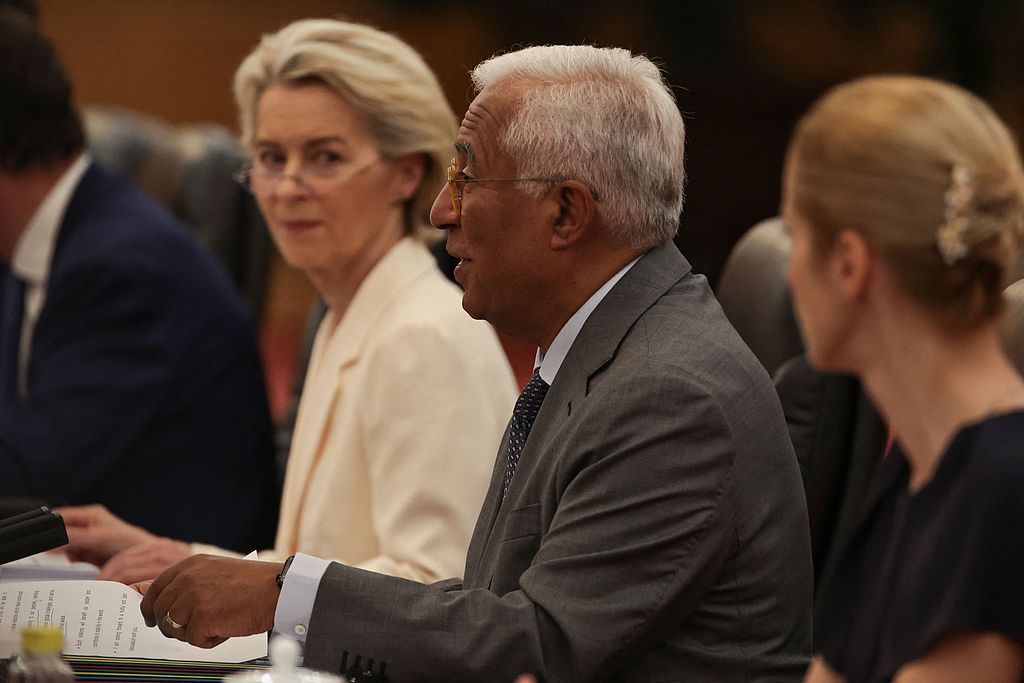
访华结束,冯德莱恩离开北京,回欧洲之前,她送给美方一句话
Sou Hu Cai Jing· 2025-07-25 14:04
Group 1 - The core message of the article highlights the evolving dynamics between the EU and China, emphasizing a shift towards cooperation amidst tensions with the US [1][11] - EU's trade with China is significant, with a daily trade volume of 20 billion euros, indicating that the relationship is crucial for European survival [9][11] - The article discusses the EU's awakening to the need for independent decision-making, as exemplified by Ursula von der Leyen's assertive statements during her visit to Beijing [1][11] Group 2 - The article outlines the challenges faced by the EU due to US trade policies, including abrupt tariff changes that have frustrated European officials [5][7] - It mentions the energy crisis in Europe as a consequence of US sanctions on Russia, leading to increased costs for European consumers [7] - The article highlights China's strategic moves, such as offering cooperation on rare earth elements and maintaining a stable trade environment for European automakers [7][9] Group 3 - The article emphasizes the importance of equal dialogue between major powers, with China positioning itself as a partner rather than a subordinate to the US [9][12] - It notes specific examples of European businesses benefiting from Chinese partnerships, such as Italian and Spanish companies finding new opportunities in China [9][11] - The conclusion suggests that the global chessboard is being redefined, with respect and dignity in partnerships becoming essential for loyalty and cooperation [11][12]
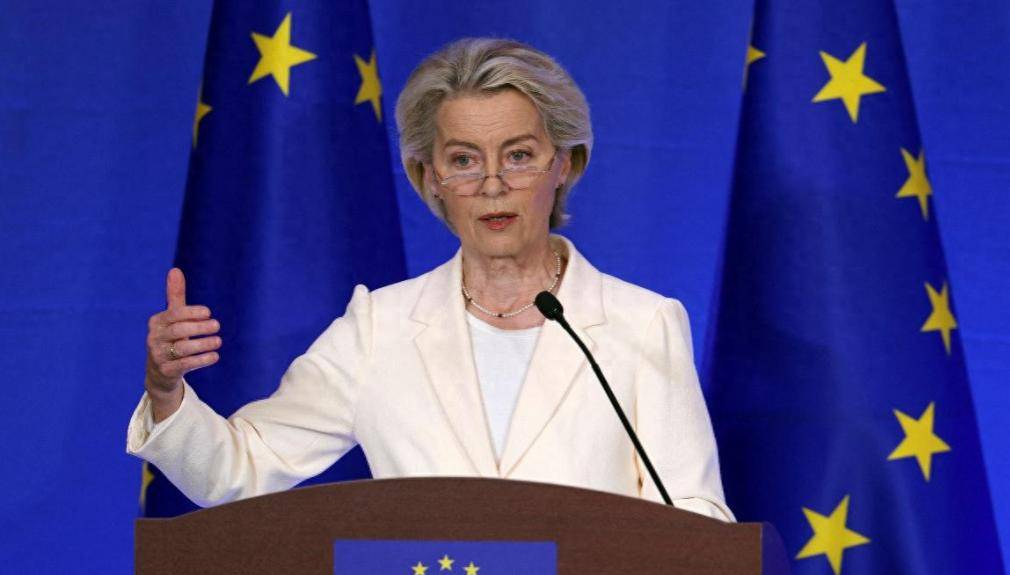
德国总理默茨:关于与美国的关系是否能继续保持以往的紧密,存在合理的疑虑。当前正是欧洲采取行动的关键时刻。
news flash· 2025-07-03 08:42
Group 1 - The core viewpoint is that there are reasonable doubts about whether the relationship with the United States can continue to remain as close as before [1] - It is a critical moment for Europe to take action [1]
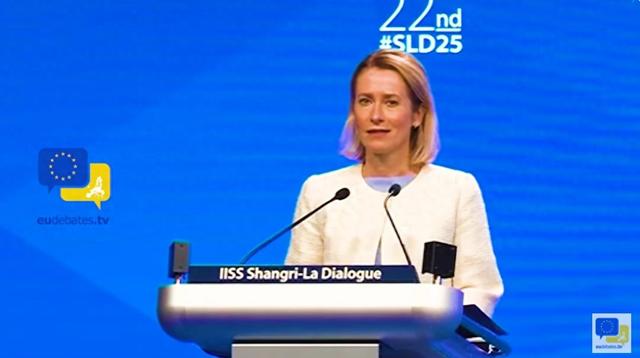
受虐?欧盟外长:美国是“严厉的爱”,总比没爱强
Guan Cha Zhe Wang· 2025-06-01 07:46
Group 1 - The article discusses the ongoing tensions between the U.S. and Europe regarding defense spending, with U.S. Defense Secretary Lloyd Austin urging European nations to increase their military budgets [1][3] - EU's High Representative for Foreign Affairs, Josep Borrell, responded to U.S. criticisms by emphasizing the importance of the transatlantic relationship and suggesting that the U.S. approach is one of "tough love" [1][3] - There are internal disagreements within Europe about military spending, but some EU members recognize the need for increased defense investment [3][4] Group 2 - The article highlights the EU's shift towards a stronger defense posture, aiming for a "peace plan backed by strong defense" and positioning itself as a global security partner [3][4] - Karas pointed out that European security is closely linked to security in the Indo-Pacific region, countering Austin's focus on U.S. interests in that area [3][4] - The EU is also concerned about China's economic influence and its role in the Russia-Ukraine conflict, indicating a desire to establish partnerships in the Indo-Pacific that align with its interests [4][5] Group 3 - The article notes that there are divisions within the EU regarding how to handle relations with China, with some leaders seeking closer ties while others express concerns [5][6] - Karas mentioned the need for the EU to reflect on its approach to China, as internal disagreements could weaken its stance [5][6] - The EU plans to hold a meeting among foreign ministers to establish a unified position on China, indicating ongoing strategic discussions [6]