
大国关系

Search documents
张瑜:关税、美元与中国复苏验证——张瑜旬度会议纪要No.133
一瑜中的· 2026-02-27 16:04
Group 1: Major Country Relations - The US-China relationship is expected to maintain a low-level stable state in the first half of the year, with a high likelihood of positive developments following the scheduled visit of US officials to China in April [5] Group 2: Global Tariffs - The recent ruling by the US Supreme Court declaring certain tariffs unconstitutional is likely to lead to the cancellation of those tariffs, which will benefit China's export relative advantage [6] - If the proposed 10% tariffs are implemented, the tariff differential between the US and China will decrease, benefiting Chinese exports significantly [7] Group 3: US Dollar Index - The strength of the US dollar is influenced by short-term interest rate differentials and long-term debt issues, creating a complex market environment [8] - Two scenarios are analyzed regarding the US economy's performance and its impact on the dollar: one where demand drives growth leading to inflation and another where AI-driven supply improvements occur without inflation [9] Group 4: China's Economic Recovery Validation - The economic recovery in China will be validated through three key indicators, with the first indicator being the January CPI and PPI data, which showed positive signals [11] - The second indicator involves January financial data, which, while showing improvement, still requires further validation from February data [14] - The third indicator will be the combined economic data from January and February, which will determine the sustainability of the recovery [16] Group 5: Structural Economic Trends - The midstream manufacturing sector is identified as the most certain area of economic growth for the year, supported by favorable tariff policies and stable US-China relations [19] - The economic landscape is characterized by a divergence between new economic sectors, such as exports and midstream manufacturing, which are performing well, and traditional sectors, which are lagging [26]


北约成员国质疑俄罗斯:和谈是“拖延战术”,特朗普可能被耍了
Jin Shi Shu Ju· 2026-02-10 09:53
Group 1 - The core viewpoint of the reports indicates that Russia is using peace negotiations as a manipulation tool to restore relations with the U.S. without intending to end the conflict with Ukraine [1] - The Estonian Foreign Intelligence Agency's annual report suggests that Russia is setting long-term operational goals for its conflict with Ukraine, indicating that recent peace talks are merely a strategy to buy time [1] - The Kremlin has instructed Russian state institutions to show an open stance towards cooperation with the U.S., aiming to fully restore relations with Washington, which could facilitate the flow of sanctioned goods and espionage activities [1] Group 2 - The report highlights that even if a peace agreement is reached, Russia's military-industrial complex will still pose a threat to its neighbors, and Moscow is likely to continue preparing for future conflicts while the current conflict persists [2] - The report anticipates stagnation in Russia's military production due to worsening economic prospects and rising borrowing costs, which are contributing to an economic recession [2] - The decline in oil production, a primary source of government revenue, is expected to continue, with increased taxes and reduced spending to cover conflict costs, alongside attacks from Ukrainian drones affecting consumer sentiment [2]
(年终特稿)新进展、新台阶、新方案,2025中国外交呈现新气象
Zhong Guo Xin Wen Wang· 2025-12-23 03:33
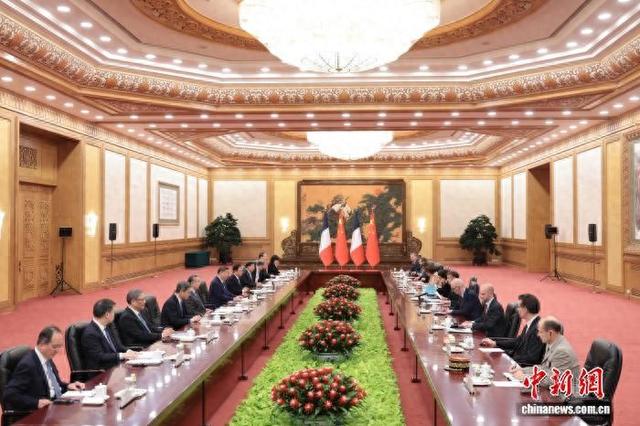
Core Viewpoint - In 2025, China's diplomacy has made significant progress, showcasing unique developments through various international engagements and initiatives aimed at enhancing global governance and fostering cooperation among major powers [1][2][4]. Group 1: Major Power Relations - China has actively promoted cooperation and positive interactions among major powers, with notable developments in Sino-American relations, including four high-level communications and successful economic negotiations [2][4]. - The year marked the 50th anniversary of China-EU diplomatic relations, with increased interactions and cooperation between China and European nations, including high-profile visits from leaders [2][4]. - Sino-Russian relations have demonstrated stability and maturity, with regular meetings and strategic discussions between the two nations' leaders [4]. Group 2: Regional Diplomacy - China's emphasis on surrounding diplomacy is evident through four significant state visits by President Xi Jinping, aimed at enhancing bilateral and regional relations with neighboring countries [5][7]. - The diplomatic approach includes promoting shared benefits and mutual support with Southeast Asian nations, Russia, Central Asia, and South Korea, reinforcing political trust and economic integration [7]. Group 3: Global Governance Initiatives - In response to rising unilateralism and global challenges, China has proposed new governance initiatives, receiving support from over 140 countries and international organizations [8][10]. - The global governance initiative emphasizes fairness and justice, aligning with contemporary needs and public sentiment, and aims to reform the governance system [10]. - China's commitment to global governance is further demonstrated through various initiatives, including climate governance targets and the establishment of an international mediation institution [10].
李迅雷专栏 | 中央经济工作会议将如何优化“存量”与“增量”
中泰证券资管· 2025-12-17 11:33
Core Viewpoint - China's economy has entered an era dominated by stock economy, facing higher demands for optimizing stock and seeking incremental growth due to its large economic scale and accumulated debt [2][4]. Group 1: Economic Environment and Policy Direction - The recent Central Economic Work Conference highlighted the deepening impact of external environmental changes, indicating increased confidence in responding to external pressures such as tariffs and technology blockades [4][5]. - The conference emphasized the need to practice internal strength to tackle external challenges, maintaining the principle of "seeking progress while ensuring stability" and better coordinating domestic economic work with international trade struggles [4][5]. - The "14th Five-Year Plan" outlines that major country relations significantly influence international situations, which in turn deeply affect domestic development, necessitating consideration of international trade dynamics in future economic work [5][6]. Group 2: Consumption and Investment Strategies - Expanding domestic demand is a strategic measure to effectively respond to external shocks, with a focus on boosting consumption through actions like implementing urban and rural resident income increase plans [6][7]. - The Central Economic Work Conference called for stabilizing investment and increasing the scale of central budget investments, aligning with major project initiations in the first year of the "14th Five-Year Plan" [6][9]. - The manufacturing sector, which accounts for about 30% of global value added, faces challenges due to external demand pressures, necessitating a focus on global capacity layout and trade protectionism concerns [6][9]. Group 3: Fiscal and Monetary Policy Adjustments - The economic work for the coming year will focus on "stability and quality improvement," with a continuation of proactive fiscal policies and moderately loose monetary policies [9][10]. - Fiscal policies will maintain necessary deficits and total debt levels, with an expected slight increase in the fiscal deficit rate from around 4% to 4.2-4.5% to support economic growth [9][10]. - Monetary policy will utilize various tools flexibly, with expectations of a 25-50 basis point reduction in reserve requirements and a 10-20 basis point interest rate cut, emphasizing the importance of reasonable price recovery [10][11]. Group 4: Innovation and Structural Reforms - The focus on innovation-driven growth is critical, with plans to establish international technology innovation centers and promote high-quality development of key industrial chains [14][15]. - The conference reiterated the importance of addressing "involution" as part of the unified national market construction, emphasizing the need for tailored approaches based on local conditions [14][15]. - Local governments are encouraged to promote new industries and models while enhancing traditional industries through new technologies, aiming for a balanced development of manufacturing and service sectors [15][17]. Group 5: Real Estate and Risk Management - The conference aimed to stabilize the real estate market through city-specific policies, inventory reduction, and promoting the construction of quality housing [17][18]. - Measures to address local government debt risks were emphasized, including proactive debt management and improving the local tax system to enhance fiscal autonomy [18].

李迅雷解读中央经济工作会议:大国关系成为影响经济重要变量,以苦练内功开展“经贸斗争”
Xin Lang Cai Jing· 2025-12-11 14:57
Core Viewpoint - The Central Economic Work Conference emphasizes the transition to a stock economy, highlighting the need for strategic responses to external economic pressures and the importance of balancing domestic economic work with international trade dynamics [1][2][3]. Group 1: Economic Strategy and Policy - The conference indicates a shift in focus towards internal capabilities to address external challenges, with a commitment to "stability while seeking progress" as a guiding principle for economic work [2][3]. - The emphasis on expanding domestic demand is identified as a key strategy to counter external shocks, with specific actions to boost consumer spending and increase residents' income [3][17]. - Investment policies will aim to stabilize and increase central budget investments, aligning with major project launches in the early years of the 14th Five-Year Plan [3][17]. Group 2: Trade and External Relations - The conference acknowledges the deepening impact of external environmental changes, reflecting a more confident stance in dealing with tariffs and technology restrictions [2][16]. - There is a focus on integrating trade and investment, as well as domestic and foreign trade, to enhance resilience in external demand [18]. Group 3: Fiscal and Monetary Policy - The fiscal policy will maintain necessary deficits and debt levels while optimizing project implementation, with expectations for a slight increase in the fiscal deficit rate to 4.2-4.5% [19][20]. - Monetary policy will remain flexible, with anticipated adjustments including a reduction in reserve requirements and interest rates, while also considering price stability as a new objective [20][21]. Group 4: Innovation and Structural Reform - The conference stresses the importance of innovation-driven growth, with initiatives to develop new economic drivers and enhance the quality of existing industries [22][23]. - There is a commitment to reforming the market structure to prevent "involution" and promote a unified national market, ensuring that traditional industries are not neglected in favor of new developments [23]. Group 5: Real Estate and Risk Management - The conference outlines measures to stabilize the real estate market, including targeted policies for inventory reduction and supply optimization [24]. - It also addresses the need to manage risks in key areas such as local government debt and small financial institutions, indicating a proactive approach to financial stability [12][24].
李迅雷:中央经济工作会议将如何优化“存量”与“增量”|立方大家谈
Sou Hu Cai Jing· 2025-12-11 14:19
Group 1 - China's economy has entered an era dominated by stock economy, facing higher demands for optimizing stock and seeking incremental growth due to its large economic scale and accumulated debt [2] - The Central Economic Work Conference emphasizes the need to practice internal strength to respond to external challenges, indicating increased confidence in handling external pressures such as tariffs and technology blockades [3][4] - The conference highlights the importance of balancing domestic economic work with international trade struggles, aiming for high-quality development amidst external uncertainties [3][4] Group 2 - Expanding domestic demand is a key strategic measure to counter external shocks, with a focus on boosting consumption through specific actions and increasing residents' income [4][5] - The conference calls for stabilizing investment and increasing central budget investment to support major projects, particularly in urban renewal to mitigate real estate investment decline [4][6] - The manufacturing sector, which accounts for about 30% of global value added, faces challenges from external market demands and trade protectionism, necessitating a focus on the global layout of production capacity [5] Group 3 - The economic work for the coming year will prioritize quality and efficiency, with a continuation of proactive fiscal and moderately loose monetary policies [6][7] - Fiscal policies will maintain necessary deficits and optimize project implementations, with an expected increase in the fiscal deficit rate from around 4% to 4.2-4.5% [7] - Monetary policy will remain flexible, with potential adjustments in reserve requirements and interest rates, while also focusing on reasonable price recovery as a key consideration [8] Group 4 - The conference outlines the need for innovation-driven growth, emphasizing the establishment of international technology innovation centers and the development of new industries [10][11] - Local governments are encouraged to tailor their approaches based on regional resources and conditions, promoting new production capacities while enhancing traditional industries [11] - The real estate market will be stabilized through targeted measures, including inventory reduction and promoting the construction of quality housing [12][13]
中央经济工作会议将如何优化“存量”与“增量”
李迅雷金融与投资· 2025-12-11 13:55
Core Viewpoint - China has entered an era dominated by stock economy, facing higher demands for optimizing existing resources and managing debt levels amid international economic challenges [1][2] Group 1: Economic Strategy and External Environment - The Central Economic Work Conference emphasized the need to strengthen internal capabilities to respond to external challenges, indicating increased confidence in managing international trade disputes [2] - The focus on "stability while seeking progress" remains a key principle, with an added emphasis on better coordinating domestic economic work and international trade struggles [2][3] - The relationship between major powers significantly influences international dynamics, which in turn affects domestic development, highlighting the need for strategic consideration in economic planning [3] Group 2: Domestic Demand and Investment - Expanding domestic demand is a primary strategy to counter external shocks, with initiatives to boost consumption and increase residents' income being prioritized [3] - The conference called for stabilizing investment and increasing the scale of central budget investments, aligning with major project launches in the early stages of the 14th Five-Year Plan [3][5] - The focus on high-quality urban renewal projects aims to mitigate the downward pressure on real estate investment [3] Group 3: Fiscal and Monetary Policy - The economic work for the coming year will maintain a stable and continuous macroeconomic policy, with a slight increase in the fiscal deficit rate expected to rise from around 4% to 4.2-4.5% [5] - Fiscal policies will prioritize optimizing project implementation and increasing public service spending, while monetary policy will remain flexible, with potential adjustments in reserve requirements and interest rates [6][7] - The conference introduced a new requirement for monetary policy to consider reasonable price recovery as a key objective [6] Group 4: Innovation and Structural Reform - The emphasis on innovation-driven growth highlights the urgency of nurturing new economic drivers, with specific actions planned for key industrial chains and technology innovation centers [8][9] - The need to combat "involution" is recognized as part of the broader goal of building a unified national market, with a focus on developing new productive forces [9] Group 5: Real Estate and Financial Stability - The conference reiterated the importance of stabilizing the real estate market through targeted measures, including inventory reduction and improving supply [10] - Strategies to address local government debt risks were outlined, emphasizing proactive debt management and the establishment of a sound local tax system [11]

亮点前瞻|启航新征程·国泰海通2026年度策略会
国泰海通证券研究· 2025-10-30 06:47
Group 1 - The main forum gathers prominent guests from institutions like the Chinese Academy of Social Sciences and the China Financial Forty Forum, focusing on insights into the US-China economy and major power relations [2] - Nearly 30 sub-forums cover hot topics such as humanoid robots, AI ecosystem, automotive extensions, new energy, new consumption, real estate chain, and innovative pharmaceuticals, featuring a comprehensive research lineup and senior industry experts to analyze industry trends [3] - The event will take place from November 4-6 at the China Grand Hotel in Beijing [4] Group 2 - Over 800 listed companies will participate, with more than 1,000 small-scale exchanges covering over 40 industries, providing a comprehensive, high-quality, and efficient communication platform for professional institutions [5] - Multiple specialized forums will be set up by various departments, including policy and industry research institutes, sales departments, futures research institutes, margin financing departments, and asset allocation departments, creating a one-stop communication and dialogue platform [6] - High-end dialogues between domestic and foreign investors will be specially arranged, with several international relations experts decoding the political and economic landscape of key regions such as US-China, China-Europe, Middle East, and Africa [8] Group 3 - A total forum live broadcast will be presented on Junhong APP and Daohuo APP, led by chief analysts in macro and strategy research, forecasting investment strategies for 2026 [10]

北京香山论坛筹委会:俄美法德等100余个国家、地区和国际组织确认出席本届香山论坛
Huan Qiu Wang· 2025-09-11 10:08
Group 1 - The 12th Beijing Xiangshan Forum will be held from September 17 to 19, focusing on "Safeguarding International Order and Promoting Peaceful Development" [1][2] - Over 100 countries' defense departments and military leaders, including representatives from Russia, Germany, France, Ukraine, and the United States, have confirmed attendance, indicating a broad and inclusive representation [2][3] - The forum will feature four plenary sessions and eight parallel sessions discussing topics such as global security governance, strategic trust in the Asia-Pacific region, and the impact of emerging technologies on international security [1][2] Group 2 - The forum coincides with the 80th anniversary of the victory in the World Anti-Fascist War and the establishment of the United Nations, highlighting China's role as a builder of peace and contributor to global development [4] - The international influence of the Beijing Xiangshan Forum is increasing, with a particular focus on major power relations, especially between China and the United States [3][4] - The forum will also include a defense technology exhibition, emphasizing the theme "Peaceful Use of Technology, Technology Safeguarding Peace," aligning with the forum's values [2]
北京香山论坛筹委会:俄美法德等100多个国家和组织代表确认出席本届香山论坛
Huan Qiu Shi Bao· 2025-09-11 10:08
Group 1 - The 12th Beijing Xiangshan Forum will be held from September 17 to 19, focusing on "Safeguarding International Order and Promoting Peaceful Development" [1][2] - Over 100 countries, including Russia, Germany, France, Ukraine, and the United States, will have defense department leaders and representatives from international and regional organizations attending [2][3] - The forum will feature four plenary sessions discussing global security governance, strategic trust in the Asia-Pacific, post-war international order, and regional peace through dialogue [1][2] Group 2 - The representation at this year's forum includes a significant increase in former military and political leaders, as well as renowned experts, enhancing its inclusivity and balance [2] - A concurrent exhibition on defense technology will take place, themed "Peaceful Use of Technology, Technology Safeguarding Peace," aligning with the forum's values [2] - The forum is expected to address the evolving dynamics of major power relations, particularly the U.S.-China relationship, which remains a focal point of media attention [3][4] Group 3 - The forum's agenda is influenced by significant historical milestones, such as the 80th anniversary of the victory in the Anti-Japanese War and the establishment of the United Nations [4] - The development of China's military capabilities is anticipated to enhance international confidence in China's role as a contributor to global peace and stability [4]