油价下行

Search documents
OPEC+供应增加促油价下跌 机构看好航空业长期趋势(附概念股)
Zhi Tong Cai Jing· 2025-08-04 00:34
Group 1 - Oil prices in Asia have declined due to OPEC+ agreeing to significantly increase production, raising concerns about global oversupply [1] - Brent crude oil prices have dropped to around $69 per barrel, while West Texas Intermediate crude is close to $67 per barrel [1] - OPEC+ has approved an increase of 547,000 barrels per day starting in September, aligning with market expectations [1] Group 2 - The potential cancellation of approximately 1.66 million barrels per day in production cuts remains uncertain at this time [1] - Recent declines in oil prices follow three months of increases, influenced by weak U.S. employment data and concerns over economic slowdown due to trade tensions [1] - National Securities has indicated that lower oil prices are beneficial for airline profitability, as fuel costs remain the largest expense for airlines [1] Group 3 - Cathay Pacific Securities suggests that short-term demand fluctuations do not alter the long-term growth logic of the aviation industry, recommending a contrarian approach to airline investments [2] - The Chinese aviation sector is expected to experience steady growth, with market-driven ticket pricing and a recovery in supply-demand dynamics anticipated over the next two years [2] - The airline supply has entered a low growth phase, but the medium-term outlook remains positive with oil price declines aiding profit recovery [2] Group 4 - Relevant Hong Kong-listed airline stocks include China National Aviation (601111) (00753), Southern Airlines (600029) (01055), and Eastern Airlines (00670) [3] - Private jet manufacturer mentioned is Cirrus (02507) [3]


特朗普如愿了?OPEC掀起新一轮供应冲击,全球油市或迎"供应过剩潮"
Hua Er Jie Jian Wen· 2025-07-07 07:04
Core Viewpoint - OPEC+ has initiated a new round of supply increases, potentially exacerbating the global oil supply surplus risk and putting further downward pressure on oil prices, which aligns with Trump's calls to lower fuel costs, but poses profitability challenges for U.S. and OPEC producers [1][3][4] Group 1: OPEC+ Supply Increase - On July 5, OPEC+ agreed to increase production by 548,000 barrels per day (bpd) in August, exceeding market expectations of 411,000 bpd [1][3] - The decision reflects a significant policy shift for OPEC+, indicating an aggressive strategy to reclaim market share amid rising competition from U.S. shale oil producers [1][3] - As of July, the eight participating countries have announced or implemented a production increase of 1.37 million bpd, accounting for 62% of the 2.2 million bpd reduction being reversed [3] Group 2: Market Dynamics and Price Pressure - Despite concerns over supply surplus, Saudi Arabia remains optimistic about demand, setting the official selling price for Arab Light crude to Asia at a premium of $2.20 per barrel over the Oman/Dubai average, up from $1.20 [4] - The International Energy Agency predicts a supply surplus equivalent to about 1.5% of global consumption in the fourth quarter, indicating potential market loosening [8] - Oil prices have dropped 11% in the past two weeks, with forecasts suggesting further declines to around $60 per barrel due to trade tensions impacting global economic outlook [1][8] Group 3: Financial Implications for Producers - Lower oil prices pose financial pressure on oil-producing countries, with Saudi Arabia needing prices above $90 per barrel to cover government spending [9] - U.S. shale executives anticipate a significant reduction in drilling activity due to falling prices, impacting major companies like ExxonMobil and those supporting Trump's administration [9] - The need for OPEC+ to balance market share with lower prices reflects a strategic pivot in response to current market realities [9]

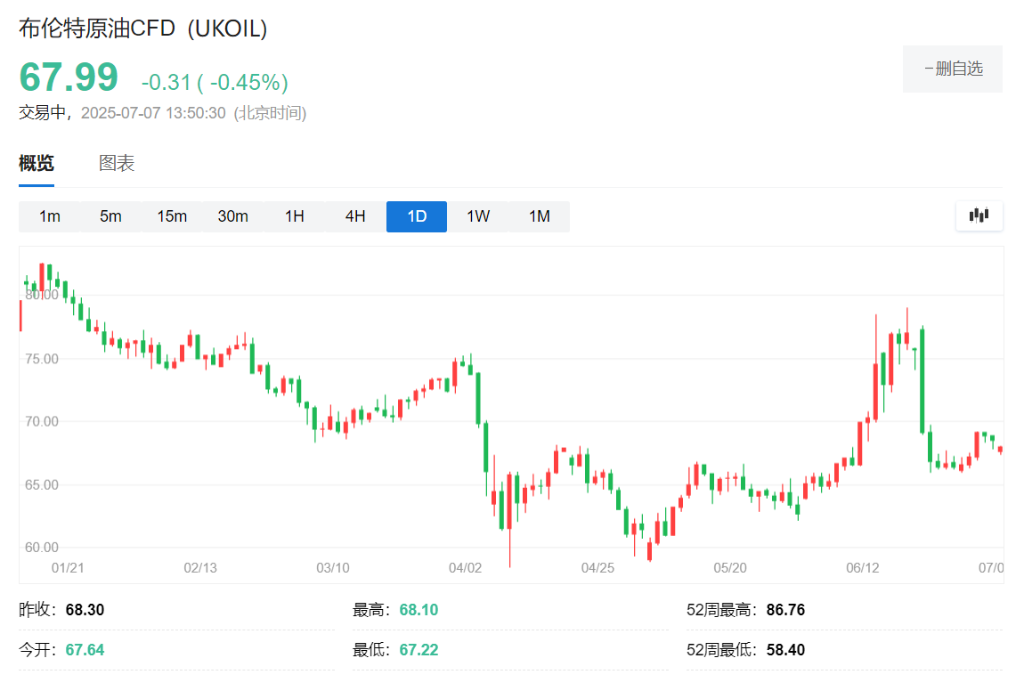
欧佩克+6月继续增产 国际油价5日应声收跌近2%
Xin Hua Cai Jing· 2025-05-06 00:24
Core Viewpoint - OPEC+ has decided to increase oil production limits, leading to a decline in international oil prices due to market concerns about trade tensions and economic growth [2][3]. Group 1: OPEC+ Production Decisions - OPEC+ members agreed to raise the daily oil supply limit by 410,000 barrels starting in early June, marking a continuation of supply recovery efforts for two consecutive months [2]. - The decision was influenced by healthy market fundamentals and low oil inventories [2]. Group 2: Market Reactions and Predictions - On June 5, the price of light crude oil futures for June delivery fell by $1.16 to $57.13 per barrel, a decrease of 1.99%, while Brent crude for July delivery dropped by $1.06 to $60.23 per barrel, down 1.73% [2]. - UBS analyst Giovanni Staunovo indicated that the accelerated exit from voluntary production cuts by OPEC+ would contribute to the decline in oil prices amid trade tensions and economic growth concerns [2]. - Goldman Sachs revised its forecast for the average price of New York crude oil futures for the year from $59 to $56 per barrel, citing high remaining capacity and recession risks [3].
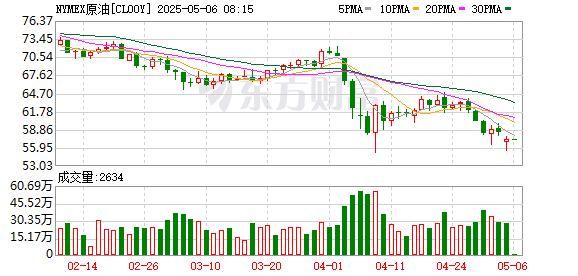
油价,二连降!
证券时报· 2025-03-05 11:18
Core Viewpoint - The recent announcement by the National Development and Reform Commission regarding the reduction of domestic gasoline and diesel prices is expected to lower transportation costs for residents and logistics companies, potentially leading to increased consumer spending and economic activity [1][2]. Price Reduction Impact - Effective from March 5, 2025, gasoline and diesel prices will be reduced by 135 yuan and 130 yuan per ton, respectively, translating to a decrease of approximately 0.1 yuan per liter for 92-octane gasoline and 0.11 yuan per liter for 95-octane gasoline [1][2]. - For an average family car with a 50-liter fuel tank, filling up will save around 5 yuan, while for heavy-duty trucks carrying 50 tons, fuel costs will decrease by approximately 4.4 yuan for every 100 kilometers driven [2]. International Oil Market Dynamics - The international oil market has been under pressure due to concerns over increased production from OPEC+ countries starting April 1, 2025, which is expected to lead to a rise in oil supply and further decline in oil prices [3][4]. - As of the report, West Texas Intermediate (WTI) crude oil was priced at $67.83 per barrel, and Brent crude at $70.9 per barrel, with a cumulative decline of nearly 3% over the week [2]. Future Price Expectations - Analysts predict a high likelihood of further reductions in refined oil prices due to the anticipated increase in oil supply and ongoing geopolitical tensions, which may suppress global oil demand [4]. - The market is also reacting to the U.S. government's plans to impose tariffs on certain countries, which could exacerbate trade risks and impact oil demand negatively [3][4].