
西德克萨斯中质原油

Search documents
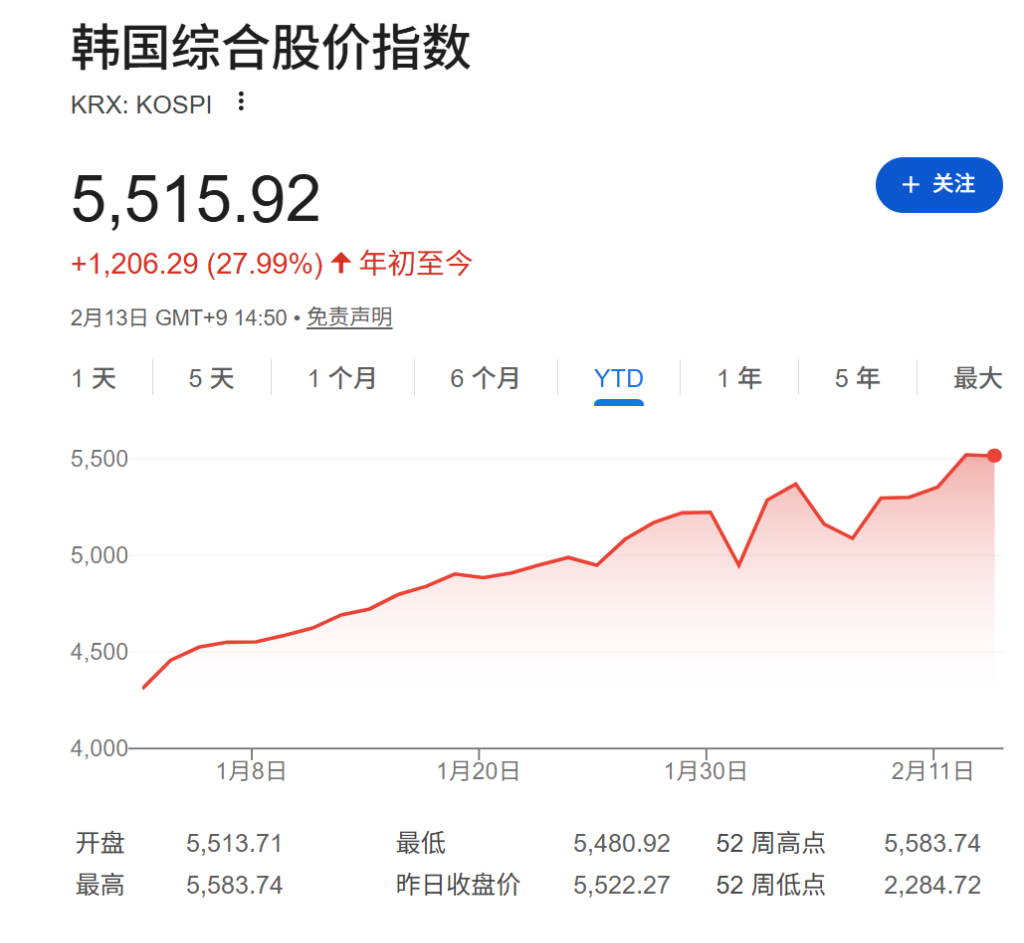
亚洲股市春节前回落,韩股逆势上涨0.9%,黄金小幅反弹,市场聚焦美国通胀数据
Hua Er Jie Jian Wen· 2026-02-13 06:24
Market Overview - Asian stock markets retreated from record highs as investors locked in profits ahead of the Chinese New Year, with the MSCI Asia-Pacific index falling 0.9%, marking its first decline in six trading days [1] - The South Korean Kospi index rose 0.9%, showcasing resilience amid concerns over U.S. tech stocks due to AI-related anxieties [1][2] - The U.S. 10-year Treasury yield increased by 1 basis point to 4.11%, partially recovering from gains driven by risk aversion [1][5] Commodity Performance - Gold prices rose by 0.7% to approximately $4,950 per ounce, while silver saw a daily increase of 3%, reaching $77.46 per ounce [1][5] - Bitcoin rebounded after four consecutive days of decline, trading at $66,335.45 [5] Inflation and Interest Rate Expectations - The market is focused on the upcoming U.S. January inflation data, with expectations for the core Consumer Price Index (CPI) to rise by 2.5% year-on-year [1][8] - Traders have pushed back expectations for a Federal Reserve rate cut from June to July, with minimal likelihood of a cut in March [1][8] - Citigroup's Benjamin Wiltshire cautioned that the market may be overly optimistic about U.S. inflation prospects, suggesting that inflation expectations could be revised upward [8] AI Market Impact - The volatility in U.S. markets reflects the high risks associated with the AI boom, but the impact on Asian markets has been relatively contained so far [7] - Applied Materials' strong post-market performance indicates potential easing of AI-related concerns [7] Regional Stock Performance - The MSCI Asia-Pacific index has risen approximately 12% year-to-date, while the S&P 500 index has erased all its gains for the year, currently down 0.2% [2] - The South Korean Kospi index has surged 32% this year, making it the best-performing stock market globally [2]

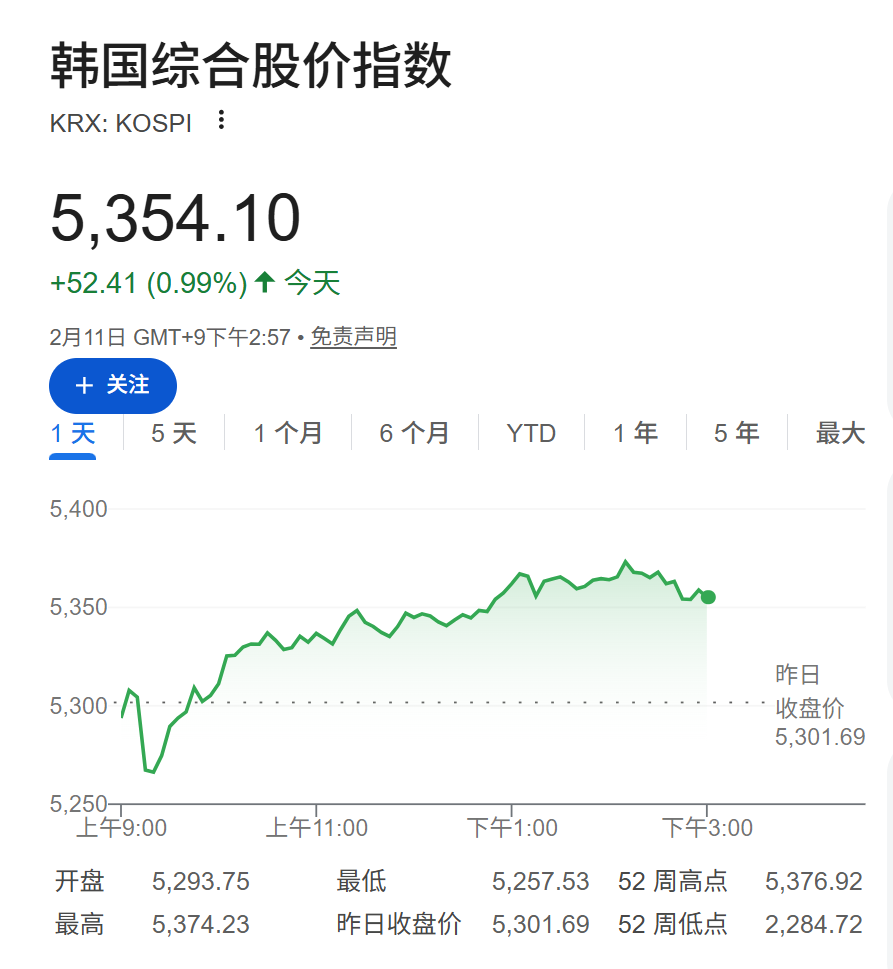
市场聚焦美国非农,亚太市场续创新高,美元连跌四日,黄金站稳5000美元大关
Hua Er Jie Jian Wen· 2026-02-11 06:29
Economic Overview - The U.S. economic data shows weakness, increasing expectations for Federal Reserve rate cuts, which has driven Asian stock markets to historical highs [1][2] - The MSCI Asia-Pacific Index rose by 1% to a record high, further extending its lead over U.S. and European markets this year [1] - U.S. retail sales data for December unexpectedly stagnated, indicating reduced consumer support for the economy, reinforcing the likelihood of rate cuts later this year [1][2] Market Reactions - The U.S. dollar weakened against all G10 currencies, with the dollar index declining for the fourth consecutive day by 0.2% [1][6] - Asian markets are experiencing a strong performance, with major indices showing significant gains, such as the Australian S&P/ASX 200 rising by 1.7% [4][3] - Gold prices have stabilized above $5,000 per ounce, rising by 0.4% due to the weak retail sales data supporting the case for rate cuts [1][9] Employment Data Focus - The upcoming U.S. employment report is seen as critical, with economists expecting 65,000 new jobs in January, which would be the best performance in four months [1][2] - The unemployment rate is anticipated to remain at 4.4%, and the employment data will include annual revisions expected to show a downward adjustment in employment numbers through March 2025 [1][2] Commodity and Currency Movements - Gold prices have seen a recent increase, with spot gold rising to $5,044.53 per ounce, supported by declining U.S. Treasury yields [9][12] - Oil prices have also risen, with Brent crude increasing by 0.8% to $69.36 per barrel amid geopolitical tensions in the Middle East [13] - Bitcoin has seen a slight decline of 1.6%, trading at $67,531.27, despite increased accumulation by large holders [16]
澳新银行:美伊双方仍存在很大分歧 地缘政治风险溢价保持不变
Xin Lang Cai Jing· 2026-02-06 08:35
Core Viewpoint - Oil prices have seen a slight increase during European trading, but a weekly decline is expected for the first time in several weeks due to upcoming talks between the U.S. and Iran, which have eased concerns over potential military actions threatening regional oil infrastructure [1] Group 1: Oil Price Movements - Brent crude and West Texas Intermediate (WTI) prices rose by 1.1%, reaching $68.28 per barrel and $63.13 per barrel, respectively [1] - Despite the recent increase, both benchmark prices have cumulatively dropped over 1% this week [1] Group 2: Geopolitical Context - The negotiations between Washington and Tehran have alleviated fears of military actions that could disrupt oil infrastructure in the region [1] - Analysts from ANZ Research indicate that significant differences remain between the two parties, suggesting that geopolitical risk premiums are likely to persist [1]
油价震荡 交易者权衡美伊紧张局势与库存下降影响
Xin Lang Cai Jing· 2026-02-04 12:01
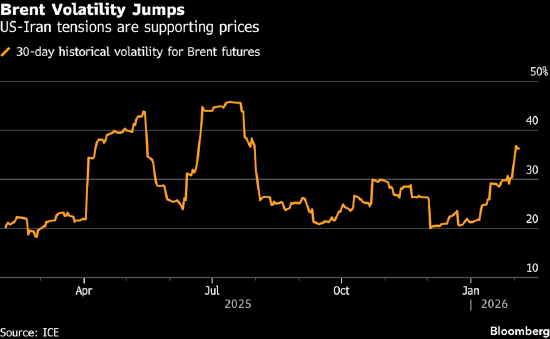
Core Viewpoint - Oil prices are fluctuating as traders weigh geopolitical tensions in the Middle East against a significant decline in U.S. crude oil inventories [1][4] Group 1: Oil Price Movements - Brent crude oil prices have risen to $67 per barrel, while West Texas Intermediate (WTI) is trading around $63 [5] - Geopolitical tensions are identified as a core driver of current market conditions, with market fundamentals suggesting oil prices should be lower [6] Group 2: Geopolitical Tensions - Iran has requested to move diplomatic talks with the U.S. from Turkey to Oman, focusing solely on its nuclear program, following the U.S. downing of an Iranian drone [5][6] - U.S. President Donald Trump has threatened military action against Iran if an agreement is not reached [5] - A U.S.-flagged tanker was recently harassed by Iranian Revolutionary Guard boats in the Strait of Hormuz, highlighting escalating tensions [8] Group 3: U.S. Oil Inventory Data - The American Petroleum Institute reported a decrease of 11.1 million barrels in U.S. crude oil inventories last week, which, if confirmed by official data, would mark the largest decline since June [6] - The current oil prices are believed to include a geopolitical risk premium of $5 to $10 per barrel due to expectations of potential U.S. strikes on Iran [8]
地缘风险缓解叠加大宗商品抛售,国际油价大幅下挫
Xin Lang Cai Jing· 2026-02-02 10:22
Group 1 - The core viewpoint of the articles is that geopolitical risk premiums are decreasing as the U.S. engages in negotiations with Iran, leading to a significant drop in international oil prices [1][3] - Brent crude oil prices fell over 7%, trading around $66 per barrel, while West Texas Intermediate crude approached $62 per barrel [1][3] - The recent sell-off in the commodity market, particularly in metals, has also impacted oil prices, with gold prices dropping by 10% and copper prices declining over 5% [1][3] Group 2 - The tensions between the U.S. and Iran escalated in January due to Iran's crackdown on protests, which previously pushed oil prices significantly higher [2][4] - The geopolitical situation raised the risk of supply disruptions in about one-third of global oil supply regions, diverting attention from the increasing oversupply in the global oil market [2][4] - Despite recent oil price increases, OPEC and its partners have approved a plan to maintain stable production levels in March, marking the final phase of a three-month production freeze [2][4]
无视特朗普搅局?华尔街机构坚守多头阵地:历史显示动荡后美股六成概率反弹
Hua Er Jie Jian Wen· 2026-01-21 12:32
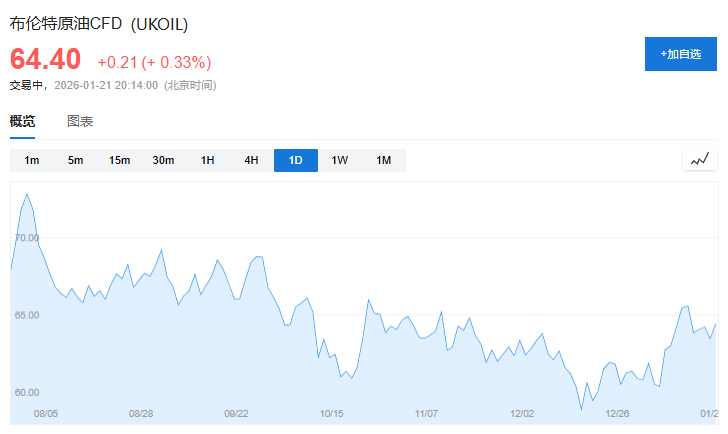
Core Viewpoint - Despite geopolitical tensions and market volatility, Wall Street strategists believe the foundation for market growth remains solid, presenting a buying opportunity [1][2]. Group 1: Geopolitical Impact - Historical data shows that geopolitical risks typically have a limited impact on stock markets, with 60% of the time seeing market gains within three months following significant geopolitical events since 1940, unless oil prices surge dramatically [1][2]. - Current oil prices are significantly below long-term averages, indicating that the ongoing geopolitical tensions have not yet reached a critical threshold for the stock market [2]. Group 2: Earnings Growth - Analysts project a 9% growth in corporate profits for Q4, with double-digit growth expected in each quarter of 2026 [7]. - In the first week of earnings reports for S&P 500 companies, 73% exceeded analyst expectations, surpassing the average of 68% for this period [7]. - Factors such as tax cuts, real wage growth, and declining inflation are expected to support stock market performance, alongside continued returns from AI trading [7]. Group 3: Market Sentiment and Strategy - While bullish sentiment prevails, strategists acknowledge the need for caution due to increased volatility, with the bull-bear ratio among individual investors reaching its highest level since 2024 [8]. - Investment managers are maintaining high equity positions, close to 96%, but are advised to hedge against potential risks [8]. - Strategists from major firms like Barclays and JPMorgan suggest maintaining a bullish stance while implementing hedges to manage risks, especially as volatility is anticipated to rise [8][9].
Vatee万腾外汇:美元兑加元连续三个交易日于1.3890附近横盘
Sou Hu Cai Jing· 2026-01-15 04:14
Core Viewpoint - The USD/CAD exchange rate remains stable around 1.3890, supported by recent US economic data indicating resilience in the economy, while the CAD is influenced by energy market performance [1][3][4] Group 1: US Economic Data - Recent US retail sales for November reached $735.9 billion, with a month-on-month increase of 0.6%, surpassing market expectations [1] - The Producer Price Index (PPI) growth rate remains stable year-on-year, contributing to a positive outlook on the US economic fundamentals [1] Group 2: Market Expectations and Monetary Policy - Market expectations suggest a low likelihood of the Federal Reserve adjusting interest rates in the near term, providing temporary support for the USD [3] - Financial institutions have adjusted their forecasts for future policy, shifting focus to mid-next year [3] Group 3: CAD and Energy Market Influence - The CAD's performance is closely tied to the energy market, particularly as Canada is a major crude oil exporter [3] - Current West Texas Intermediate crude oil prices are stable above $60 per barrel, supported by geopolitical factors and supply-demand dynamics, which helps limit the USD/CAD exchange rate's upward movement [3] Group 4: Technical Analysis and Future Outlook - The USD/CAD exchange rate is expected to continue in a range-bound pattern in the short term, with significant economic data releases potentially causing temporary fluctuations [4] - Long-term exchange rate direction will depend on economic growth differences between the US and Canada, the degree of monetary policy divergence, and changes in global risk sentiment [4] - Market participants are advised to adopt a flexible allocation strategy to respond to potential changes amid ongoing uncertainties [4]

周一原油价格上涨
Sou Hu Cai Jing· 2026-01-06 01:30
Group 1 - The capture of Venezuelan President Nicolás Maduro by U.S. military has heightened geopolitical risks, leading to an increase in oil prices, with West Texas Intermediate rising by 1.7% to over $58 per barrel [1] - Despite Venezuela's small global footprint and ongoing market oversupply, the U.S. plans to continue pressuring OPEC oil exports, which has resulted in a surge in oil company stock prices following President Trump's announcement of significant investments to rebuild Venezuela's infrastructure [1] - The future of Venezuela's oil industry remains uncertain, but the U.S. intends to manage the country's oil supply, with reports of plans to intercept a tanker allegedly carrying Venezuelan oil [1] Group 2 - Venezuela's oil production has drastically declined over the past two decades, now accounting for less than 1% of global supply, primarily exporting to China, amidst a backdrop of significant market oversupply [2] - Geopolitical risks have intensified, with the market reacting more to potential chain reactions from Russia, China, and Iran regarding U.S. actions than to the short-term supply losses from Venezuela [2] - OPEC+ has decided to maintain its plan to pause supply increases in the first quarter, with no discussions on the Venezuelan situation during a recent meeting [2] Group 3 - Due to U.S. naval blockades, Venezuela's December oil exports have dropped to a 17-month low, with restrictions preventing tankers from reaching their destinations [3] - Despite U.S. attacks, Venezuela's oil infrastructure has not been significantly affected, although pressure on Maduro's regime has led to the closure of some oil wells [3] - Any short-term disruptions in Venezuelan output are expected to be offset by increased production elsewhere, with forecasts suggesting global supply growth could push oil prices down to $50 in the next year [3] Group 4 - February WTI crude oil prices increased by 1.7%, closing at $58.32 per barrel, while March Brent crude rose by 1.7% to $61.76 per barrel [4]
受整体市场乐观情绪提振,油价从10月以来低点回升
Xin Lang Cai Jing· 2025-12-12 10:02
Core Viewpoint - International oil prices have rebounded from their lowest closing levels in two months, driven by overall optimism in the financial markets, despite ongoing concerns about oversupply in the oil market [1][3]. Group 1: Oil Price Movements - Brent crude oil prices fell by 1.5% in the previous trading day but subsequently recovered to around $62 per barrel, while West Texas Intermediate crude oil prices approached $58 per barrel [1][3]. - Year-to-date, oil prices have declined by nearly 20% due to concerns over oversupply [1][3]. - The International Energy Agency (IEA) reiterated its expectation of unprecedented oversupply in the oil market, although it slightly downgraded its forecast from the previous month, noting that global oil inventories have reached a four-year high [1][3]. Group 2: Market Sentiment and Geopolitical Factors - The optimistic sentiment in the market has helped offset the bearish outlook for oil prices, with traders willing to increase their risk exposure [1][3]. - Geopolitical tensions, particularly the recent U.S. seizure of a supertanker near Venezuela's coast and new sanctions against Venezuelan officials, may provide some support for oil prices [1][4]. - The situation in Venezuela is seen as a new phase of pressure from the Trump administration aimed at cutting off oil revenue to President Nicolás Maduro, although it is not expected to significantly alter the overall market dynamics unless it leads to supply disruptions [4]. Group 3: Supply Recovery - Brazil's oil production is recovering from a previous shutdown that had reduced its output by over 300,000 barrels per day [4]. - Brazil is the largest oil supplier in Latin America and is among the key new sources of oil supply alongside the U.S., Canada, Guyana, and Argentina [4].
油价遭遇2023年以来最糟月度表现
Xin Lang Cai Jing· 2025-11-28 10:07
Group 1 - Oil prices are experiencing the longest monthly decline in over two years, with Brent crude stabilizing above $63 per barrel and expected to see a fourth consecutive month of decline in November [1] - The WTI futures price is near $59 per barrel, with trading paused due to technical issues at the CME Group [1] - OPEC+ is likely to extend its production cut plan until early 2026, with the upcoming meeting focusing on long-term assessments of member countries' production capacity [1] Group 2 - Year-to-date, Brent crude prices have dropped by 15%, driven by expectations of oversupply in the global oil market as OPEC+ resumes production and non-OPEC producers increase output [2] - JPMorgan Chase forecasts a daily oversupply of 2.8 million barrels in 2026 and 2.7 million barrels in 2027 [2] - The potential resolution of the Ukraine conflict could significantly impact the oil market, as Russia's oil exports are currently under severe Western sanctions [2] Group 3 - The CEO of XAnalysts Pty suggests that a potential peace agreement regarding Ukraine may take time, as Russia might choose to store some oil rather than sell it immediately [3] - There are indications that U.S. sanctions are pressuring Russian oil producers, with oil inventories in Russia exceeding 16 million barrels, a level not seen since the onset of the Ukraine conflict in 2022 [3]