
空间科学研究

Search documents
创下多个首次!中国空间站2025年“工作总结”出炉
Xin Lang Cai Jing· 2026-01-08 04:08
Core Viewpoint - The report emphasizes the promotion of space science, technology, and applications, showcasing 33 representative scientific research and application achievements from China's space station program [1] Group 1: Space Science and Technology - The report focuses on areas such as space life sciences and human research, microgravity physical sciences, and new technologies and applications in space [1] - It highlights completed in-orbit experiments, downlink scientific samples, and analysis results that demonstrate significant research progress [1] Group 2: Public Engagement and Expectations - The report aims to address societal concerns and expectations regarding the development of China's space station [1] - It reflects China's capabilities and innovative spirit in the field of space technology [1] Group 3: Future Implications - The report is intended to facilitate further in-depth space scientific research, achieve high-level scientific breakthroughs, promote large-scale applications, and enhance multidimensional benefits [1]
神二十一乘组“太空出差”近30天 各项工作有序推进
Yang Shi Wang· 2025-11-25 07:16
Group 1 - The Shenzhou 21 crew has been in orbit for nearly a month, with ongoing work and new developments expected after the arrival of supplies for the Shenzhou 22 mission [1] - The Shenzhou 21 crew is primarily focused on platform maintenance experiments and preparations for significant tasks, while the Shenzhou 20 crew is engaged in final work before their return [4] - After the Shenzhou 20 crew's departure, the Shenzhou 21 crew is conducting extensive recovery and organization work, alongside established in-orbit experimental projects [6] Group 2 - The Shenzhou 21 crew will conduct 27 new scientific and application projects during their approximately six-month stay, focusing on critical scientific issues in various fields such as space life sciences, aerospace medicine, and space materials science [8] - A notable experiment involves the first in-orbit implementation of domestic rodent space science experiments, using four mice to study the effects of microgravity and confined conditions on behavior [8]

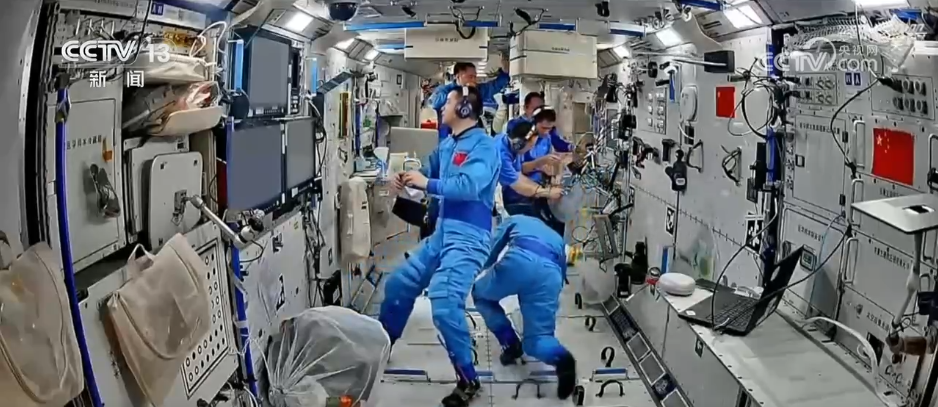
中国空间站第九批空间科学实验样品顺利返回 涉及26个实验项目
Xin Hua She· 2025-11-15 08:03
Core Points - The ninth batch of scientific experiment samples from China's space station has successfully returned with the Shenzhou-21 spacecraft, involving 26 experimental projects [1] - The total weight of the returned scientific samples is approximately 46.67 kilograms, including 9 types of life experiment samples, 32 types of material experiment samples, and 3 types of combustion experiment samples [1] - The returned life experiment samples include mice, zebrafish, and other organisms, which will be studied to understand their responses and adaptations to the space environment [1] Summary by Category Life Science Experiments - The returned samples include mice, zebrafish, and other organisms, which will be analyzed for behavioral and physiological responses to the space environment [1] - The research aims to provide scientific evidence for understanding the impact of space conditions on living organisms [1] Material and Combustion Experiments - A total of 32 types of material experiment samples and 3 types of combustion experiment samples were also returned, which will be further studied [1] - These samples will be transported to the Chinese Academy of Sciences for subsequent research [1] Logistics and Handling - The samples were transferred to the Space Application Engineering and Technology Center of the Chinese Academy of Sciences for inspection and confirmation before being handed over to scientists for further research [1] - The remaining material and combustion samples will be returned to Beijing with the Shenzhou-21 spacecraft's return capsule [1]
天宫迎来小鼠“乘客”
Ke Ji Ri Bao· 2025-11-03 02:55
Group 1: Space Applications and Research - The Chinese Academy of Sciences is leading a project involving six scientific experiments in life sciences, fluid sciences, and materials sciences, with a total weight of 63.2 kilograms sent aboard the Shenzhou 21 manned spacecraft [1] - This mission marks the first time mice have been sent to the Chinese space station, which are important model organisms for life sciences research due to their high genetic homology with humans, small size, short reproductive cycle, and ease of genetic editing [1] - The project aims to study the effects of microgravity and confinement on mouse behavior, which is crucial for understanding the key technologies for breeding and monitoring small mammals in space [1] Group 2: Lithium-Ion Battery Research - The "Electrochemical Optical In-Situ Research of Lithium-Ion Batteries for Space Applications" project, developed by the Dalian Institute of Chemical Physics and the Astronaut Research and Training Center, focuses on in-situ optical observation experiments of lithium-ion batteries in microgravity [3] - The research aims to capture the entire process of lithium dendrite growth in microgravity, which is essential for the development and reliable application of lithium-ion batteries in future space missions [3] - Lithium-ion batteries are highlighted as a crucial power source for various space missions due to their lightweight and long lifespan [2]
逐梦九霄 再赴天宫
Ren Min Ri Bao· 2025-10-31 22:06
Core Viewpoint - The successful launch of the Shenzhou-21 manned spacecraft marks a significant advancement in China's space technology, particularly with the implementation of a 3.5-hour autonomous rapid rendezvous and docking process, showcasing innovation in space mission capabilities [2][3]. Group 1: Technological Innovations - The Shenzhou-21 mission challenges the previous docking time of 6.5 hours, aiming for a new record of 3.5 hours, which is a major leap in space technology innovation [2]. - Key technological optimizations include reducing the number of orbits from three to two during the remote guidance phase, shortening the initial distance for close-range guidance, and unifying the optimization of both guidance phases to ensure trajectory safety [2]. - The GNC (Guidance, Navigation, and Control) system can switch between 3.5-hour and 6.5-hour docking modes, enhancing flexibility and emergency response capabilities during missions [3]. Group 2: System Integration and Support - The Shenzhou-21 mission relies on a highly integrated support network composed of various subsystems, including the rocket system, measurement and control, and communication systems [4]. - The Long March 2F rocket underwent nearly 20 technical improvements to ensure precise orbital insertion, which is critical for the success of the rapid docking process [4]. - The communication system, which includes ground stations and the "Tianlian" data relay satellites, ensures reliable tracking and communication, while the docking mechanism is designed to absorb collision energy for precise capture and locking [4]. Group 3: Scientific Research Initiatives - This mission marks the first time that rodents are being raised and studied in China's space station, with four mice selected for experiments to understand their physiological responses to microgravity [5][6]. - The primary goal of studying the mice is to establish a comprehensive experimental system for mammalian space research, focusing on their organ systems' responses to space conditions [6]. - Additional research includes in-situ studies on lithium-ion batteries in space, which will provide critical insights for future missions [6].
开展10余项空间科学研究 神二十乘组“出差周记”上新
Yang Shi Wang· 2025-06-08 04:03
Core Insights - The Shenzhou-20 crew has been working and living in the Chinese space station for over a month, having completed their first extravehicular activity on May 22, and are now engaged in a new round of on-orbit work [1] Group 1: Space Science Experiments - The crew conducted over ten space science experiments, focusing on areas such as space medicine, human behavior, and human factors technology [1] - In the field of space medicine, blood samples were collected to study the physiological changes in astronauts' bones and nerves during long-duration flights [1] - The crew performed memory sliding tests to investigate fine motor control changes and adaptive learning mechanisms in astronauts [1][3] Group 2: Life Sciences and Microgravity Research - The crew completed sample collection and storage for a controlled aquatic ecological life experiment, studying the effects of microgravity on protein homeostasis in vertebrates [3] - In microgravity physics, the crew conducted maintenance and sampling for combustion science experiments and fluid physics studies, focusing on droplet behavior in microgravity [3] Group 3: Environmental Monitoring and Equipment Maintenance - The crew carried out environmental monitoring and maintenance of various equipment, including the regenerative life support system and humidity sensors [5] - Noise measurement and inspection of in-cabin equipment were also performed to ensure operational efficiency [5] Group 4: Health Monitoring - The crew conducted non-invasive cardiac function checks, hearing tests, and various health assessments to monitor their physical well-being during the mission [7]
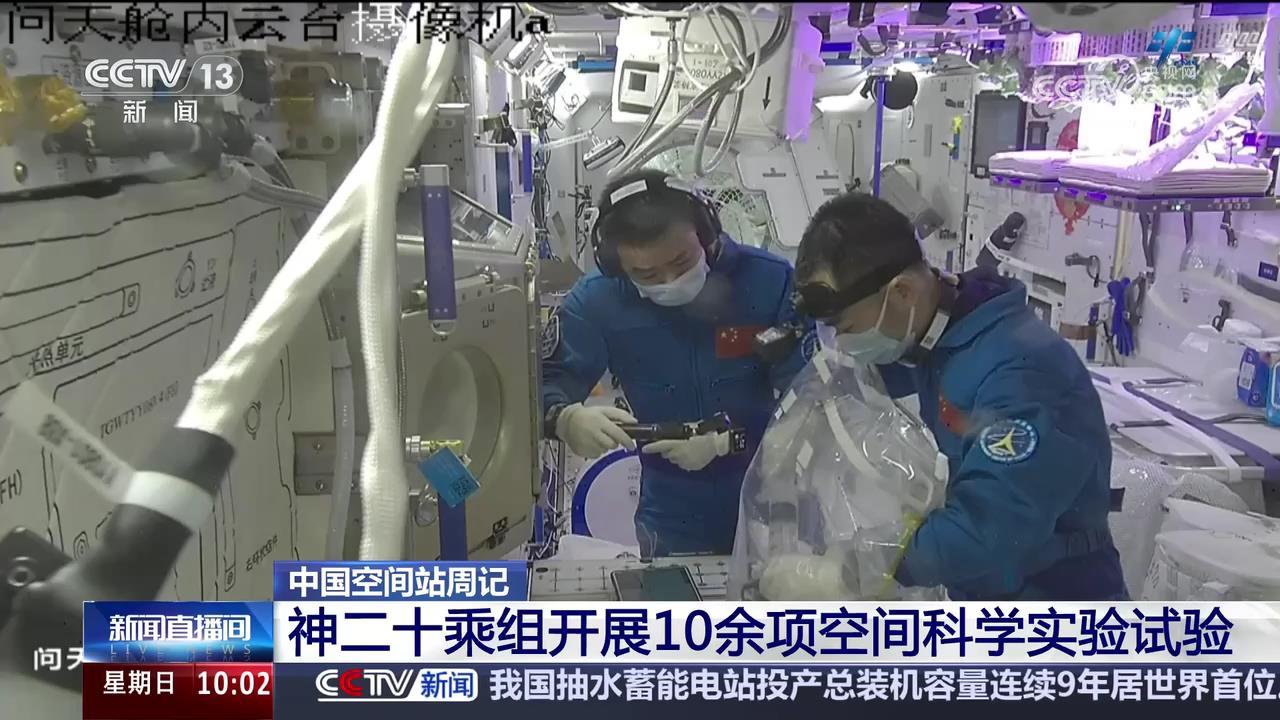
【中国青年报】37.25公斤!又一批空间科学实验样品返回地球并交付科学家
Zhong Guo Qing Nian Bao· 2025-05-06 02:59
Group 1: Space Life Science Experiments - The eighth batch of scientific samples from the Chinese space station includes 25 experimental projects, weighing approximately 37.25 kilograms, covering fields such as space life science, materials science, and new technologies [1] - The returned life science samples consist of 20 categories, including bone cells, induced pluripotent stem cells, early embryos of humans and animals, protein samples, and fruit flies, marking the largest variety of biological samples in the space station's application and development phase [1][2] Group 2: Research and Analysis Plans - Scientists will conduct morphological detection, cell lineage analysis, structural analysis, and multi-omics analysis on the returned samples, focusing on mechanisms affecting bone loss, stem cell growth in microgravity, and early embryonic development under space conditions [2] - The research results are expected to provide data and theoretical support for human health both in space and on Earth [2] Group 3: Space Materials Science Experiments - The materials science samples, which will be transported back to Beijing, include 22 types across 4 categories, such as tungsten-based ultra-high temperature alloys and high-strength steel [3] - Future analyses will investigate the effects of microgravity on material growth, composition segregation, solidification defects, and performance, supporting the design of new high-performance alloys and large-sized crystals [3] - The research aims to advance the manufacturing and application of critical materials for next-generation aerospace turbine blades, nano-electronic devices, and flexible solar sails, providing a theoretical foundation for future deep space exploration and human space activities [3]
新华全媒+|大漠长风起 神舟破云归——写在神舟十九号航天员乘组天外凯旋之际
Xin Hua She· 2025-04-30 18:37
Core Viewpoint - The successful return of the Shenzhou 19 crew marks a significant achievement in China's manned spaceflight program, highlighting advancements in space science and technology [1][4][9] Group 1: Mission Overview - Shenzhou 19's crew, consisting of three astronauts, completed a 183-day mission, conducting three spacewalks and six cargo operations, setting a world record for the longest single spacewalk at 9 hours [1][6][7] - The mission involved 88 scientific experiments across various fields, including space life sciences and microgravity physics, yielding significant preliminary results [1][8][9] Group 2: Return Process - The return of Shenzhou 19 was initially delayed due to adverse weather conditions, emphasizing the importance of astronaut safety [2][3] - The return capsule successfully landed in the Dongfeng landing site, with ground teams prepared for immediate medical checks and recovery operations [4][5] Group 3: Technological and Scientific Contributions - The mission's experiments included the first successful breeding of fruit flies in space, contributing to understanding biological processes in microgravity [8] - The space station's ongoing research is expected to lead to advancements in various fields, including agriculture and medicine, benefiting national development [9][10] Group 4: Future Prospects - China's space station is set to operate for over a decade, providing a platform for continued scientific research and international collaboration [9][10] - The integration of astronauts from Hong Kong and Macau into future missions reflects the expanding scope of China's space program [7][8]