
美国联邦政府停摆

Search documents
美参议院正式通过临时拨款法案
Ren Min Ri Bao· 2025-11-11 22:40
Core Points - The U.S. Senate has officially passed a temporary funding bill to resolve the federal government shutdown that began on October 1, lasting a record 41 days as of November 10 [1] - The bill will fund most federal agencies at current levels until January 30, 2026, and provides full-year funding for the Department of Agriculture, Department of Veterans Affairs, military construction projects, and congressional operations [1] - The passed bill only includes three of the twelve annual appropriations, indicating that nine annual budgets remain unresolved, which could lead to another government shutdown in two months [1] Summary by Categories - **Legislative Action** - The Senate's passage of the temporary funding bill is a critical step to end the government shutdown [1] - The bill is based on a version previously approved by the House of Representatives and requires House approval and presidential signature to take effect [1] - **Funding Provisions** - Most federal agencies will receive funding at existing levels until January 30, 2026 [1] - Specific departments such as Agriculture and Veterans Affairs will receive full-year funding [1] - **Future Implications** - Ongoing negotiations between the two parties will continue regarding the remaining nine annual budgets [1] - There is a potential risk of another government shutdown in the near future if negotiations do not conclude successfully [1]
刚刚,美国会参议院就结束政府“停摆”达成一致
Jin Rong Shi Bao· 2025-11-10 04:30
Group 1 - The U.S. Senate has reached an agreement to end the federal government shutdown that has lasted for 40 days, with President Trump indicating that a resolution is near [1] - The Senate previously rejected two bipartisan funding bills, leading to the shutdown that affected hundreds of thousands of federal employees and various government services [1] - A new funding bill, which includes short-term funding measures until January 2026 and three annual appropriations bills, is expected to pass with sufficient Democratic support [1] Group 2 - The ongoing government shutdown has severely impacted multiple industries, with officials warning of economic downturns and disruptions to citizens' daily lives [1] - The Senate's inability to pass funding bills has resulted in a historic low in legislative efficiency, with 14 rejections of the same bill during the shutdown [2] - The aviation industry has been particularly affected, with over 2,000 flight cancellations and more than 7,000 delays reported, attributed to air traffic control staffing shortages [2]
突发!全线拉升!特朗普称政府停摆接近结束
Zheng Quan Shi Bao· 2025-11-10 02:28
Group 1 - The U.S. federal government has been in a shutdown for 40 days, with President Trump indicating that a resolution may be near [1] - The Senate is expected to vote on a bill passed by the House, which includes short-term funding measures to sustain the government until January 2026, bundled with three annual appropriations bills [1] - The revised funding proposal still requires approval from the House and President Trump, which may take several days [1] Group 2 - Senate Democrats are resisting the passage of the funding bill to pressure Republicans into agreeing to reforms in the healthcare system, including extending subsidies under the Affordable Care Act [1] - An agreement is being discussed where the Senate will later agree to vote separately on the subsidy issue [1] Group 3 - Financial markets reacted positively, with Nasdaq futures rising by 0.8% and S&P 500 futures increasing by over 0.5% [1] - Bitcoin reached approximately $106,400, while Ethereum rose above $3,600 [1] - Spot gold increased by 0.64% to $4,027, and spot silver rose by 1% [1]
美国联邦政府“停摆”时间创纪录 破坏性与日俱增
Yang Shi Wang· 2025-11-06 16:05
Core Points - The longest federal government shutdown in U.S. history has reached its 37th day, significantly impacting daily life and social operations across the country [1] Group 1 - The shutdown has led to long lines at food assistance points, indicating a growing strain on social services [1] - There has been a reduction in airport capacity, affecting travel and transportation sectors [1]
记者手记丨美联邦政府“停摆”破纪录 食品救济点人更多了
Xin Hua She· 2025-11-06 06:11
Core Points - The U.S. federal government shutdown has reached its 36th day, marking the longest shutdown in U.S. history, leading to increased demand for food assistance among federal employees [1] - The charity organization "World Central Kitchen" has set up multiple food relief points in Washington D.C., distributing over 36,000 meals since October 27, with a noticeable increase in demand on November 5 [2] - The shutdown has severely impacted food assistance programs, with the "Supplemental Nutrition Assistance Program" halting benefits since November 1, affecting approximately 42 million people, or one-eighth of the U.S. population [3] Group 1 - The shutdown has resulted in long lines at food relief points, with federal employees increasingly relying on free meals due to missed paychecks [1] - The charity's collaboration with local restaurants aims to support struggling businesses while providing meals to federal employees [2] - The economic impact of the shutdown is evident, with local restaurants reporting a sales decline of 15% to 20% during this period [2] Group 2 - The inability to access food assistance has raised concerns among low-income families, with estimates suggesting that around 1.2 million households and nearly 5 million individuals may not receive benefits in November [3] - Political leaders have expressed differing views on the shutdown's implications, with Democrats accusing the Trump administration of neglecting the needs of the hungry, while Republicans blame Democrats for initiating the shutdown [4]
进入第36天 美联邦政府“停摆”时长破历史纪录
Yang Shi Xin Wen· 2025-11-05 04:16
Core Points - The U.S. federal government shutdown has reached its 36th day, breaking the previous record of 35 days set from late 2018 to early 2019 [1] - This marks the longest government shutdown in U.S. history [1] Summary by Category - **Duration of Shutdown** - The current shutdown has surpassed the previous record, indicating a significant political impasse [1] - **Historical Context** - The previous longest shutdown lasted 35 days, highlighting the increasing frequency and duration of such events in recent years [1]
美国联邦政府停摆追平历史最长纪录 民生项目大面积中断
Xin Hua Cai Jing· 2025-11-04 13:26
Core Points - The U.S. federal government shutdown has reached its 35th day, matching the record set from late 2018 to early 2019, significantly impacting various essential sectors such as food assistance, early education, air transport, and healthcare [1] - Millions of Americans relying on the Supplemental Nutrition Assistance Program (SNAP) have not received their benefits since November 1, leading to a complete halt in funding distribution for this critical food aid program [1] - The Trump administration announced the allocation of $4.65 billion in emergency funds to maintain approximately half of the SNAP benefits for the month, but the actual timing and amount of aid remain uncertain due to necessary system adjustments in some states [1] - The most affected groups include low-income families and those with young children, facing food shortages and economic pressure, compounded by the closure of federally funded early education institutions [1] - The shutdown has also resulted in federal employees working without pay or being furloughed, causing delays or reductions in public services such as air safety inspections, disease control, and food safety regulation [1] - Analysts warn that if the shutdown continues, the cascading impacts on the economy and public welfare will further escalate [1] Legislative Status - As of now, there is still no agreement between the two parties in Congress regarding the funding bill, and there is no clear expectation for when the federal government will resume operations [2]
一边政府“停摆”正破纪录,一边美国人民感叹“最好时代已过去”
Xin Jing Bao· 2025-11-04 08:36
Core Points - The U.S. federal government shutdown has reached its 35th day, tying the record for the longest shutdown in U.S. history [1] - The shutdown is causing significant disruptions in various sectors, including aviation, food assistance, and healthcare, leading to increased pressure on both the economy and public welfare [2] Group 1: Reasons for the Shutdown - The shutdown occurred due to the failure of budget-related bills to pass in both the House and Senate, as required by U.S. law [3] - A continuing resolution (CR) passed by the House was blocked in the Senate after 13 votes, primarily due to disagreements over the Affordable Care Act subsidies [4] - The Senate requires at least 60 votes for budget and funding bills to pass, but the Republican Party holds only 53 seats, complicating negotiations [4] Group 2: Impact of the Shutdown - Millions of low-income Americans may lose access to the Supplemental Nutrition Assistance Program (SNAP) benefits, and early education centers may face closures [7] - Federal employee salary payments could be affected, and the shutdown is expected to disproportionately impact low- and middle-income individuals [8] - The government is attempting to mitigate the damage, but measures taken are insufficient to cover the expected $9 billion in SNAP benefits for November [8] Group 3: Political Dynamics - The shutdown coincides with critical local elections, making both parties reluctant to compromise [5] - House Speaker Johnson blames Democrats for the prolonged shutdown, while Democrats deny political motivations and accuse Republicans of intransigence [5] - Ongoing mutual blame between party leaders suggests that reaching an agreement to end the shutdown is unlikely in the near term [10]
“停摆”之下 美国联邦食品救济将暂停
Xin Hua Wang· 2025-10-27 12:32
Core Points - The U.S. Department of Agriculture (USDA) announced the suspension of the Supplemental Nutrition Assistance Program (SNAP) due to the ongoing federal government shutdown, which will stop food aid distribution starting November 1, affecting over 40 million Americans [1][2] - The USDA criticized Senate Democrats for repeatedly blocking funding proposals for SNAP, leading to the depletion of its funds [1] - Over 200 Democratic representatives urged the Agriculture Secretary to utilize emergency funds to continue food aid for November, while the USDA stated that emergency funds are legally restricted to disaster relief and cannot be used for regular welfare expenses [1][2] Group 1 - SNAP covers over 40 million people, approximately one-eighth of the U.S. population, primarily low-income individuals and people with disabilities [2] - The federal government shutdown began on October 1 after Congress failed to pass a temporary funding bill before the end of the previous fiscal year on September 30, leading to a funding crisis [2] - Some states have pledged to maintain food aid distribution if the federal government stops funding, but the legality of this action is uncertain, and the USDA will not reimburse states for any costs incurred [1]

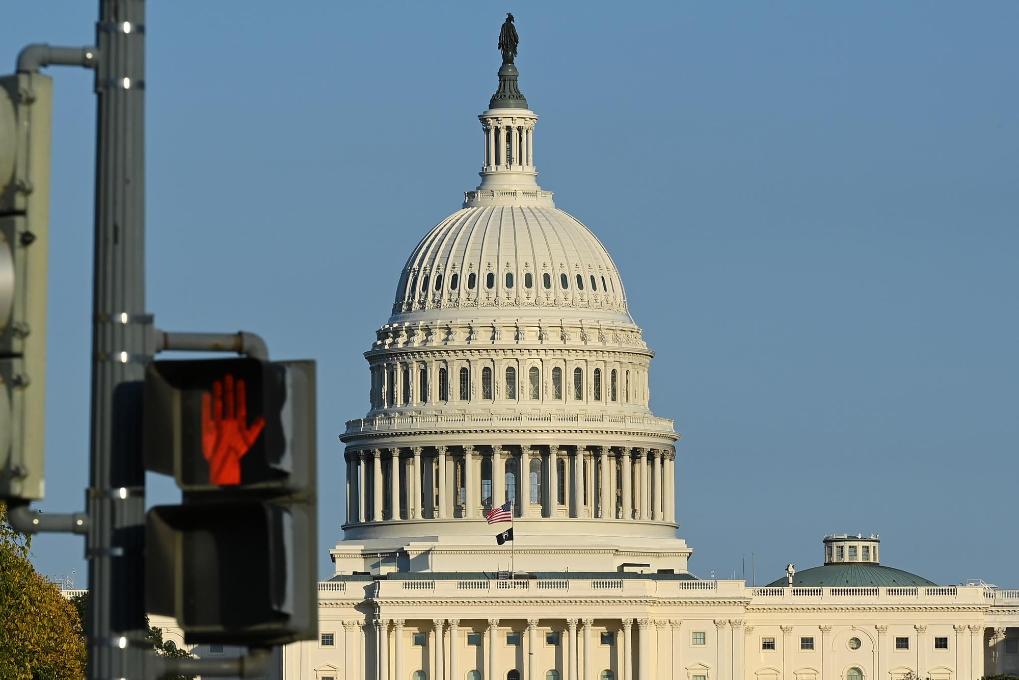
“停摆”持续!美参议院第12次否决临时拨款法案
Zhong Guo Xin Wen Wang· 2025-10-22 23:15
Core Points - The U.S. Senate has rejected a temporary funding bill for the 12th time, leading to a continued government shutdown [1] - The final vote resulted in 54 votes in favor and 46 against, with three Democratic senators supporting the Republican bill, failing to reach the 60-vote threshold [1] - Since the government shutdown began, the Republican Party has been unable to attract more Democratic senators to support the funding bill [1]