补充营养援助计划(SNAP)

Search documents
美政府拨款500亿美元用于乡村医疗转型,各州官员褒贬不一
Huan Qiu Shi Bao· 2025-12-30 22:51
Core Viewpoint - The U.S. government announced a $50 billion funding initiative for rural healthcare transformation to address the growing healthcare crisis in rural areas, although experts believe the funding is insufficient to offset significant losses from federal budget cuts, particularly in Medicaid [1][2]. Funding Allocation - A total of $10 billion will be allocated by 2026, with individual states receiving between $145 million and $281 million, depending on rural population size [2]. - The funding distribution follows a "dual-track" system: half is evenly distributed among states, while the other half is allocated based on a formula considering rural population size, financial status of healthcare institutions, and overall health levels of residents [2]. - Future funding of $12 billion over five years is tied to states implementing the Trump administration's "Healthier America" policies, which include nutrition education and restrictions on SNAP funding for junk food [2]. Controversy and Opposition - The funding plan has sparked controversy, with some Democratic-led states refusing to include restrictions on SNAP funding, arguing that the plan is politically motivated to favor allies and penalize opponents [3]. - Critics of the funding distribution argue that the equal allocation to all states disadvantages larger states, as smaller states receive a disproportionately higher per capita amount [3]. - Experts warn that the allocated funds are inadequate to cover the projected $137 billion loss for rural hospitals over the next decade, with approximately 300 rural hospitals at risk of closure due to Republican spending plans [3].
美联邦政府结束停摆 但重启时间或达一周以上
智通财经网· 2025-11-13 06:56
Group 1 - The U.S. federal government has ended a 43-day shutdown after President Trump signed a temporary funding bill, allowing most government agencies to operate until January 30, 2026 [1] - Federal employees will return to work, but the payroll system needs updates to compensate for wages lost during the shutdown, with payments expected to begin as early as Saturday [2] - The economic impact of the shutdown is significant, with estimates suggesting a loss of approximately $10 billion to $15 billion for each week of closure, and some losses may be irrecoverable [3] Group 2 - The shutdown has caused delays in the release of key economic data, including the non-farm payroll report and consumer price index, which may not be published on time due to the halt in data collection [3] - The Supplemental Nutrition Assistance Program (SNAP) will resume normal operations, but states may require up to a week to update beneficiary records and recharge benefit cards [2] - The aviation sector anticipates a smooth Thanksgiving travel period, with air traffic controllers expected to receive about 70% of their back pay within 24 to 48 hours after the government reopens [2]
美最高法院:特朗普政府可继续暂扣食品援助金
Yang Shi Xin Wen· 2025-11-12 00:32
Core Points - The U.S. Supreme Court has decided to extend the suspension of a lower court's order that required the Trump administration to fully distribute funds for the Supplemental Nutrition Assistance Program (SNAP) in November [1] - This action allows the Trump administration to continue withholding approximately $4 billion in SNAP funds [1] - Due to depleted funds, SNAP will suspend benefit distributions starting November 1, marking the first time in 60 years that the program has halted benefits, even during federal government shutdowns [1] Group 1 - The Supreme Court's decision impacts the distribution of SNAP funds, which is a critical component of the U.S. social safety net [1] - SNAP serves approximately 42 million people, accounting for about one-eighth of the U.S. population, with most recipients living below the poverty line [1] - The program has monthly expenditures exceeding $8 billion [1]
美国政府关门或再持续数天,参院还要走程序,众院何时表决未定
Hua Er Jie Jian Wen· 2025-11-10 18:04
Core Points - The U.S. federal government is expected to reopen soon as the Senate passed a temporary funding bill, but final voting is still pending [1][3] - The temporary funding bill aims to provide government funding until January 30, 2026, and includes provisions for federal employee wages during the shutdown [7] - The White House supports the Senate's agreement, viewing it as a positive step towards ending the record-long government shutdown [6] Legislative Progress - The Senate passed the temporary funding bill with a vote of 60 to 40, overcoming the minimum votes needed to advance [3] - The House of Representatives is expected to vote on the Senate's agreement, with Speaker Mike Johnson indicating a potential vote as early as Wednesday [4][5] - The House will only vote after the Senate completes its procedures, and Johnson has committed to giving members 36 hours' notice to return to Washington [4] Economic Impact - U.S. stock markets reacted positively to the news of a potential end to the government shutdown, with the S&P 500 index rising over 1% [2] - The ongoing shutdown has already lasted 41 days, causing disruptions in flights and delays in food assistance programs [2] Content of the Funding Bill - The bill will fund the Department of Agriculture, Department of Veterans Affairs, and Congress itself for the entire year, while other agencies will receive funding until January 30 [7] - It includes provisions for back pay for furloughed government employees and ensures that all federal workers receive their normal wages during the shutdown [7] Democratic Party Response - The agreement has faced criticism from within the Democratic Party for not extending healthcare subsidies under the Affordable Care Act [8] - Some Democratic leaders have expressed disappointment, labeling the agreement as inadequate and highlighting internal divisions [8]
高盛:美政府停摆或在“11月第二周”结束,经济损失恐史无前例!
Jin Shi Shu Ju· 2025-11-05 09:52
Core Viewpoint - Goldman Sachs believes that the U.S. government shutdown may soon come to an end, as it has set a record for the longest shutdown in history [1] Group 1: Economic Impact - The current shutdown could become the most economically impactful on record, potentially exceeding the 35-day partial shutdown of 2018-2019, with a broader scope affecting more sectors [2] - Goldman Sachs estimates that the six-week shutdown could reduce the fourth-quarter economic growth rate by 1.15 percentage points to just 1%, with a rebound not expected until early 2026 [2] - The U.S. Chamber of Commerce reported that the shutdown has caused a weekly revenue loss of $3 billion for 65,500 small business contractors [2] Group 2: Government Operations and Assistance Programs - The shutdown has delayed the issuance of food stamp benefits, with the White House announcing the use of emergency funds to cover 50% of SNAP benefits [2] - DoorDash and Gopuff have initiated emergency food responses to assist SNAP recipients affected by the shutdown [3] - The core of the impasse lies in disagreements over healthcare subsidies, with Democrats seeking to extend ACA subsidies while Republicans refuse to attach conditions to the temporary funding bill [3] Group 3: Political Pressure and Compromise - Increasing operational and political pressures may drive lawmakers to reach a compromise, with expectations for a resolution around the second week of November [1] - The missed salary payments for air traffic controllers and airport security personnel could exacerbate pressures, particularly before the second pay date in November [1]

美国政府关门“势创纪录”,市场已然撑不住,周四或是“破局时刻”?
Hua Er Jie Jian Wen· 2025-11-05 00:33
Core Viewpoint - The U.S. government shutdown is pushing financial markets towards a dangerous edge, but there are signs of potential breakthroughs in bipartisan negotiations, with some Republican lawmakers optimistic about reaching an agreement this week [1][3]. Group 1: Market Reactions - On "Black Tuesday," major U.S. markets experienced significant declines, with the Nasdaq and S&P 500 indices recording their largest single-day drops in nearly a month, particularly affecting technology and semiconductor sectors [1]. - Bitcoin fell below the $100,000 mark for the first time since June, leading to over $1.3 billion in liquidations in the cryptocurrency market [1]. - The U.S. dollar index rose for the fifth consecutive trading day, reaching a three-month high, while the British pound, offshore yuan, and commodities faced widespread pressure [1]. Group 2: Liquidity Crisis - The government shutdown has exacerbated a growing liquidity crisis, with the U.S. Treasury's General Account (TGA) balance surging from approximately $300 billion to over $1 trillion in the past three months, effectively withdrawing over $700 billion from the market [2]. - This large-scale liquidity withdrawal has tightened market conditions, comparable to multiple interest rate hikes, with key financing rates under significant stress [2]. - The Secured Overnight Financing Rate (SOFR) spiked by 22 basis points, indicating that actual financing costs have not decreased despite the Federal Reserve's rate cuts [2]. Group 3: Political Developments - Some Republican senators express confidence that the political deadlock may end this week, with discussions around local elections influencing negotiations [3]. - The impact of the shutdown on public welfare programs is becoming increasingly evident, adding pressure on both parties to reach an agreement [3]. - Analysts from Goldman Sachs and Citigroup predict that the government is likely to reopen within the next two weeks [3]. Group 4: Democratic Party Divisions - Internal divisions within the Democratic Party are emerging, with moderate members considering a compromise to temporarily reopen the government in exchange for future commitments from Republicans regarding healthcare subsidies [5]. - This proposed "reopen first, vote later" strategy has angered progressive members, who view it as a betrayal of working families [6].
美国联邦政府停摆追平历史最长纪录 民生项目大面积中断
Xin Hua Cai Jing· 2025-11-04 13:26
Core Points - The U.S. federal government shutdown has reached its 35th day, matching the record set from late 2018 to early 2019, significantly impacting various essential sectors such as food assistance, early education, air transport, and healthcare [1] - Millions of Americans relying on the Supplemental Nutrition Assistance Program (SNAP) have not received their benefits since November 1, leading to a complete halt in funding distribution for this critical food aid program [1] - The Trump administration announced the allocation of $4.65 billion in emergency funds to maintain approximately half of the SNAP benefits for the month, but the actual timing and amount of aid remain uncertain due to necessary system adjustments in some states [1] - The most affected groups include low-income families and those with young children, facing food shortages and economic pressure, compounded by the closure of federally funded early education institutions [1] - The shutdown has also resulted in federal employees working without pay or being furloughed, causing delays or reductions in public services such as air safety inspections, disease control, and food safety regulation [1] - Analysts warn that if the shutdown continues, the cascading impacts on the economy and public welfare will further escalate [1] Legislative Status - As of now, there is still no agreement between the two parties in Congress regarding the funding bill, and there is no clear expectation for when the federal government will resume operations [2]
美政府“停摆”满月,民生经济双重承压
Huan Qiu Shi Bao· 2025-11-02 22:53
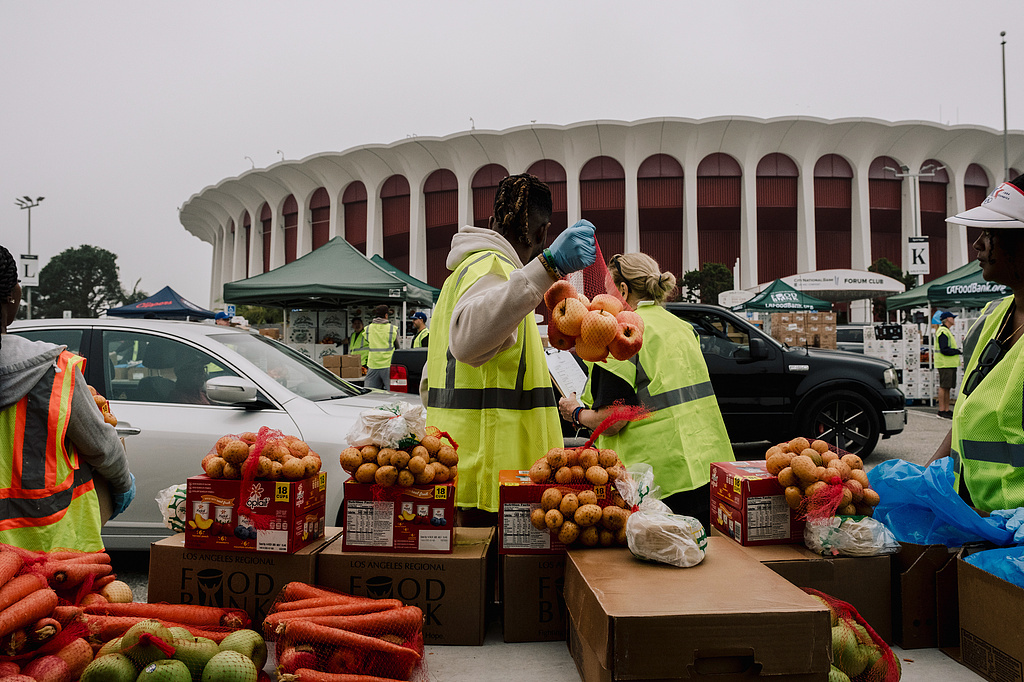
Group 1: Impact on SNAP Program - The U.S. government shutdown has led to the depletion of funds for the Supplemental Nutrition Assistance Program (SNAP), affecting millions of Americans who rely on this assistance [3][4] - As of November 1, millions of Americans did not receive their aid, resulting in increased queues at food distribution points across the country [3][4] - SNAP covers approximately 42 million people in the U.S., which is about 1/8 of the total population, with most participants living below the poverty line [3] Group 2: Broader Economic Implications - The shutdown is expected to cause a decline in sales for major food retailers, including Walmart and Smithfield Foods, as consumer spending is impacted [4] - The National Grocers Association has urged Congress to resume government operations and fund the SNAP program to prevent instability in the food retail sector [4] - The shutdown has also led to delays in public services and federal employee salaries, increasing operational pressure on various sectors of American society [4] Group 3: Economic Forecasts - The Congressional Budget Office has warned that the shutdown has already cost the U.S. economy at least $18 billion, with a projected decline of at least one percentage point in GDP growth for the fourth quarter [6]

美国政府关门时长逼近历史记录,特朗普误判民主党决心,“关键时刻”到来!
华尔街见闻· 2025-11-02 12:24
Core Points - The article discusses the ongoing government shutdown in the U.S., highlighting the critical situation regarding the Supplemental Nutrition Assistance Program (SNAP) funding, which is set to expire on November 1, affecting 42 million Americans [1][6][7]. Group 1: Government Shutdown Overview - The government shutdown has lasted for 34 days as of November 3, with no clear resolution in sight [1]. - The political agenda in Congress is stalled, with the Senate's next vote on funding expected to occur late on November 3 [1]. Group 2: Political Dynamics - The Trump administration misjudged the Democratic Party's resolve during budget negotiations, believing that the shutdown would not last beyond 10 days [2]. - Trump expressed frustration with the Democrats, claiming they are responsible for the shutdown and calling for the Republican Party to use the "nuclear option" to pass funding with a simple majority [3][4]. Group 3: Impact of SNAP Funding Crisis - The SNAP funding interruption is viewed as a critical moment, with millions of families at risk of hunger due to the funding halt [6][7]. - A federal judge ruled that emergency funds must be used to maintain the SNAP program, but Trump indicated that funding distribution might still be delayed [7][8]. Group 4: Broader Economic and Social Impacts - The shutdown is causing significant strain on various sectors, including the Federal Aviation Administration (FAA), which has issued ground delay orders due to staff shortages [10]. - Vice President Vance warned of potential disasters in air traffic if the shutdown continues into the Thanksgiving holiday [11]. - Millions of government employees have missed their paychecks, and military salaries may face disruption by November 15 [12]. Group 5: Ongoing Negotiations - Despite some progress in bipartisan talks, core disagreements remain, particularly regarding the Affordable Care Act (ACA) subsidies [14]. - The political pressure is mounting on both parties as the negative impacts of the shutdown accumulate, with a crucial vote scheduled for November 3 [14].

特朗普关税政策再遭否决!美国政府停摆持续,正加剧美国乱象!
Sou Hu Cai Jing· 2025-11-02 06:06
Core Points - The U.S. Senate has voted to terminate Trump's comprehensive tariff policy, but the actual impact remains limited due to the need for House approval and potential presidential veto [3][5] - The ongoing government shutdown has lasted for 31 days, with significant economic repercussions, including a projected loss of at least $18 billion [7][10] - The aviation industry is facing severe challenges due to the shutdown, with warnings of potential disruptions during the Thanksgiving travel peak [8][10] Tariff Policy - The Senate passed a resolution to end Trump's tariff policy, but the House, controlled by Republicans, is likely to block it [3][5] - The Supreme Court will ultimately decide on the legality of the tariffs, with a hearing scheduled for November 5 [3][5] Government Shutdown - The shutdown has already caused significant economic damage, with estimates of permanent losses ranging from $7 billion to $14 billion depending on its duration [7] - The USDA will stop funding the Supplemental Nutrition Assistance Program (SNAP) starting November 1, affecting over 41 million low-income families [7] Aviation Industry - The shutdown poses a risk to air travel, with potential staffing shortages among air traffic controllers and security personnel [8] - Airlines are urging Congress to pass a clean continuing resolution to mitigate the impact of the shutdown on air travel [8] Economic Impact - The shutdown is expected to lower GDP growth by 1 to 2 percentage points in Q4, translating to a loss of $28 billion to $39 billion in output [7][10] - Delays in releasing key economic data could hinder the Federal Reserve's decision-making regarding interest rates [10][12]