
自主开放

Search documents
扩大高水平对外开放的生动实践(国际观澜)
Ren Min Ri Bao· 2025-11-11 22:40
Group 1 - The core message emphasizes China's commitment to providing 100% zero-tariff treatment on products for all least developed countries that have diplomatic relations with China, showcasing China's role in promoting global development and shared prosperity [1][2] - China has maintained its position as Africa's largest trading partner for 16 consecutive years, with a 10.8% increase in imports from African countries in the third quarter of this year [1] - The zero-tariff policy is a specific measure under China's broader strategy to expand high-level opening-up and is expected to enhance trade liberalization and economic globalization, contributing to global prosperity [2] Group 2 - The "14th Five-Year Plan" emphasizes expanding high-level opening-up and creating win-win cooperation, with zero-tariff policies being a concrete initiative to achieve these goals [2] - The introduction of zero-tariff measures is expected to enrich the Chinese market with diverse products, such as Ugandan coffee and Nepalese spices, while also promoting the development of related domestic industries [2]
中共中央发布会丨“十五五”时期,既重视“中国经济”也重视“中国人经济”
Sou Hu Cai Jing· 2025-10-26 07:26
Core Points - The article discusses the important deployment of China's "15th Five-Year Plan" regarding opening up the economy, as introduced by Wang Wentao, the Minister of Commerce [2][3] Group 1: Expansion of Opening Up - The plan emphasizes actively expanding autonomous opening, aligning with international high-standard economic and trade rules, focusing on service sectors, and increasing market access [2] - It aims to enhance trade relationships through regional and bilateral trade investment agreements and expand the network of high-standard free trade zones [2] Group 2: Trade Innovation Development - The plan outlines three pillars for becoming a strong trading nation: goods trade, service trade, and digital trade [2] - In goods trade, it focuses on expanding intermediate goods trade, green trade, and promoting market diversification [2] - For service trade, it aims to improve the negative list management system for cross-border service trade [2] - In digital trade, it plans to gradually expand openness in the digital sector while promoting balanced import and export development [2] Group 3: Investment Cooperation - The strategy includes enhancing the "Invest in China" brand and creating new advantages to attract foreign investment [3] - It emphasizes the importance of a transparent, stable, and predictable institutional environment for foreign investment [3] - The plan also highlights the need for effective management of outbound investments and a comprehensive overseas service system [3] Group 4: High-Quality Belt and Road Initiative - The article states that the Belt and Road Initiative is a collaborative effort rather than a solo endeavor, requiring strategic alignment with partner countries [3] - It aims to advance significant landmark projects alongside smaller, community-focused initiatives [3] - The plan seeks to deepen cooperation in trade, investment, industry, and culture, while expanding collaboration in green, digital, and artificial intelligence sectors [3]

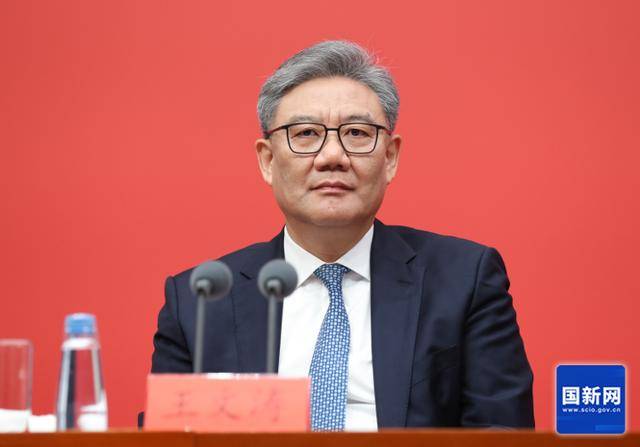
王文涛:推动进出口平衡发展,加大力度扩大进口
Nan Fang Du Shi Bao· 2025-10-24 05:02
Core Viewpoint - The Fourth Plenary Session of the 20th Central Committee of the Communist Party of China emphasized the importance of high-level opening-up and cooperation, signaling China's commitment to mutual benefit and win-win outcomes in international trade and investment [1] Group 1: Expansion of High-Level Opening-Up - The session approved the suggestions for the 15th Five-Year Plan, focusing on expanding high-level opening-up as a key strategy for economic development [1] - Wang Wentao, Minister of Commerce, outlined four main areas for enhancing foreign openness, including proactive engagement with international trade rules and expanding market access [3][4] Group 2: Trade Innovation and Development - The suggestions include three pillars for trade power: goods trade, service trade, and digital trade, with specific measures to promote each area [3] - For goods trade, there will be an emphasis on expanding intermediate goods trade and green trade, while service trade will see improvements in cross-border service trade management [3] Group 3: Investment Cooperation - The strategy aims to enhance the "Invest in China" brand and create a transparent and stable environment for foreign investment [4] - There will be a focus on both GDP and GNI, indicating a balanced approach to economic growth and the well-being of citizens [4][5] Group 4: Belt and Road Initiative - The initiative is framed as a collaborative effort rather than a unilateral action, with plans to strengthen cooperation with partner countries in various sectors [4] - Emphasis will be placed on integrating major projects with smaller, community-focused initiatives, particularly in green, digital, and AI sectors [4]
积极扩大自主开放 兼顾中国之需与世界之盼
Yang Shi Xin Wen· 2025-10-24 02:46
Group 1 - The core viewpoint of the article emphasizes the importance of expanding autonomous openness during the "14th Five-Year Plan" period, balancing China's needs with global expectations [1] - The Ministry of Commerce aims to actively align with international high-standard economic and trade rules, focusing on the service sector to expand market access and areas of openness [1] - There is a commitment to enhancing trade and investment agreements, accelerating the process of regional and bilateral trade agreements, and expanding the network of high-standard free trade zones [1] Group 2 - The strategy includes creating open highlands and effectively implementing various open pilot projects [1]
加快推进服务业扩大开放
Jing Ji Ri Bao· 2025-05-29 22:25
Core Viewpoint - The expansion of the service industry is a key component of China's opening-up strategy and an important support for economic development, with foreign investment in the service sector expected to account for about 70% of the total foreign investment in 2024, and service trade surpassing $1 trillion for the first time [1][6] Group 1: Service Industry Opening-Up - The service industry has become the focus of high-level opening-up in China, with a continuous expansion of the scope and level of openness through institutional and autonomous measures [2][3] - The establishment of a negative list management model for foreign investment in the service sector has been implemented nationwide, enhancing the transparency and efficiency of market access [3][4] - The reduction of special management measures for foreign investment in the service sector has significantly decreased from 95 to 22, with a 76.8% reduction, particularly in finance and real estate [4] Group 2: Key Areas of Focus - The 2024 pilot program for expanding foreign investment in value-added telecommunications services has removed foreign ownership restrictions in several major cities, facilitating greater foreign participation [5][6] - The healthcare sector is being prioritized for opening-up, with policies allowing foreign investment in hospitals and medical services, aiming to improve service quality and fill gaps in high-end medical resources [13][14] - The financial sector has seen the complete removal of foreign ownership limits across various financial services, promoting a more inclusive and competitive environment for foreign financial institutions [18][19] Group 3: Achievements and Future Directions - The number of foreign-funded telecommunications companies has increased significantly, with over 2,400 foreign firms operating in the sector, reflecting a 26.5% year-on-year growth [9][10] - The financial market has expanded to include over 1,160 foreign institutions in the bond market, with a total bond holding of 4.5 trillion yuan, indicating a robust integration of foreign capital [20][21] - Future efforts will focus on enhancing the regulatory framework, improving the business environment, and ensuring a balance between openness and security in the financial sector [22]