
超级计算机

Search documents
【环时深度】从“先驱”到“跟不上步伐”,日本反思AI落后
Huan Qiu Shi Bao· 2025-08-24 23:05
Core Viewpoint - Japan is reflecting on its lagging position in AI development compared to the US and China, despite its historical contributions to the field during the first AI boom from the 1950s to 1970s [1][2] Group 1: Historical Context - Japan's AI research began in the 1950s, contributing significantly to advancements in natural language processing, speech recognition, and image processing [1] - The "Fifth Generation Computer Systems" project launched in 1982 aimed to create a "supercomputer" capable of reasoning and learning, but it failed to deliver expected results and was terminated in 1992, leading to a stagnation in AI research [2][3] - From the 1990s to the early 2000s, Japan's focus on manufacturing overshadowed the importance of software and services, causing it to miss opportunities in the internet revolution [3][4] Group 2: Current Challenges - Japan's AI development is hindered by a lack of digital workforce, high legal barriers, and conservative capital investment, with only 26.7% of the population having used generative AI by 2024 [5][6] - The aging population and declining birth rates contribute to a shortage of talent and acceptance of AI technologies, with low usage rates among younger demographics [7][8] - Japan's strict data protection laws complicate the creation of effective training datasets for AI, limiting the potential for innovation [9] Group 3: Government and Industry Response - The Japanese government has initiated several strategies to boost AI development, including the "e-Japan Strategy" and recent AI legislation aimed at elevating AI to a national strategic priority [4][10] - There is a call for increased investment in AI education and attracting global talent to address the skills gap, with only 12 universities offering dedicated data science programs [8][11] - Collaborative efforts between government and industry, such as the "Manufacturing AI Visual Inspection Plan," aim to enhance AI integration in various sectors [11][12]
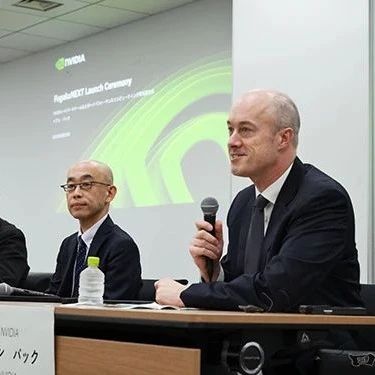
英伟达将参与开发日本超算“富岳”的后续机型
日经中文网· 2025-08-22 08:00
Core Insights - Nvidia will collaborate with RIKEN to develop AI-oriented GPUs for Japan's next-generation supercomputer, marking the first involvement of a foreign company in Japan's core supercomputer development [1][3] - The new model, codenamed "Fugaku NEXT," aims to achieve the highest global performance in supercomputing by integrating advanced technologies from both Japan and the U.S. [1][3] Development Details - Fujitsu is confirmed to participate in the development, responsible for the overall system design and the central processing unit (CPU), with plans to begin operations around 2030 [3][6] - The project aims to establish Japan's position as a leading AI nation by designing the highest-level CPU and GPU for the AI era [3][6] Performance Goals - The Fugaku NEXT aims for a peak performance of 10 zetta operations per second, significantly enhancing capabilities in AI and advanced simulation computing [5][6] - The new system is expected to improve computational power by 5 to 10 times compared to the existing Fugaku supercomputer [5] Competitive Landscape - The global trend of utilizing AI to accelerate scientific research is intensifying, with the U.S. and China rapidly developing next-generation high-performance supercomputers [9] - Japan aims to enhance its AI capabilities to secure a top-tier position in the international supercomputing arena [9]


世运电路:公司与特斯拉合作的Dojo项目
Mei Ri Jing Ji Xin Wen· 2025-08-06 09:01
Core Viewpoint - The company, Shiyun Circuit (603920.SH), is collaborating with Tesla on the Dojo project, specifically supplying PCB products for Tesla's supercomputer applications [1]. Group 1: Company Collaboration - The company confirmed its involvement in the Dojo project, which is associated with Tesla's supercomputer [1]. - There are two distinct Dojo projects mentioned: one related to Tesla and the other to a blockchain gaming engine [3]. Group 2: Production and Sales Inquiry - An investor inquired about the production and sales volume of the PCB products for the Dojo project, as well as the expected revenue and profit contribution for the year [3]. - The company indicated that further details regarding production and sales data would be provided in future announcements [1].


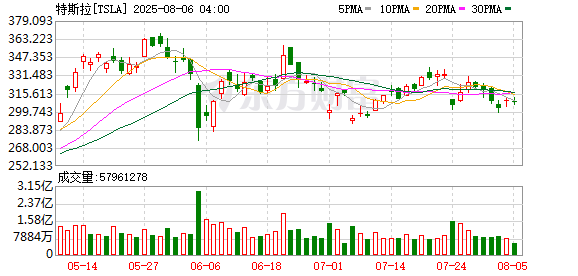
特斯拉(TSLA.O)预计将在明年某个时候实现超级计算机机房的规模化运行。
news flash· 2025-07-23 22:10
Core Insights - Tesla (TSLA.O) is expected to achieve large-scale operation of its supercomputer facility sometime next year [1] Group 1 - The company is making significant advancements in its supercomputing capabilities [1]
美日科研成果 量子计算与传统超算联袂模拟分子行为
Huan Qiu Wang Zi Xun· 2025-07-08 02:00
Core Insights - IBM and RIKEN researchers successfully simulated quantum behaviors of various molecules by combining quantum and supercomputing technologies, paving new paths for chemical and pharmaceutical research [1][2] Group 1: Research Collaboration - IBM's "Eagle" quantum computer collaborated with Japan's "Fugaku" supercomputer to simulate the quantum states of nitrogen molecules and two iron-sulfur compounds using a spatial quantum dynamics algorithm [1] - The quantum computer performed core calculations while the supercomputer acted as a "quality inspector," correcting errors in real-time [1] Group 2: Performance and Future Prospects - Although the hybrid model has not yet surpassed the independent performance of supercomputers, it has demonstrated competitive capabilities in computational chemistry [2] - Kenneth M. Moritz from Cleveland Clinic noted that the improved spatial quantum dynamics algorithm can simulate molecular behavior in solution, making chemical modeling more realistic [2] - There is optimism that the combination of quantum and classical computing could show significant advantages within a year after further algorithm optimization [2] Group 3: Industry Developments - NVIDIA has developed a software platform supporting hybrid computing, while Microsoft emphasizes the transformative potential of the combination of quantum computing, supercomputing, and artificial intelligence in chemistry and materials science [2] - Caution is expressed by Markus Reiher from ETH Zurich, who highlights the need to observe the method's performance in large molecule simulations before it can be considered the preferred approach for quantum chemical calculations [2] Group 4: Ongoing Improvements - The RIKEN laboratory has upgraded to a new IBM quantum processor with lower error rates, and the research team is working on optimizing the spatial quantum dynamics algorithm and enhancing the collaboration efficiency between "Eagle" and "Fugaku" [2]


在中国,Model Y的好日子到头了
3 6 Ke· 2025-07-02 02:12
Core Viewpoint - Xiaomi's YU7 has made a significant impact on the Chinese automotive market, achieving impressive pre-order numbers and attracting a diverse customer base, indicating its potential to disrupt the mid-sized electric SUV segment [1][4][5]. Group 1: Market Impact - The YU7 was launched at a starting price of 253,500 yuan, with pre-orders reaching 200,000 units in just 3 minutes and 289,000 units in 1 hour, showcasing overwhelming consumer interest [1]. - The foot traffic at Xiaomi's stores for the YU7 has been described as "terrifying," with a mix of young fans and traditional fuel vehicle owners showing interest [4]. - The YU7's long delivery wait times, currently estimated at 56-59 weeks, may deter some customers, but its strong demand is reshaping the competitive landscape for mid-sized electric SUVs [5]. Group 2: Competitive Landscape - The YU7 is positioned as a serious competitor to Tesla's Model Y, which has seen a decline in sales, with retail figures dropping significantly in recent months compared to the previous year [8][11]. - The Model Y's sales in China have shown a downward trend, with monthly retail figures falling from 39,985 units last year to 25,694 units this year, indicating increasing pressure from domestic competitors [8][11]. - The introduction of the YU7 is seen as a turning point, with the potential to lead a group of domestic electric SUVs in challenging the dominance of the Model Y [11][12]. Group 3: Future Outlook - The competitive environment for the Model Y is expected to worsen, with new entrants like the Xiaopeng G7 and Li Auto's i6 set to join the market, intensifying the competition [12][13]. - Analysts predict that the Model Y may face its most challenging market conditions since entering China, with potential monthly sales declines of 10,000 to 15,000 units [13]. - The introduction of a lower-priced version of the Model Y is being considered, but it may not address the underlying issues of competition and market saturation effectively [21][23].

英伟达(NVDA.US)动作频频:携手慧与科技(HPE.US)建德国超级计算机,推出气候AI模型
智通财经网· 2025-06-10 13:17
Group 1 - Nvidia and HPE are collaborating with the Leibniz Supercomputing Centre in Germany to build a new supercomputer named "Blue Lion" [1] - The "Blue Lion" supercomputer will utilize next-generation HPE Cray technology and be equipped with Nvidia GPUs, featuring the Vera Rubin architecture [1] - The computational power of "Blue Lion" is expected to be approximately 30 times greater than the current LRZ high-performance computer, SuperMUC-NG [1] - The supercomputer is set to support collaborative research projects across Europe and is scheduled to be operational by early 2027 [1] Group 2 - Nvidia has launched the "cBottle" AI model, part of the Earth-2 platform, designed to simulate global climate at kilometer resolution [2] - The cBottle model can generate realistic atmospheric states and adjust based on various input conditions, providing a new method for understanding complex natural systems [2] - Predictions using cBottle can be thousands of times faster than traditional numerical models, with higher energy efficiency without compromising accuracy [2] - Research institutions, including MPI-M and Ai2, are exploring the use of cBottle to transform Earth observation data and high-resolution climate simulations into interactive AI systems [2]