超级计算机

Search documents
中科曙光跌2.05%,成交额16.37亿元,主力资金净流出1.90亿元
Xin Lang Cai Jing· 2026-02-02 06:03
Core Viewpoint - Zhongke Shuguang's stock price has experienced fluctuations, with a recent decline of 2.05% and a total market capitalization of 128.65 billion yuan, indicating potential volatility in investor sentiment and market performance [1]. Financial Performance - For the period from January to September 2025, Zhongke Shuguang reported a revenue of 8.82 billion yuan, reflecting a year-on-year growth of 9.68%, while the net profit attributable to shareholders was 966 million yuan, showing a significant increase of 25.55% [2]. - The company has distributed a total of 2.02 billion yuan in dividends since its A-share listing, with 1.19 billion yuan distributed over the past three years [3]. Shareholder and Market Activity - As of January 20, 2025, the number of shareholders for Zhongke Shuguang reached 398,100, an increase of 0.58% from the previous period, while the average circulating shares per person decreased by 0.58% to 3,674 shares [2]. - The stock has seen a net outflow of 190 million yuan in principal funds recently, with significant buying and selling activity from large orders [1]. Company Overview - Zhongke Shuguang, established on March 7, 2006, and listed on November 6, 2014, is based in Beijing and specializes in high-performance computing, general servers, and storage products, with IT equipment accounting for 88.79% of its revenue [1]. - The company operates within the computer industry, specifically in the computer equipment sector, and is associated with concepts such as supercomputing and computing power [1].

韩国今年将向融合源技术领域投资2342亿韩元
Shang Wu Bu Wang Zhan· 2026-01-26 09:57
Group 1 - The South Korean Ministry of Science and ICT announced a plan to invest 234.2 billion KRW in fusion source technology research, high-temperature superconductors, supercomputers, AI technology, and humanoid robots in 2023 [1] - The fusion source technology sector will continue to support projects with high commercialization potential and provide support for bridge fusion R&D and global fusion R&D [1] - A new project will be launched in the high-temperature superconducting field to enhance practicality [1] Group 2 - The supercomputer sector will build and operate the sixth supercomputer, ensuring the security of software source code [1] - In the AI technology field, models will be developed for applications in biology, materials, and chemistry [1] - The humanoid robot sector will focus on developing humanoid robots with human-level behavioral autonomy [1]
超级计算机,是自动驾驶的“救命稻草”吗?
Zhong Guo Qi Che Bao Wang· 2026-01-23 04:30
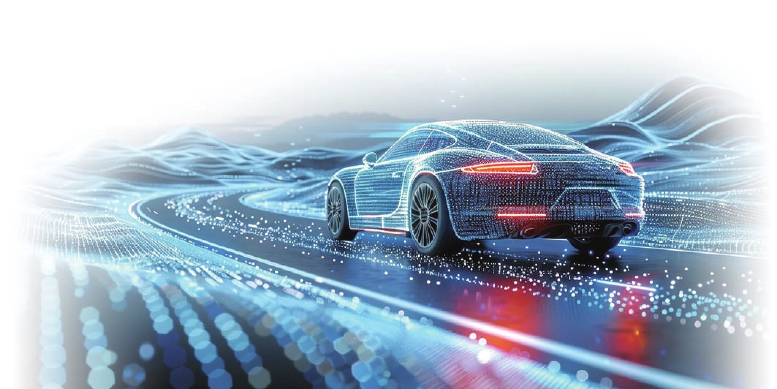
Core Viewpoint - Tesla has announced the restart of the Dojo 3 supercomputer project, which is crucial for the development of AI chips and autonomous driving technology [2][6]. Group 1: Importance of Supercomputers - Supercomputers are referred to as the "Everest" of computing, designed for high-speed calculations, large storage capacity, and high communication bandwidth, making them essential for processing large datasets in various applications [3]. - The demand for computing power in autonomous driving is described as "massive," with key metrics like 1 EFLOPS and PB-level storage becoming benchmarks for performance [4]. - Supercomputers play a critical role in training neural networks for autonomous driving, enabling the processing of vast amounts of data and complex scenarios [6]. Group 2: Role in Autonomous Driving - The processing capabilities of supercomputers are vital for the development of autonomous driving systems, allowing for real-time data analysis and decision-making [6][7]. - Supercomputers are seen as accelerators of technological iteration in autonomous driving, significantly impacting the commercialization of autonomous taxi projects [7]. - The core value of supercomputers in autonomous driving lies in their ability to overcome key bottlenecks in data processing, model training, and algorithm optimization [8]. Group 3: Challenges and Costs - Despite their advantages, supercomputers come with high construction and operational costs, potentially reaching hundreds of millions of dollars, which can be a burden for some automotive companies [8]. - The successful implementation of autonomous driving technology requires not only powerful computing resources but also supportive regulations, infrastructure, and data security measures [8]. Group 4: Competitive Landscape - A global competition for supercomputing power is underway, positioning supercomputers as a core competitive barrier in the autonomous driving sector [9]. - Companies with robust supercomputing capabilities can gain a competitive edge in the development and optimization of autonomous driving technologies [9].


马斯克高调“复活”特斯拉Dojo3芯片项目
3 6 Ke· 2026-01-21 07:45
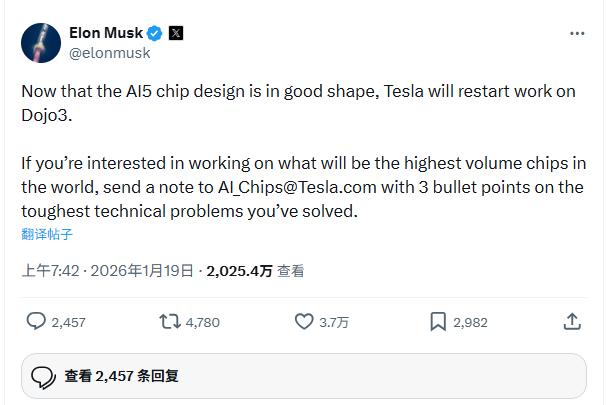
Core Insights - Tesla's CEO Elon Musk announced the revival of the previously shelved supercomputer project Dojo 3, marking a significant shift in Tesla's chip strategy [1][2] - The new mission of Dojo 3 will expand beyond training autonomous driving models on Earth to include "space artificial intelligence (AI) computing" [1][6] Group 1: Dojo 3 Project Overview - Dojo 3 was initially designed as a supercomputer for machine learning training, first introduced during Tesla's AI Day in 2021 [4] - The project aims to restructure its architecture and optimize costs, moving away from the complex paths of previous generations that relied on in-house D1 chips [4] - Musk hinted that the future of Dojo will involve a cluster architecture integrating numerous AI6 chips rather than developing dedicated training systems [4] Group 2: Strategic Shifts and Partnerships - Five months prior, Tesla halted the Dojo 3 project, disbanded its core team, and shifted focus to AI5, AI6, and subsequent chips, which can handle both efficient inference and core training tasks [2] - Tesla plans to increase reliance on Nvidia and other partners like AMD for computing, as well as on Samsung for chip manufacturing, rather than continuing to develop custom chips [2][5] - The AI5 chip is manufactured by TSMC and is intended to power Tesla's autonomous driving features and the Optimus humanoid robot [5] Group 3: Space AI Vision - Musk's latest statements indicate a vision for deploying AI computing centers in space, which he believes will be more cost-effective than terrestrial systems within four to five years [6][7] - The rationale includes the availability of "free" solar energy and relatively easier cooling technologies in space [6] - Musk's involvement in xAI, SpaceX, and Tesla creates a synergistic potential for these ventures, positioning Tesla as a major beneficiary if successful [6] Group 4: Challenges Ahead - Despite the ambitious goals, significant obstacles remain for establishing space-based AI data centers, including orbital debris, regulatory approvals, and international space policies [9] - Cooling high-power computing devices in a vacuum presents challenges, as temperature fluctuations in space can be extreme [9][10] - Constructing large AI data centers in geostationary orbit will require massive heat dissipation structures, which pose logistical and cost challenges [10]
日本组团搞存储,旨在干掉HBM
半导体行业观察· 2025-12-26 01:57
Core Viewpoint - Fujitsu is joining a project led by SoftBank to develop next-generation memory for artificial intelligence and supercomputers, aiming to revitalize Japan's memory production technology and position its companies among the world's top memory manufacturers [1][2]. Group 1: Project Overview - The newly established Saimemory company will coordinate the project, focusing on developing high-performance memory to replace current high-bandwidth memory (HBM) achieved through stacked DRAM chips [1]. - The project plans to invest 8 billion yen (approximately 51.2 million USD) to complete prototype development by the fiscal year 2027 and aims to establish a mass production system by the fiscal year 2029 [1]. - SoftBank will inject 3 billion yen into Saimemory before the fiscal year 2027, while Fujitsu and RIKEN will jointly invest about 1 billion yen [1]. Group 2: Technical Aspects - Saimemory aims to produce memory with a capacity two to three times that of HBM, with power consumption only half that of HBM, while maintaining similar or lower pricing [2]. - The project will utilize semiconductor technology jointly developed by Intel and the University of Tokyo, with production and prototyping in collaboration with Nikkon and Taiwan's Powerchip Semiconductor Manufacturing Corporation [2]. - Intel will provide underlying stacking technology, which allows for vertical stacking of chips, increasing the number of memory chips per device and reducing data transmission distances [2]. Group 3: Market Context - The demand for computing power in Japan is expected to grow over 300% by 2030 compared to 2020, driven by the rise of generative AI [2]. - Japan's semiconductor self-sufficiency is low, leading to risks of supply instability and price increases, with South Korean companies holding about 90% of the global HBM market share [2]. - The emergence of artificial intelligence is changing the industry landscape, with SoftBank building its own large data centers and Fujitsu developing CPUs for data centers and communication infrastructure, targeting practical applications by 2027 [3].

谷歌对外销售芯片:博通大涨,英伟达AMD应声下跌
半导体行业观察· 2025-11-25 01:20
Core Viewpoint - Google is intensifying competition with Nvidia by selling its Tensor Processing Units (TPUs) to clients for use in their own data centers, marking a significant shift in its business strategy [2][3]. Group 1: Market Dynamics - Google is negotiating with companies like Meta Platforms to utilize its Tensor AI chips, which could threaten Nvidia's market dominance [2]. - Meta is considering purchasing Google TPUs worth billions starting in 2027 and renting TPU capacity from Google Cloud as early as 2026 [2]. - Following the news, Google's stock rose over 2% in after-hours trading, while Nvidia and AMD saw declines [3]. Group 2: Technological Advancements - Google's latest TPU v7 accelerator shows significant performance improvements, with each Ironwood TPU providing 4.6 petaFLOPS of dense FP8 performance, slightly surpassing Nvidia's B200 [5][6]. - The Ironwood architecture allows for the connection of up to 9216 individual chips, enabling a total bandwidth of 9.6 Tbps, which is crucial for large-scale computing [7][8]. - The system's reliability is highlighted by a reported uptime of approximately 99.999% since 2020, equating to less than six minutes of downtime annually [8]. Group 3: Competitive Landscape - Google’s TPU pods can scale significantly, with the latest generation capable of supporting up to 9216 chips, which is a substantial increase from previous models [15]. - The competition is intensifying as companies like Anthropic plan to utilize up to one million TPUs for their next-generation models, indicating a shift in the AI model training landscape [15][16]. - Analysts are increasingly questioning the impact of AI-specific ASICs on Nvidia's GPU dominance, as companies like Google and Amazon enhance their hardware capabilities [16].
英伟达最强对手,来了
半导体行业观察· 2025-11-07 01:00
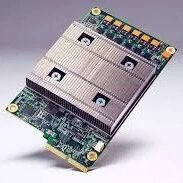
Core Insights - Google’s TPU v7 accelerators demonstrate significant performance improvements, with Ironwood being the most powerful TPU to date, achieving 10 times the performance of TPU v5p and 4 times that of TPU v6e [4][11] - The TPU v7 offers competitive performance against Nvidia's Blackwell GPUs, with Ironwood providing 4.6 petaFLOPS of dense FP8 performance, slightly surpassing Nvidia's B200 [3][4] - Google’s unique scaling approach allows for the connection of up to 9216 TPU chips, enabling massive computational capabilities and high bandwidth memory sharing [7][8] Performance Comparison - Ironwood TPU has a performance of 4.6 petaFLOPS, compared to Nvidia's B200 at 4.5 petaFLOPS and the more powerful GB200 and GB300 at 5 petaFLOPS [3] - Each Ironwood module can connect up to 9216 chips with a total bidirectional bandwidth of 9.6 Tbps, allowing for efficient data sharing [7][8] Architectural Innovations - Google employs a unique 3D toroidal topology for chip interconnects, which reduces latency compared to traditional high-performance packet switches used by competitors [8][9] - The optical circuit switching (OCS) technology enhances fault tolerance and allows for dynamic reconfiguration in case of component failures [9][10] Processor Development - In addition to TPU, Google is deploying its first general-purpose processor, Axion, based on the Armv9 architecture, aimed at improving performance and energy efficiency [11][12] - Axion is designed to handle various tasks such as data ingestion and application logic, complementing the TPU's role in AI model execution [12] Software Integration - Google emphasizes the importance of software tools in maximizing hardware performance, integrating Ironwood and Axion into an AI supercomputing system [14] - The introduction of intelligent scheduling and load balancing through software enhancements aims to optimize TPU utilization and reduce operational costs [14][15] Competitive Landscape - Google’s advancements in TPU technology are attracting attention from major model builders, including Anthropic, which plans to utilize a significant number of TPUs for its next-generation models [16][17] - The competition between Google and Nvidia is intensifying, with both companies focusing on enhancing their hardware capabilities and software ecosystems to maintain market leadership [17]


黄仁勋:希望特朗普帮帮忙
半导体芯闻· 2025-10-29 10:40
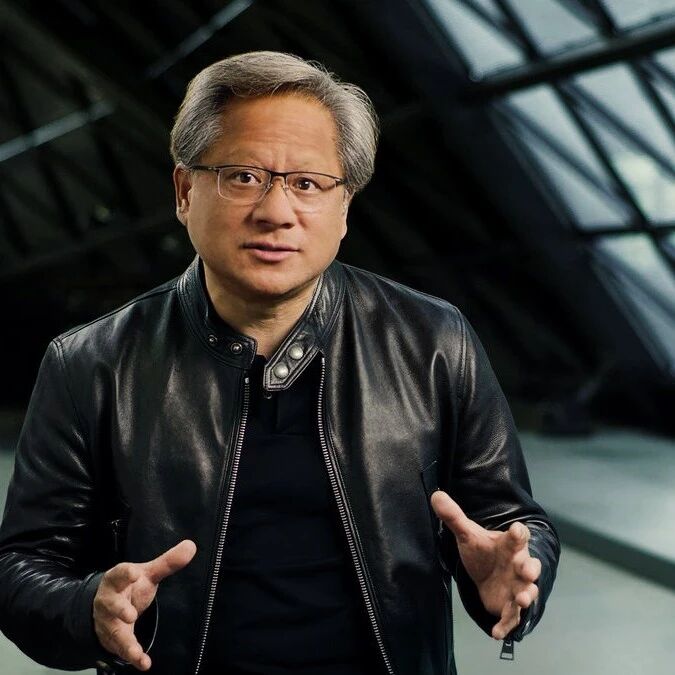
Core Insights - The article highlights NVIDIA's advancements in AI technology and its collaborations with major companies like Uber, Palantir, Amazon, and Microsoft, emphasizing the significance of domestic manufacturing in the U.S. [1][2] - NVIDIA's CEO Jensen Huang showcased the capabilities of the Blackwell GPU, which has seen substantial demand, with 6 million units shipped and 14 million units ordered, translating to potential sales of $500 billion [1][2] - Huang's remarks reflect a strategic push for U.S. manufacturing and a desire to reduce reliance on foreign products in the AI sector [2][3] Group 1 - Huang praised the Blackwell GPU's computational power and highlighted the integration of 72 GPUs in a single server rack, weighing 3,000 pounds and costing millions [1] - The company has begun mass production of Blackwell chips in Arizona, although not all production processes are completed in the U.S. [1][2] - Huang expressed concerns about the U.S. potentially losing its market in AI technology due to reliance on foreign products and called for solutions from government officials [2][3] Group 2 - NVIDIA's partnerships include collaborations with Lucid Motors for autonomous driving and Eli Lilly for supercomputing in drug development [3] - The company is investing $1 billion in Nokia to integrate AI into 6G wireless networks, showcasing its commitment to enhancing energy efficiency in data centers [3][4] - Huang indicated the intention to hold annual AI conferences in Washington, reflecting a growing influence in the tech policy landscape [5]
智能早报丨苹果被法国罚款4800万欧元;亚马逊史上最大规模裁员
Guan Cha Zhe Wang· 2025-10-28 03:17
Group 1: Market Developments - The first batch of three newly registered companies in the Sci-Tech Innovation Board's growth layer officially listed today, marking a significant step in the establishment of this new segment just over four months after the announcement by the China Securities Regulatory Commission [1] - The three companies include two high-tech enterprises in the biopharmaceutical sector and one in the semiconductor materials field, all of which are currently unprofitable [1] Group 2: Stock Market Performance - The "Magnificent 7" index of major U.S. tech stocks rose by 2.40%, reaching a record high of 208.95 points, with a cumulative increase of 4.35% over the last three trading days [2] - Tesla shares increased by 4.31%, Google by 3.6%, and both Nvidia and Apple saw gains of over 2% [2][3] Group 3: Corporate News - Former Alibaba Group Vice President Peng Chao has launched a new company named "Yun Jue Technology," focusing on AI wearable devices and smart agents [5] - The first product from Yun Jue Technology will combine wearable hardware with an intelligent agent, aiming to enhance consumer experiences in high-frequency sports environments [5][6] - AMD has established a $1 billion partnership with the U.S. Department of Energy to build two supercomputers for various scientific challenges, including nuclear energy and cancer treatment [10] Group 4: Regulatory Issues - Apple has been fined €48 million (approximately $55.9 million) by a French court for unfair marketing practices related to its iPhone sales contracts with mobile operators [8] - The penalties include €8 million in fines and compensation to several mobile operators, with Bouygues Telecom receiving €16 million, Iliad €15 million, and SFR €7.7 million [8]



再创新高!AMD与美国能源部达成10亿美元AI合作,打造两台超算
美股IPO· 2025-10-28 00:25
Core Insights - AMD has entered a $1 billion partnership with the U.S. Department of Energy to develop two supercomputers aimed at advancing research in nuclear energy, cancer treatment, and national security [3][4][9] - The first supercomputer, named Lux, is set to be operational within six months and will utilize AMD's MI355X AI chip, providing approximately three times the AI computing power of current supercomputers [6][7] - The second supercomputer, Discovery, is expected to be delivered in 2028 and operational by 2029, utilizing the more advanced MI430 series AI chips [8] Group 1: Supercomputer Development - The first supercomputer, Lux, will be developed in collaboration with various partners including HP and Oracle's cloud infrastructure, and is designed to enhance computational capabilities for complex scientific experiments [6][8] - Discovery, the second supercomputer, will be designed for high-performance computing and is expected to significantly improve performance, although specific metrics on its computing power increase are not yet available [8] Group 2: Applications and Impact - The supercomputers will focus on critical areas such as fusion energy, where scientists aim to replicate solar reactions to release energy, and in the medical field for accelerating drug discovery through molecular-level simulations [9] - The U.S. Department of Energy emphasizes the importance of these systems in ensuring sufficient computational power to handle increasingly complex data requirements in scientific research [3][4] Group 3: Market Reaction - Following the announcement of the partnership, AMD's stock experienced a notable increase, rising nearly 2.7% and reaching a new closing high, indicating positive market sentiment towards the collaboration [4]