跨境并购

Search documents
Meta收购Manus,中国监管如何把握边界?
Sou Hu Cai Jing· 2026-01-09 01:12
Core Viewpoint - The recent attempt by Meta to acquire the AI platform Manus has drawn significant attention in the international capital and technology sectors, highlighting the sensitivity of cross-border mergers and acquisitions in the context of Chinese regulations [1][3]. Group 1: Regulatory Perspective - The Chinese Ministry of Commerce supports enterprises in conducting mutually beneficial international operations and technology cooperation, provided they comply with Chinese laws and regulations [1]. - Any actions involving technology exports, data outflows, or cross-border mergers are viewed as sensitive, impacting capital flow, national security, technological sovereignty, and data control [1][3]. - The Ministry will conduct assessments of the consistency of the acquisition with laws regarding export control, technology transfer, and foreign investment, indicating a comprehensive review of legal applicability and strategic implications [3][5]. Group 2: National Strategy and Security - The acquisition of AI platforms like Manus is not merely a commercial transaction but intersects with issues of technological ecology and information control [3][5]. - China's regulatory approach aims to balance encouraging technological innovation and international cooperation while preventing the uncontrolled outflow of critical technologies and strategic assets [3][5]. - The complexities of cross-border mergers are influenced by international rules and market environments, necessitating a strategic examination of any transactions involving key technologies [5][6]. Group 3: Future Implications - The case of Meta's acquisition reflects the nuanced relationship in current international technology competition, where companies seek to rapidly gain technological capabilities through cross-border mergers while nations aim to safeguard core interests [5][6]. - Future cross-border technology transactions are expected to increase, with data, algorithms, and AI platforms becoming more sensitive, requiring adherence to legal frameworks for smooth operations [5][6]. - The Chinese government signals a clear message: openness exists within boundaries, and cooperation must adhere to established rules, ensuring that national interests and corporate development are complementary rather than conflicting [6][8].


罗兰贝格:中企跨境并购增加 更深度融入全球产业链
Zhong Guo Xin Wen Wang· 2026-01-08 15:38
Core Insights - The report by Roland Berger highlights that the diversification and cross-regional nature of cross-border mergers and acquisitions (M&A) will drive Chinese companies deeper into the global supply chain, accelerating their internationalization efforts [1] Group 1: Cross-Border M&A Trends - In the first half of 2025, Chinese companies announced a total M&A value of approximately $20 billion, reflecting a nearly 80% year-on-year increase, indicating a more proactive approach to overseas acquisitions and local operations [1] - The report emphasizes that while there are risks associated with going abroad, the risks of not internationalizing are greater, as exporting through international trade faces challenges such as tariffs, anti-dumping measures, and antitrust issues [1] Group 2: Capital and Industry Integration - The acceleration of capital going overseas is leading to the integration of supply chains, with the impact of overseas M&A extending beyond sectors like automotive parts and new energy to include traditional industries such as construction and consumer goods [1] Group 3: Challenges and Strategic Adjustments - Chinese companies face uncertainties when expanding internationally and need to establish a dynamic adjustment mechanism to respond agilely, which raises the requirements for their internationalization investments and capabilities [1]
罗兰贝格:价值重构驱动中国并购交易再跃迁
Xin Hua Cai Jing· 2026-01-08 15:11
Group 1 - The core viewpoint of the report indicates that the Chinese investment and M&A market is experiencing a rapid recovery and profound structural transformation driven by value reconstruction, with strategic mergers and acquisitions becoming dominant [1][2] - The report highlights that the recovery in domestic M&A is driven by industrial integration upgrades, foreign capital adjustments creating domestic spin-off demands, and Chinese companies deepening overseas investments [1][2] - The exit side of the market is seeing a significant turnaround, with the Hong Kong IPO market entering a "big year" and the A-share market strengthening, providing smoother exit paths for previous investment projects and reshaping the investment-exit-reinvestment confidence cycle [1] Group 2 - Investment logic is undergoing a profound transformation, moving away from short-term arbitrage reliant on capital leverage to a more cautious approach focused on long-term value and strategic synergy [2] - Buyers are increasingly attentive to the integration potential of targets in areas such as technology, industrial chain synergy, and sustainable development, particularly in "hard technology," green transformation, high-end manufacturing, and digitalization [2] - Cross-border M&A is becoming an important component of the Chinese M&A market, helping Chinese companies gain new market shares and enhance global competitiveness through resource integration and technology upgrades [2] Group 3 - The report notes that both financial and industrial investors in the Chinese market are entering a phase of steady recovery, with comprehensive improvements across different stages of fundraising, investment, management, and exit [3] - State-owned investment platforms and funds are becoming more proactive and active, while insurance capital, guiding funds, and market-oriented VC and PE are also increasingly taking initiative [3] - Geopolitical changes are prompting some foreign institutions to adjust their resource investment strategies in China, leading to numerous local M&A opportunities [3]
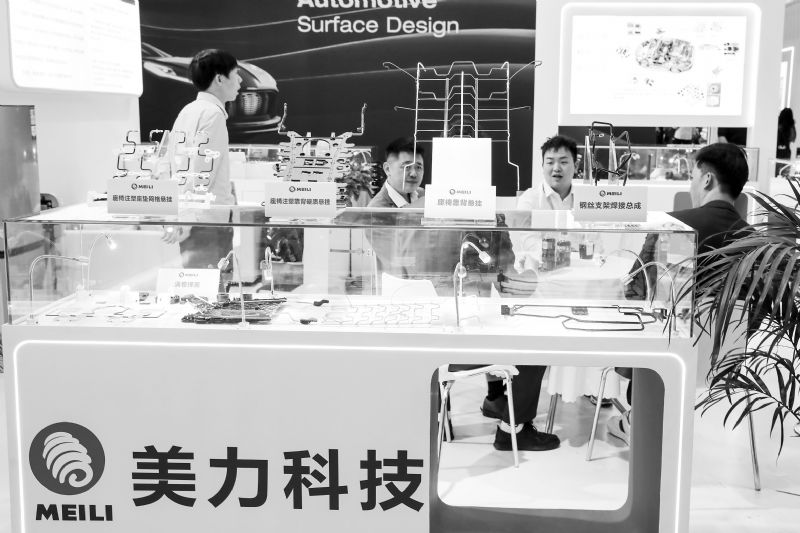
美力科技加强国际布局境外营收占17% 并购德国公司抢占市场总资产将增96%
Chang Jiang Shang Bao· 2026-01-08 00:01
Core Viewpoint - Meili Technology is accelerating its international expansion through an acquisition of Hitched Holdings 3 B.V., aiming to strengthen its position in the global trailer towing system market and enhance its long-term growth prospects [2][4]. Group 1: Acquisition Details - The acquisition will be executed through Meili Holding GmbH, a wholly-owned subsidiary in Germany, for 100% equity of HH3, with a total consideration of approximately €63.69 million plus additional costs [4]. - The transaction constitutes a major asset restructuring as the target company's financial metrics exceed 50% of Meili Technology's recent fiscal year indicators [4]. - The acquisition is expected to significantly enhance Meili Technology's asset scale and profitability, with projected revenue and net profit increases of 209.67% and 75.08%, respectively, post-transaction [3][10]. Group 2: Market Position and Strategy - Meili Technology has established a market presence in the spring sector and aims to leverage the acquisition to capture growth in both mature and emerging markets [2][5]. - The target company, ACPS Group, has a strong competitive position in the trailer towing system market, with over 100 core patents and a significant customer base including major automotive brands [5][6]. - The acquisition is expected to complement Meili Technology's domestic market advantages, facilitating a diversified global business strategy [6]. Group 3: Financial Performance and Projections - In the first half of 2025, Meili Technology achieved overseas revenue of ¥152 million, accounting for 16.92% of total revenue, with a year-on-year growth of 25.55% [8]. - The target company's revenue for 2023 to the first ten months of 2025 shows fluctuations, with a notable recovery in profitability expected in 2025 [8][9]. - Post-acquisition, Meili Technology's asset-liability ratio is projected to rise from 45.92% to 72.29%, indicating increased financial leverage [11].

跨境并购重塑产业格局!华泰联合证券赋能企业跃迁
券商中国· 2025-12-16 23:23
Core Viewpoint - The article highlights the transformation of Chinese capital markets and the role of Chinese securities firms, particularly Huatai Securities, in facilitating cross-border mergers and acquisitions (M&A) to support domestic companies' internationalization and technological advancement [1][10]. Group 1: Company Transformation - Yake Technology, originally focused on flame retardants, has successfully transitioned into the semiconductor materials sector, achieving a net profit of 872 million yuan in 2024 and a market capitalization nearing 34 billion yuan [4]. - The strategic acquisition of UP Chemical in 2016 marked a pivotal point for Yake Technology, enabling it to secure core materials for integrated circuit manufacturing [4][5]. - The company has expanded its M&A activities to include sectors such as semiconductor precursor materials and electronic specialty gases, breaking foreign monopolies and becoming a key supplier for LNG transportation [7][8]. Group 2: Role of Huatai Securities - Huatai Securities has played a crucial role in Yake Technology's transformation by providing comprehensive cross-border M&A services, leveraging its deep understanding of both domestic and international markets [5][10]. - The firm has facilitated numerous financing projects globally, with approximately 600 instances of service and a total financing scale of about 280 billion USD, including over 64 billion USD in Hong Kong [10]. - Huatai Securities has demonstrated expertise in navigating complex cross-border transactions, ensuring compliance and efficiency throughout the M&A process [11][12].


跨境并购重塑产业格局 华泰联合证券赋能企业跃迁
Zheng Quan Shi Bao· 2025-12-16 18:11
Core Insights - Yake Technology has transformed from a flame retardant manufacturer to a key player in the semiconductor materials sector, significantly enhancing its market position and growth potential [1][2]. Group 1: Company Transformation - Yake Technology, established in 1997, initially focused on flame retardants but has strategically shifted towards emerging materials since 2015, leading to a substantial increase in net profit from under 100 million yuan to 872 million yuan in 2024 [2]. - The acquisition of UP Chemical in 2016 marked a pivotal moment for Yake Technology, allowing it to enter the semiconductor materials market and secure core production capabilities for integrated circuit manufacturing [2][3]. Group 2: Strategic Acquisitions - Following the UP Chemical acquisition, Yake Technology expanded its portfolio through further cross-border acquisitions, including the purchase of LG Chem's color photoresist business, which provided access to advanced technologies and a strong customer base [4]. - In 2024, Yake Technology acquired 75.10% of SKC-ENF Electronic Materials Limited, enhancing its capabilities in semiconductor wet chemicals and broadening its service offerings to core clients [5]. Group 3: Investment Banking Support - Huatai United Securities played a crucial role in Yake Technology's transformation by designing innovative transaction structures and providing comprehensive support throughout the acquisition processes [3][4]. - The firm has extensive experience in cross-border mergers and acquisitions, enabling it to navigate complex international transactions effectively and facilitate Yake Technology's growth in the global market [6][7]. Group 4: Market Position and Future Outlook - The trend of Chinese companies pursuing cross-border acquisitions to achieve technological advancements is on the rise, with Huatai Securities positioned as a leader in this space, having facilitated nearly 600 financing transactions globally, amounting to approximately $280 billion [6]. - Huatai Securities has established a robust global value chain system, enhancing its service capabilities in the Hong Kong market and supporting various complex cross-border listing structures [6][7].


2025上市公司跨境并购典型案例汇编
Sou Hu Cai Jing· 2025-12-16 02:23
今天分享的是:2025上市公司跨境并购典型案例汇编 报告共计:179页 【中国上市公司跨境并购图谱:全球化浪潮下的战略跃迁与整合智慧】 在全球经济格局深度调整与产业升级共振的大背景下,中国上市公司正以前所未有的广度与深度参与全球资源配置。近日,上 海证券交易所发布的一份涵盖16个典型案例的跨境并购汇编,清晰勾勒出中国企业从"产品出海"向"品牌出海"、"技术出海"乃 至"生态出海"迈进的战略轨迹。这些案例不仅是资本流动的记录,更是观察中国产业竞争力提升与全球化运营能力成熟的重要 窗口。 纵观这些并购案例,其核心驱动力已超越单纯的规模扩张,呈现出鲜明的战略导向性。企业出海并非盲目"抄底",而是紧密围 绕补强技术短板、获取高端品牌、完善全球市场网络及构建完整产业链等战略目标展开。例如,万华化学通过分步收购匈牙利 BC公司,不仅一举成为全球MDI行业龙头,更完成了生产基地的全球化布局;豪威集团收购美国豪威科技,实现了在CMOS图 像传感器领域从追赶到领先的关键一跃;海尔智家通过系列并购GE家电、Candy等品牌,构建起覆盖全球主流市场的品牌矩阵 与研发销售网络。这种以我为主、精准卡位的并购逻辑,标志着中国企业的国际化 ...

钱多机会多,美联储降息下跨境并购春天来了!(实用建议+ODI备案详解)
Sou Hu Cai Jing· 2025-12-12 10:17
Group 1 - The Federal Reserve announced a 25 basis point interest rate cut, lowering the target range for the federal funds rate from 3.75%-4.00% to 3.50%-3.75%, marking the third consecutive rate cut by the Fed [1] - This news is favorable for the cross-border investment market, indicating increased liquidity and opportunities for mergers and acquisitions [1] - Companies looking to finance should secure long-term low-interest loans promptly to avoid potential future rate increases [1] Group 2 - Focus on high-debt, asset-heavy, or high-growth technology companies, as they will benefit significantly from the interest rate cut [2] - Investment effects from the rate cut may take 3-6 months to materialize in the transaction market, necessitating strategic planning [3] Group 3 - A simplified checklist for the investment process includes: feasibility study, business license, audit report, board resolutions, and various regulatory filings [5] - The entire investment process typically takes 2-3 months if all documentation is in order, but can take longer in special circumstances [6] Group 4 - Key challenges include industry restrictions, proof of fund sources, return investment recognition, and coordination among multiple regulatory bodies [6][7] - It is advisable to start the ODI (Overseas Direct Investment) process 3-4 months in advance of signing contracts to ensure timely compliance [7] Group 5 - All overseas investments require ODI registration, and it is illegal to invest before completing the necessary paperwork [9][10] - The approval rate for compliant and strategic investments is high, but issues often arise from inadequate documentation [11]

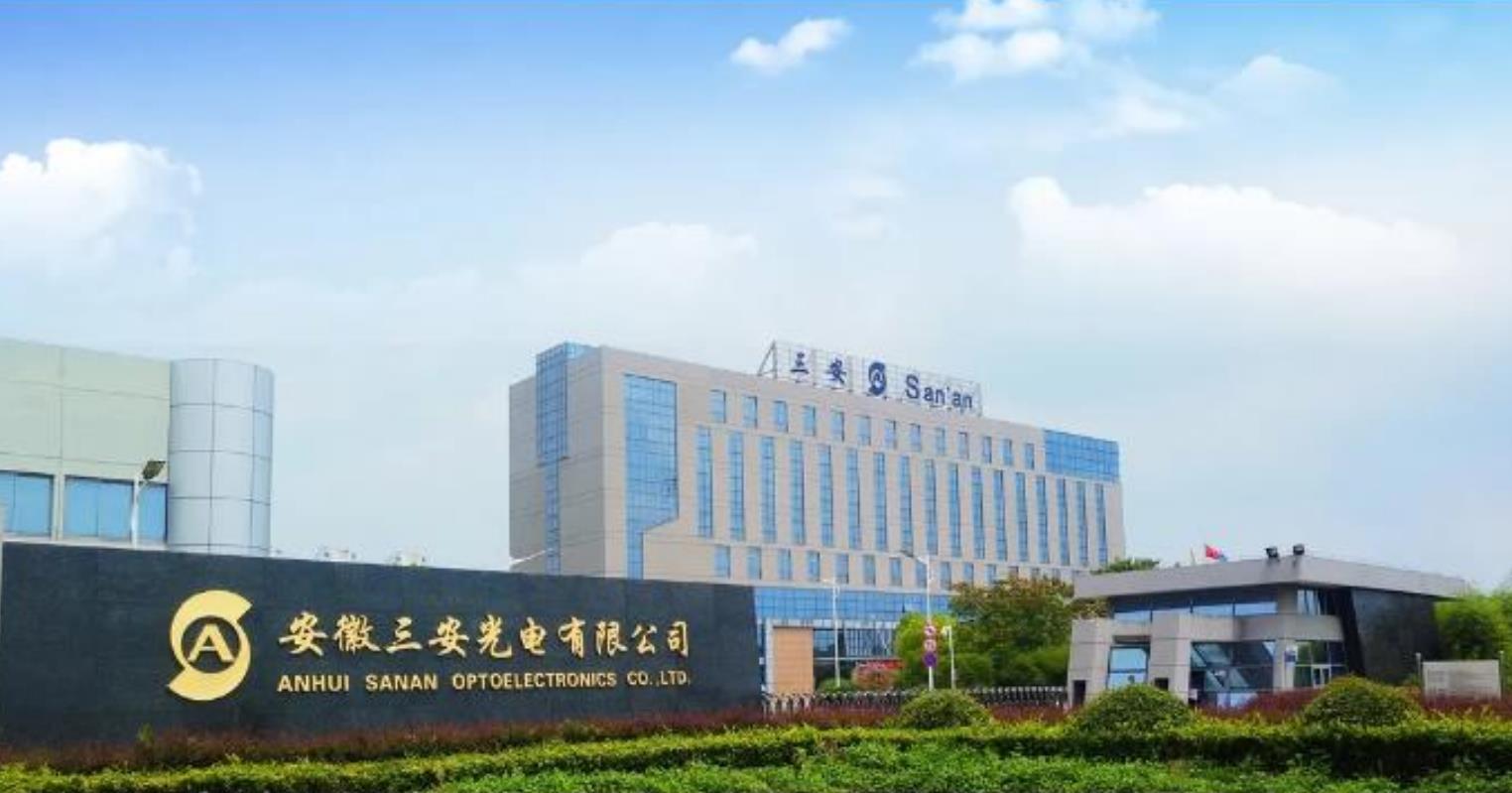
三安光电:收购Lumileds获中国、土耳其反垄断及意大利外资审查通过
Ju Chao Zi Xun· 2025-12-10 14:26
Core Viewpoint - Sanan Optoelectronics plans to jointly acquire 100% equity of Lumileds Holding B.V. with Inari Amertron Berhad for approximately $239 million, marking a significant step in its internationalization strategy [1][3] Group 1: Acquisition Details - The acquisition has passed antitrust reviews in China and Turkey, as well as foreign direct investment reviews in Italy, indicating regulatory progress [1] - Lumileds Holding B.V. is a global provider of LED solutions, with products used in automotive lighting, general lighting, and display backlighting [3] Group 2: Strategic Implications - The joint acquisition aims to create synergies in the LED industry chain and international market channels, enhancing the company's global layout capabilities in the compound semiconductor business [3] - This move is seen as a crucial step for the company to expand its overseas high-end customer base and application areas amid growing global demand for high-end lighting and automotive LEDs [3] Group 3: Future Considerations - The company acknowledges that the cross-border acquisition still requires compliance with regulatory procedures in certain countries and regions, and there is uncertainty regarding the completion of the transaction and its timeline [3]

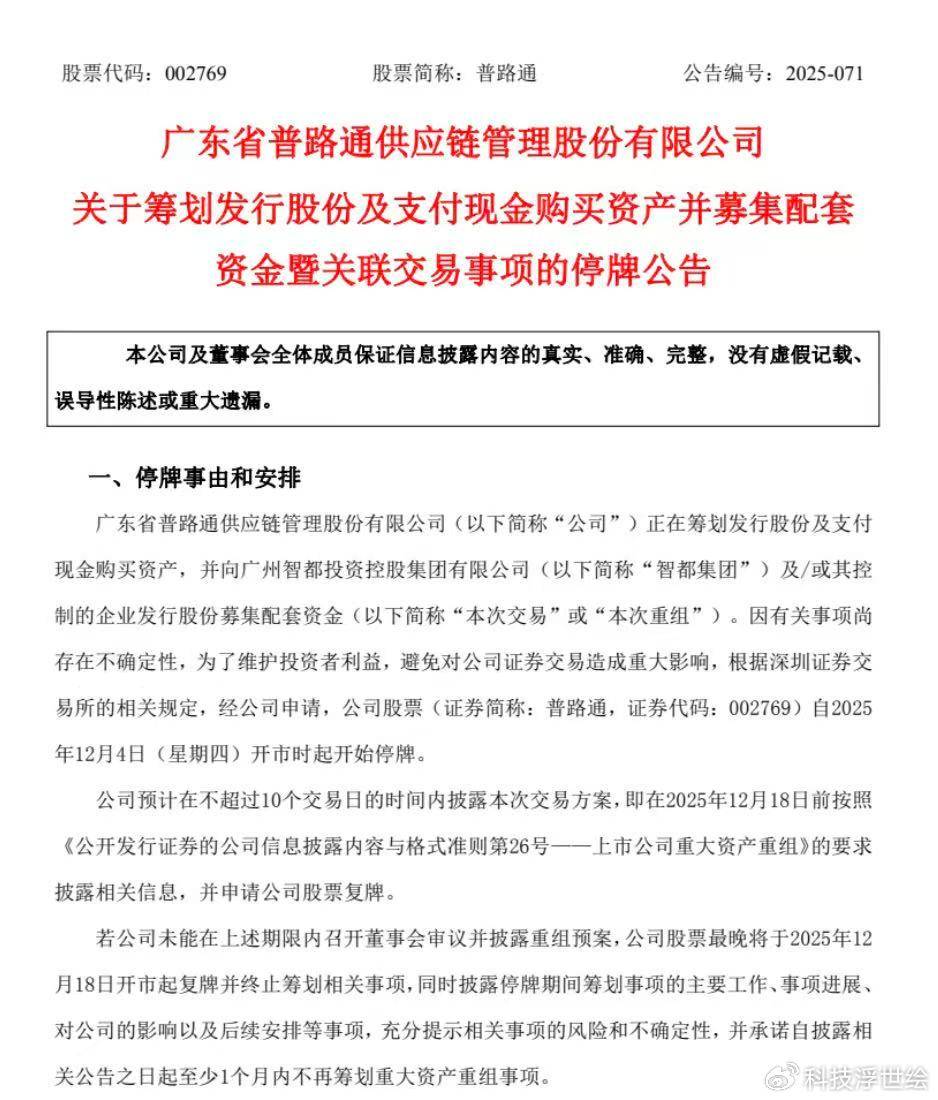
从IPO辅导到借壳:乐其电商拟通过普路通实现A股上市
Sou Hu Cai Jing· 2025-12-06 18:36
Group 1 - The core announcement is that Pulu Tong (002769.SZ) is planning to acquire control of Leqee Group Limited through a share issuance and cash payment [1][3] - If successful, this acquisition will allow Leqee Group, a well-known brand e-commerce service provider, to enter the A-share market via a state-owned listed company [3] - Leqee Group, established in 2018 and registered in the Cayman Islands, focuses on brand digital and e-commerce services, covering major platforms like Tmall, JD.com, and Douyin [3] Group 2 - Pulu Tong has transformed from a supply chain management service company to one that also operates in the new energy sector, with its main business now including supply chain management, photovoltaic energy services, and energy storage ecosystem operations [4] - The change in Pulu Tong's controlling shareholder to Guangdong Green Investment Operation Co., Ltd. in March 2024 is a key background for understanding this transaction [4] - The transaction is classified as a cross-border acquisition, with Pulu Tong planning to raise matching funds through a share issuance to its controlling shareholder or its controlled enterprises [4]