
通用具身智能

Search documents
智元、宇树、优必选,全球排名前三
Shang Hai Zheng Quan Bao· 2026-01-09 07:31
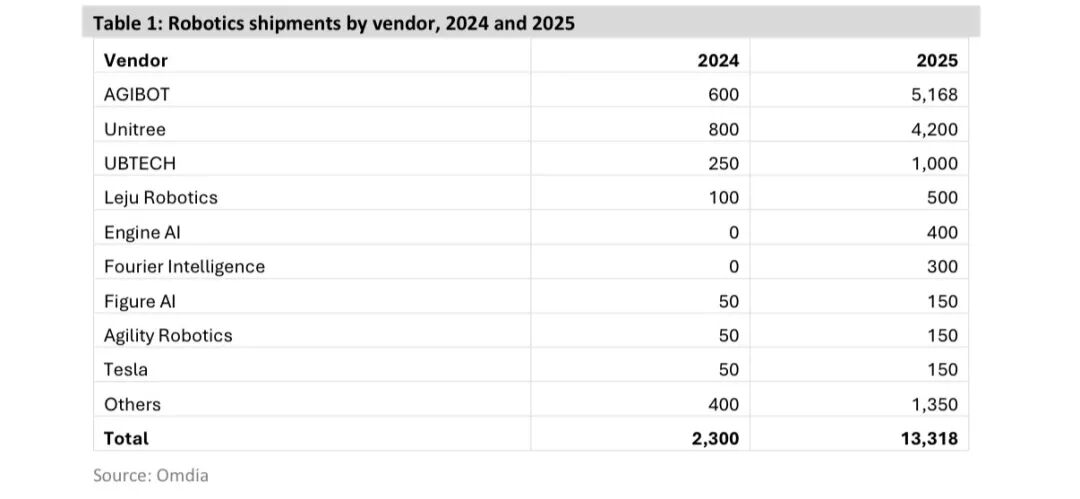
Core Insights - The humanoid robot market is expected to enter a rapid growth phase, with global shipments projected to reach 13,318 units in 2025, up from 2,300 units in 2024 [1][2] - Chinese manufacturers are leading in both production scale and shipment volume, with ZhiYuan accounting for over 5,100 units and a 39% market share, making it the global leader [1][4] Market Overview - The report by Omdia indicates that ZhiYuan, Unitree, and UBTECH will be the top three vendors in 2025, with shipments of 5,168 units, 4,200 units, and 1,000 units respectively, capturing 39%, 32%, and 7% of the market share [2][4] - The total shipment volume for humanoid robots is expected to grow significantly, with a forecast of 260 million units by 2035 [6] Competitive Landscape - The competitive landscape is categorized into tiers, with ZhiYuan, Figure AI, Tesla, UBTECH, and Unitree in the first tier, while Agility Robotics, Apptronik, Fourier, and Leju Robotics are in the second tier [6] - The integration of generative AI with robotics is driving the evolution towards "general embodied intelligence," enhancing robots' capabilities for autonomous learning and environmental adaptation [6] Production and Deployment - Companies are ramping up production capabilities, with ZhiYuan's sales revenue exceeding 1 billion yuan in 2025, significantly higher than the previous year's figures [2][4] - Upcoming production facilities include a global manufacturing center by Zhongqing Robotics in Zhengzhou and a super smart factory by UBTECH in Liuzhou, expected to produce 10,000 humanoid robots by 2026 [6][7] Future Outlook - 2026 is anticipated to be a pivotal year for the humanoid robot industry, with a clear differentiation among startups based on technological breakthroughs and industrial capabilities [6][7] - The deployment scale of robots is crucial for their competitiveness, as more deployments lead to better data for training models [8]

报告显示中国人形机器人企业出货量登顶全球榜首
Zhong Guo Xin Wen Wang· 2026-01-09 05:45
Group 1 - The core viewpoint of the report indicates that the global humanoid robot market is entering a rapid growth phase, with total shipments expected to reach 13,000 units in 2025 [2] - Chinese manufacturers are leading the global market, with Zhiyuan (AGIBOT) projected to have the highest shipment volume and market share, delivering 5,168 units, which accounts for 39% of the global market [2] - The integration of generative AI and robotics technology is driving the evolution of robots from executing preset tasks to possessing autonomous learning and environmental adaptability, termed "general embodied intelligence" [2] Group 2 - The report highlights that leading companies in the humanoid robot sector, such as Zhiyuan, Yushu, and Tesla, are actively promoting accelerated industry development [2] - Omdia forecasts that the humanoid robot market will experience exponential growth over the next decade, with global shipments expected to reach 2.6 million units by 2035 [2] - Zhiyuan Robotics, founded in 2023 and headquartered in Shanghai's Pudong Zhangjiang Science City, has rapidly increased the number of humanoid robots produced and sold to various countries and regions [2]

机构报告:2025年全球人形机器人出货量中国厂商领跑 智元份额居首
Xin Hua Cai Jing· 2026-01-09 04:41
Core Insights - The global humanoid robot market is expected to enter a rapid growth phase by 2025, with Chinese manufacturers leading in mass production and shipment volume [1] - AGIBOT is projected to achieve the highest shipment volume and market share globally in 2025, with over 5,100 units shipped, capturing 39% of the market [1] - The integration of generative AI with robotics is accelerating the evolution of robots from executing single tasks to possessing autonomous learning capabilities [1] Industry Overview - The total shipment volume of humanoid robots is anticipated to reach 13,000 units in 2025, indicating a significant increase in market activity [1] - The report identifies AGIBOT, Yushu, and Tesla as part of the "first tier" of companies in the global humanoid robot sector [1] - The humanoid robot industry is projected to experience exponential growth, with an expected shipment volume of 2.6 million units by 2035 [1]
Omdia最新报告:智元出货量与市场份额两项关键指标上均位居全球第一
IPO早知道· 2026-01-09 03:44
Group 1 - The core viewpoint of the article is that the global humanoid robot market is entering a rapid growth phase, with an expected total shipment of 13,000 units in 2025, and Chinese manufacturers, particularly Zhiyuan, leading in both production and market share [2][3] - Zhiyuan achieved an annual shipment of over 5,100 units, capturing 39% of the global market share, making it the top performer in both shipment volume and market share [2] - The report highlights that Zhiyuan has developed a diverse range of products, including full-size, half-size, and wheeled robots, successfully commercializing them in various core scenarios such as entertainment, industrial intelligence, and education [2] Group 2 - Omdia's evaluation of global mainstream manufacturers used a heatmap model across eight dimensions, with Zhiyuan receiving the highest rating (Advanced Capability) in six of these dimensions, making it the top-rated manufacturer in this assessment [3] - The integration of generative AI and robotics is driving the evolution of robots from executing preset tasks to possessing autonomous learning and environmental adaptability, termed "general embodied intelligence" [3] - Leading companies in the humanoid robot sector, including Zhiyuan, Yushu, and Tesla, are actively promoting accelerated industry development, with a forecasted exponential growth in the humanoid robot market, potentially reaching 2.6 million units by 2035 [3]
全球TOP 13战队翻车实录!机器人极限求生,比科幻片还残酷
具身智能之心· 2025-12-09 00:05
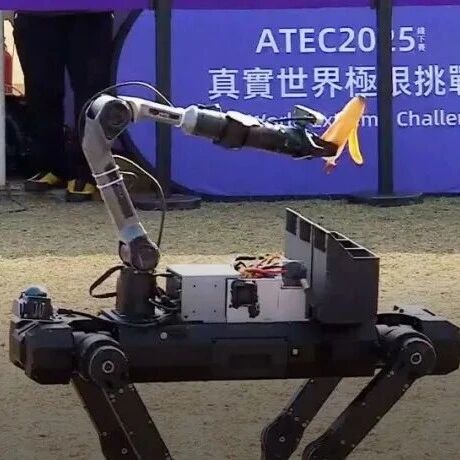
Core Viewpoint - The ATEC 2025 competition represents a significant step towards achieving general embodied intelligence in robotics, challenging teams to develop robots that can operate autonomously in real-world environments rather than controlled settings [28][30][31]. Group 1: Competition Overview - The ATEC 2025 competition took place in a real-world outdoor setting, featuring diverse terrains such as bridges, hills, and stairs, which posed significant challenges for the participating robots [36][38]. - The event aimed to test the robots' abilities to adapt to unpredictable environments, moving beyond the controlled conditions typically seen in robotic competitions [30][31]. - The competition included four main tasks: garbage sorting, autonomous watering, orienteering, and bridge crossing, each designed to assess the robots' multi-modal perception and decision-making capabilities [47][50]. Group 2: Technical Challenges - The competition highlighted three major technical challenges for robotics: environmental perception and cognition, intelligent decision-making and response, and hardware and computational limitations [52][60][69]. - Environmental perception involves not just recognizing objects but understanding their context and condition, which is complicated by real-world factors like contamination and deformation [59]. - Intelligent decision-making requires robots to adapt to dynamic environments, making real-time decisions based on changing conditions, which is currently a significant limitation in robotic capabilities [62][64]. Group 3: Team Performance and Insights - Out of 396 teams, only 13 advanced to the finals, with the winning team, wongtsai, scoring 434 points through effective preparation and innovative strategies [78][79]. - Teams reported that the greatest challenge in outdoor environments was the unpredictability of conditions, which often led to difficult decisions regarding whether to operate autonomously or remotely [80][81]. - The competition fostered a spirit of collaboration and innovation among participants, with many expressing optimism about the future of robotics in real-world applications [93][96].
全球TOP 13战队翻车实录,机器人极限求生,比科幻片还残酷
3 6 Ke· 2025-12-08 10:18
Core Insights - The ATEC 2025 competition showcased the challenges faced by robots in real-world environments, emphasizing the need for advancements in autonomous capabilities [18][20][22] - The event aimed to test robots' abilities to adapt to complex, unpredictable scenarios, moving beyond controlled laboratory settings [21][23][25] - The competition highlighted the importance of developing robots that can operate without human intervention, pushing teams to innovate in AI and robotics [29][61] Group 1: Competition Overview - The ATEC 2025 competition featured 13 elite teams from around the world, with the wongtsai team achieving the highest score of 434 points [48][49] - The competition included four main tasks: garbage sorting, autonomous watering, directional off-road navigation, and bridge crossing, each designed to test various robotic capabilities [30][31] - The event was held in a real outdoor environment, presenting challenges such as varying terrain and environmental conditions, which tested the robots' adaptability [25][22] Group 2: Technical Challenges - Teams faced significant technical hurdles, including environmental perception, intelligent decision-making, and hardware limitations [33][61] - The garbage sorting task illustrated the difficulties robots encounter in recognizing and categorizing objects in real-world conditions [40][34] - The bridge crossing task required robots to make autonomous decisions based on dynamic environmental factors, showcasing the need for advanced planning and execution capabilities [44][46] Group 3: Innovations and Strategies - The competition encouraged the development of "no remote control" technologies, rewarding teams that achieved full autonomy [29][26] - Teams employed diverse technical strategies, with some opting for traditional methods while others explored cutting-edge approaches to enhance robotic performance [58][57] - The event served as a platform for teams to refine their algorithms and hardware, addressing the limitations that hinder the practical application of robotics in everyday scenarios [59][60]
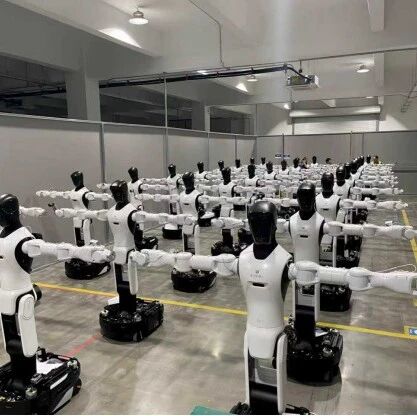
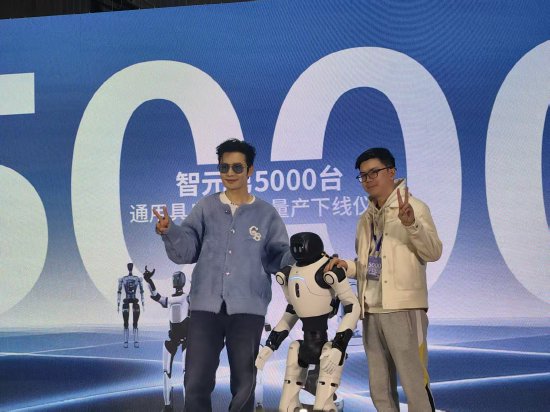
智元第5000台人形机器人量产下线,知名演员黄晓明“现场提货”
Xin Lang Cai Jing· 2025-12-08 08:47
责任编辑:何俊熹 智元机器人联合创始人兼首席技术官彭志辉表示,"第5000台机器人下线是一个里程碑,但它更是我们 新征程的一个起点,智元机器人未来将继续坚持以创新为本,以客户为中心,让智能机器人能够真正的 走进千行百业,走进我们的日常生活。"(文猛) 智元机器人联合创始人兼首席技术官彭志辉表示,"第5000台机器人下线是一个里程碑,但它更是我们 新征程的一个起点,智元机器人未来将继续坚持以创新为本,以客户为中心,让智能机器人能够真正的 走进千行百业,走进我们的日常生活。"(文猛) 责任编辑:何俊熹 新浪科技讯 12月8日下午消息,智元机器人今日宣布第5000台通用具身智能机器人量产下线,该款机器 人为智元灵犀X2。现场,知名演员黄晓明亲自来到现场,成为智元第5000台人形机器人产品主人,"现 场提货"领走了灵犀X2。 新浪科技讯 12月8日下午消息,智元机器人今日宣布第5000台通用具身智能机器人量产下线,该款机器 人为智元灵犀X2。现场,知名演员黄晓明亲自来到现场,成为智元第5000台人形机器人产品主人,"现 场提货"领走了灵犀X2。 ...
宇树科技IPO加速度
2 1 Shi Ji Jing Ji Bao Dao· 2025-11-18 04:28
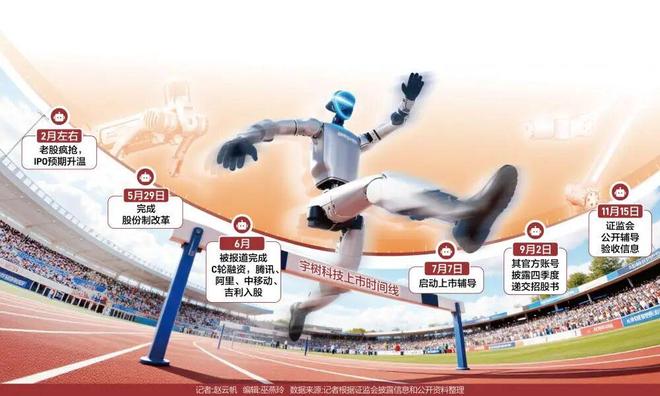
Core Viewpoint - Yushu Technology's IPO process is accelerating, with the company having completed its IPO counseling and moving towards submitting its prospectus by the end of 2023 [1][2][6]. Group 1: IPO Progress - Yushu Technology has entered the "counseling acceptance" stage as of November 15, indicating readiness to submit its IPO application [1]. - The company completed its IPO counseling in just 132 days, significantly faster than the average duration of 6 to 12 months for similar processes in the A-share market [7]. - The rapid progress is attributed to a strong team from CITIC Securities, which deployed 24 personnel to assist Yushu Technology [6]. Group 2: Market Position and Expectations - Yushu Technology has gained significant attention in the market, with its original shares being highly sought after, reflecting strong investor interest [2]. - The company is expected to meet the basic requirements for A-share listing, having reported annual revenue exceeding 1 billion yuan (approximately 10 billion) [8]. - The company is positioned to potentially set a record for the fastest IPO process for a technology stock in A-share history [7]. Group 3: Challenges Post-IPO - Post-IPO, Yushu Technology and similar humanoid robot companies face the dilemma of balancing profitability with the need for continued capital investment in technology [10]. - The industry is grappling with challenges such as market saturation in certain segments and the need for ongoing investment in high-performance computing resources [10][11]. - The market's perception of humanoid robot companies will depend on their ability to deliver on production and delivery expectations, as well as their strategic focus on either AI capital expenditure or traditional consumer robotics [12].
宇树科技IPO加速度
21世纪经济报道· 2025-11-18 04:08
Core Viewpoint - Yushu Technology's IPO process is accelerating, with the company having completed its preparatory work for the IPO application, indicating a smooth progression towards its goal of submitting the IPO prospectus between October and December [1][7]. Group 1: IPO Progress - Yushu Technology has entered the "acceptance" stage of its IPO guidance, having completed the necessary preparations for its IPO application [1]. - The company has achieved a record speed in its IPO guidance process, completing it in just 132 days, significantly faster than the average duration of 6 to 12 months for similar companies [6][7]. - The company’s founder revealed that Yushu Technology's annual revenue has exceeded 1 billion yuan, meeting the basic requirements for A-share listing [7]. Group 2: Market Position and Competitors - Yushu Technology is considered a leading player in the capital market, with other humanoid robot companies like Leju Robotics and Zhiyuan Robotics also pursuing IPOs [2]. - The rapid progress of Yushu Technology's IPO has drawn significant market attention, with its original shares being actively traded and sought after in the primary market [1][2]. Group 3: Challenges Post-IPO - Humanoid robot companies face a dilemma post-IPO regarding whether to prioritize profitability or to increase capital expenditures for technological advancements [9]. - The market may encounter challenges such as potential sales bottlenecks in educational and exhibition humanoid robots after 2025, and issues related to production capacity and delivery in industrial humanoid robots [9][10]. - The industry is debating the effectiveness of "end-to-end" versus "remote operation" humanoid robots, with each approach presenting its own set of challenges and market expectations [10]. Group 4: Future Outlook - The IPO is seen as a significant milestone for Yushu Technology, which must evolve to meet market expectations as a public company [11].
宇树科技IPO“加速度”
2 1 Shi Ji Jing Ji Bao Dao· 2025-11-17 23:07
Core Insights - Yushu Technology's IPO process has accelerated, with the company moving into the "acceptance" stage of its counseling status, indicating readiness to submit its IPO prospectus by the end of 2023 [1][4] - The rapid progress of Yushu Technology's IPO counseling, completed in just 132 days, sets a record in the A-share market, significantly faster than the average duration of 6 to 12 months [6][7] - The company has met the basic requirements for A-share listing, with annual revenue exceeding 1 billion yuan, positioning it favorably in the capital market [7] Group 1: IPO Progress - Yushu Technology has completed its counseling work with the assistance of a large team from CITIC Securities, indicating a strong commitment to expedite the IPO process [4] - The company is expected to submit its IPO registration application shortly after the counseling acceptance, potentially achieving a historic milestone in the A-share IPO timeline [1][6] - The recent changes in the board of directors are seen as a crucial step in establishing a robust governance structure for the upcoming IPO [5][6] Group 2: Market Position and Competition - Yushu Technology is recognized as a leading player in the capital market, with other humanoid robot companies also pursuing IPOs, indicating a strong demand for capital in the robotics sector [2] - The challenges faced by humanoid robot companies post-IPO include balancing profitability with the need for continued capital investment in technology and development [8][9] - The market's perception of humanoid robots may be influenced by their performance in industrial applications, with ongoing debates about the effectiveness of different operational models [9] Group 3: Future Considerations - The success of Yushu Technology's IPO will depend on its ability to meet market expectations and navigate the complexities of being a public company [9][10] - The company must address potential pitfalls in revenue generation and operational efficiency to maintain investor confidence post-IPO [8][9] - The evolving landscape of the humanoid robotics market will require Yushu Technology to adapt its strategies to align with investor interests and market demands [9]