
通用具身机器人

Search documents
财信证券晨会纪要-20260331
Caixin Securities· 2026-03-30 23:31
Financial Insights - The bond market overview indicates a decline in yields, with the 1-year government bond yield down by 4.06 basis points to 1.21% and the 10-year yield down by 1.09 basis points to 1.81% [12] - The People's Bank of China conducted a 7-day reverse repurchase operation of 269.5 billion yuan, resulting in a net injection of 261.5 billion yuan for the day [16] Industry Dynamics - The robotics industry saw a significant milestone with the launch of the 10,000th general-purpose embodied robot by Zhiyuan Robotics, marking a transition from early-stage production to industrial standards [23] - The transportation sector is advancing with the release of the "Smart Shipping 2030 Action Plan," aiming for deep integration of AI technology in shipping by 2027 [18] Company Performance - Hualu Hengsheng (600426.SH) reported a revenue decline of 9.52% to 30.969 billion yuan and a net profit drop of 15.04% to 3.315 billion yuan for 2025, impacted by industry downturns [24] - Huatai Securities (601688.SH) achieved a net profit of 1.638 billion yuan, a 6.72% increase year-on-year, with total assets rising by 32.31% to 107.735 billion yuan [25][26] - EVE Energy (300014.SZ) reported a net profit of 4.134 billion yuan, a 1.44% increase, with total revenue reaching 61.470 billion yuan, up 26.44% [28][30] - Keda Li (002850.SZ) achieved a net profit of 1.764 billion yuan, a 19.87% increase, driven by strong demand in the new energy vehicle sector [31][32] - Youyou Food (603697.SH) reported a revenue increase of 34.39% to 1.589 billion yuan, with a net profit growth of 17.94% to 186 million yuan [33] - Lingyi Technology (002600.SZ) saw a net profit increase of 30.47% to 2.288 billion yuan, supported by growth in AI-related hardware products [35] - Sanhuan Group (300408.SZ) reported a net profit of 2.618 billion yuan, a 19.54% increase, with revenue growth of 22.13% to 9.007 billion yuan [38] - Fala Electronics (600563.SH) achieved a net profit of 1.192 billion yuan, a 14.72% increase, with total revenue of 5.327 billion yuan, up 11.64% [41]
智元机器人进入德国市场,机器人ETF嘉实(159526)聚焦机器人全产业链发展机遇
Xin Lang Cai Jing· 2026-02-26 02:59
Group 1 - The core viewpoint of the news highlights the growth and advancements in the robotics industry, particularly with the introduction of new products and strategic partnerships in the European market [1] - The China Securities Robotics Index rose by 0.52% as of February 26, 2026, with notable increases in stocks such as Dazhong Laser (up 10.00%) and Yuntian Lifeng (up 6.91%) [1] - Zhiyuan announced its entry into the German market, unveiling a full range of general-purpose embodied robot products and signing a strategic cooperation agreement with Minshi Group to accelerate local deployment of robotics technology in Europe [1] Group 2 - As of January 30, 2026, the top ten weighted stocks in the China Securities Robotics Index accounted for 54.66% of the index, including companies like iFlytek and Huichuan Technology [2] - The Robotics ETF by Harvest (159526) closely tracks the China Securities Robotics Index, focusing on companies involved in system solutions, digital workshops, automation equipment manufacturing, and other robotics-related sectors [2] - Investors without stock accounts can access the robotics industry development opportunities through the Harvest Robotics ETF linked fund (024620) [3]

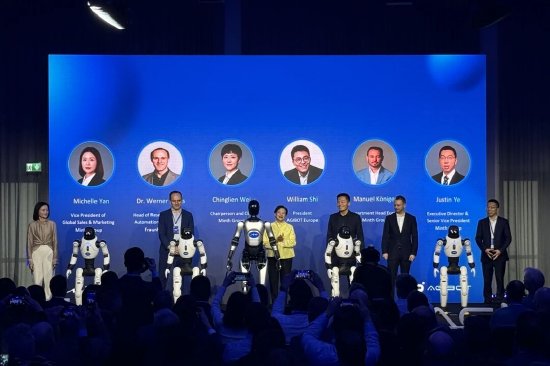
智元宣布进入德国市场,联和敏实集团推进机器人本地化生产
Xin Lang Cai Jing· 2026-02-25 04:30
Core Insights - AGIBOT has officially entered the German market, launching a full range of general-purpose embodied robot products and system-level industry solutions [1][4] - A strategic cooperation agreement has been signed with Minth Group, a leading global manufacturer of automotive exterior and structural components, to accelerate the localization and large-scale deployment of robotic technology in Europe [1][4] Company Overview - Minth Group operates 78 factories and offices globally, employing over 27,000 people, with a strong international presence [1][4] - The company has been deeply engaged in the European market for 15 years, holding over 40% market share in aluminum trim and battery housing structural components [1][4] Strategic Collaboration - The partnership aims to promote localized production of robots in Europe, providing continuous and reliable full-cycle service support to customers [1][4] - Minth Group's modern factories worldwide will serve as exclusive training bases for robot learning and data collection, enhancing both Minth's smart manufacturing upgrade and the robotics industry through valuable real-world data [1][4] Product Capabilities - AGIBOT's full range of robotic products is now capable of mature deployment and deep integration with real industrial scenarios [2][5] - The company aims to empower German and European enterprises to enhance production efficiency through advanced embodied intelligence technology [2][5][6]

《中国新闻》报专版刊登:惠企助企 上海奋力打开民营经济发展新天地
Xin Lang Cai Jing· 2026-02-14 12:22
Core Insights - The article emphasizes Shanghai's commitment to enhancing the development of the private economy by implementing supportive policies and addressing challenges faced by private enterprises, leading to significant growth in various economic indicators by 2025 [1][6]. Group 1: Economic Growth Indicators - By 2025, Shanghai's private enterprises are projected to achieve an import and export total of approximately 1.81 trillion yuan, reflecting a year-on-year growth of 25.8% [6]. - The number of jobs created by private enterprises is expected to reach around 2.195 million, accounting for 71.5% of the city's total [6]. - New private market entities are anticipated to number 392,000, representing 95.4% of all new entities established in the city [6]. - By the end of 2025, Shanghai is expected to have 1,026 national-level "specialized, refined, distinctive, and innovative" enterprises, with 776 being private, making up 75.6% of the total [6]. Group 2: Policy and Regulatory Framework - Shanghai has prioritized policy supply as a key strategy, continuously improving its policy framework to support the high-quality development of the private economy [10]. - The implementation of the "Shanghai Private Economy Promotion Regulations" provides legal guarantees for private enterprises to participate in market competition and access resources [10]. - The city has established a comprehensive support system covering the entire lifecycle of enterprises, including measures to stimulate technological innovation [10]. Group 3: Business Environment and Support Services - Shanghai has focused on creating a market-oriented, law-based, and international business environment, which has been recognized as a fertile ground for the growth of private enterprises [10][11]. - The city has launched the "Optimization of Business Environment Plan 9.0," introducing 26 targeted measures to enhance the business climate and reduce competitive pressures [10]. - A collaborative service ecosystem has been established, allowing for direct communication between private enterprises and government departments to address challenges effectively [13][14]. Group 4: Financial Support and Innovation - Shanghai has enhanced financial services for private enterprises, with a loan balance for private enterprises reaching 3.3 trillion yuan by the end of 2025, marking a year-on-year increase of 7.76% [15]. - The city has set up 270 financial service points and reduced loan interest rates to 2.56%, effectively lowering financing costs for enterprises [15]. - The focus on technological innovation is evident as Shanghai aims to position private enterprises as key players in the international technology innovation center [17].

开局“十五五” 实干启新程
Xin Lang Cai Jing· 2026-01-12 16:57
Core Viewpoint - The article emphasizes the importance of expanding domestic demand and stabilizing growth as a fundamental strategy for China's economic development, highlighting the collaborative efforts of various provinces to enhance investment and consumption, thereby laying a solid foundation for the "14th Five-Year Plan" period [4][13]. Investment and Consumption - Domestic demand is identified as the primary driving force for economic growth, with a focus on expanding effective investment and releasing consumption potential [4]. - Provinces are actively pursuing major project construction, with Hunan Province planning 2,676 central investment and provincial key construction projects, achieving over 530 billion yuan in cumulative investment by 2025 [5]. - By 2026, various regions aim to stabilize and enhance investment quality, with Hunan proposing a "project planning" initiative to accelerate the construction of key infrastructure projects [5][6]. Consumer Market Development - The article discusses the optimization of consumption policies, with provinces like Jiangsu focusing on expanding service consumption and promoting new consumption hotspots such as the silver economy and AI-driven consumption [6]. - Hunan is set to implement policies to promote service consumption and enhance the effectiveness of consumption upgrade initiatives [6][7]. Private Investment - Private investment is highlighted as a crucial support for growth and employment, with provinces like Fujian and Zhejiang implementing reforms to create a favorable environment for private enterprises [7]. - By 2026, regions will enhance policy incentives to stimulate private investment, focusing on reducing entry barriers and operational costs for private enterprises [7][8]. Technological Innovation and Industry Upgrade - The cultivation of new productive forces through technological innovation is emphasized as a key support for high-quality development [8]. - Provinces are encouraged to balance traditional industry upgrades with the development of emerging industries, with initiatives in places like Hunan and Jiangsu focusing on AI and digital economy advancements [9][10]. Regional Coordination and Collaboration - The article underscores the importance of regional cooperation in driving industrial upgrades, with various regions collaborating on emerging industry chains [11]. - Efforts to facilitate the flow of resources and promote open cooperation are highlighted, with provinces like Fujian and Yunnan working on cross-regional resource optimization and trade partnerships [12]. Conclusion - The development blueprint outlined by various provinces aligns with national strategic deployments while showcasing regional strengths, aiming to contribute significantly to China's modernization efforts by 2026 [13].

智元第一,宇树第二!中国人形机器人企业领跑全球
Zhong Guo Zheng Quan Bao· 2026-01-09 08:30
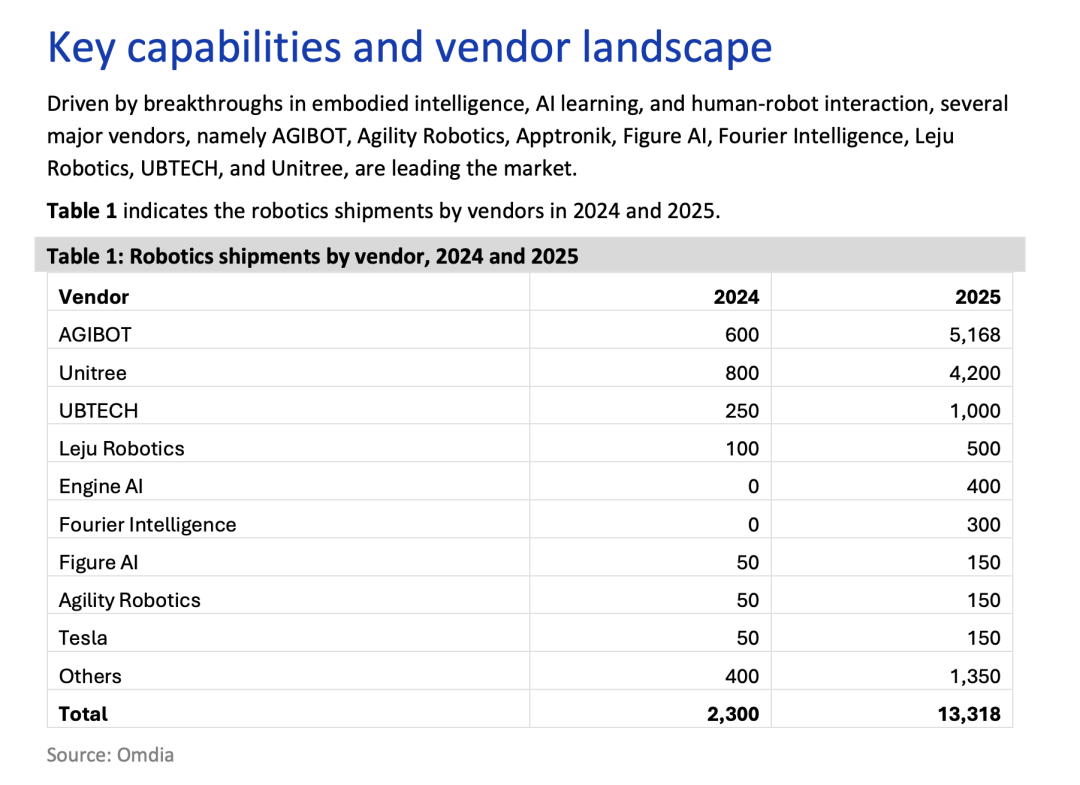
Core Insights - The report by Omdia highlights the dominance of Chinese manufacturers in the humanoid robot market, with Zhiyuan leading with over 5,100 units shipped, capturing 39% of the global market share [1] - By 2025, the top six humanoid robot manufacturers will all be Chinese, collectively accounting for 86.9% of global shipments [1] Group 1: Market Performance - In 2024, total shipments of humanoid robots are projected to be 2,300 units, increasing to 13,318 units in 2025 [2] - The report indicates that the humanoid robot index rose by 1.66%, with significant stock price increases for companies like Jizhi Co. and Hongxun Technology [3] Group 2: Industry Developments - At CES 2023, several Chinese humanoid robot companies showcased their products, including Zhiyuan's launch of the Genie Sim 3.0 platform, which enhances model training and application [4] - Other companies like Unitree and Fourier Intelligence also presented their latest humanoid robots and solutions, indicating a strong presence in the market [4][5] Group 3: Future Projections - Omdia predicts exponential growth in the humanoid robot market, with global shipments expected to reach 2.6 million units by 2035 [6] - Companies like Zhiyuan and Tesla are positioned as leaders in the industry, driving rapid development and innovation [6] Group 4: Strategic Investments - Companies are actively investing in humanoid robotics, with Hongrun Construction and Guoji Precision Engineering announcing partnerships and new product lines aimed at enhancing their market positions [7] - The domestic humanoid robot shipment is expected to rise to 62,500 units by 2026, marking a significant milestone for the industry [7]

Omdia最新报告:智元出货量与市场份额两项关键指标上均位居全球第一
IPO早知道· 2026-01-09 03:44
Group 1 - The core viewpoint of the article is that the global humanoid robot market is entering a rapid growth phase, with an expected total shipment of 13,000 units in 2025, and Chinese manufacturers, particularly Zhiyuan, leading in both production and market share [2][3] - Zhiyuan achieved an annual shipment of over 5,100 units, capturing 39% of the global market share, making it the top performer in both shipment volume and market share [2] - The report highlights that Zhiyuan has developed a diverse range of products, including full-size, half-size, and wheeled robots, successfully commercializing them in various core scenarios such as entertainment, industrial intelligence, and education [2] Group 2 - Omdia's evaluation of global mainstream manufacturers used a heatmap model across eight dimensions, with Zhiyuan receiving the highest rating (Advanced Capability) in six of these dimensions, making it the top-rated manufacturer in this assessment [3] - The integration of generative AI and robotics is driving the evolution of robots from executing preset tasks to possessing autonomous learning and environmental adaptability, termed "general embodied intelligence" [3] - Leading companies in the humanoid robot sector, including Zhiyuan, Yushu, and Tesla, are actively promoting accelerated industry development, with a forecasted exponential growth in the humanoid robot market, potentially reaching 2.6 million units by 2035 [3]
上海一个月5家AI企业上市
Xin Lang Cai Jing· 2026-01-09 00:59
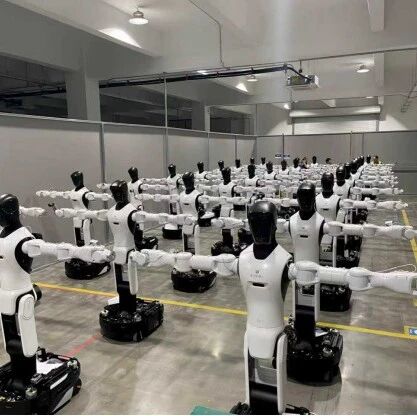
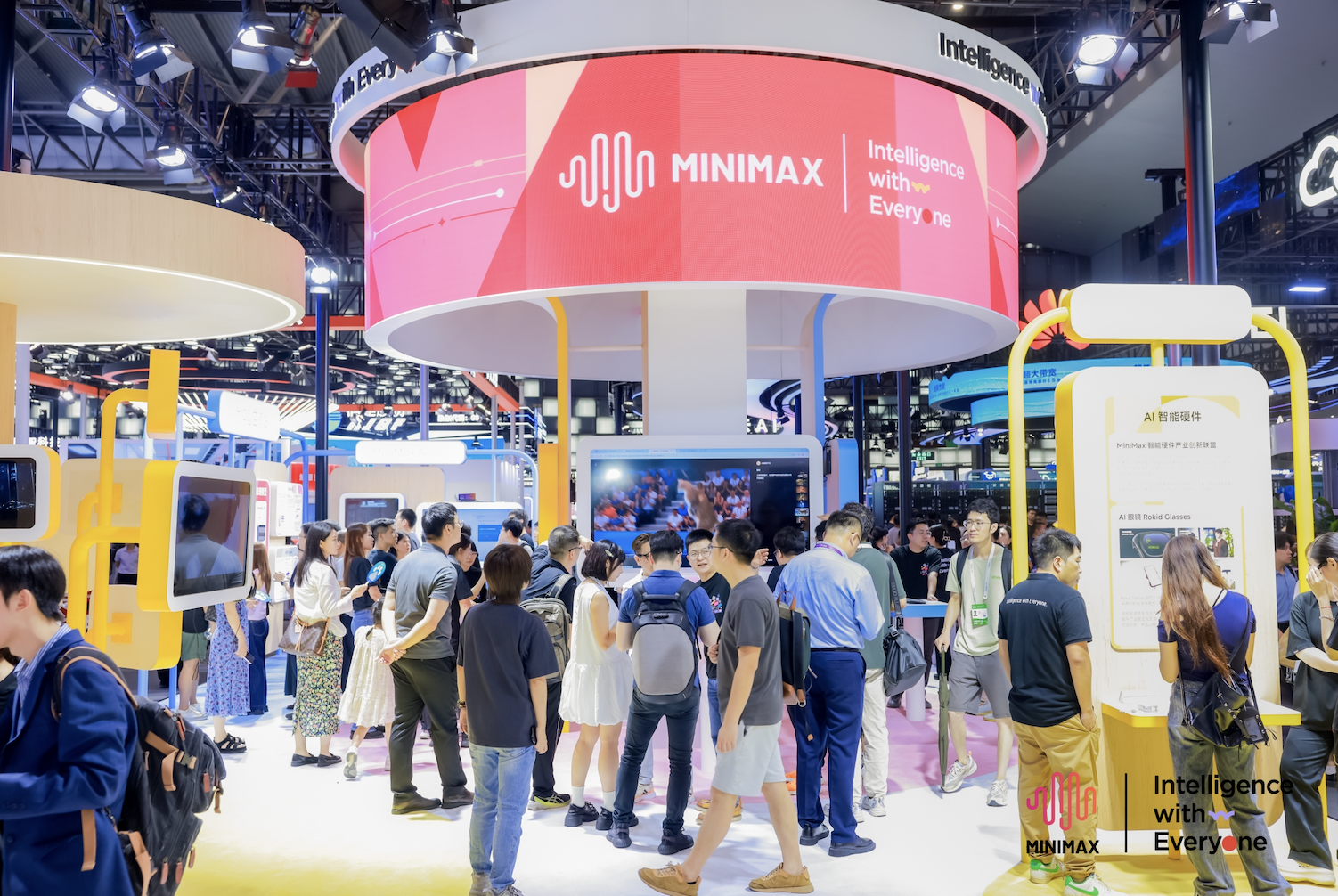
Core Insights - Shanghai has achieved a record of "five AI companies listed in one month," indicating that the AI industry in Shanghai is entering a "harvest period" [1] - The five listed AI companies possess high technological content, reflecting Shanghai's comprehensive industrial chain from algorithms to applications, unlike other cities that focus on single breakthroughs [1][2] - Shanghai is home to a significant concentration of AI talent, with 250,000 AI professionals, accounting for one-third of the national total [2] AI Industry Growth - By 2025, Shanghai's AI industry is expected to exceed 550 billion yuan in scale, with a growth rate of over 30% [2] - In the first three quarters of 2025, 394 large-scale enterprises in Shanghai reported revenues of 435.49 billion yuan, a year-on-year increase of 39.6% [2] - MiniMax, a local AI company, has achieved rapid growth, with 2.12 billion personal users and a monthly active user count of 27.6 million by September 2025 [4] Technological Advancements - Shanghai has established a development pattern of "1 open-source base model + 3 commercial base models + N innovative models" in model algorithm innovation [4] - The city is focusing on the development of large models, with significant advancements in multi-modal scientific models that outperform leading closed-source models [4] - Companies like MiniMax and SenseTime are leading in the development of advanced models, with MiniMax's model achieving code generation speeds twice that of competitors at a fraction of the cost [4] GPU and Semiconductor Industry - Shanghai is recognized as China's "GPU capital," with four major GPU companies successfully listed, contributing to the city's robust semiconductor industry [5][7] - The city has a well-established integrated circuit industry, ranking fourth globally and first in mainland China, supporting the AI industry's growth [7][8] - The local government provides substantial financial support for the semiconductor sector, enhancing the overall ecosystem [7] Robotics and Physical AI - Shanghai is making strides in humanoid robotics, with companies like Zhiyuan Robotics achieving significant production milestones [9][11] - The city is leveraging its strong supply chain in the Yangtze River Delta to support the rapid scaling of humanoid robot production [11][12] - Recent technological breakthroughs in humanoid robots and related components are driving the industry forward, with a focus on enhancing training facilities and data collection standards [12]
上海一个月5家AI企业上市,5500亿产业“护城河”全链开花
Di Yi Cai Jing· 2026-01-09 00:09
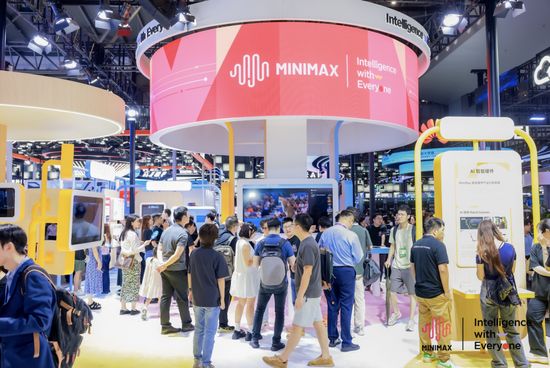
Group 1 - Shanghai is building a complete AI ecosystem, unlike other cities that focus on single breakthroughs, with five AI companies listed in one month, indicating the industry is entering a "harvest period" [1] - The five listed AI companies in Shanghai, including MiniMax, have high technological content, supported by a comprehensive industrial chain that includes hardware, software, algorithms, and applications [1][2] - By 2025, Shanghai's AI industry is expected to exceed 550 billion yuan in scale, with a growth rate of over 30%, reflecting significant revenue and profit increases among major enterprises [2] Group 2 - MiniMax, established in early 2022, is a representative of Shanghai's local AI model companies, achieving the fastest IPO globally, with a high proportion of R&D personnel [3] - MiniMax's model, MiniMax-M2, has a code generation speed twice that of its competitors at a fraction of the cost, showcasing its efficiency [3][6] - Shanghai has developed a model algorithm innovation system with a structure of "1 open-source base model + 3 commercial base models + N innovative models" [6] Group 3 - Shanghai is recognized as China's "GPU capital," with four major GPU companies listed, indicating a robust foundation for AI technology [7][11] - The integrated circuit industry in Shanghai has been developing for decades, ranking fourth globally and first in mainland China, supporting the AI industry's growth [7][11] - The city has established a complete integrated circuit industry chain, fostering leading enterprises in various segments, including chip design and manufacturing [11] Group 4 - Human-shaped robots are seen as the ideal carriers for embodied intelligence, with significant production milestones achieved by local companies [12][14] - Shanghai's robot companies have rapidly scaled production, supported by a well-established supply chain in the Yangtze River Delta region [14][15] - The city is enhancing the effectiveness of embodied intelligence training facilities and building a high-quality data set for training [15]
“十五五”开好局起好步|沉下心来抓落实、办实事
Ren Min Ri Bao· 2026-01-04 04:32
Group 1 - The "15th Five-Year Plan" is a crucial period for achieving socialist modernization, with emphasis on high-quality development and effective implementation of goals [1][2] - Various regions and departments are actively engaging in practical measures to ensure the successful start of the "15th Five-Year Plan" [2][3] - The importance of aligning local actions with national strategies and market demands is highlighted, promoting high-quality development models [3] Group 2 - Hainan Free Trade Port is experiencing continuous policy benefits, aiming to align with international high-standard economic and trade rules [4] - The Yangtze River Delta is enhancing its supply chain for robotics, showcasing the region's collaborative innovation capabilities [5][6] - Different regions are focusing on their unique advantages to contribute to national goals, such as clean energy initiatives in Shanxi and ecological protection in Inner Mongolia [7] Group 3 - A problem-oriented approach is emphasized for addressing development challenges, with quick responses to public service issues being a priority [8][9] - The government is committed to improving rural water supply and infrastructure, with specific projects planned to enhance service levels [9][10] - The integration of various departments is crucial for addressing challenges and promoting high-quality development in the Guangdong-Hong Kong-Macao Greater Bay Area [14] Group 4 - Collaborative efforts across provinces are being made to protect the environment and ensure sustainable development, with successful initiatives in water quality management [13] - The focus on modular construction standards and inter-departmental cooperation is aimed at facilitating market access and resource flow [14] - The overall goal is to leverage practical actions and achievements to support the successful initiation of the "15th Five-Year Plan" [14]