银行股投资

Search documents
银行股获内部人力挺 普通投资者能否跟随布局?
Zhong Guo Jing Ying Bao· 2026-01-14 08:32
Core Viewpoint - The recent stock purchases by executives and major shareholders in Chinese banks, such as Chongqing Rural Commercial Bank and Nanjing Bank, are seen as significant indicators of market confidence, suggesting a potential turning point for bank stocks in the medium to long term [1][2]. Group 1: Executive and Shareholder Actions - Chongqing Rural Commercial Bank announced that several executives, including the chairman and CEO, purchased a total of 192,000 shares from January 5 to January 7, 2026 [1]. - Nanjing Bank reported that its major shareholder, Zijin Group, increased its stake by 123 million shares, representing 1.00% of the total share capital, raising its total ownership to 14.02% [2]. - Qilu Bank disclosed that its executives and senior management had exceeded their planned share purchases, acquiring 771,000 shares for a total of 4.48 million yuan, which is 128% of their initial target [4]. Group 2: Market Performance and Analysis - The banking index rose by 12.04% in 2025, with 35 out of 42 A-share listed banks experiencing stock price increases, notably Agricultural Bank of China with a 52.66% rise [2]. - Analysts attribute the positive performance of bank stocks to high dividend yields and a recovering fundamental outlook, with insurance funds being significant buyers due to attractive returns [2][3]. - The overall banking revenue is expected to recover starting in 2026, with projections indicating a growth rate of around 5% by 2029, as net interest income improves alongside loan growth [5]. Group 3: Future Outlook - Analysts predict that the banking sector will enter a turning point in 2026, with most banks expected to report positive revenue growth and a reduction in the narrowing of interest margins [4][5]. - Key upcoming events to watch include the release of annual reports in March 2026 and quarterly reports in April 2026, as well as developments in government debt management and capital market dynamics [5].


前瞻2026年银行股: 从关键主线中挖掘机会
Zhong Guo Zheng Quan Bao· 2025-12-16 20:21
Core Viewpoint - The banking sector is expected to transition from a bottoming phase in 2025 to stable growth in 2026, driven by policy support and improved net interest margins, leading to a structural bull market in bank stocks. Group 1: 2025 Banking Sector Performance - In 2025, the banking sector demonstrated a structural bull market, with the Shenwan primary banking index rising by 16.2% as of December 16, 2025, and Agricultural Bank increasing by nearly 50% [1] - Regional leaders like Xiamen Bank, Chongqing Bank, and Qingdao Bank saw increases of over 20%, while some joint-stock banks had gains of less than 5% [1] - The funding landscape showed significant differentiation, with strategic funds like insurance and AMC increasing their holdings, while public funds and northbound capital reduced their positions significantly in Q3 [1] Group 2: Valuation and Financial Metrics - The Shenwan primary banking index's price-to-book (PB) ratio rose from a low of 0.42 in 2023 to 0.54 by December 16, 2025, indicating an upward shift in valuations for major state-owned banks and quality regional banks [2] - By Q3 2025, the net interest margin for commercial banks was stable at 1.42%, with net profits for the first three quarters at 1.87 trillion yuan, unchanged from the previous year [2] - Non-performing loans increased to 3.52 trillion yuan, with a non-performing loan ratio of 1.52%, but a provision coverage ratio of 207.15% provided a buffer against risks [2] Group 3: Outlook for 2026 - In 2026, the banking sector is expected to benefit from policy dividends, with net interest margins stabilizing, which will support revenue growth [3] - Analysts predict that the decline in net interest margins will further narrow, leading to positive growth in net interest income [3] - The asset quality is expected to show a mixed trend, with retail and small business exposures being the main sources of non-performing loans, while corporate exposures remain stable [3] Group 4: Investment Opportunities - The differentiated performance of bank stocks in 2025 is likely to continue into 2026, with a focus on policy dividends, operational resilience, and valuation recovery [4] - High dividend stocks are seen as a stable investment choice, particularly regional banks with strong performance certainty [5] - Analysts suggest that banks with strong loan organization capabilities and stabilizing net interest margins will perform better, while those in a non-performing loan improvement cycle will have stronger profit release potential [5]
前瞻2026年银行股:从关键主线中挖掘机会
Zhong Guo Zheng Quan Bao· 2025-12-16 20:19
Core Viewpoint - The banking sector is expected to transition from a bottoming phase in 2025 to stable growth in 2026, driven by policy support and improved net interest margins, leading to a structural bull market in bank stocks [1][2]. Group 1: 2025 Banking Sector Performance - The banking sector experienced a structural bull market in 2025, with the Shenwan Primary Bank Index rising by 16.2% as of December 16, 2025, and Agricultural Bank increasing by nearly 50% [1]. - Regional leaders like Xiamen Bank, Chongqing Bank, and Qingdao Bank saw over 20% growth, while some joint-stock banks had less than 5% increase [1]. - There was a notable differentiation in funding sources, with strategic funds like insurance and AMC increasing their holdings, while trading funds like public funds and northbound capital reduced their positions significantly in Q3 [1]. Group 2: Valuation and Financial Metrics - The Shenwan Primary Bank Index's price-to-book (PB) ratio rose from a low of 0.42 in 2023 to 0.54 by December 16, 2025, indicating an upward shift in valuations for major state-owned banks and quality city commercial banks [2]. - The net interest margin for commercial banks remained stable at 1.42% in Q3 2025, with net profits for the first three quarters at 1.87 trillion yuan, unchanged from the previous year [2]. - The non-performing loan balance increased to 3.52 trillion yuan, with a non-performing loan ratio of 1.52%, but a high provision coverage ratio of 207.15% provided a buffer against risks [2]. Group 3: Outlook for 2026 - In 2026, the banking sector is expected to benefit from policy dividends, with net interest margins stabilizing, which will support revenue and profit growth [2][3]. - Analysts predict that the revenue and profit of listed banks will grow steadily, with fee income expected to stabilize after several years of cost reductions [3]. - The asset quality is anticipated to show a mixed trend, with retail and small business exposures remaining the main sources of non-performing loans, while corporate exposures stabilize [3]. Group 4: Investment Opportunities - The differentiated performance of bank stocks in 2025 is likely to continue into 2026, with a focus on policy dividends, operational resilience, and valuation recovery [3][4]. - High-dividend stocks are seen as a stable investment amid asset scarcity, with recommendations for city commercial banks with regional advantages and strong earnings certainty [4]. - Analysts suggest that stocks of quality city commercial banks with improving performance are likely to lead the banking sector, with profit growth linked to net interest income performance [4].
12月5日将操作1万亿元买断式逆回购;三季度银行办理非现金支付1503.36万亿元 | 金融早参
Sou Hu Cai Jing· 2025-12-04 23:08
Group 1 - The People's Bank of China will conduct a 10 trillion yuan reverse repurchase operation on December 5, 2025, to maintain ample liquidity in the banking system, indicating a supportive monetary policy stance [1] - The operation will be conducted using a fixed quantity, interest rate bidding, and multiple price-level bidding methods, with a term of three months [1] Group 2 - In the third quarter, Chinese banks processed non-cash payment transactions totaling 150.336 trillion yuan, with 168.508 billion transactions recorded [2] - The payment system in China is operating smoothly, with 1.65278 billion card transactions amounting to 234.92 trillion yuan, including 1.03594 billion consumer transactions worth 33.19 trillion yuan [2] - Electronic payment transactions reached 94.54 trillion yuan, with mobile payments accounting for 13.753 trillion yuan [2] Group 3 - In 2025, over 300 small and medium-sized banks are expected to undergo mergers and restructuring, with 368 banks already having been merged or dissolved this year, surpassing the total from the previous year [3] - Village and township banks account for 176 of the total exits, representing nearly half of the total [3] - Experts suggest that the consolidation of small and medium-sized banks will help reduce high-risk financial institutions and lower risk management costs [3] Group 4 - AMC has increased its stake in bank stocks, with Citic Financial Asset raising its holdings in Everbright Bank to 9% [4] - Since announcing a plan to invest up to 4 billion yuan in Everbright Bank shares in November 2024, AMC's actions have continued to materialize [4] - Insurance funds have also been increasing their investments in the banking sector, with their holdings in bank stocks exceeding 400 billion yuan by the end of the third quarter [4]

AMC与险资的投资交集:银行股何以成为“核心锚点”
Zhong Guo Zheng Quan Bao· 2025-12-03 20:28
Core Viewpoint - AMC has increased its stake in China Everbright Bank, raising its holding to 9% as part of a strategic investment plan, while insurance funds have also significantly increased their investments in the banking sector, indicating a strong interest in bank stocks as a core investment option for long-term capital [1][2][3] Group 1: AMC's Investment Actions - China Everbright Bank announced that CITIC Financial Asset has increased its holdings by 275 million A-shares and 315 million H-shares, raising its total stake from 8% to 9% [1] - CITIC Financial Asset's previous increase in July raised its stake from 7.08% to 8% through the acquisition of 264 million A-shares and 279 million H-shares [1] - The total assets of China Everbright Bank reached 7.2 trillion yuan by the end of Q3 2025, showing steady growth [1] Group 2: Insurance Capital Involvement - Insurance capital has been actively increasing its holdings in bank stocks, with a total market value exceeding 400 billion yuan by the end of Q3 [1][3] - Insurance funds have acquired an additional 2.689 billion shares of bank stocks in Q3 compared to Q2, bringing the total holdings to over 47 billion shares [3] Group 3: Investment Rationale - The stable high dividend returns of bank stocks are a key attraction for institutional investors, with the average dividend yield of A-share listed banks exceeding 4% [3] - The banking sector is characterized by low valuations and low volatility, with most banks trading below a price-to-book ratio of 1, indicating a "broken net" status [3][4] - Despite challenges such as narrowing interest margins, banks have maintained stable profitability through asset structure optimization and risk management [4] Group 4: Future Outlook - Analysts suggest focusing on banks with diversified businesses, complete licenses, and strong performance stability for long-term investments [4]
银行股增持潮起股东用资本投票
Zhong Guo Zheng Quan Bao· 2025-11-25 20:27
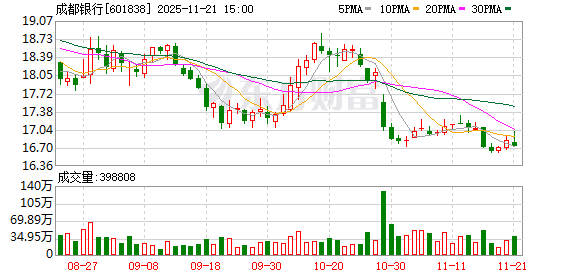
Core Viewpoint - The recent surge in share buybacks by shareholders and executives in A-share banks, particularly city commercial banks like Nanjing Bank and Chengdu Bank, reflects strong confidence in the banks' fundamentals and a market preference for high-dividend assets [1][2]. Group 1: Shareholder and Executive Buybacks - Nanjing Bank announced that BNP Paribas (QFII) increased its stake by 12.8 million shares, raising its total holding from 17.02% to 18.06% [1]. - Chengdu Bank's major shareholders, Chengdu Industrial Capital Group and Chengdu Xintianyi, collectively spent 611 million yuan to buy 3.4247 million shares, with plans for further purchases [2]. - Executives from Changshu Bank and Shanghai Rural Commercial Bank also announced their intentions to buy shares, indicating a commitment to their banks' long-term value [2]. Group 2: Market Conditions and Valuation - The increase in buybacks is attributed to expectations of economic recovery, improved performance, and valuation corrections, with 38 out of 42 A-share listed banks seeing stock price increases this year [2][3]. - The banking sector's overall price-to-book ratio remains at historical lows, suggesting potential for valuation recovery [2][3]. Group 3: Investment Outlook - Analysts express optimism regarding the banking sector, highlighting the appeal of high-dividend, low-valuation characteristics of bank stocks, especially during periods of economic stagnation [4]. - Investment strategies focus on banks with regional advantages and strong performance certainty, particularly in areas like Jiangsu, Shanghai, Chengdu, Shandong, and Fujian [4].
国有大行之后,城商行机会如何
2025-11-24 01:46
Summary of Conference Call Records Industry Overview - The banking sector is experiencing a rise in stock prices supported by multiple factors, including market fluctuations, ongoing capital allocation, stabilization of industry interest margins, and a decrease in non-performing loan rates, which provides a basis for industry value reassessment [1][4] Key Points and Arguments - **Valuation Perspective**: Domestic quality city commercial banks have significantly lower price-to-earnings (P/E) ratios compared to overseas quality regional banks and are undervalued compared to large domestic banks. There is a higher likelihood of outperforming large state-owned banks in the next three to five years [1][5] - **Risk Resilience**: Quality small banks in core cities exhibit stronger risk resilience than large commercial banks, with more stable profit growth during economic fluctuations and lower peak bad debt rates [1][6] - **Investment Trends**: Large insurance companies prefer investing in large-cap stocks like Agricultural Bank, while smaller insurance companies opt for small-cap stocks that match their capital size, such as quality city commercial banks [1][8] - **Mortgage Loan Subsidy Policy**: Market rumors about mortgage loan subsidies indicate that the government believes bank interest margins are near their bottom, which is significant for stabilizing market expectations. However, the actual impact depends on the policy's strength [1][9] - **Public Fund Strategies**: Public fund managers are expected to increase allocations to bank stocks, prioritizing quality city commercial banks, followed by joint-stock banks, and lastly large state-owned banks, indicating a shift in investment strategy [1][10] Additional Important Insights - **Market Performance**: Despite recent market volatility, bank stocks have performed relatively well, with state-owned banks showing strong performance over the past quarter [2] - **Investment Selection**: When selecting specific sub-industries for investment, considerations should include reasonable valuations and marginal changes. Quality city commercial banks are significantly undervalued compared to international standards [5] - **Economic Recovery Impact**: Historically, bank stocks perform well during economic recovery, but different types of banks show varying performance. Quality city commercial banks tend to outperform large state-owned banks in the long run [7] - **ETF Fund Flows**: Recent ETF fund flows indicate a clear sign of state support, with significant net inflows into major ETFs, while financial and real estate sectors are experiencing net outflows [14][15] Conclusion - The outlook for the banking sector remains optimistic, with expectations of substantial growth for quality city commercial banks over the next five years, despite short-term market fluctuations [13]
真金白银出手!上市银行,增持潮起
Zheng Quan Shi Bao· 2025-11-24 00:13
Core Viewpoint - Recent trends show a significant increase in share buybacks by major shareholders and executives in A-share listed banks, particularly among city commercial banks and rural commercial banks, indicating confidence in long-term growth prospects despite market volatility [1][2][4]. Group 1: Shareholder and Executive Buybacks - Multiple listed banks, including Nanjing Bank and Chengdu Bank, have reported substantial share buybacks by major shareholders, with Chengdu Bank's two major shareholders investing approximately 611 million yuan to acquire nearly 34.247 million shares [2][3]. - Nanjing Bank's largest shareholder, BNP Paribas, increased its stake by approximately 12.8 million shares, raising its total holding from 17.02% to 18.06%, marking a new high for the bank [3]. - Executives from banks like Changshu Bank and Shanghai Rural Commercial Bank have also engaged in share buybacks, demonstrating their confidence in the banks' future [4]. Group 2: Market Performance and Analyst Insights - The banking sector has shown resilience, with major banks like Bank of China and Industrial and Commercial Bank of China reaching historical highs, and Bank of China experiencing a 13.74% increase over the past month [1][6]. - Analysts suggest that the recent buybacks reflect a shift from defensive strategies to proactive market management, as banks are now buying back shares not just at low prices but also during periods of price recovery, driven by expectations of economic recovery and stable interest margins [5][7]. - Despite the recent gains, the overall valuation of bank stocks remains low, with most A-share listed banks trading below their net asset value, indicating potential for further investment opportunities [6]. Group 3: Future Investment Opportunities - Analysts from various firms have reiterated the investment potential in the banking sector, highlighting the attributes of high dividends and low valuations as key factors for future interest [7]. - There is an expectation that medium-sized insurance companies will increasingly seek long-term equity investments in smaller banks, particularly those with strong regional advantages and stable dividends [7]. - The shift in investment logic from "pro-cyclical" to "weak-cyclical" suggests that bank stocks may become more attractive during periods of economic stagnation due to their high dividend yields [7].
成都银行两国资股东增持金额已超6亿元,银行板块年内增持净额领跑全市场
Mei Ri Jing Ji Xin Wen· 2025-11-23 14:25
Core Viewpoint - Chengdu Bank's major shareholders have significantly increased their holdings, reflecting a broader trend of shareholder and management buybacks across the banking sector amid market adjustments [2][6]. Group 1: Shareholder Activity - Chengdu Industrial Capital Holding Group and Chengdu Xintianyi Investment have collectively increased their shares by approximately 34.247 million, with a total investment of 611 million yuan [2][3]. - Chengdu Industrial Capital Group raised its stake from 5.73% to 6.0618%, acquiring about 14.04475 million shares for approximately 253 million yuan [3]. - Chengdu Xintianyi invested 358 million yuan to acquire around 20.2022 million shares, increasing its holding from 3.80% to 4.2737% [3]. Group 2: Broader Market Trends - The banking sector has seen a net increase in shareholder or executive buybacks amounting to approximately 9.03 billion yuan, the highest among 31 industries [5][7]. - Other banks, such as Nanjing Bank and Qingdao Bank, have also experienced significant shareholder buybacks, with Nanjing Bank's largest shareholder, BNP Paribas, increasing its stake to 18.06% [6][7]. - Local industrial capital is actively investing in banks, with Qingdao Guoxin Financial Holdings increasing its stake in Qingdao Bank by 9.57 billion yuan [6]. Group 3: Future Outlook - Chengdu Bank's initial buyback plan was adjusted to remove the price cap and extend the implementation period to April 2026, with a total investment target of 700 million to 1.4 billion yuan [4]. - Analysts suggest that the banking sector's valuation is currently low, with a price-to-book ratio of 0.73, indicating potential for future growth [7][8]. - The focus for 2026 investment strategies includes high dividend stocks, structural opportunities in city and rural commercial banks, and recovery in retail banking demand [8].

真金白银出手!上市银行,增持潮起!
证券时报· 2025-11-23 08:44
Core Viewpoint - A-share listed banks are experiencing a wave of share buybacks from shareholders and executives, indicating confidence in the long-term prospects of these banks amidst market volatility [1][3][5]. Group 1: Shareholder and Executive Buybacks - Recently, several listed banks, including Nanjing Bank and Chengdu Bank, announced significant share buybacks by major shareholders and executives, reflecting a trend that began in October with other banks like Xiamen Bank and Qilu Bank [3][4]. - Chengdu Bank reported that its two major shareholders invested approximately 611 million yuan to buy back nearly 34.247 million shares, with plans for further purchases totaling between 700 million and 1.4 billion yuan [3][4]. - Nanjing Bank's largest shareholder, BNP Paribas, increased its stake by approximately 12.8 million shares, raising its total holding from 17.02% to 18.06%, marking a new high for its ownership [4]. Group 2: Market Performance and Analyst Insights - The banking sector has shown resilience, with 17 bank stocks reporting positive returns over the past month, including China Bank with a 13.74% increase [9]. - Despite recent gains, the overall valuation of bank stocks remains low, with a median price-to-book ratio of about 0.6, indicating potential for further appreciation [9]. - Analysts from various institutions reaffirmed the investment opportunities in the banking sector, highlighting the appeal of high dividend yields and low valuations as key factors for future investments [10][11]. Group 3: Confidence in Long-term Value - The increase in share buybacks by executives and major shareholders is seen as a signal of confidence in the banks' long-term value and a strategy to stabilize market sentiment [7]. - The shift in buyback activity from low-price periods to times of rising stock prices suggests a proactive approach to managing market perceptions and valuations [7].