
隐私计算

Search documents
深度|“AI手机”元年!AI Agent能否接管一切?激进派PK稳健派
Zheng Quan Shi Bao· 2025-12-31 00:55
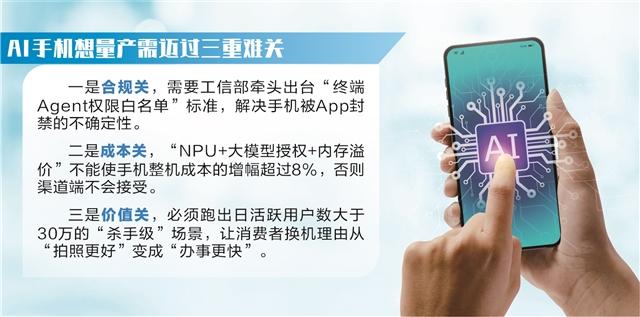
Core Viewpoint - The emergence of AI Agent smartphones is anticipated to revolutionize the mobile industry by 2026, with significant developments from various manufacturers and AI model companies, although challenges remain in compliance, cost, and value [1][10]. Group 1: Industry Developments - The collaboration between Doubao and ZTE has led to the introduction of the Doubao AI smartphone, marking a significant step in AI Agent smartphone development [1]. - Major companies like ByteDance are reportedly pursuing partnerships with leading hardware manufacturers such as Vivo and Lenovo to advance AI smartphone initiatives [3]. - The "Big Model Six Little Tigers," including Zhipu, are contributing to the AI Agent smartphone landscape, with Zhipu's AutoGLM model being a notable development [3]. Group 2: Diverging Paths - The industry is witnessing two distinct approaches: the "radical faction," represented by Doubao AI smartphones, which integrates high-level permissions, and the "conservative faction," represented by companies like Huawei, which opts for a more cautious approach through API interfaces [4]. - Major smartphone manufacturers like Vivo and Huawei, which had over 40 million units shipped last year, face significant compliance costs for system-level changes, influencing their strategy to treat AI as a feature rather than a foundational element [4]. Group 3: Challenges and Concerns - The development of AI Agent smartphones raises concerns regarding user privacy and security, particularly as applications like WeChat and Taobao have begun to block access to Doubao's AI assistant due to potential risks [6][7]. - The relationship between permissions and intelligence is described as a "seesaw," where increased permissions for AI can enhance functionality but also pose privacy threats, leading to cautious authorization from app and phone manufacturers [7][8]. - To address these challenges, industry experts suggest the need for advancements in privacy computing and regulatory frameworks to establish clear guidelines for AI usage [8]. Group 4: Future Outlook - The year 2026 is projected to be a pivotal moment for AI Agent smartphones, contingent on achieving specific technological benchmarks, including processing power and cost reductions [10]. - The successful mass production of AI smartphones will depend on overcoming three key hurdles: compliance with regulatory standards, managing production costs, and demonstrating compelling user value [10].

深度|“AI手机”元年!AI Agent能否接管一切?激进派PK稳健派
证券时报· 2025-12-31 00:34
Core Viewpoint - The emergence of AI Agent smartphones is expected to reshape the mobile industry by 2026, driven by advancements in AI technology and collaboration between hardware and AI model companies [1][2]. Group 1: Industry Trends - Since 2025, the collaboration between Doubao and ZTE has led to the introduction of the Doubao AI smartphone (Nubia M153), prompting various smartphone manufacturers and AI model companies to accelerate the development of AI Agent smartphones [2][5]. - 2026 is anticipated to be the year of mass production for AI Agent smartphones, although the industry is divided into "radical" and "conservative" development paths, facing challenges related to compliance, costs, and value [2][7]. Group 2: Competitive Landscape - Major companies like ByteDance are actively pursuing partnerships with leading hardware manufacturers such as Vivo, Lenovo, and Transsion for AI smartphone collaborations [5]. - The "Big Model Six Little Tigers," including Zhipu, have announced the open-sourcing of their core AI Agent model AutoGLM, which is expected to accelerate the development of AI Agent smartphones [6]. Group 3: Technical and Compliance Challenges - The successful mass production of AI Agent smartphones hinges on three critical factors: the computational power of mobile SoCs exceeding 40 TOPS, the production of RF amplifiers below 12nm, and the availability of 8GB LPDDR5X modules at around $70, which would lower BOM costs to below $320 [13]. - There are significant concerns regarding privacy and security, as the AI Agent's ability to operate across applications raises risks of unauthorized access and misuse, leading to some major apps blocking the Doubao AI smartphone [9][11]. Group 4: Market Dynamics - The smartphone market is currently experiencing stagnant growth, making AI Agent smartphones a key focus for companies seeking to innovate and capture new market opportunities [5]. - The development of AI Agent smartphones is seen as a potential "ticket" to a new era in mobile technology, with companies like Huawei integrating AI capabilities into their flagship devices [6][7].


手机“贾维斯”元年将至 AI Agent能否接管一切?
Zheng Quan Shi Bao· 2025-12-30 18:19
Core Viewpoint - The emergence of AI Agent smartphones is expected to revolutionize the mobile industry by 2026, driven by advancements in AI technology and collaborations between smartphone manufacturers and AI model developers [2][3]. Group 1: Industry Trends - The AI Agent smartphone is seen as a ticket to a new era in mobile technology, especially as traditional smartphone sales stagnate [3]. - Major companies like ByteDance are reportedly collaborating with leading hardware manufacturers such as Vivo and Lenovo to develop AI smartphones [3]. - The "Big Model Six Little Tigers," including Zhiyu, are accelerating the development of AI Agent smartphones, with Zhiyu announcing the open-sourcing of its AutoGLM model, which can autonomously operate smartphones [3][4]. Group 2: Development Paths - The industry is divided into two distinct paths: the "radical faction," represented by Doubao AI smartphones, which integrates high-level permissions to access system functions, and the "conservative faction," represented by companies like Huawei, which uses API interfaces for cross-application collaboration [4][5]. - Companies like ZTE are more willing to explore aggressive strategies due to their lower market share, while larger firms face significant compliance costs with any system-level changes [5]. Group 3: Challenges and Concerns - The development of AI Agent smartphones raises concerns about user privacy and security, as the technology requires extensive permissions that could be exploited by malicious software [6][7]. - Major applications, including WeChat and banking apps, have begun to block access to Doubao AI smartphones due to security concerns, highlighting the tension between innovation and risk management [6][7]. - The industry faces three major hurdles before AI Agent smartphones can achieve mass production: compliance with regulations, cost management, and demonstrating clear value to consumers [9][10].


8个重点领域、33项工作任务 金融监管总局最新公布→
Yang Shi Xin Wen· 2025-12-26 18:26
Core Viewpoint - The implementation plan for the high-quality development of digital finance in the banking and insurance sectors has been officially released, outlining eight key areas and 33 tasks to promote digital financial services. Group 1: Key Areas of Focus - Support for the innovation and growth of technology-based enterprises by establishing a big data set to improve credit approval efficiency [1] - Service enhancement for advanced manufacturing by utilizing industrial internet and knowledge graphs to strengthen data collection and analysis capabilities [1] - Assistance for green economic development through technology to identify environmental risks and optimize green financial service models [1] - Deepening financial services for small and micro enterprises by integrating various data sources to optimize credit models and build comprehensive online service platforms [1] - Development of targeted digital financial products in the livelihood service sector to improve financial service capabilities in healthcare and elderly care [1] - Support for rural revitalization by enhancing digital platform systems and financial service capabilities for agriculture [2] - Support for the implementation of national major regional development strategies by providing localized digital financial services [2] - Promotion of trade digitization by participating in shipping trade digitalization and enhancing trade data application [2] Group 2: Technological Integration and Risk Management - Acceleration of the development of "artificial intelligence + finance" by encouraging financial institutions to build enterprise-level AI platforms [2] - Exploration of cutting-edge technologies such as quantum computing, blockchain, and privacy computing for integration into financial scenarios [2] - Strengthening risk management in digital finance, focusing on liquidity, operational, and outsourcing risks, and establishing intervention mechanisms for critical business processes [2] - Emphasis on comprehensive management of financial consumer personal information and enhancing data security awareness through training and education [2]
用数据打造信任:第三方企业征信机构如何激活企业信用价值
Sou Hu Cai Jing· 2025-12-26 03:13
Core Insights - The article emphasizes the importance of data in defining credit value, which is fundamental to modern business operations. The ability to collect and interpret data accurately is crucial for creating a reliable "credit profile" [1] Group 1: Data Integration and Governance - The company integrates various dynamic indicators such as business registration, judicial, tax, and bank transaction data to create a comprehensive corporate profile. This process involves standardization and governance to ensure high-quality credit reports that serve as authoritative "credit certificates" [3] Group 2: AI and Risk Management - By utilizing advanced models like DeepSeek R1 and dynamic knowledge graph technology, the company enhances risk identification and credit scoring. The model's optimization allows for real-time updates and alerts, improving fraud detection and approval efficiency, particularly for small and micro enterprises lacking traditional collateral [4] Group 3: Data Security and Value Realization - The company employs blockchain and privacy computing technologies to ensure data security and traceability, enabling a full-service loop from assessment to empowerment. This approach allows for the transformation of data resources into compliant "data assets," facilitating the conversion of credit into a driving force for business development [6]

数字金融狂奔下的创新与风险博弈:让技术监管技术,让数据可用不可见
Mei Ri Jing Ji Xin Wen· 2025-12-25 14:57
Group 1 - The concept of "digital finance" is becoming a core pillar of the digital economy, rapidly restructuring the financial system and driving high-quality economic development [1] - Data security risks in digital finance are a significant concern, as the leakage of core financial data can threaten the stability of the financial system and public interests [1] - Small and medium-sized financial institutions often lack robust security measures, complicating risk prevention and posing challenges to the industry's security governance [1] Group 2 - The development of digital finance is a key national strategy, with recent policies emphasizing the importance of digital finance in enhancing China's digital economy [2] - Financial institutions are undergoing digital transformation, focusing on customer-centric business model innovations and personalized financial products [2] - By mid-2025, major banks like ICBC are implementing AI initiatives to enhance various business areas, showcasing the integration of technology in financial services [2] Group 3 - AI applications in retail banking are expanding, with banks like China Merchants Bank and Postal Savings Bank utilizing AI to enhance customer service and operational efficiency [3] - The use of generative AI and other advanced technologies presents multifaceted security challenges, including data privacy risks and potential vulnerabilities in AI systems [5][6] - Experts suggest that the risks associated with generative AI and blockchain can be managed through improved technology and regulatory frameworks [7][8] Group 4 - Financial institutions are encouraged to adopt new technologies for risk management while ensuring market stability [5] - The integration of privacy-enhancing technologies and robust data governance frameworks is essential for addressing data security risks [8][9] - Industry-wide collaboration on data security standards and threat intelligence sharing is necessary to prevent isolated security challenges among institutions [9]
数字金融创新提速:让技术监管技术,让数据“可用不可见”
Mei Ri Jing Ji Xin Wen· 2025-12-25 14:49
Core Insights - Digital finance is rapidly transforming the financial system and is becoming a key driver for high-quality economic development, but it also brings significant data security risks [1][4] - The application of technologies like AI, blockchain, and quantum computing in finance presents complex security challenges that require comprehensive risk management strategies [5][6] Group 1: Digital Finance Development - Digital finance is a core pillar of the digital economy, reshaping financial services such as digital wallets and face recognition payments [1] - Financial institutions are innovating business models to be customer-centric, offering personalized financial products and integrating services into various life scenarios [2] - Major banks like ICBC and China Merchants Bank are leveraging AI to enhance customer service and operational efficiency, with ICBC launching over 100 AI applications [2][3] Group 2: Data Security Risks - Data security risks in digital finance are characterized by high concentration, rapid cross-industry transmission, and strong concealment of technical means [1] - The application of generative AI and other technologies can lead to dual risks, including unauthorized data scraping and potential leaks of sensitive financial information [5][6] - The financial sector faces challenges from API misuse, third-party cooperation vulnerabilities, and the inherent risks of emerging technologies like blockchain and quantum computing [6][7] Group 3: Regulatory and Risk Management - Regulatory bodies emphasize the importance of balancing innovation with risk control, ensuring that financial markets remain stable and orderly [4] - Experts suggest that financial institutions should enhance their data protection measures, develop regulatory technology, and establish comprehensive data governance frameworks [8][9] - There is a call for the establishment of unified data security standards and collaborative capabilities across the industry to avoid security silos [9]

郭珍:向新而行激活智慧农业
Jing Ji Ri Bao· 2025-12-24 00:10
Core Insights - The development of smart agriculture in China is rapidly advancing, leveraging technologies such as AI, IoT, big data, and robotics to enhance productivity and resource utilization in agriculture [1][2] Group 1: Technological Advancements - Smart agriculture utilizes advanced technologies for information perception, intelligent decision-making, and precise operations, significantly improving land output and labor productivity [1] - The integration of sensors, data processing, and remote sensing technologies has enabled the collection of critical data on environmental conditions, pest monitoring, crop growth, and yield [1] - Intelligent decision-making is supported by agricultural knowledge graphs and core algorithms, generating precise prescriptions for environmental control and pest management [1] Group 2: Industry Advantages and Challenges - China possesses unique advantages in smart agriculture, with state-owned enterprises driving innovation and providing significant application scenarios for technology [2] - New infrastructure development in rural areas is reducing the costs associated with deploying smart agriculture solutions, although challenges such as data barriers and limited application scope remain [2] Group 3: Policy and Standardization - Establishing a mechanism for linking technological innovation outcomes with standardization is crucial for addressing issues like data barriers and system integration in smart agriculture [3] - The development and implementation of national and industry standards for smart agriculture are essential to enhance applicability and innovation, fostering a virtuous cycle of technology innovation and industry application [3] Group 4: Implementation Strategies - A comprehensive approach involving pilot demonstrations and application promotion is recommended to enhance the resilience of smart agriculture [3] - Setting up leading areas for smart agriculture in regions with better foundational conditions can facilitate the application of smart planting, livestock, and aquaculture solutions [3]

发展数字金融赋能数字经济
Xin Lang Cai Jing· 2025-12-20 22:07
Core Viewpoint - The 20th Central Committee's Fourth Plenary Session emphasizes the acceleration of building a financial powerhouse, focusing on the development of digital finance as a crucial element for integrating the digital economy with the real economy [1] Group 1: Digital Finance Development Achievements - During the 14th Five-Year Plan period, significant progress has been made in the digital transformation of China's financial sector, enhancing the efficiency of financial products and services [2][3] - The digital economy's core industry is projected to account for approximately 10% of GDP by 2024, with digital innovation significantly boosting development capabilities [4] Group 2: Financial Services and Digital Economy Integration - The growth rate of loans to the digital economy sector has outpaced the average growth rate of all loans, with a loan balance of 8.2 trillion yuan as of September, reflecting a 13% year-on-year increase [4] - New financing channels have been established for technology-driven enterprises through the introduction of a "Technology Board" in the bond market, enhancing accessibility to financing [4] Group 3: Policy and Regulatory Framework - The development of digital finance is supported by a robust policy framework, including the "Financial Technology Development Plan (2022-2025)" and various guidelines for digital transformation in banking and insurance [3][6] - A comprehensive legal framework is being established to govern digital finance, focusing on data security, personal information protection, and algorithm ethics [7][14] Group 4: Digital Currency Development - The People's Bank of China is leading the development of the digital yuan, which is positioned as a state-backed digital currency with unique advantages over existing electronic payment methods [8][9] - As of September, 225 million personal wallets have been opened for the digital yuan, with a total transaction amount of 14.2 trillion yuan across 33.2 billion transactions [9][10] Group 5: Security and Risk Management - The rapid expansion of digital finance presents both opportunities and challenges, necessitating a focus on data security and risk management to maintain public trust [13][15] - Measures are being implemented to enhance the security of financial data and to establish a regulatory framework that balances innovation with risk prevention [14][16]
桔子数科荣膺“2025年度智能风控科技创新应用典型案例”奖,以科技赋能金融高质量发展
Xin Lang Cai Jing· 2025-12-20 06:44
转自:六安新闻网 (来源:六安新闻网) 活力——通过技术创新不断优化风控模型,提升金融机构的业务拓展能力。 韧性——强化风险识别与应对能力,增强金融体系的抗风险韧性。 拓新——探索AI、大数据等新技术在风控领域的深度应用,开辟金融科技新赛道。 2025年12月12日,由华夏机构投资者年会组委会主办的第十九届华夏机构投资者年会暨华夏金融(保 险)科技论坛在北京隆重举行。本次论坛以"活力与韧性拓新与赋能"为主题,汇聚了知名学者、金融机 构领导者及行业专家,共同探讨金融科技的未来发展方向。在本次盛会上,桔子数科凭借其自主研发的 智能风控系统"桔盾",荣获"2025年度智能风控科技创新应用典型案例"奖项,彰显了公司在金融科技领 域的创新实力与行业影响力。 科技赋能,打造金融风控新标杆 当前,全球经济环境复杂多变,金融机构在数字化转型过程中,既需要保持发展活力,又需增强风险抵 御能力。桔子数科始终坚持以技术驱动风控革新,通过人工智能、大数据、机器学习等前沿技术,构建 了覆盖全业务场景的智能风控体系,助力金融机构提升风险管理效率,优化用户体验。 此次获奖的"桔盾"智能风控系统,是桔子数科在金融科技领域的核心成果之一。该系 ...