
集体林权制度改革

Search documents
余杭百丈村民“喜提”1390余万元
Hang Zhou Ri Bao· 2026-01-13 02:54
Group 1 - The core viewpoint of the articles highlights the successful implementation of a systematic policy in Yuhang District to promote the collective management of bamboo forests, resulting in significant financial benefits for local villagers [1][2] - Over 3,000 households in villages such as Banshan, Shizhu Garden, Baizhang, Xianyan, and Xikou have received a total of over 13.9 million yuan in subsidies, with individual households receiving up to 30,000 yuan [1] - The district has achieved a large-scale transfer of bamboo forests covering 143,700 acres, generating approximately 34.58 million yuan in rental payments to farmers, providing them with a stable income source [1] Group 2 - Yuhang District is continuously exploring high-quality development in the bamboo industry, forming a comprehensive industrial chain from nurturing bamboo on the mountain to processing and operating it in the valley [1] - The establishment of the first bamboo material physical decomposition point in Sixi Village has led to over 60,000 tons of initial bamboo processing, positioning the bamboo industry as a key driver of regional green development [1] - Yuhang's bamboo industry system is being recognized for its innovative achievements, with the approval of the first provincial pilot for forestry ecological product value projects, aiming to transform ecological resources into financial assets [2]
进一步优化升级林业金融服务
Xin Lang Cai Jing· 2026-01-10 23:42
Core Viewpoint - The recent notification aims to optimize and upgrade forestry financial services in Fujian, promoting high-quality development in the forestry sector through 16 specific measures focused on work mechanisms, product innovation, and external support [1][4]. Group 1: Work Mechanisms - The notification emphasizes the establishment of five work mechanisms: departmental cooperation, financing services, online connections, technological empowerment, and monitoring incentives [1]. - It encourages financial institutions to develop a "one chain, one policy" financing service model tailored to forestry特色产业 [1]. Group 2: Financing Services - Financial institutions are guided to explore a new integrated credit evaluation system based on "human credit," "material credit," and "data credit" [1]. - A comprehensive financial service package is to be provided to support the integration of forestry production, deep processing, sales, and cold chain logistics [1]. Group 3: Online Connection - The notification continues to rely on the "Jinfu Cloud" platform to expand "forestry + finance" application scenarios and establish a foundational database for forestry financial policies and services [2]. - It promotes the sharing of credit information through various local platforms and encourages the construction of credit information data platforms [2]. Group 4: Technological Empowerment - Financial institutions are encouraged to utilize technologies such as satellite remote sensing, IoT, and AI to obtain scalable and reliable dynamic data [2]. - The establishment of a full growth cycle identification model for forest resources is proposed to promote automation and intelligent development in forestry [2]. Group 5: Product Innovation - The notification calls for the diversification of forestry financial products and the promotion of "credit +" combination guarantee methods [3]. - It aims to enhance the operational mechanism of forest ticket financing and develop forestry carbon credit financing models [3]. Group 6: External Support - The notification suggests improving the forest classification management mechanism to enhance the comprehensive benefits of forest management [3]. - It encourages social capital participation in ecological protection and restoration projects to attract financial investment [3]. Group 7: Current Financial Landscape - The total balance of forestry-related loans in Fujian is reported at 183.528 billion, with a balance of 17.541 billion for forest rights mortgage loans [4]. - The "Fulin Loan" has been issued at a total of 3.556 billion, with growth rates for forestry loans and "Fulin Loans" at 18.15% and 24.29%, respectively [4].
钱江源“活化”记
Xin Lang Cai Jing· 2025-12-28 17:19
Core Viewpoint - The article highlights the development of the Qianjiangyuan-Baishanzu National Park candidate area in Quzhou, Zhejiang, emphasizing ecological protection and sustainable development through innovative practices such as collective forest land rights reform and natural education initiatives [1][2][3]. Group 1: Ecological Protection and Development - The Qianjiangyuan-Baishanzu National Park candidate area has been recognized for its innovative "land co-construction" practices, focusing on ecological priority and green development since 2016 [1]. - Collective forest rights reform in Kaohua County has transitioned from "rights confirmation" to "equity dividend," allowing villagers to receive compensation while fulfilling their protection obligations [2]. - The ecological compensation standard for Suzhong Town's Hongzhong Village has increased to 55 yuan per mu per year, with the village receiving 113,000 yuan last year for distribution among farmers [3]. Group 2: Natural Education Initiatives - The Qianjiangyuan National Park has implemented natural education programs, attracting nearly 50,000 visitors to its science popularization museum this year [5]. - Various natural education courses and products have been developed, including online courses and short videos, enhancing local market vitality and expanding the natural education workforce to 90 professionals [5][6]. - The establishment of the first astronomical observation point in the Yangtze River Delta at Gao Tian Keng Ancient Village highlights the area's unique ecological resources and promotes natural education [6].
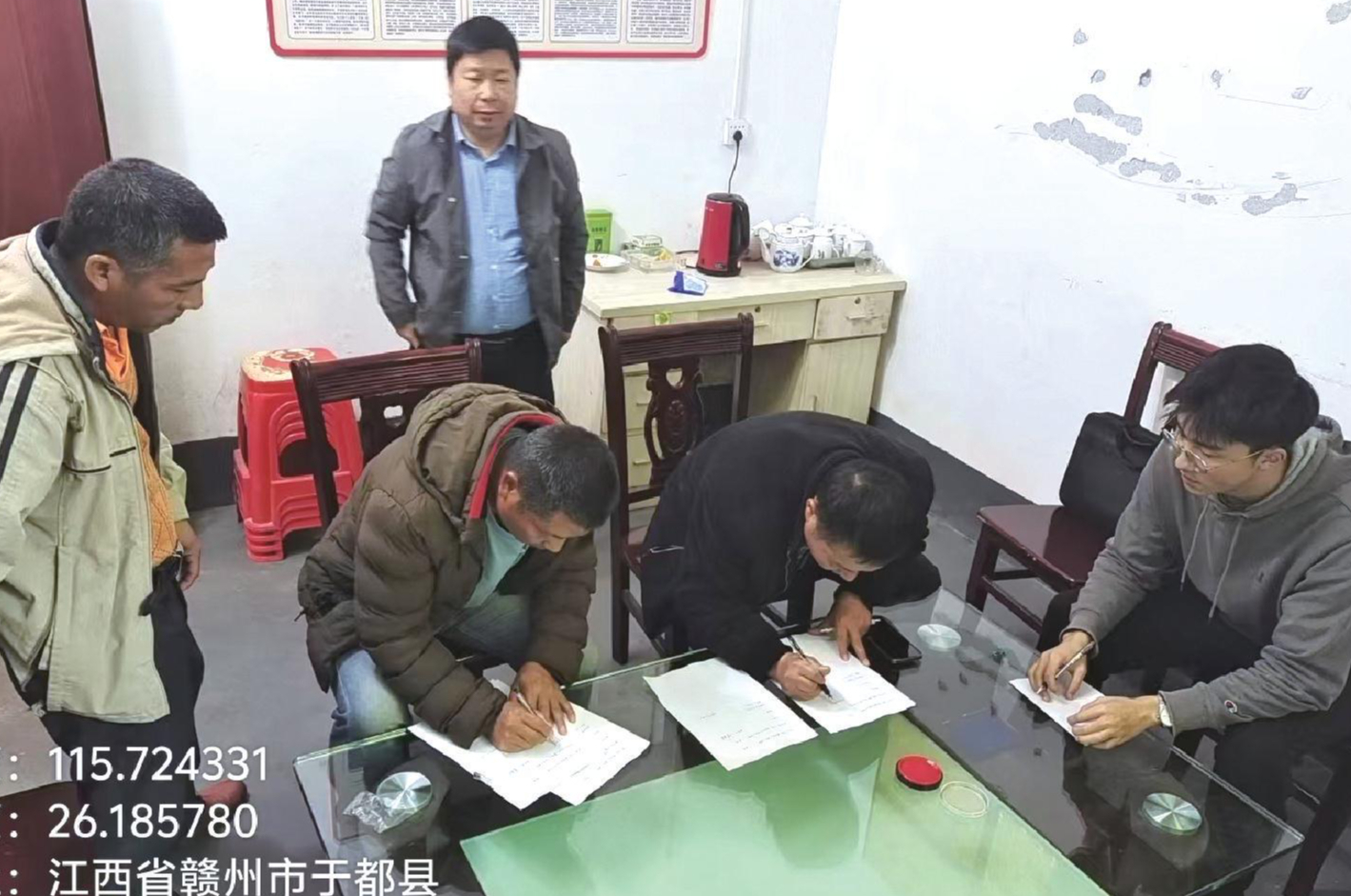
江西于都“双线”化解林权争议
Zhong Guo Zi Ran Zi Yuan Bao· 2025-12-26 08:18
Group 1 - The core viewpoint of the article emphasizes the successful resolution of long-standing land ownership disputes in Yudu County, which is crucial for deepening the reform of collective forest rights systems [2] - The mediation process involved a dual approach of listening to demands and resolving conflicts, where officials patiently recorded grievances and clarified legal regulations to the public [2] - A comprehensive verification of ownership documents and on-site inspections were conducted to compare recorded boundary information with actual conditions, leading to face-to-face mediation among disputing parties [2] Group 2 - In 2025, Yudu County received over 470 visits from the public regarding forest rights disputes, successfully resolving 28 conflicts on-site [3] - A total of 18 land ownership disputes were mediated, involving an area of 568 acres of forest land [3]

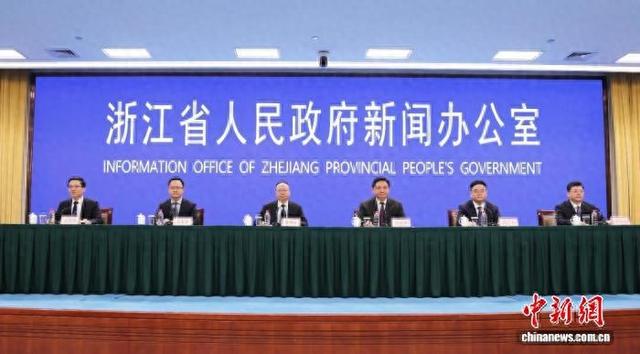
浙江深化集体林权制度改革取得显著成效
Xin Hua Wang· 2025-12-20 01:36
Core Insights - Zhejiang Province has achieved significant results in deepening the collective forest rights system reform, with key indicators showing new breakthroughs, including a forest coverage rate of 58.55% and a forest stock volume of 415 million cubic meters, contributing to an annual forestry output value of 661 billion yuan [1] Group 1: Economic Impact - The under-forest economy has seen rapid growth, with an annual comprehensive output exceeding 117 billion yuan [1] - The innovative model of "shareholding cooperation + storage platform + trading platform" has led to the establishment of 5,616 forestry scale management entities and the transfer of 2.9 million mu of forest land in the past two years [2] - The establishment of over 1,000 under-forest economy demonstration bases covering more than 310,000 mu has benefited 1.07 million forest farmers, achieving an average income increase of 27,200 yuan per person [2] Group 2: Policy Innovations - The government has initiated forestry standard land reforms to attract social capital, transforming the approach from "projects seeking land" to "land waiting for projects" [2] - Over 60,000 mu of standard forestry land has been established, successfully attracting over 3 billion yuan in social capital investment in the flower and seedling industry [2] - The establishment of a regional ecological product trading platform in Lishui has completed over 1,600 transactions of forest rights and carbon credits, with a transaction value of 228 million yuan [3] Group 3: Future Outlook - The provincial forestry bureau plans to continue promoting reforms throughout the forestry lifecycle, implementing models such as "one share and two platforms" and expanding the coverage of standard forestry land [3] - The focus will be on enhancing the efficient use of forest land resources and accelerating the construction of shared forestry service centers and other initiatives to boost the under-forest economy and increase farmers' income [3]
浙江集体林权制度改革卓有成效
Mei Ri Shang Bao· 2025-12-19 22:28
Core Insights - Zhejiang's collective forest land reform is crucial for promoting forestry development, increasing farmers' income, and building ecological civilization [1][2][3] Group 1: Collective Forest Land Reform - Zhejiang has implemented an innovative "shareholding cooperation + storage platform + trading platform" model to enhance the collective forest land management system [1] - By the end of 2024, there will be 5,616 forestry scale management entities in the province, including 281 key leading enterprises [1] - In the past two years, nearly 2.9 million acres of forest land have been transferred, effectively promoting large-scale forestry operations [1] Group 2: Financing and Economic Growth - Zhejiang is leveraging national reserve forests and special bonds to deepen forest rights mortgage loans and explore new financing models [2] - The province's forest coverage rate has reached 58.55%, with a forest stock volume of 415 million cubic meters and carbon storage of 335 million tons [2] - The forestry industry is focusing on developing five leading industries, including woody oil and under-forest economy, to promote the integration of primary, secondary, and tertiary industries [2] Group 3: Farmers' Income Improvement - The province promotes a shareholding cooperation model to ensure farmers benefit from land transfer and operational participation [3] - In Yuhang District, 20 village collectives generated an average annual income of 7.185 million yuan, with individual farmers earning over 2,000 yuan annually [3] - In 58 key collective forest counties, the per capita disposable income from forestry for farmers exceeds 6,100 yuan [3]
浙江深化集体林权制度改革 拓宽山区共富路径
Xin Lang Cai Jing· 2025-12-19 14:22
Core Viewpoint - Zhejiang Province is deepening the collective forest rights system reform to transform resources into assets, live trees into cash, and farmers into shareholders, thereby promoting green transformation in the forestry industry and common prosperity in mountainous areas [1][3]. Group 1: Reform Mechanisms - The reform focuses on four innovative mechanisms: cooperative shareholding operation, efficient land use, socialized forestry services, and financial support for forestry [3][4]. - An example of the cooperative shareholding mechanism includes a model that integrates "cooperative shares + storage platform + trading platform," facilitating the transfer of forest land management rights [4]. - In Xinchang County, 95,000 acres of inefficient forest land have been transferred, leading to the establishment of 80 large-scale fragrant nut bases, generating over 16 million yuan annually for the county [3]. Group 2: Achievements of the Reform - The reform has led to continuous growth in forest resources, steady enhancement of the forestry industry, increased income for farmers in mountainous areas, and further release of development potential [4]. - In Yuhang District, the unified transfer of bamboo resources has resulted in an average annual income increase of 718.5 million yuan for village collectives and over 2,000 yuan for individual farmers [4]. Group 3: Development of Under-Forest Economy - Zhejiang is promoting the under-forest economy through large-scale, characteristic, and full-chain development, focusing on various industries such as medicinal plants, fungi, and special breeding [5]. - The comprehensive output value of the under-forest economy is expected to exceed 117 billion yuan in 2024, with over 1,000 demonstration bases established, covering more than 310,000 acres and benefiting 1.07 million farmers [5].
林海“淘金” 绿富同兴
Jing Ji Ri Bao· 2025-12-19 05:51
经济日报记者 薛志伟 刘兴 吴陆牧 集体林权制度改革是完善农村基本经营制度的重大实践,对推动林业高质量发展、激发乡村全面振 兴活力具有重要意义。 2023年9月,中办、国办印发《深化集体林权制度改革方案》,支持福建、江西、重庆建设深化集 体林权制度改革先行区。两年来,3个先行区探索实施了一批首创性、特色性改革举措,激活林业发展 活力,让改革成果惠及更多林农。 制度先行先试,激发活力 创新金融服务,点绿成金 林区变革,制度先行。三地通过改革创新,推动集体林改政策机制更加完善,支撑保障更加有力。 走进福建省龙岩市武平县,一片片山林焕发出生机与活力。2002年,武平率先迈出集体林权制度改 革的步伐,曾因山小分散、单户难经营而"沉睡"的山林成了联户共富的试验林,亦是福建集体林权制度 改革的生动缩影。但改革从未止步,经营分散化、产业链低端化等新问题倒逼新探索。 2024年,福建省林业局出台方案,决定在全省16个县(市、区)开展以"多方得益、多式联营、多 重服务"为重点的集体林权制度"三多"改革试点工作。 "多方得益"激活利益链,在推进"三权分置"、优化林权管理、完善生态补偿机制上先行,让林农、 集体、企业、社会多方得益 ...
福建、江西、重庆深化集体林权制度改革——林海“淘金” 绿富同兴
Jing Ji Ri Bao· 2025-12-18 22:09
Core Viewpoint - The reform of the collective forest rights system is a significant practice for improving the basic management system in rural areas, playing an important role in promoting high-quality forestry development and invigorating rural revitalization [1] Group 1: Reform Initiatives - The State Council issued a plan to deepen the collective forest rights system reform, supporting Fujian, Jiangxi, and Chongqing to build pilot areas for this reform [1] - Fujian Province is implementing a "three-multiple" reform pilot focusing on "multiple benefits, multiple operations, and multiple services" to enhance the collective forest rights system [2] - Jiangxi has initiated a pilot for early extension of collective forest land contracts, signing contracts for 873.74 million mu, which is 74.4% of the area eligible for extension [3] Group 2: Economic Impact - The total output value of the forestry industry in Fujian reached 812.1 billion yuan, growing by 6.1% [3] - In Jiangxi, the total forestry output value exceeded 713 billion yuan, with per capita disposable income for forest farmers reaching 3,031 yuan, a year-on-year increase of 5.6% [7] - In Chongqing's Qianjiang District, the average output value per mu of forest land reached 2,490 yuan, with per capita disposable income from forestry for farmers at 1,700 yuan [4] Group 3: Financial Innovations - Jiangxi has developed green financial products such as forestry economic revenue rights pledge loans, with a total of 393.72 billion yuan in forestry rights mortgage loans issued [5][6] - Qianjiang District has established a "Qianjiang Forestry Branch" to enhance green financial products, effectively addressing funding issues for forestry development [6] Group 4: Industry Linkages - Fujian has established high-standard demonstration bases for under-forest economy, generating 1.26 billion yuan in output value and involving 12,000 forest farmers [7] - Jiangxi's Fuzhou City has created 683 modern forestry industrial bases, leading to the establishment of 10 characteristic industrial clusters [7] - Chongqing's Chengkou County has actively promoted the orderly transfer of forest land management rights, revitalizing over 800,000 mu of collective forest land [8]
韶关金融活水浸润林改,让每寸林地都成“生态资产”
Nan Fang Nong Cun Bao· 2025-12-16 09:04
Core Viewpoint - The article discusses the transformation of Shaoguan's forestry sector through collective forest rights reform, which aims to clarify property rights, enhance operational capabilities, and integrate ecological protection with economic development, ultimately turning forest land into valuable ecological assets [1][8]. Group 1: Overview of Forestry Resources - Shaoguan boasts 21.7 million acres of forest land, the largest in the province, with 19.92 million acres classified as collective forest land, accounting for 92% of the total [2][3]. Group 2: Reform Initiatives - Recent reforms have addressed historical issues such as unclear forest rights and inefficient management, allowing farmers to become the owners of their forests and facilitating investment opportunities [4][11]. - Shaoguan has been designated as a national pilot for collective forestry reform, leading to the development of replicable experiences in forest rights systems and industrial development [6][7]. Group 3: Implementation of Forest Rights - The core of the collective forest rights reform includes clarifying property rights, enhancing operational rights, ensuring disposal rights, and securing income rights [11][12]. - The initial step involved registering forest rights, allowing each piece of forest land to have a clear ownership status [14][16]. Group 4: Financial Innovations - Shaoguan has pioneered financial support for forestry, introducing the "forest management income rights certificate," which has facilitated access to financing for local enterprises [33][34]. - The issuance of the first five certificates in Wengyuan County led to a credit extension of 11 million yuan to five enterprises, demonstrating the financial viability of forest rights [36][39]. Group 5: Economic Impact - The forestry reforms have resulted in a significant increase in forestry output value, reaching 2.83 billion yuan in the first three quarters of 2024, a year-on-year growth of 12.28% [43]. - Various initiatives, such as the integration of tourism and agriculture, have led to increased income for local farmers, with some villages reporting annual income increases of over 53% [62][66]. Group 6: Ecological and Economic Balance - The reforms have successfully balanced ecological preservation with economic growth, with Shaoguan completing the optimization of 197,900 acres of forest land and enhancing forest quality [68][70]. - The integration of fragmented forest land into larger operational units has mitigated ecological risks while improving economic benefits for local communities [69][70].
