800V高压平台

Search documents
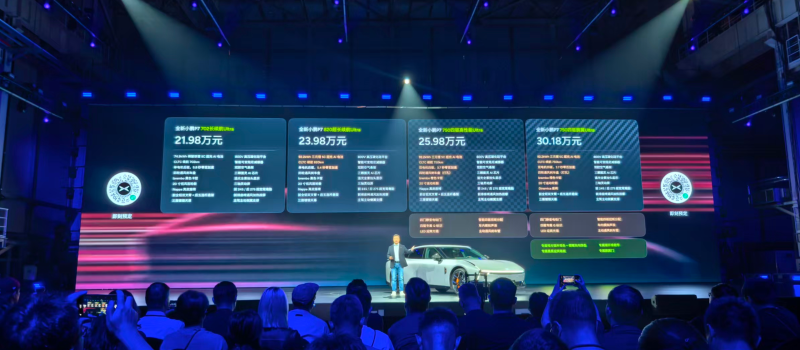
全新小鹏P7上市:21.98万元—30.18万元 最大续航820km
Zhong Guo Zhi Liang Xin Wen Wang· 2025-08-28 05:39
Core Viewpoint - The launch of the new XPeng P7 positions it as a future AI luxury coupe, featuring multiple models with varying performance and pricing, along with attractive purchase incentives for customers [1]. Design and Aesthetics - The new XPeng P7 features an original five-type design that integrates functional elements like lights and sensors into a minimalist aesthetic, achieving a balance between beauty and functionality [2]. - The vehicle's dimensions include a height of 1407mm, width of 970mm, and a length of 5017mm, emphasizing a low, wide, and elongated design that conveys luxury and power [2][6]. - The car offers seven new exterior color options, including a special matte finish, enhancing its visual appeal [6]. Performance and Technology - The new XPeng P7 boasts a 50:50 weight distribution and a low center of gravity of 440mm, providing stability and agility in driving performance [7]. - It features a self-developed 800V XPower electric drive system, delivering a maximum power output of 593PS and peak torque of 695N·m, with a 0-100 km/h acceleration time of just 3.7 seconds [9]. - The vehicle is equipped with three self-developed Turing AI chips, achieving a total computing power of 2250 TOPS, enhancing its intelligent driving capabilities [11]. Safety Features - The XPeng P7 incorporates a high-strength steel and aluminum mixed structure, improving overall rigidity and crash performance [15]. - It includes advanced safety features such as a wet road AES system and a super enhanced AEB that operates up to 130 km/h, providing comprehensive pre-warning and protection [17]. Comfort and Luxury - The interior of the XPeng P7 is designed for comfort, featuring spacious rear seating with ample legroom and a total storage capacity of 631L, expandable to 1929L [19]. - The vehicle includes luxury features such as Nappa leather seats with multiple adjustments, heating, ventilation, and massage functions [20]. - A high-fidelity audio system with 23 custom speakers and advanced soundproofing contributes to a premium in-car experience [22]. Battery and Charging - The XPeng P7 is equipped with an 858 high-performance battery pack, offering a range of 820 km and ultra-fast charging capabilities, allowing for a 10-minute charge to gain 525 km of range [25].


行业观察 | 锚定新能源汽车电驱赛道,“小巨人”佳腾电业卡位800V高压绝缘材料
Sou Hu Cai Jing· 2025-08-12 12:43
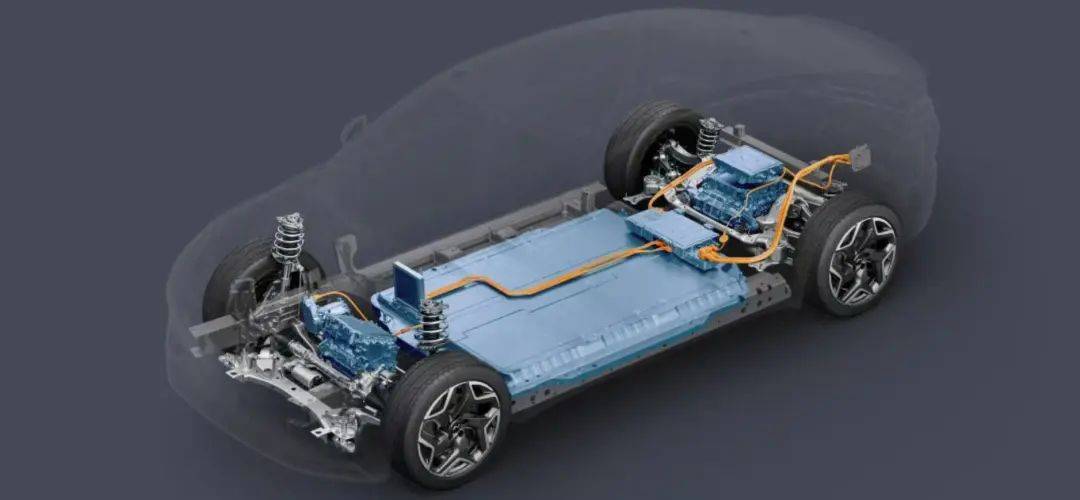
Core Insights - The article highlights the growing preference of Chinese venture capital, including corporate venture capital (CVC), for investing in leading players within niche markets that possess technological scarcity and high barriers to entry, exemplified by Wellascent in the flat wire motor sector [2][3]. Company Overview - Wellascent, established in 2006, focuses on the research, production, and sales of flat wires, becoming the first supplier in China with full-size mass production capabilities, holding over 60% market share in certain niche areas, and serving over 2,000 global clients including ASML and BMW [2][6]. - The company has received multiple rounds of investment from notable venture capital firms since initiating market-oriented financing, indicating strong growth potential [2]. Technological Advancements - Wellascent identified the trend of electric vehicles (EVs) and strategically positioned itself in the 800V high-voltage platform technology, collaborating with Victrex, the inventor of PEEK materials, to overcome core bottlenecks and achieve mass production of high-temperature, high-voltage PEEK insulated flat wires [3][9]. - The company has secured over 80% of the global first-tier automotive manufacturers' projects related to the 800V platform, indicating exponential growth in performance [3][13]. Market Trends - The article notes a structural transformation in the EV industry since the introduction of the 800V high-voltage system, with major automakers adopting flat wire motor technology, which is expected to exceed 90% penetration in the global EV market by 2025 [5][13]. - The demand for Wellascent's products is projected to continue growing, with planned production capacity expansion in Jiangxi, aiming for an annual output value exceeding 2 billion yuan [3]. Strategic Growth Areas - Wellascent is expanding its technological reach into emerging markets such as artificial intelligence and low-altitude economy, which are expected to become significant growth drivers alongside its existing EV business [4][14]. - The company has committed over 75 million yuan in R&D over the past three years, representing more than 5% of its revenue, to enhance its innovation capabilities and market competitiveness [14]. Global Expansion - Wellascent plans to establish manufacturing bases in Texas, Stuttgart, and Thailand by 2024, aiming to create a "China innovation, global delivery" agile system to ensure stable and efficient supply chain support for global clients [15][16]. - The company is initiating a new round of financing focused on accelerating global production capacity, deepening technological advantages, and optimizing operational systems [16].
增程+插混占比超50%,新能源车市“销量与减碳”如何兼得?
3 6 Ke· 2025-05-19 09:50
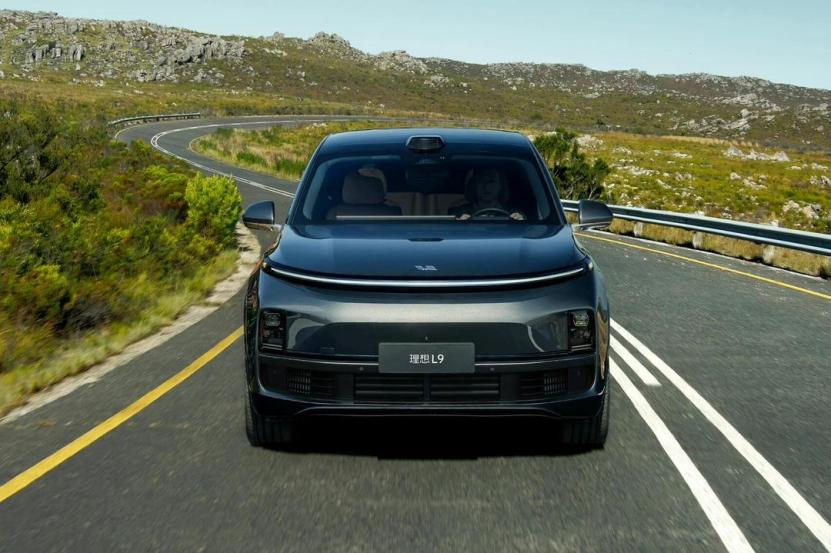
Core Insights - In 2025, China's new energy vehicle (NEV) market is expected to reach a structural turning point, with range-extended and plug-in hybrid vehicles accounting for over 50% of the market share, driven by models like the Wanjie M8 and Avita 06 [1] - The sales of new energy vehicles in 2024 are projected to reach 11.26 million units, with range-extended and plug-in hybrid vehicles contributing 4.52 million units, showing an impressive year-on-year growth of 85.2% compared to 15% for pure electric vehicles [1] - The market is experiencing a deep competition phase regarding technology routes, raising questions about whether range-extended and plug-in hybrid technologies are practical choices for carbon neutrality or merely transitional solutions [1] User Demand and Technological Benefits - The pursuit of a "no-anxiety experience" is a core driver for consumers, with range-extended vehicles meeting both low-cost urban commuting needs and long-distance travel concerns [3] - For instance, the Li Auto L series boasts a comprehensive range exceeding 1000 km, with a cost of less than 0.1 yuan per kilometer in pure electric mode, appealing to family users [3] - Plug-in hybrid vehicles, like BYD's DM-i, maintain fuel consumption below 3L/100km even in depleted states, balancing performance and economy [3] Technological Breakthroughs - The range-extended structure has lower R&D costs (40% less than plug-in hybrids) and production line transformation costs (one-third of plug-in hybrids), facilitating rapid market entry for new players [5] - Li Auto achieved over 500,000 annual sales in 2024 with a single range-extended model, while the Wanjie M7 surpassed 190,000 units in deliveries, validating the commercial viability of this approach [5] - Plug-in hybrid technology has also seen significant sales, with BYD's DM-i models exceeding one million units, showcasing strong market penetration across various vehicle segments [5] Environmental Concerns and Technological Debate - The rise in sales of hybrid vehicles has intensified debates over technology routes, with range-extended technology facing criticism for higher energy consumption and carbon emissions compared to plug-in hybrids [6] - Critics argue that the two-step energy conversion process of range-extended vehicles is less efficient, while proponents highlight their fuel-saving potential of 30%-50% in less developed areas [6] - The market is navigating a balance between ideal environmental goals and real user needs, as highlighted by industry experts [6] Strategic Choices of Automakers - New entrants like Li Auto and Wanjie are leveraging range-extended technology to establish market recognition, while traditional automakers focus on plug-in hybrid technologies [7] - The differentiation in strategies reflects a broader trend of technological convergence, with companies like Li Auto introducing pure electric models and BYD integrating high-voltage platforms with hybrid technologies [9] Future Outlook - The potential widespread adoption of 800V platforms could mitigate the refueling disadvantages of hybrid vehicles, although it may increase costs due to the need for upgraded components [11] - Solid-state batteries are anticipated to revolutionize pure electric vehicle range by 2027, posing challenges to the transitional status of range-extended and plug-in hybrid technologies [11] - The consensus in the industry suggests that hybrid technologies will remain mainstream from 2025 to 2030, as they address user needs while filling gaps left by pure electric vehicles [12]


【联合发布】重点新车上市预告(2025年5月)
乘联分会· 2025-05-09 08:34
Core Viewpoint - The article highlights the upcoming launch of four significant new vehicles in May 2025, showcasing advancements in electric and hybrid technology, smart driving capabilities, and luxurious interior designs [1][10]. Group 1: Upcoming Vehicle Launches - The four new vehicles set to launch are: Galaxy Star 8, Zhiji L6, Zun Jie S800, and GAC Trumpchi Xiangwang M8 [1][10]. - Galaxy Star 8 is a mid-to-large plug-in hybrid sedan featuring advanced smart driving systems and a luxurious interior [4][10]. - Zhiji L6 is a pure electric sedan with an upgraded 800V high-voltage platform, offering rapid charging and advanced driving assistance features [6][10]. - Zun Jie S800, a collaboration between Huawei and JAC, is positioned as a luxury vehicle with L3-level intelligent driving capabilities and a focus on comfort and technology [8][10]. - GAC Trumpchi Xiangwang M8 is a large MPV developed in partnership with Huawei, featuring a high-end interior and advanced smart driving systems [9][10]. Group 2: Vehicle Specifications and Features - Galaxy Star 8 offers two hybrid options, EM-i and EM-P, with electric ranges of 60 km and 130 km respectively, and includes a high-tech cockpit with multiple smart features [4][10]. - Zhiji L6 features a modern design with a new paint finish, an 800V platform for faster charging, and advanced AI integration for a seamless user experience [6][10]. - Zun Jie S800 boasts a luxurious interior with natural materials, advanced L3-level driving assistance, and a focus on safety and convenience through various smart technologies [8][10]. - GAC Trumpchi Xiangwang M8 includes a 2.0T plug-in hybrid system with a pure electric range of 248 km and a comprehensive driving assistance system [9][10]. Group 3: Market Implications - The new vehicles reflect the industry's shift towards electric and hybrid technologies, emphasizing smart driving and luxurious features, which are expected to enhance market competitiveness [10]. - The integration of advanced technologies and luxurious designs in these new models indicates a strong commitment from manufacturers to meet evolving consumer demands [10].