
800V高压平台

Search documents
电动化下半场:“低温”大战开启
高工锂电· 2026-03-15 09:57
Core Viewpoint - The electric vehicle industry is entering a critical phase where low-temperature performance of batteries is essential for various applications, leading to intense competition among major players like CATL, BYD, and Guoxuan High-Tech [3][4]. Group 1: Low-Temperature Solutions - Major battery manufacturers are focusing on low-temperature solutions, with BYD's second-generation blade battery achieving fast charging in under 12 minutes at -30°C, while CATL's sodium-ion battery allows for immediate charging without preheating [4][6]. - The competition is not just about battery performance but also about creating a comprehensive ecosystem that includes charging infrastructure and vehicle compatibility [9][10]. Group 2: Charging Infrastructure and Market Dynamics - The future of fast charging infrastructure, particularly in northern markets, is crucial for the growth of electric vehicles, with BYD planning to expand its fast-charging stations significantly [7][8]. - The penetration of 800V high-voltage platforms is expected to exceed 10% by 2025, with a projected sales volume of nearly 1.5 million units, indicating a shift towards higher voltage systems in the market [7][8]. Group 3: Material Innovations - The introduction of lithium iron phosphate (LFP) and manganese iron phosphate (LMFP) materials is set to redefine the competitive landscape, with BYD's advancements in low-temperature performance potentially disrupting the dominance of ternary materials [11][12]. - CATL's M3P battery, which utilizes manganese iron phosphate, is already being deployed in various vehicle models, showcasing the trend towards multi-material strategies in battery technology [13]. Group 4: Commercial Vehicle Applications - CATL's sodium-ion battery is being integrated into commercial vehicles, demonstrating its capability to operate effectively in extreme cold conditions, thus expanding the application range of low-temperature batteries [14][15].




营收持平,利润新高:威迈斯如何“卷”出39%增长?
市值风云· 2026-02-27 10:14
Core Viewpoint - The demand for vehicle power supplies is showing signs of slowing down in the fourth quarter, impacting the overall performance of the company [1]. Group 1: Company Performance - VMAX (威迈斯) reported an estimated revenue of 6.342 billion in 2025, a slight decline of 0.48% year-on-year, while net profit attributable to shareholders is expected to reach 557 million, reflecting a growth of 39.22% [4]. - The company has initiated a share buyback program with a total amount of 9.09 million, with share prices ranging between 32.38 and 33.20 per share, which is higher than the closing price on the first trading day after the earnings announcement [5]. - The company has achieved a historical high in profit growth despite a stable revenue outlook, with the vehicle power supply segment contributing 89% of its main business income in the first half of 2025 [15]. Group 2: Market Position and Product Development - VMAX is a leading player in the vehicle power supply market, holding approximately 16% market share in the domestic passenger vehicle onboard charger market, ranking second after BYD's Fudi Power [14]. - The company has successfully transitioned from general power supplies to automotive-grade power supplies, focusing on integrated vehicle power supply products, including onboard chargers and DC/DC converters [9]. - VMAX has entered mass production of 800V high-voltage platform SiC products, supplying to several high-end models from brands like Xiaopeng and Ideal [16]. Group 3: Industry Trends and Future Outlook - The vehicle power supply business saw a revenue growth of 3.5% in 2024, but the growth rate is expected to slow down in 2025, with a projected revenue of 5.107 billion [18]. - The electric drive system has shown remarkable growth, with a revenue increase of 418.39% in 2024, continuing to grow by 12.7% in the first half of 2025 [20]. - The company anticipates a decline in revenue for the fourth quarter of 2025, which is traditionally a peak season, indicating a potential downturn in demand [20]. - The company is also focusing on expanding its overseas market presence, with Stellantis becoming one of its top five clients, although overseas revenue saw a significant decline of 46.6% in the first half of 2025 [24][26].

不是巧合,今年春节,电动车返乡不再是「勇敢者的游戏」
3 6 Ke· 2026-02-27 02:44
Core Viewpoint - The electric vehicle (EV) charging experience has significantly improved during the recent Spring Festival, with fewer complaints from EV owners due to enhanced infrastructure and smarter charging solutions [3][4][18]. Group 1: Infrastructure Improvements - The number of charging sessions on highways reached 6.021 million, with a total charging volume of 14,976.75 million kWh, marking a 52.01% increase in daily average charging volume compared to last year [4]. - Major EV manufacturers like NIO and Li Auto have significantly increased their charging infrastructure, with NIO accounting for 15% of the total charging volume on highways during the specified period [4][6]. - Local governments are also investing in charging infrastructure, including mobile charging robots and emergency charging vehicles, to alleviate peak demand issues [6][8]. Group 2: User Behavior Changes - EV owners are adapting their travel strategies, such as planning trips to avoid congested charging stations and utilizing fast charging stations in smaller towns instead of busy service areas [7][8]. - The integration of advanced navigation and charging station information in vehicle systems allows drivers to optimize their routes and avoid long wait times at charging stations [7][8]. Group 3: Technological Advancements - The industry is moving towards faster charging technologies, with companies like BYD developing megawatt-level fast charging stations capable of delivering up to 1000 kW [9][12]. - Major automakers are also investing in high-voltage platforms and fast charging capabilities, with BMW, Toyota, and Mercedes-Benz announcing significant advancements in their EV technologies [14][16]. - The trend towards fast charging is expected to continue, making it accessible to more mainstream vehicles, thus enhancing the overall EV ownership experience [16][18]. Group 4: Future Outlook - The charging infrastructure is projected to expand further, with over 10,000 new charging guns planned for installation in highway service areas this year, including a significant portion being high-power fast chargers [9]. - The overall EV industry is expected to mature, with better coordination between vehicle manufacturers, battery suppliers, and charging infrastructure providers, leading to a more seamless experience for EV users [13][19].
盘点2026年部分车企销量目标
Zhong Guo Qi Che Bao Wang· 2026-01-08 07:15
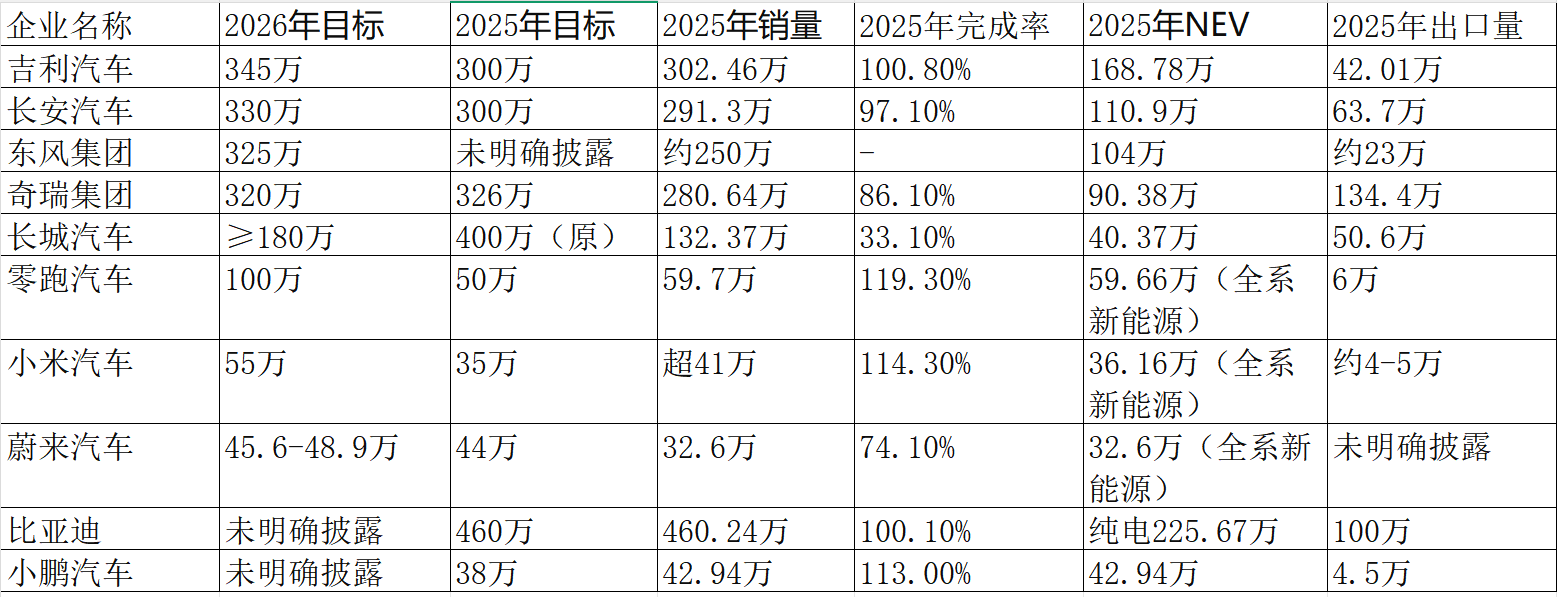
Core Viewpoint - Several automotive companies have announced their sales targets for 2026, and an analysis of their 2025 performance reveals the potential challenges they may face in achieving these goals [3]. Group 1: Company Performance and Targets - Geely Automobile aims for a target of 3.45 million units in 2026, having achieved 3.0246 million units in 2025, exceeding its target of 3 million units with a completion rate of 100.8% [3] - BYD's actual sales in 2025 reached 4.6024 million units, surpassing its adjusted target of 4.6 million units, with a significant pure electric sales figure of 2.2567 million units, ranking first globally [5] - Leap Motor set a target of 1 million units for 2026, achieving 597,000 units in 2025, exceeding its target of 500,000 units with a completion rate of 119.3% [8] - Changan Automobile has a target of 3.3 million units for 2026, with 2025 sales of 2.913 million units, achieving a completion rate of 97.1% [12] - Chery Group aims for 3.2 million units in 2026, having sold 2.8064 million units in 2025, with a completion rate of 86.1% [15] - NIO targets between 456,000 and 489,000 units for 2026, with 2025 sales of 326,000 units, achieving a completion rate of 74.1% [20] Group 2: Challenges Faced by Companies - Geely faces challenges such as EU anti-subsidy investigations and changes in Brazil's tax policies affecting exports [3][4] - BYD needs to improve sales in the high-end market, particularly for its luxury models, and address rising overseas transportation costs, which increased by 47% [6][7] - Leap Motor must compete in the 100,000-150,000 yuan market against Geely and Changan, while its gross margin is only 12%, below the industry average of 15% [10] - Changan's challenges include competition in the new energy market with BYD and Tesla, and reliance on Middle Eastern and Southeast Asian markets for exports, which are subject to geopolitical risks [14] - Chery's domestic market faces low new energy penetration at 32%, necessitating a faster transition, while its exports are vulnerable to currency fluctuations and trade barriers [15] - Great Wall Motors has significantly reduced its target from 4 million to 1.8 million units, indicating a strategic contraction, and faces delays in its new energy transition [18][19] - NIO's sales target increase of 40-50% requires monthly sales of 38,000-41,000 units, while its average monthly sales in 2025 were only 27,000 units, alongside ongoing financial losses [22] Group 3: Industry Trends and Insights - The competition in the automotive market is intensifying, with many companies having gross margins below the industry average of 15%, limiting their operational flexibility [23] - The price volatility of lithium carbonate, a key component for batteries, is expected to negatively impact cost reduction efforts for automotive companies in 2026 [23] - The automotive industry is entering a phase of "technology-driven + globalization" competition, requiring companies to balance scale, profit, and technology to achieve their 2026 targets [25]





东风日产NX8公告图发布 2026年上半年正式亮相
Yang Zi Wan Bao Wang· 2025-12-07 08:38
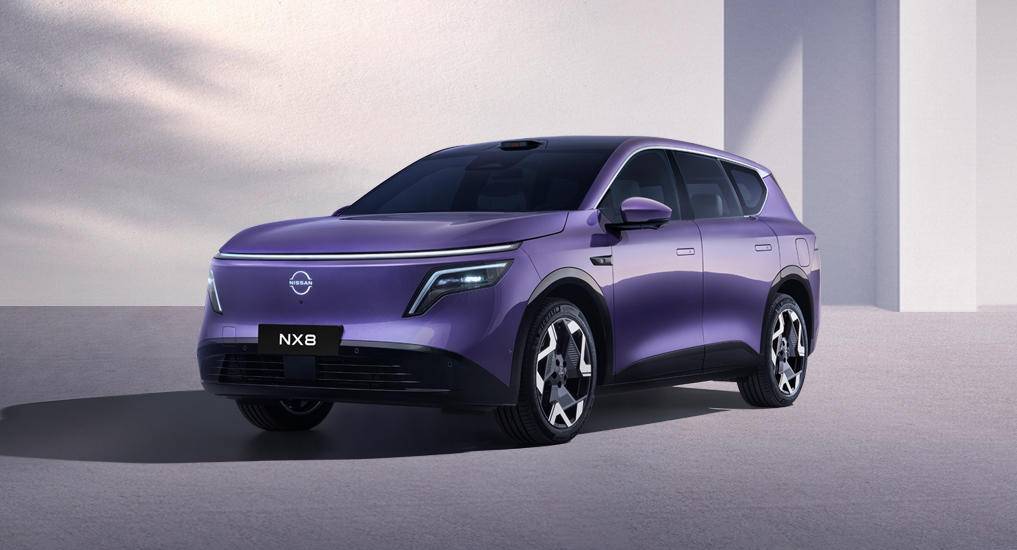
Core Viewpoint - Dongfeng Nissan has officially released the announcement for its new mid-to-large SUV, NX8, which is positioned as a benchmark model under the Tianyan architecture, aimed at providing a superior travel experience for mainstream Chinese families with its advanced technology and spacious design [1][4]. Group 1: Product Features - The NX8 features dimensions of 4870×1920×1680mm and a wheelbase of 2917mm, making it suitable for family use with a spacious interior [3]. - The SUV adopts a minimalist design with a focus on family aesthetics, showcasing a wide front and a sleek body that enhances its modern appeal [6]. - The rear of the NX8 is equipped with 2064 OLED "quantum light curtain" tail lights, allowing for customizable lighting patterns that enhance its technological charm [8]. Group 2: Technological Advancements - The NX8 is the first joint venture SUV to feature the 800V high-voltage platform and CATL's 5C ultra-fast charging technology, marking a significant advancement in the joint venture's electric vehicle offerings [10]. - The vehicle's battery, based on Nissan's global standards, ensures high safety and longevity, capable of operating in extreme temperatures from -30℃ to 60℃ [12]. - The NX8 will also include advanced driving assistance features such as lidar for enhanced navigation and parking capabilities, promising a safer driving experience [12]. Group 3: Market Positioning - The NX8 is part of Dongfeng Nissan's N series of electric vehicles, which includes models like the pure electric sedan N7 and the plug-in hybrid sedan N6, contributing to a comprehensive product matrix in the new energy sector [4]. - The introduction of the NX8 reflects Dongfeng Nissan's commitment to accelerating its transformation into a new energy brand, showcasing its innovative spirit in the competitive automotive market [4].
理想汽车 | 2025Q3:营收短期承压 静待新品上量【国联民生汽车 崔琰团队】
汽车琰究· 2025-11-28 02:31
Core Viewpoint - The company reported a significant decline in revenue and profitability for Q3 2025, primarily due to reduced vehicle deliveries and a drop in gross margin [1][2][4]. Revenue Summary - In Q3 2025, total revenue reached 27.36 billion yuan, representing a year-on-year decrease of 36.2% and a quarter-on-quarter decrease of 9.5% [1][2]. - Automotive business revenue was approximately 25.87 billion yuan, with a year-on-year decline of 37.4% and a quarter-on-quarter decline of 10.4% [2]. - Vehicle deliveries totaled 93,000 units, down 39.0% year-on-year and 16.1% quarter-on-quarter [1][2]. Profitability Summary - The automotive business gross profit was 4.02 billion yuan, reflecting a year-on-year decrease of 53.5% and a quarter-on-quarter decrease of 28.4% [4]. - The gross margin for the automotive business was 15.5%, down 5.4 percentage points year-on-year and 3.9 percentage points quarter-on-quarter [4]. - The net profit attributable to shareholders was -630 million yuan, indicating a loss compared to the previous year [4]. Expense Summary - R&D expenses for Q3 2025 were 2.97 billion yuan, up 15.0% year-on-year and 5.8% quarter-on-quarter, with an R&D expense ratio of 10.9% [5]. - Sales and management expenses were 2.77 billion yuan, down 17.6% year-on-year but up 1.9% quarter-on-quarter [5]. Cash Flow Summary - The net cash used in operating activities was 7.4 billion yuan, with free cash flow at -8.9 billion yuan for Q3 2025 [8]. Future Outlook - The company expects Q4 2025 vehicle deliveries to be between 100,000 and 110,000 units, with corresponding revenue estimated between 26.5 billion and 29.2 billion yuan [8]. - The company anticipates a year-on-year decline in deliveries of 37.0% to 30.7% for Q4 2025 [8]. Product Development - The company is ramping up production for its new electric models, with the I6 and I8 targeting the mainstream and high-end electric vehicle markets [9]. - The 2026 model year for the L series is set for a significant upgrade, focusing on a streamlined SKU model and enhanced luxury features [9]. Market Positioning - The company aims to leverage its user insights and efficient organizational structure to innovate product offerings and maintain a competitive edge in the electric vehicle market [10].

赛力斯集团通过港交所上市聆讯 拟募资加速全球化布局
Xi Niu Cai Jing· 2025-10-13 10:20
Core Viewpoint - Seres Group has successfully passed the listing hearing on the Hong Kong Stock Exchange, marking a significant step in its strategic transformation and expansion in the electric vehicle market [2][4]. Company Overview - Founded in 1986, Seres Group, formerly known as Xiaokang Co., has undergone a strategic transformation in 2021 through a deep collaboration with Huawei, launching the AITO brand [3][4]. - The company has established a complete industrial chain centered on electric vehicles, including research and development of the three electric systems, vehicle manufacturing, and sales services [3]. Financial Performance - In 2024, Seres Group achieved a revenue of 145.176 billion yuan, representing a year-on-year growth of 305.04%, marking a historical high [4]. - The company reported a net profit attributable to shareholders of 5.946 billion yuan, turning profitable and becoming the fourth global electric vehicle company to achieve profitability [4]. - The gross margin for electric vehicles increased to 26.21% in 2024 [4]. - For the first half of 2025, Seres Group recorded a revenue of 62.402 billion yuan, a year-on-year decrease of 4.06%, while the net profit attributable to shareholders surged by 81.03% to 2.941 billion yuan [4]. - The gross margin further improved to 28.93% in the first half of 2025 [4]. IPO Details - Seres Group submitted its IPO application to the Hong Kong Stock Exchange in April 2025, with CICC and China Galaxy International as joint sponsors [4]. - The company plans to issue no more than 331 million H-shares, accounting for 18.7% of the expanded share capital, with 70% of the raised funds allocated for R&D, focusing on intelligent driving and an 800V high-voltage platform [4]. - Additionally, 20% of the funds will be used to expand overseas markets and charging networks, while 10% will supplement working capital [4].


2027年年底建10万台大功率充电桩 中汽数据康泽军:80%用户接受超充1元/度溢价
Zhong Guo Jing Ying Bao· 2025-10-11 14:02
Core Insights - 80% of users are willing to pay a premium of around 1 yuan per kWh for ultra-fast charging services, indicating a growing acceptance of this technology among consumers [1][7] - The development of high-voltage 800V platforms is driving down the prices of electric vehicles, with models now available for under 200,000 yuan, and further penetration into the 150,000 yuan segment is expected [4][6] Charging Infrastructure Development - The National Development and Reform Commission and the National Energy Administration aim to establish over 100,000 high-power charging facilities by the end of 2027, focusing on quality and advanced technology [3] - The current number of ultra-fast charging stations is limited, with only about 5% of public DC charging stations being 360kW or above, but the proportion of 480kW facilities is expected to rise to around 30% in new installations [6] Technological Advancements - The iteration speed of electric vehicle products is accelerating, with new models expected to be released every five to six months, and over 50% of new electric vehicles in 2024 will feature 800V high-voltage architecture [4][5] - The maximum charging power of first-tier models is between 400-600kW, reflecting significant advancements in charging technology [4] User Experience and Preferences - Users have shifted from "range anxiety" to "charging anxiety," seeking safer, more convenient, and comfortable charging experiences [8] - While users are confident in the V2L (Vehicle-to-Load) functionality for recreational use, they are less inclined to pay a premium for it, and there are concerns regarding battery life and degradation related to V2G (Vehicle-to-Grid) technology [8] Industry Recommendations - Companies in the charging infrastructure sector should prioritize enhancing the charging experience, as this will be a critical competitive area [8] - Emphasis on data circulation and application is essential for realizing the value of data, which can drive overall revenue and efficiency in the industry [8]

不仅国庆长假,新能源车主每次充电都搞不清楚这个问题
3 6 Ke· 2025-09-29 10:53
Core Viewpoint - The article discusses the discrepancy between the high voltage (800V) promoted by car manufacturers and the charging power (kW) displayed on charging stations, highlighting the importance of understanding charging efficiency and consumer perception in the electric vehicle (EV) market [1][3][6]. Group 1: Charging Efficiency and Cost - The article emphasizes the cost advantage of electric vehicles (EVs) during long-distance travel, with an example showing a vehicle consuming approximately 14 kWh per 100 km, leading to a travel cost of around 17 yuan per 100 km based on current charging prices [3][4]. - It notes that a vehicle with a 78 kWh battery can achieve a range of about 450 km under optimal conditions, showcasing the efficiency of EVs compared to traditional vehicles [3][4]. Group 2: Technical Aspects of Charging - The article explains the fundamental physics of charging, stating that charging power (W) is determined by both voltage (V) and current (I), and that higher voltage can lead to more efficient charging with less heat generation [4][6]. - It highlights that increasing voltage is a more efficient method for achieving high charging power compared to increasing current, which can lead to significant heat loss and safety concerns [6][7]. Group 3: Marketing Strategies - The preference for promoting "800V" by car manufacturers is attributed to a combination of technical, marketing, and consumer psychology factors, positioning it as a symbol of advanced technology in the EV market [6][8]. - The article points out that the term "800V high voltage platform" does not necessarily mean that vehicles can actually charge at 800V, as there is a common industry practice where any voltage above 400V can be labeled as such [11][12]. Group 4: Industry Standards and Future Developments - The article discusses a recent government initiative aimed at promoting the development of high-power charging infrastructure, with a target of over 100,000 high-power charging stations by the end of 2027 [19][20]. - It emphasizes the need for standardized power ratings in the industry, which would enhance consumer understanding and protect their rights by providing clear performance indicators rather than vague marketing terms [21][22].
理想i6内饰官图首发:后排21.4英寸娱乐屏+零重力座椅
Jing Ji Guan Cha Bao· 2025-09-19 10:16
Core Points - Li Auto officially unveiled the interior design of its new five-seat pure electric SUV, the Li Auto i6, on September 19 [1] - The vehicle features a minimalist tech style, with a dual-screen design in the front and a 21.4-inch entertainment screen in the rear [1] - The i6 is built on an 800V high-voltage platform, offering both rear-wheel and all-wheel drive versions with significant range capabilities [1] Design and Features - The interior includes a one-piece dual-screen setup (central control screen + co-driver entertainment screen) and eliminates the traditional LCD instrument panel, relying entirely on a HUD for driving information [1] - The rear seats are equipped with zero-gravity seats, a large capacity refrigerator, and ambient lighting, enhancing comfort for family use [1] - The vehicle dimensions are 4950×1935×1655mm with a wheelbase of 3000mm, providing over 3.3 meters of usable space inside [1] Performance and Technology - The rear-wheel drive version offers 250kW power with a range of 710-720 km, while the all-wheel drive version provides 400kW power with a range of 660 km [1] - The vehicle supports rapid charging, allowing for 500 km of range with just 10 minutes of charging [1] - It is equipped with the AD Max 3.0 intelligent driving system and Qualcomm 8295 chip for enhanced in-car experience [1] Market Positioning - The Li Auto i6 is set to launch on September 26, targeting the market segment priced between 250,000 to 300,000 yuan [1]
