AI农业

Search documents
日媒:在日本政坛,稻米是“第三条高压线”
Huan Qiu Shi Bao· 2025-07-21 22:40
Core Viewpoint - The article emphasizes the critical importance of rice in Japan's political landscape, likening it to a "third rail" that politicians must avoid disrupting, as it directly impacts food security and voter sentiment [1][2]. Group 1: Rice Production Challenges - Japan's rice production system faces significant challenges, including an aging farmer population, with many over 65 years old and lacking successors [2][3]. - The fragmentation of farmland limits the ability to invest in automation and AI technologies, making it difficult to modernize the agricultural sector [2][3]. - The government has historically set rice prices to protect farmers, but this has not led to profitability, and past policies have failed to adapt to climate change impacts [2][3]. Group 2: Policy and Market Implications - The reliance on large rice reserves to stabilize market prices is becoming unsustainable due to weak political leadership, resulting in empty supermarket shelves and soaring rice prices [2]. - The rising cost of rice has become a focal point for voters, prompting the Prime Minister to appoint a new minister to reform the rice system, although there are concerns about the potential negative impact on Japan's 2,500-year-old rice culture [2][3]. - The agricultural ministry faces a complex dilemma of maintaining low rice prices while ensuring farmer income and food security, complicating policy decisions [3]. Group 3: Recommendations for Reform - Instead of paying farmers not to cultivate rice, there is a need to encourage the consolidation of small plots into larger, more efficient operations, supported by technology and financial assistance [3]. - Accelerating breeding research to develop high-quality, heat-resistant rice varieties is essential to address climate change challenges and protect premium production areas [3]. - Reforming the rice system requires careful consideration, as any misstep could have severe consequences for Japan's food culture and security [3].
每年获投公司仅20-30家,为何AI农业发展慢?
第一财经· 2025-06-24 12:51
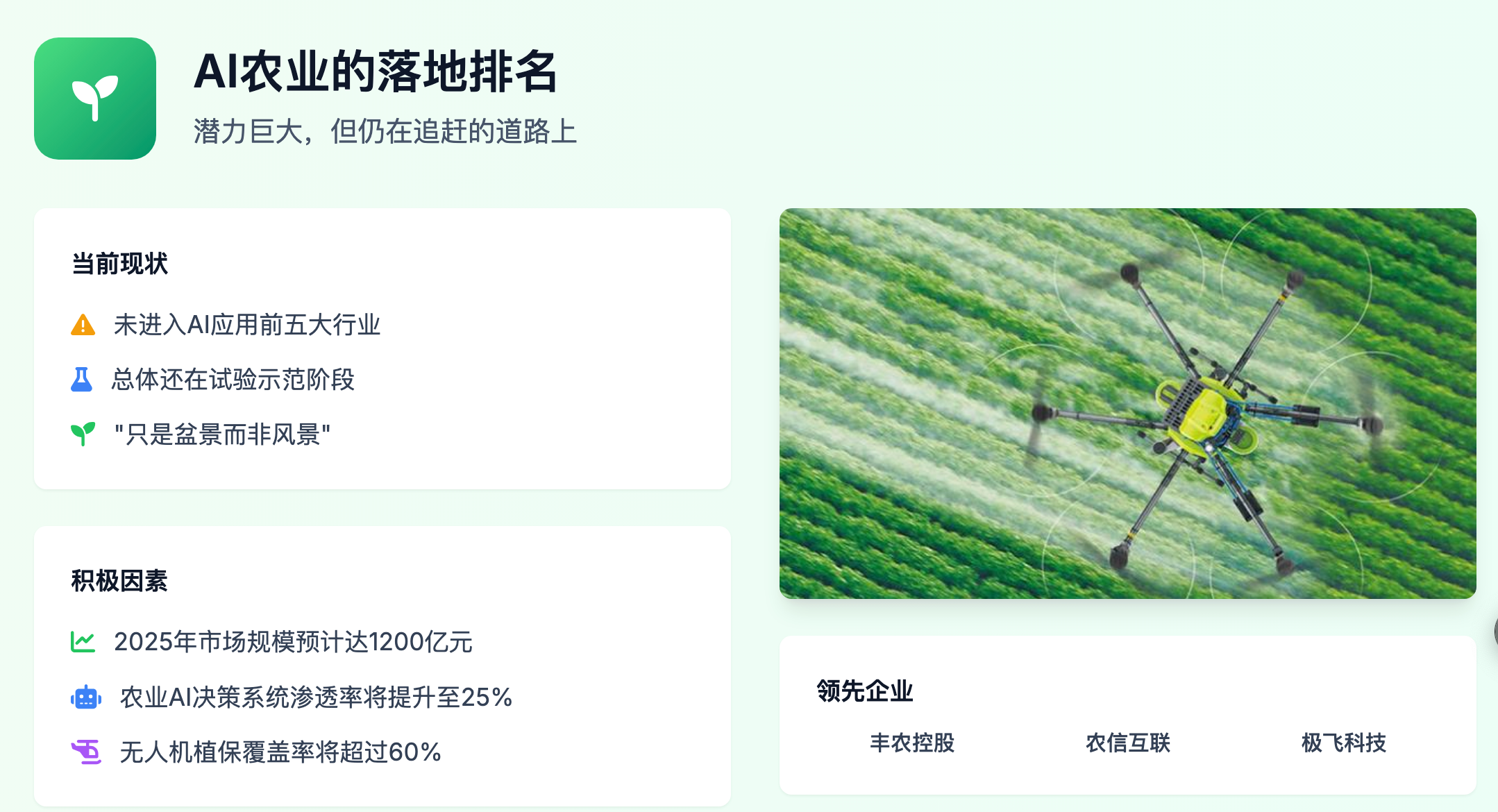
Core Insights - The article emphasizes that the penetration of AI in agriculture requires a long-term evolution, facing challenges such as resource allocation, user habit changes, and product iteration [1] - Despite rapid advancements in AI applications, certain areas, particularly AI in agriculture, are still in the experimental demonstration phase [1] Group 1: Challenges in AI Agriculture - The slow advancement of AI in agriculture can be attributed to three main factors: weak data foundation, high costs with low ROI expectations, and complex scenarios with trust barriers [2] - Agricultural data is fragmented due to diverse soil, climate, and crop varieties, making it insufficient for training reliable AI models [2] - High costs of AI equipment and long investment return cycles hinder the adoption of AI in agriculture [2] Group 2: Data and Model Development - The competition among agricultural AI models is primarily about data accuracy, with specialized models needing to provide precise services to clients [3] - For instance, Fengnong's breeding model has been trained using feedback from farmers, making it more relevant to their needs [3] - The most critical agricultural AI models are those that possess refined capabilities, such as formulation ratios and on-site operations, rather than common Q&A models [3] Group 3: Environmental Complexity - The complexity of agricultural environments limits the generalizability of AI solutions, as conditions like soil and weather can significantly affect outcomes [4] - AI agriculture's complexity is likened to that of AI in healthcare, but the latter benefits from a broader commercialization space and better data accumulation [4] - Investment in smart agriculture has been active but limited, with only 20-30 companies receiving funding annually from 2015 to 2022 [4] Group 4: Policy and Future Outlook - National policies play a crucial role in the development of AI agriculture, with the Ministry of Agriculture and Rural Affairs setting a goal for agricultural production informationization to reach over 32% by the end of 2028 [4] - Significant changes in the agricultural sector are anticipated over the next 10 to 20 years, necessitating attention and nurturing from various stakeholders [4]

每年获投公司仅20-30家,为何AI农业发展慢?
Di Yi Cai Jing· 2025-06-24 11:49
Core Insights - The report from CICC indicates that AI penetration in agriculture requires long-term evolution, facing challenges such as resource allocation, user habit changes, and technology refinement [1] - AI applications in agriculture are currently in the experimental demonstration phase, with slow penetration rates in certain areas despite rapid advancements in large model applications [1] - The complexity of agricultural environments and the need for precise recommendations pose significant challenges for AI models, which must adapt to various conditions [7][8] Industry Overview - The agricultural sector has seen the emergence of multiple large model products, with competition centered around data accuracy and relevance to customer needs [4] - The investment landscape in smart agriculture has been active from 2015 to 2022, yet only 20-30 companies receive funding each year, indicating a selective investment environment [8] - The Ministry of Agriculture and Rural Affairs has set a goal for agricultural production informationization to reach over 32% by the end of 2028, highlighting the importance of national policies in fostering AI agricultural development [8] Challenges in AI Agriculture - Key challenges hindering AI adoption in agriculture include weak data foundations, high costs, low ROI expectations, and trust barriers among practitioners [1] - The diversity of agricultural data due to varying soil, climate, and crop types complicates the training of reliable AI models [1] - The complexity of agricultural environments limits the generalizability of AI solutions, making it difficult to apply models developed in one context to another [7][8]
中国AI农业渐兴 新疆“试验田”获关注
Zhong Guo Xin Wen Wang· 2025-05-26 15:06
Group 1 - The article highlights the growing interest in AI agriculture in Xinjiang, which is seen as an important "testing ground" for AI technology in agriculture due to its vast arable land and potential for new farmland [1][2] - AI technology is being widely applied in agriculture, with core advantages including deep learning and big data analysis for optimizing planting decisions, automating workflows, and efficiently managing environmental resources [1][2] - Companies like Beijing Daqiao Digital Technology Co., Ltd. and Qingdao Wotu Intelligent Technology Co., Ltd. are leading the development of AI agricultural solutions, including smart agricultural robots and integrated data analysis systems [1][2] Group 2 - Beijing Daqiao has established foundational infrastructure for AI agricultural services in key cotton-producing areas of Xinjiang, such as Aral City, including water and fertilizer integration facilities and data collection networks [2] - Qingdao Wotu focuses on electric smart agricultural robots, which cover the entire process of orchard management, including 15 core tasks such as weeding, precise spraying, pruning, and fertilization [2] - Experts emphasize the need for continuous evolution of smart agricultural technology in China, advocating for a development path that includes technological breakthroughs, product research, integrated applications, and industry cultivation [2]
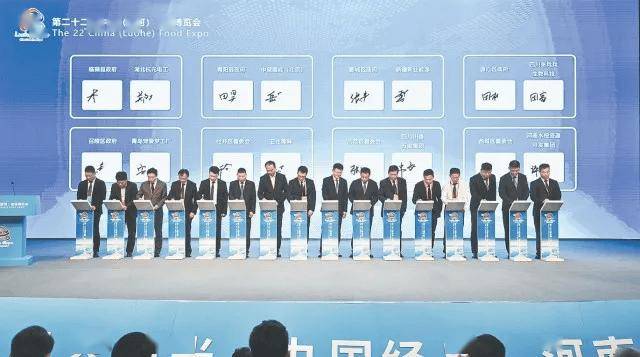
漯河食博会首日签约项目75个 投资372.2亿元
Sou Hu Cai Jing· 2025-05-18 06:32
Group 1 - A total of 75 investment projects were signed during the first day of the Food Expo, with a total investment amount of 37.22 billion yuan, focusing on modern food, intelligent manufacturing, and new materials [1][2] - The city signed a friendly city agreement with Urumqi, establishing a new bridge for cooperation between Henan and Xinjiang [2] - Significant international trade projects were initiated, including a beef trade project with Brazil's Merihua Company and an ice cream procurement project with Belarus's Mogilev region [2] Group 2 - A cooperation agreement was signed for the Henan Modern Food Industry Development Fund, aimed at providing financial support for the food industry [2] - Multiple cooperation projects were established with JD Group, marking the beginning of comprehensive collaboration across various sectors including logistics and technology [2] - Talent projects such as the AI Agricultural Academy and high-end food projects will enhance technological support for creating a healthy and nutritious food supply [2] Group 3 - The city government emphasized the importance of service in project implementation, planning to form a dedicated team to provide full lifecycle support for signed projects [2] - The government aims to create a market-oriented, legal, and international business environment to attract global investors [2]