AI端侧硬件

Search documents
蓝思科技:已配合多家客户开发眼镜、手表、手环、戒指以及桌面型多款AI端侧硬件设备
Di Yi Cai Jing· 2025-12-03 13:40
Core Viewpoint - Lens Technology is accelerating its layout in AI edge hardware, collaborating with leading domestic and international clients to develop various AI edge hardware devices such as glasses, watches, wristbands, rings, and desktop models [2] Group 1 - Lens Technology has developed smart rings and precision appearance and structural components for charging bases, with shipment volumes rapidly increasing according to client guidance [2] - The company plans to further expand its operations by conducting complete machine assembly at overseas bases [2]


蓝思科技:已配合多家国内外头部客户开发眼镜、手表、手环、戒指以及桌面型多款AI端侧硬件设备
Zheng Quan Shi Bao Wang· 2025-12-03 13:40
Core Viewpoint - Lens Technology is accelerating its layout in AI edge hardware, collaborating with multiple leading domestic and international clients to develop various AI edge hardware devices such as glasses, watches, wristbands, rings, and desktop models [1] Group 1 - The company has developed smart rings and precision appearance and structural components for charging bases, with shipment volumes rapidly increasing according to client guidance [1] - Future plans include expanding complete assembly operations at overseas bases [1]
三大指数齐收阳,下个爆点浮出水面?
Jiang Nan Shi Bao· 2025-12-01 13:51
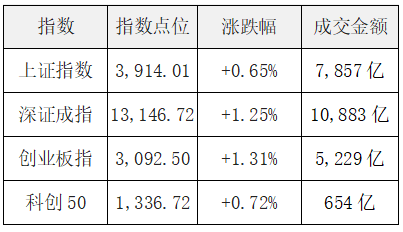
Market Overview - The A-share market exhibited a strong recovery with a "high opening, fluctuating, stabilizing in the afternoon, and increased volume at the close" [1] - By the end of trading on December 1, the Shanghai Composite Index rose by 0.65% to 3,914.01 points, the Shenzhen Component Index increased by 1.25% to 13,146.72 points, and the ChiNext Index gained 1.31% to 3,092.50 points [2] Technical Analysis - The Shanghai Composite Index successfully surpassed the 60-day moving average (3,885-3,890) and approached the 3,930 gap area; the ChiNext Index broke through the 3,050 resistance level, with a MACD golden cross about to be established [3] - The market's volume increased to over 1.8 trillion, indicating a shift from "low-position ambush" to "main line attack," with the potential to challenge the 3,930 gap [4] Industry and Hotspot Capture - AI hardware on the edge experienced a significant surge, driven by the launch of the "Doubao mobile assistant" and Huawei's "Hanhai" AI toy, with global smart glasses shipments increasing by 64% year-on-year [5] - Industrial metals saw strong gains, with copper prices breaking through $11,200 and silver reaching new highs, prompting a re-evaluation of resources [5] - Companies such as Jiangxi Copper, Yunnan Copper, and Zijin Mining saw substantial increases, as funds viewed metals as dual-attribute assets against inflation and new productive capacity [5] Forward Strategy - The Shanghai Composite Index's 3,930 gap is a critical point; if it breaks through with sustained volume, the market may accelerate; however, if it peaks and retreats, short-term profit-taking pressure may arise [6] - Maintaining a volume level above 1.8 trillion indicates strong recognition from incremental funds; a rapid decline could lead to structural rotation [6] - A short-term strategy of "main line rotation, high-low switching, and rhythm adjustment" is recommended to rationally respond to market fluctuations [7]
创业板50指数首次登陆泰国
Shang Hai Zheng Quan Bao· 2025-11-25 18:14
Group 1: Company Overview - Company generates approximately 85% of its revenue from overseas clients, serving around 3,000 global customers annually, including the top 20 pharmaceutical companies [1] - Company is recognized as a leading provider of integrated, international, and multi-therapy innovative drug research and development services, offering a one-stop solution from drug discovery to commercialization [1] Group 2: Industry Performance - In the first three quarters, the company's power battery shipments reached 34.59 GWh, representing a year-on-year increase of 66.98%, ranking second globally [1] - The company's energy storage battery shipments reached 48.41 GWh, with a year-on-year growth of 35.51%, placing it among the top three globally [1] - The company's overseas sales percentages for 2022, 2023, and 2024 are projected to be 34.79%, 27.27%, and 24.25%, respectively, indicating steady growth [1] Group 3: Future Outlook - The company plans to continue focusing on its lithium battery core business, increasing R&D investment, and enhancing global operational capabilities through technology upgrades and capacity optimization [1] - The company is expanding its global footprint by establishing new production bases, including a recent facility in Thailand, which is expected to create around 2,000 jobs and meet the demand for smart automotive products [1] - Future plans include further establishing production bases to provide AI-related hardware products to overseas clients [1]

蓝思科技(300433) - 2025年11月20日投资者关系活动记录表
2025-11-20 13:30
Group 1: Company Overview and Capabilities - The company has established a vertical integration platform for embodied intelligence, covering core components to complete machine assembly, including innovative materials and precision manufacturing [2][3] - The newly opened smart robot park in Changsha covers an area of 400 acres, with a production capacity of 189,100 large automation equipment and 500,000 embodied intelligent robots annually [3] - The company aims to become the largest embodied intelligent robot manufacturing platform globally, with a strong focus on the North American and Southeast Asian markets [3][4] Group 2: Market Position and Product Development - The company has entered the supply chains of several leading robot enterprises in North America and China, with a projected shipment of over 3,000 humanoid robots and 10,000 quadruped robots this year [3][4] - By 2026, the company expects to double the scale of humanoid robot core components and complete machine assembly, maintaining a leading position in global shipments [3][4] - The company is focusing on breakthroughs in lightweight technology for humanoid robot joint modules and aims to establish a comprehensive capability from software development to complete machine assembly [4] Group 3: Strategic Directions and R&D Investment - The company plans to increase R&D investment to become a leader in the manufacturing of edge AI hardware, focusing on consumer electronics, automotive electronics, and embodied intelligence [4][5] - The company has already achieved mass production of AI server chassis components and aims to scale production of solid-state drives by 2026 [4][5] - The company is positioned to leverage the upcoming trillion-level explosion in edge AI hardware, enhancing its competitive advantages through technological innovation and manufacturing capabilities [4][5] Group 4: Global Expansion and Supply Chain Management - The company has established a robust global supply chain system, expanding its operations in Vietnam, Thailand, and Mexico to meet diverse customer needs [5][6] - The company maintains close communication with clients to adapt its global business layout, ensuring delivery capabilities for future AI edge hardware [5][6] - The company’s strategic focus on vertical integration and advanced production processes has strengthened its market position and customer relationships [5][6] Group 5: Financial Performance and Profitability - The company is enhancing its gross margin through internal management improvements and external innovations, with a focus on high-margin AI edge devices [6] - The automotive glass business is expected to become a significant growth driver, with production capacity matching the demand for over one million vehicles [6] - The company has secured long-term agreements with major clients to stabilize pricing and ensure cost control despite rising material costs [6]
迎接AI端侧硬件革命 蓝思科技迈步具身智能赛道
Shang Hai Zheng Quan Bao· 2025-11-19 18:24
Core Viewpoint - The chairman of the company believes that the hardware revolution driven by AI is at a critical point, predicting that 2026 will be the true "AI edge year" [4][5][6] Group 1: Company Developments - The company has launched its smart robot manufacturing park in Yong'an, Hunan, which covers 400 acres and has a factory area of approximately 189,000 square meters, capable of producing 10,000 sets of large automation equipment and 500,000 units of embodied intelligent robots annually [6][7] - The company has integrated its smart robot division with its software platform to adapt to the trends of the AI era, focusing on both hardware and software solutions [7][8] - The company has established a vertical integration platform in the robotics field since 2016, covering key components such as liquid metal materials, six-dimensional force sensors, and robotic hands, positioning itself as one of the largest manufacturers of embodied intelligent hardware globally [7][9] Group 2: Market Opportunities - Research predicts that by 2028, the penetration rate of edge devices supporting generative AI will exceed 75%, with a market size surpassing $800 billion, indicating significant growth opportunities in consumer electronics and automotive electronics [9][10] - The company is transitioning from selling components to providing complete machine assembly services, enhancing its value chain in the consumer electronics sector [9][11] - In the automotive electronics sector, the company is collaborating with over 30 domestic and international automotive brands to supply advanced glass products that integrate smart features, significantly increasing the value per vehicle [11][12] Group 3: Future Plans - The company has set a "three-year attack plan" to increase R&D investment, focusing on edge hardware, multi-modal integration technology, and new material processes, aiming to become a global leader in AI edge hardware manufacturing [12] - In the robotics sector, the company plans to enhance the lightweight technology of humanoid robot joint modules and aims to significantly increase the scale of core components and assembly by 2026 [12]
蓝思智能机器人永安园区投产 支撑全球布局
Zheng Quan Shi Bao Wang· 2025-11-18 12:35
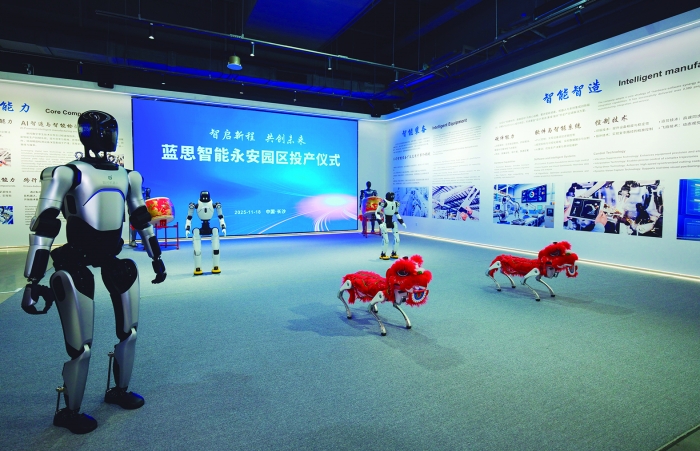
Core Insights - The launch of the Lansi Intelligent Robot production facility in Liuyang is a strategic move for Lansi Technology to enhance its manufacturing capabilities in the "consumer electronics + smart automotive + emerging intelligent terminals" sectors, marking a significant step in its dual focus on capital and industry after its successful Hong Kong listing in July [1][4] Group 1: Production Capacity and Infrastructure - The Lansi Intelligent Robot facility covers 400 acres with a factory area of approximately 189,000 square meters, capable of producing 10,000 sets of large automation equipment and 500,000 units of embodied intelligent robots annually, establishing a complete ecosystem from new material research to core component manufacturing and final assembly [2] - The facility will form a global manufacturing layout centered in Changsha, with support from Southeast Asia (Thailand, Vietnam), focusing on serving international markets, particularly North America [2] Group 2: Technological Development and Product Offerings - Since its establishment in 2016, Lansi has focused on key technologies in industrial robotics, including mechanical structure design, motion control algorithms, and machine vision systems, successfully delivering over 2,000 smart manufacturing projects across various industries [2][3] - Lansi has built a vertically integrated platform for humanoid robots, covering core component development to final assembly, and has entered the supply chains of leading robot companies in North America and domestically, with assembly scale ranking among the industry leaders [3] Group 3: Strategic Transformation and Future Goals - Lansi's strategic shift aligns with its vision of AI hardware development, as the company aims to leverage its 30 years of experience in consumer electronics to transition into the AI hardware sector, focusing on comprehensive hardware solutions across various applications [4][5] - The company has announced a "three-year attack plan" to increase R&D investment, focusing on end-side hardware, multi-modal integration technology, and new material processes, with the goal of becoming a global leader in AI end-side hardware manufacturing [4][5]

布局全球智造,蓝思智能机器人永安园区投产
Chang Sha Wan Bao· 2025-11-18 12:34
Core Insights - The official launch of the Blue Sky Intelligent Robot production facility in Liuyang Economic Development Zone marks a significant step in the company's global manufacturing strategy, focusing on "consumer electronics + smart vehicles + emerging smart terminals" [1][3] - This facility is part of Blue Sky Technology's dual strategy of capital and industry development, enhancing its valuation logic through emerging businesses like robotics [1][3] Production Capacity and Infrastructure - The new facility spans 400 acres with a building area of approximately 189,000 square meters, capable of producing 1,000 large automation devices and 500,000 embodied intelligent robots annually, covering the entire production chain from material research to assembly [3][5] - Blue Sky Technology aims to establish a global manufacturing layout centered in Changsha, with support from Southeast Asia (Thailand, Vietnam), focusing on serving international markets like North America [3][5] Technological Advancements - Since its establishment in 2016, Blue Sky has focused on key technologies in industrial robotics, including mechanical design, motion control algorithms, and machine vision systems, delivering over 2,000 smart manufacturing projects across various industries [5][7] - The company has developed a vertically integrated platform for humanoid robots, covering everything from core components to assembly, and has made significant inroads into the supply chains of leading robotics firms in North America and domestically [7][9] Future Projections - Blue Sky Technology expects to significantly increase the scale of humanoid robot core components and assembly in the coming year, aiming to maintain a leading position in global shipments of humanoid robots and quadruped robotic dogs by 2027 [8][9] - The company is expanding its capabilities in AI infrastructure, starting from AI server chassis to critical modules like liquid cooling and solid-state drives, with mass production of solid-state drives anticipated by 2026 [8][9] Strategic Vision - The company's strategic shift from a consumer electronics leader to a comprehensive AI edge hardware service platform aligns with the trend of AI moving from cloud to edge devices, which is expected to reshape value chains in various sectors [9][11] - Blue Sky Technology plans to invest heavily in R&D over the next three years, focusing on edge hardware, multi-modal integration technologies, and new materials, with the goal of becoming a global leader in AI edge hardware manufacturing [11][13]
蓝思科技机器人新基地投产 剑指AI端侧硬件全球龙头
Zheng Quan Ri Bao Wang· 2025-11-18 10:37
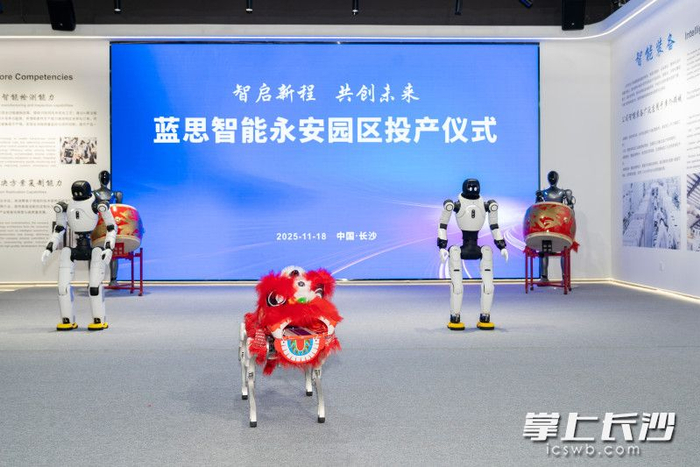
Core Insights - The official launch of the new production base for Lens Technology's smart robotics in Liuyang marks a significant step in the company's strategy to integrate "consumer electronics + smart vehicles + emerging smart terminals" [1] - The new facility aims to establish a leading global base for intelligent equipment and embodied intelligence servers, aligning with the trend of AI moving from cloud to edge devices [1] Production Capabilities - The new base covers 400 acres with a factory area of 189,000 square meters, capable of producing 10,000 sets of large automation equipment and 500,000 units of embodied intelligent robots annually, ensuring a complete ecosystem from material research to assembly [2] - The production network will center around Changsha, with support from Southeast Asia (Thailand, Vietnam), focusing on serving international markets, particularly North America [2] - The company has developed a business matrix around "intelligent equipment," "embodied intelligence," and "AI servers," providing comprehensive solutions across AI hardware scenarios [2] Technological Integration - In the field of embodied intelligence, the company has established a vertically integrated platform covering core components to complete assembly, including innovative materials and key modules [3] - The company aims to double the scale of humanoid robot core components and assembly by 2026, with plans to maintain a leading position in global shipments of humanoid robots and quadruped robotic dogs by 2027 [3] Competitive Advantage - Lens Technology is leveraging its 30 years of experience in precision materials and vertical integration in consumer electronics to build a comprehensive hardware solution capability across various scenarios [4] - The company emphasizes systemic breakthroughs in "materials + processes + equipment," achieving full coverage of core technologies in AI edge hardware [4] - A three-year plan has been announced to increase R&D investment, focusing on edge hardware, multi-modal integration technology, and new materials, aiming to become a global leader in AI edge hardware manufacturing [4] Market Outlook - Experts believe that Lens Technology's experience in vertical integration and technology innovation in the consumer electronics sector positions it well to reshape its valuation through the emerging robotics industry [5]
从消费电子到AI硬件生态,蓝思科技机器人新基地投产重塑产业估值
Sou Hu Wang· 2025-11-18 09:02
Core Insights - The launch of the Lansi Intelligent Robot production facility in Liuyang Economic Development Zone marks a significant step in the company's strategy to enhance its smart manufacturing system and diversify into "consumer electronics + smart vehicles + emerging smart terminals" [3][4] - This facility is part of Lansi Technology's dual focus on capital and industry, following its successful listing on the Hong Kong stock exchange in July 2023, with emerging businesses like robotics reshaping the company's valuation logic [3][4] Production Capacity - The Lansi Intelligent Robot facility spans 400 acres with a factory area of approximately 189,000 square meters, capable of producing 10,000 sets of large automation equipment and 500,000 units of embodied intelligent robots annually [4] - The facility aims to create a comprehensive ecosystem from new material research and core component manufacturing to complete machine assembly, establishing a global manufacturing layout centered in Changsha and supported by Southeast Asia [4] Business Directions - Lansi Intelligent Robot has identified three main business directions for collaborative development: "smart equipment," "embodied intelligence," and "AI servers" [5] Technological Advancements - Since its establishment in 2016, Lansi has focused on key technologies in industrial robotics, including mechanical structure design, motion control algorithms, and machine vision systems, delivering over 2,000 intelligent manufacturing projects across various industries [6] - The company has built a vertically integrated platform for humanoid robots, covering core component development to complete machine assembly, and is positioned among the industry leaders in assembly scale [6] AI Infrastructure - In the AI computing infrastructure sector, Lansi has started with AI server chassis components and plans to expand into liquid cooling modules and solid-state drives, with mass production of solid-state drives expected by 2026 [7] Strategic Transformation - Lansi's strategic layout aligns with its judgment on the development trend of AI edge hardware, transitioning from a consumer electronics leader to a one-stop service platform for AI edge hardware [9] - The company aims to leverage its 30 years of experience in precision materials and vertical integration manufacturing to create hardware solutions across various scenarios, including AI smartphones and intelligent automotive cabins [9] Future Plans - Lansi has announced a "three-year attack plan" to increase R&D investment, focusing on edge hardware, multi-modal integration technology, and new material processes, with the goal of becoming a global leader in AI edge hardware manufacturing [10]