
AI2.0

Search documents
H20被曝存漏洞后门安全风险,英伟达被国家网信办约谈|快讯
Hua Xia Shi Bao· 2025-07-31 06:31
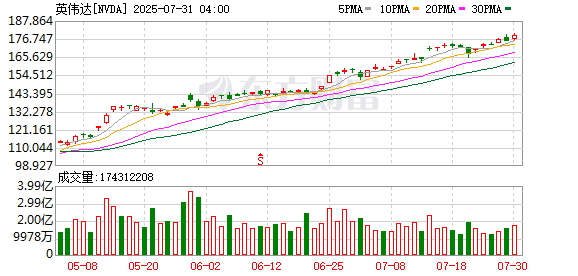
Group 1 - The National Internet Information Office of China has raised security concerns regarding NVIDIA's H20 computing chip, citing potential vulnerabilities and backdoor risks [2] - NVIDIA's CEO Jensen Huang recently visited China and indicated that the H20 chip would resume sales in the Chinese market, although no orders have been received yet due to pending approvals [2][4] - As of July 30, NVIDIA's stock price reached $179.27 per share, with a total market capitalization of $4.37 trillion, making it the first company to surpass a $4 trillion market cap [3] Group 2 - The call for advanced chips to include "tracking" features by U.S. lawmakers has added pressure on NVIDIA regarding its chip sales in China [2] - The supply chain for AI supercomputers, from wafer ordering to product delivery, takes approximately nine months, indicating a lengthy recovery process for the H20 chip's supply chain [2]


从技术狂欢到盈利拷问,中国AI2.0的集体造血焦虑
Hu Xiu· 2025-06-25 08:19
Core Insights - The report shifts focus from demand to supply in the AI 2.0 landscape, analyzing various companies like SenseTime, Black Sesame Intelligence, Qunhe Technology, and others, highlighting their different strategies and challenges in achieving profitability and sustainable growth [1][2][3]. Group 1: SenseTime - SenseTime has transitioned from a government-focused AI 1.0 company to a more diversified AI 2.0 entity, with a significant shift towards generative AI, achieving a revenue of 3.772 billion yuan in 2024, marking a 10.75% year-on-year growth [5][10]. - The company's revenue structure has evolved, with traditional AI contributing only 30% of total revenue by 2024, while generative AI has surged to 63.7% of total revenue, growing by 103.1% year-on-year [7][10]. - Despite revenue growth, SenseTime faces challenges such as declining gross margins, which fell from 70.6% in 2020 to 42.9% in 2024, and cumulative losses of 46.4 billion yuan over five years [16][20]. Group 2: Black Sesame Intelligence - Black Sesame Intelligence focuses on providing cost-effective smart automotive chips and solutions, with 92.4% of its 2024 revenue (4.38 billion yuan) coming from automotive products [27][32]. - The company has improved its gross margin significantly, achieving a gross profit of 195 million yuan in 2024, up 153% year-on-year, with a gross margin of 41.14% [36]. - However, high R&D costs have led to continued losses, with an adjusted net loss of 1.304 billion yuan in 2024, remaining stable compared to the previous year [39]. Group 3: Yingshi Network - Yingshi Network, a subsidiary of Hikvision, has upgraded its business model to focus on AI and IoT, achieving a revenue of 5.442 billion yuan in 2024, a 12.41% increase [45]. - The company’s core product remains smart home cameras, which contributed 54% of total revenue, but growth in this segment has plateaued [46]. - Yingshi's cloud platform services have seen significant growth, nearly doubling from 5.38 billion yuan in 2021 to 10.52 billion yuan in 2024, with a gross margin of 76% [49][50]. Group 4: Qunhe Technology - Qunhe Technology, known for its space design software, reported a revenue of 664 million yuan in 2023, with a 10.48% year-on-year growth [66]. - The company has established itself as a leading provider in the space design software market, holding a 22.2% market share [79]. - Despite revenue growth, Qunhe Technology continues to operate at a loss, with an adjusted loss of 94 million yuan in Q3 2024 [78]. Group 5: Innovation Qizhi - Innovation Qizhi focuses on AI solutions for the manufacturing sector, achieving a revenue of 1.222 billion yuan in 2024, a 30.21% decline year-on-year [85]. - The company has maintained strict cost control, with total operating expenses at 66.3% of revenue, but still reported a loss of 117 million yuan in 2024 [90][94]. - The decline in revenue is attributed to challenges in the manufacturing and financial services sectors, which are critical to its business model [87].
申万宏源研究晨会报告-2025-03-17
Shenwan Hongyuan Securities· 2025-03-17 00:42
Investment Rating - The report maintains a "Buy" rating for the company based on its growth potential and market positioning [16]. Core Insights - The report highlights the increasing government support for fertility policies, which is expected to boost the maternal and infant sector, leading to a rise in related consumption [12][11]. - The company is positioned to benefit from the growing demand for health and wellness products, particularly in the context of traditional Chinese medicine and modern health trends [16][14]. - The report emphasizes the importance of stable housing prices in driving consumer spending, linking real estate stability to overall economic recovery [15][12]. Summary by Sections Fertility and Maternal-Infant Sector - The government has introduced various policies to encourage childbirth, including financial subsidies and improved childcare services, which are expected to positively impact the maternal and infant market [12][11]. - Local governments are also implementing supportive measures, such as direct financial incentives for families with multiple children [12]. Real Estate and Consumer Spending - The report discusses the correlation between housing prices and consumer spending, noting that a stable real estate market is crucial for economic recovery [15]. - Recent government actions aim to stabilize housing prices and support consumer demand, indicating a proactive approach to economic management [15][12]. Company Performance and Market Position - The company has a diversified product portfolio that includes traditional health products and modern wellness items, positioning it well to capture market growth [16][14]. - The report forecasts significant revenue growth for the company, driven by the increasing demand for its health-related products and the expansion of its market reach [16].

