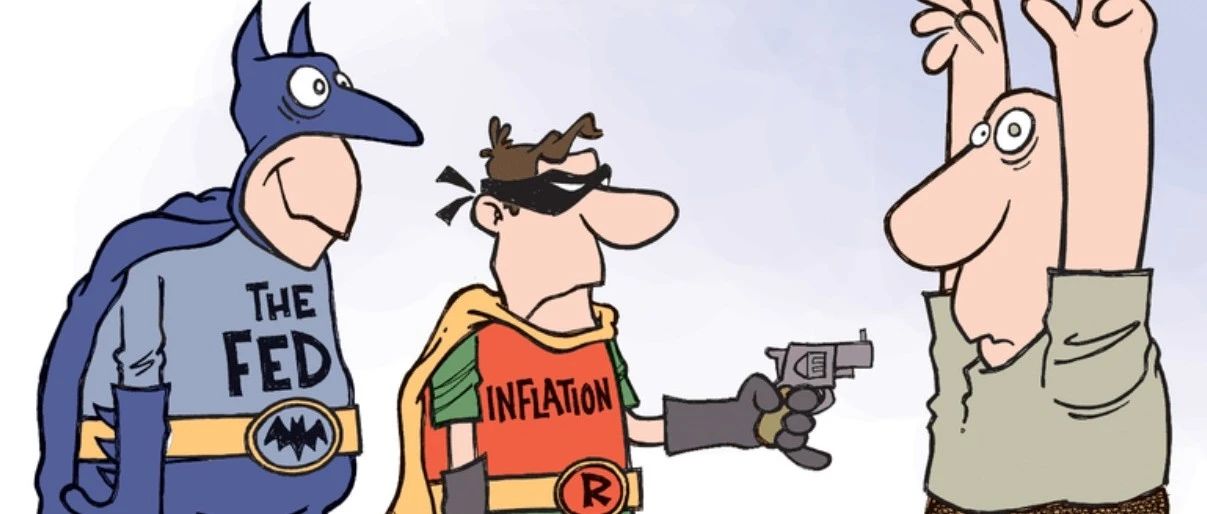
Fed Put

Search documents
策略日报:缩圈-20250829
Tai Ping Yang Zheng Quan· 2025-08-29 15:24
Group 1: Macro Asset Tracking - The bond market shows narrow fluctuations with a slight increase, but the risk of further declines remains high after short-term stabilization [17] - The stock market is experiencing a "shrinking circle" phenomenon, with large-cap indices outperforming small-cap indices, indicating a decrease in market risk appetite [19] - The A-share market's long-term upward trend remains intact, supported by recent policy shifts towards increased fiscal spending targeting residents [19][6] Group 2: A-Share Market Insights - The A-share market saw a trading volume of 2.83 trillion, down nearly 170 billion from the previous trading day, with around 3,200 stocks declining [19] - The market is characterized by increased volatility, suggesting that buying on dips is a better strategy than chasing highs [19] - Recent policies indicate a shift from investment-driven growth to consumer-driven growth, which is expected to support economic recovery [19] Group 3: U.S. Market Overview - The U.S. stock market indices rose, with the Nasdaq up 0.53%, Dow Jones up 0.16%, and S&P 500 up 0.32%, driven by improved GDP and employment data [25] - The U.S. second-quarter GDP growth was revised up to 3.3%, with business investment growth significantly revised from 1.9% to 5.7% [25][40] - The dovish tone from the Federal Reserve Chairman at the Jackson Hole meeting opens the door for potential rate cuts, which may boost market risk appetite [25] Group 4: Currency Market Analysis - The onshore RMB against the USD was reported at 7.1299, down 86 basis points from the previous close, indicating a potential rebound in the dollar [29] - The outlook for the dollar is expected to be weak in the short term, but the cost-effectiveness of shorting the dollar is considered low [30] Group 5: Commodity Market Trends - The Wenhua Commodity Index increased by 0.16%, with construction materials and non-ferrous metals leading the gains, while oilseeds and ferroalloys lagged [34] - The current pricing of domestic commodities remains at historical lows, suggesting that shorting commodities lacks cost-effectiveness [34] Group 6: Important Policies and News - The Ministry of Finance reported that from January to July, state-owned enterprises' total profits were 24,786.4 billion, a year-on-year decrease of 3.3% [37] - The National Development and Reform Commission emphasized the need to avoid disorderly competition in the development of "Artificial Intelligence+" [39]
要抓住市场,不要被市场抓住
Hu Xiu· 2025-08-26 23:40
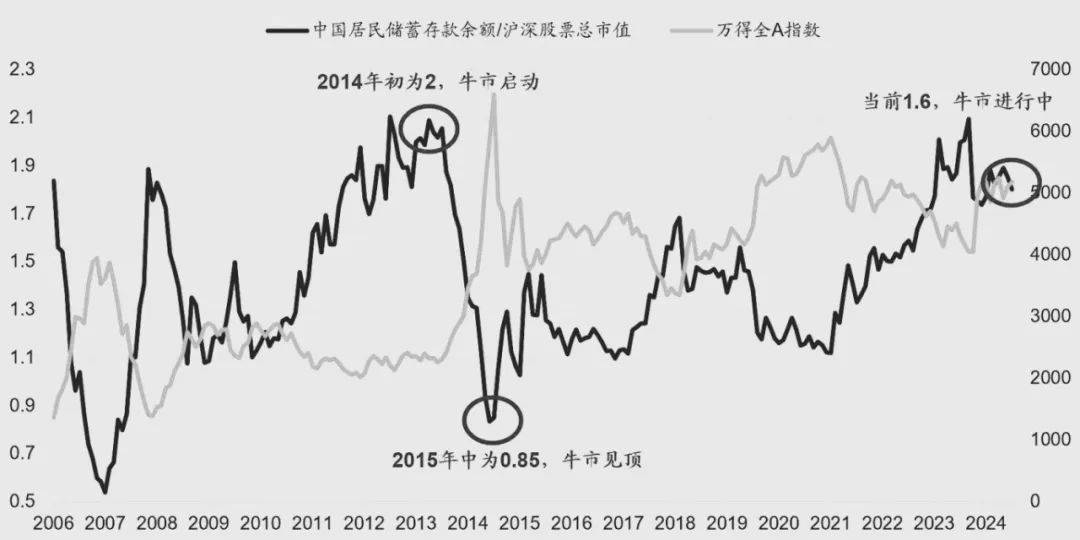
Group 1 - The current bull market is perceived by some as lacking a fundamental basis, being more of a liquidity-driven phenomenon, but this view may overlook significant macroeconomic changes that have occurred [2][3] - The acceleration of the stock market has not aligned with the most favorable macroeconomic conditions, suggesting a disconnect between market performance and underlying economic indicators [3][11] - The concept of "funds moving" is discussed, indicating a shift in residents' investment assets towards stocks, but this transition is more about internal reallocations within non-bank deposits rather than a direct switch from savings to investments [7][9] Group 2 - The narrative around "excess savings" suggests that these funds are likely to enter the market, but this is based on a flawed assumption that residents will significantly increase their investment asset allocation [8][9] - The relationship between the capital market and the real economy is complex, with the potential for the bull market to act as a catalyst for economic improvement, despite current weak fundamentals [13][15] - The real estate sector is highlighted as a critical area of concern, with ongoing issues such as population aging and inventory levels, which may not necessarily lead to a decline in property prices if other factors like interest rates and supply dynamics are favorable [14][15] Group 3 - The market's current optimism may not be sustainable, as the divergence between market performance and economic fundamentals could lead to a correction when the underlying risks become apparent [11][12] - Observations of global market stability and internal economic risks are crucial for understanding the potential for future market movements, with a focus on whether policy responses will maintain a supportive environment [17] - The potential for bubble-like conditions to develop in the market is a concern, as any signs of overheating could prompt corrective actions from authorities, impacting market dynamics [17]

海外研究|“Fed Put”难以指望,不见“Trump Put”不撒鹰
中信证券研究· 2025-04-07 01:20
Core Viewpoint - The March 2025 non-farm payroll data in the U.S. exceeded expectations, with healthcare services and leisure hospitality being the main contributors. The slight increase in the unemployment rate is primarily due to a rise in labor force participation, indicating a healthy job market overall, although there are signs of marginal weakening [1][3][4]. Summary by Sections Employment Data - In March 2025, the U.S. added 228,000 non-farm jobs, surpassing the expected 140,000 and the revised previous value of 117,000. The unemployment rate was 4.2%, slightly above the expected 4.1% and the previous 4.1%. Year-on-year wage growth was 3.8%, below expectations and the previous value of 4%, while month-on-month growth was 0.3%, consistent with expectations and higher than the revised previous value of 0.2% [2][3]. Sector Contributions - The private sector added 209,000 jobs, exceeding the market expectation of 135,000 and the revised previous value of 116,000. Job gains were seen across various sectors, with the goods-producing sector adding 12,000 jobs and the service sector adding 197,000 jobs. Notably, education and healthcare services contributed 77,800 jobs, while leisure and hospitality added 43,000 jobs [3][4]. Labor Force Participation - The labor force participation rate in March was 62.5%, higher than the previous and expected values of 62.4%. The slight increase in the unemployment rate was attributed to this rise in participation, with the unemployment rate moving from 4.139% in February to 4.152% in March [4][5]. Federal Reserve's Stance - The March employment data did not raise concerns for the Federal Reserve, which prioritized inflation risks over economic growth pressures. Powell's statements indicated no intention for risk management-style rate cuts similar to those in 2019, reflecting a cautious approach to monetary policy amid rising inflation concerns [6][7]. Market Implications - The significant increase in non-farm payrolls and the slight rise in unemployment are viewed as a "calm before the storm" regarding tariff impacts. The market consensus suggests that the current employment data may not provide sufficient safety margins due to the unexpected breadth and depth of Trump's tariff increases, which could lead to economic adjustments [7][8]. Future Outlook - In the absence of a "Trump Put," market sentiment is expected to remain subdued, continuing to adjust in a "stagflation-like environment." The Federal Reserve's focus on inflation risks may hinder any immediate easing measures, despite favorable employment data [8][9].

欲拒还迎的Fed Put(国金宏观宋雪涛)
雪涛宏观笔记· 2025-03-20 10:08
Core Viewpoint - The article discusses the Federal Reserve's current stance under Powell, characterized as "duck-like," indicating a lack of decisive action while trying to appease both the market and the White House amidst rising economic uncertainties [1][10]. Summary by Sections Federal Reserve's Position - Powell's approach reflects a compromise between being overly aggressive and overly passive, indicating that the Fed is not clear on the economic situation, leading to a lack of coherent monetary policy [1][10]. - The March FOMC meeting showed a degree of independence, with the Fed not overly concerned about soft data and emphasizing the importance of addressing inflation [3][10]. Market Reactions and Economic Policies - The Fed's unexpected slowdown in balance sheet reduction and its temporary judgment on tariff impacts suggest a commitment to a "Fed Put," although this commitment is not strong due to political constraints [4][5][10]. - Powell's reluctance to directly address the negative impacts of Trump's policies indicates a cautious approach, with the Fed needing to see greater chaos to justify more aggressive actions [5][11]. Economic Uncertainty - The article highlights that the current policy mix serves as a short-term reassurance for the market and a friendly response to Trump, with tariffs viewed as a one-time shock that does not require significant monetary policy adjustments [10]. - The uncertainty surrounding economic policies is expected to increase, with the Fed likely to lag in its responses to economic data, which may force it to act more decisively in future meetings [11].