Micro LED技术

Search documents
智能眼镜市场快速增长明年有望迎来规模化拐点
Zheng Quan Shi Bao· 2025-11-21 23:34
Core Insights - The smart glasses market, including XR and AI glasses, is experiencing strong growth driven by major tech companies like Baidu, Alibaba, and Xiaomi accelerating their investments and product launches [1][2][3] Market Growth - According to IDC, the global smart glasses shipment is expected to reach 12.8 million units by 2025, with a year-on-year growth of 26%, and the Chinese market is projected to exceed 2.75 million units, growing by 107% [3] - Tmall reported a 2500% year-on-year increase in sales for AI glasses as of October 30, while JD.com noted a 346% increase during the "Double 11" shopping festival, marking AI glasses as one of the fastest-growing categories in the digital industry [2] Technological Advancements - The integration of AI and AR is seen as a key trend, with AR glasses being the optimal carrier for AI technology in daily life [3] - Micro LED technology is being prioritized by display companies due to its advantages such as high pixel density and low power consumption, which are essential for near-eye displays like smart glasses [6][7] Industry Dynamics - Companies are adopting a dual strategy in the AR glasses market, focusing on both B2B and B2C segments, leveraging existing resources and expanding into consumer markets [7] - The cost structure of smart glasses indicates that hardware components account for 80-85% of total costs, with significant potential for cost reduction through innovations in design and technology [4][8] Future Trends - The market is expected to transition through three development stages, starting with lightweight AI glasses without displays, moving to AI+AR single display, and ultimately achieving AI+AR dual full-color displays [5] - As optical and display technologies mature, the market for AR glasses is anticipated to expand, leading to a gradual "AR-ification" of AI glasses [5]
智能眼镜市场快速增长 明年有望迎来规模化拐点
Zheng Quan Shi Bao· 2025-11-21 16:33
Core Insights - The smart glasses market, including XR and AI glasses, is experiencing strong growth driven by major tech companies like Baidu, Alibaba, and Xiaomi accelerating their investments and product launches [1][2] - IDC predicts that by 2025, the global shipment of smart glasses will reach 12.8 million units, with China leading the market [3][4] - The market is expected to undergo significant changes in product forms, interaction methods, and service models by 2026, marking a critical turning point for the industry [1][3] Market Growth - Baidu has re-entered the smart glasses market after 11 years with the launch of its Xiaodu AI Glass Pro, featuring multiple AI functionalities [2] - Tmall reports a 2500% year-on-year increase in sales for AI glasses as of October 30, while JD.com indicates a 346% increase during the "Double 11" shopping festival [2] - CINNO Research notes that the AR/VR industry saw 33 financing deals in Q3 2025, totaling approximately 5.5 billion yuan, driven by new AR device launches and AI technology integration [2] Technological Integration - The integration of AI and AR is seen as a key driver for the adoption of smart glasses, with AR glasses being the ideal platform for AI technology [3] - The average price of AI glasses is expected to remain around 1500 yuan, appealing to both tech enthusiasts and general consumers [3][4] - The development of Micro LED technology is crucial for the next generation of smart glasses, offering advantages such as high pixel density and low power consumption [6][7] Industry Dynamics - Companies are focusing on reducing costs and enhancing user experience to transition smart glasses from novelty to everyday use [4][8] - The cost structure of smart glasses is heavily influenced by hardware components, with hardware costs accounting for 80-85% of total expenses [4] - The industry is witnessing a shift towards lightweight AI glasses without displays, which are more affordable and can stimulate market growth [5][8] Future Outlook - The smart glasses market is expected to evolve through three stages: lightweight AI glasses, AI+AR single display, and ultimately AI+AR dual full-color display [5] - As optical and display technologies mature, the market for AR glasses is anticipated to expand, leading to a gradual "AR-ification" of AI glasses [5] - The integration of advanced technologies and user-centric design will be essential for the sustained growth of the smart glasses market [8]
友达、达运共同推出Micro LED智慧复健系统
WitsView睿智显示· 2025-11-13 04:04
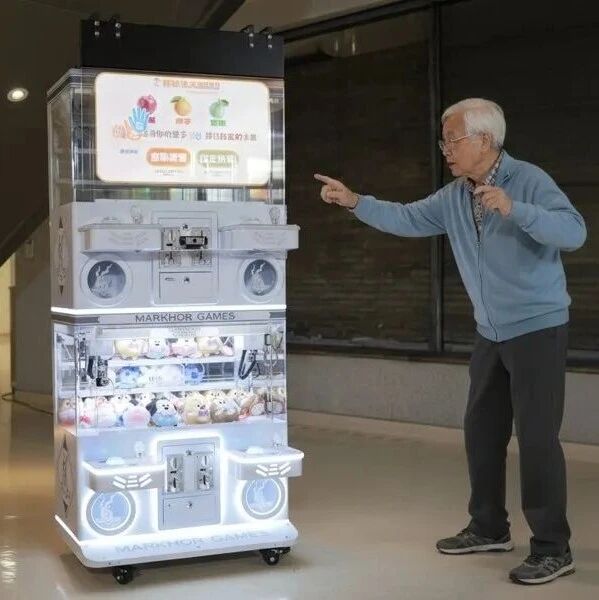
Core Insights - The collaboration between Taiwan's Tzu Chi Hospital, Dayun Precision, and AUO has led to the development of an immersive rehabilitation system that integrates Micro LED transparent displays with 3D AI imaging for elderly care and rehabilitation training [1][2]. Group 1: Medical Applications - The system utilizes high-brightness and high-transparency Micro LED technology, combined with interactive gamification design, to enhance the engagement and continuity of training for the elderly [1]. - Dayun Precision's chairman highlighted that this achievement marks significant progress for Micro LED technology in the medical field, paving the way for future applications in smart wearable devices, laptops, and AR/VR [2]. - The interactive rehabilitation system can monitor patient movements and responses in real-time, making rehabilitation training more targeted and enjoyable [2]. Group 2: Product Innovations - Dayun has introduced a 30-inch Micro LED transparent display as part of the "Leisure Fun Machine," which incorporates a camera for motion recognition and interactive training [2]. - The company has also implemented a 200-inch Mini LED audiovisual wall and AR motion-sensing technology to create a collaborative group rehabilitation platform, which has shown to improve cognitive function and coordination [2]. - Additionally, Dayun launched the "B Balance Smart 3D Body Monitoring Device," capable of measuring nine data points, including fat, muscle, and water content, within three minutes, supporting 3D posture modeling and historical comparison analysis [2]. Group 3: Environmental Initiatives - Tzu Chi Hospital is promoting a paperless and low-carbon management approach by introducing color electronic paper information boards [2]. Group 4: Retail Applications - Beyond medical applications, AUO is actively expanding the use of Micro LED technology in smart retail, having implemented a transparent display solution in a trendy clothing store to create an immersive shopping experience [2]. - The store features a 54-inch Micro LED transparent module with over 60% transparency and a brightness of 600 nits, used to create a "transparent runway" showcasing high-end fashion [3].

资本奔涌入局 成本贵上天的Micro LED如何走向商业化
2 1 Shi Ji Jing Ji Bao Dao· 2025-11-06 09:03
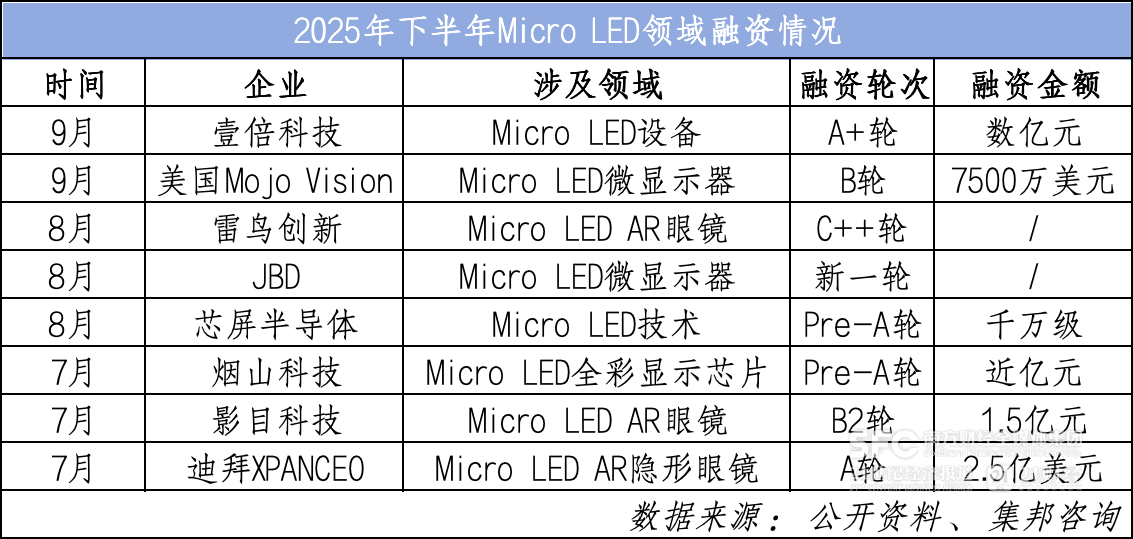
Core Insights - Micro LED technology is gradually developing a significant market, with expectations for the chip market to exceed $461 million by 2029 due to cost reductions, design optimizations, and application expansions [2][7]. Industry Developments - The Micro LED industry has seen dynamic advancements in technology research, product development, capacity planning, and capital investment, attracting considerable market attention [3]. - Meta's launch of the Meta Ray-Ban Display AR glasses in September sparked a global buying frenzy, highlighting the AR segment of the Micro LED field as a focal point for capital investment [4]. - Despite challenges in cost control and yield improvement, the commercial pathway for Micro LED technology is becoming clearer [5]. Market Opportunities - Micro LED technology is recognized as the next-generation display technology, offering advantages such as high pixel density, ultra-high brightness, low response time, low power consumption, long lifespan, high color saturation, high reliability, and small size [6]. - The technology is penetrating various fields, including near-eye displays, micro-projection, automotive displays, and optical communication, with significant applications in AR/VR and smartwatches [6]. Capital Investment Trends - The capital market's enthusiasm for Micro LED technology is high, with several companies securing substantial financing. For instance, JBD completed a financing round exceeding 1 billion RMB, setting a record for single financing in the Micro LED micro-display sector [7][8]. - Various companies, including Rokid and Yingmu Technology, have also completed significant financing rounds to support their Micro LED AR glasses initiatives [8]. Production Capacity and Challenges - Major panel manufacturers like BOE, TCL, and Visionox are actively investing in Micro LED production, with some projects entering the product delivery phase [9]. - The industry faces challenges in scaling production, particularly regarding yield and cost, with chip costs accounting for over 80% of total expenses [10]. Technological Advancements - Innovations in production efficiency and cost reduction are critical, with a focus on larger sizes to lower costs and improve compatibility with CMOS processes [11]. - Micro LED technology is expected to enhance product lifespan and reduce maintenance costs, particularly in niche markets beyond consumer displays [12]. AR Glasses Market Dynamics - AR glasses are seen as a primary battleground for Micro LED technology, with significant cost contributions from optical display modules [12]. - Companies are competing to develop high-brightness, full-color, high-pixel-density, and miniaturized technologies for AR applications [12]. Recent Product Launches - The second half of the year has seen multiple new products featuring Micro LED technology, including AI glasses and various AR glasses targeting different markets [13]. - Companies like Guozhao Optoelectronics and Xingyao Semiconductor are expanding their production capabilities, with significant investments in Micro LED production lines [14][15]. Supply Chain Integration - China's AR glasses supply chain is rapidly evolving, with numerous companies involved in various components, indicating a trend towards horizontal cooperation and vertical integration [16].
TCL科技前三季度营收超1300亿元,华星贡献780亿元
Bei Ke Cai Jing· 2025-10-30 15:36
Core Insights - TCL Technology reported a revenue of 135.943 billion yuan for the first three quarters of 2025, marking a year-on-year increase of 10.50% [1] - The net profit attributable to shareholders reached 3.047 billion yuan, showing a significant year-on-year growth of 99.75% [1] Financial Performance - In Q3, TCL Technology achieved a revenue of 50.383 billion yuan, which is a year-on-year increase of 17.71% [2] - The net profit attributable to shareholders for Q3 was 1.163 billion yuan, reflecting a year-on-year growth of 119.44% [2] Business Segments - The strong growth in the panel business is the primary driver of TCL Technology's performance [2] - TCL Huaxing's cumulative revenue for the first three quarters reached 78.01 billion yuan, with a year-on-year increase of 17.5% [2] - The net profit for TCL Huaxing was 6.1 billion yuan, up 53.5% year-on-year [2] - The net profit attributable to TCL Technology's shareholders was 3.9 billion yuan, representing a year-on-year growth of 41.9% [2] Market Position and Growth Drivers - In the large-size segment, the company's market share in the TV and commercial display market has increased to 25% [3] - The small and medium-sized business has become a core growth engine, with notebook panel sales surging by 63% [3] - The area of vehicle display shipments grew by 47% year-on-year [3] Future Developments - TCL Huaxing has commenced construction of the 8.6-generation printed OLED production line [3] - The existing G5.5-generation printed OLED production line is steadily increasing its capacity from 3K/month to 9K/month [3] - Medical display products have stabilized in shipments, with mass production expected in the first half of next year [3] - Micro LED technology is anticipated to achieve mass production and stable delivery by the end of this year [3]

TCL科技前三季度归母净利润同比增长99.8%,显示中小尺寸业务成增长引擎
Feng Huang Wang· 2025-10-30 14:56
Financial Performance - TCL Technology Group reported a revenue of 135.9 billion yuan for the first three quarters of 2025, representing a year-on-year growth of 10.5% [1] - The net profit attributable to shareholders reached 3.05 billion yuan, showing a significant increase of 99.8% year-on-year [1] - The core panel business, TCL Huaxing, contributed 78.01 billion yuan in revenue and 6.1 billion yuan in net profit, with year-on-year growth rates of 17.5% and 53.5% respectively [1] Business Segments - The display business exhibited balanced and rapid growth, with the TV and commercial display market share increasing to 25%, maintaining a leading global profit level [1] - In the IT product line, notebook panel sales surged by 63%, and monitor sales grew by 10% year-on-year [1] - In mobile terminals, the market share of tablet panels rose to second globally, while LCD mobile panel shipments increased by 28% [1] - The automotive display sector also experienced rapid growth [1] Technological Advancements - TCL Technology is accelerating the commercialization of advanced display technologies, with the construction of the 8.6 generation printed OLED production line recently commenced [2] - The G5.5 generation printed OLED production line is steadily increasing capacity, with products already applied in the medical display field, and mass production expected in the first half of next year [2] - The company’s Micro LED technology is set to achieve mass production and stable delivery by the end of this year, positioning it to seize opportunities in the new display technology cycle [2] Global Expansion - TCL Technology's capacity layout and globalization strategy are progressing steadily, with the t11 and t9 production lines forming a complementary structure covering mainstream and high-end markets [2] - In the overseas market, the TV large-size products in India have doubled in growth, and a new module factory in Vietnam is expected to start bulk shipments in the fourth quarter, providing new growth points for overseas business [2]
TCL科技前三季度归母净利润同比大增99.8%,显示中小尺寸业务成增长引擎
Ge Long Hui· 2025-10-30 12:22
Core Insights - TCL Technology reported a significant increase in revenue and profit for the first three quarters of 2025, with total revenue reaching 135.9 billion yuan, a year-on-year growth of 10.5%, and net profit attributable to shareholders at 3.05 billion yuan, up 99.8% [1] Financial Performance - The company achieved an operating cash flow of 33.84 billion yuan, reflecting a year-on-year increase of 53.8% [1] - In Q3 alone, the net profit attributable to shareholders was 1.16 billion yuan, showing a quarter-on-quarter growth of 33.6% [1] Business Segments - The panel business was the primary driver of TCL's strong performance, with revenue from TCL Huaxing reaching 78.01 billion yuan, a 17.5% increase year-on-year, and net profit of 6.1 billion yuan, up 53.5% [1] - The large-size panel segment maintained a leading global market share of 25% in the TV and commercial display markets [1] - The small and medium-sized panel segment became a core growth engine, with a 10% increase in monitor sales and a 63% surge in notebook panel sales [1] - In the mobile terminal sector, LCD smartphone panel shipments grew by 28%, and the tablet panel market share rose to 13%, ranking second globally [1] Technological Advancements - The company is advancing its capacity integration and technology layout, with the T11 production line achieving significant cost reductions through refined operations [2] - The T4 (G6 generation line) for OLED maintains steady operations, ranking fourth globally in flexible OLED smartphone shipments [2] - TCL Huaxing is accelerating commercialization in cutting-edge technologies like printed OLED and Micro LED, with the T8 printed OLED production line recently commencing construction [2] Market Expansion - TCL has seen significant success in expanding its overseas markets, particularly in India, where large-size TV products have doubled in sales [2] - A new module factory in Vietnam is expected to begin mass shipments in Q4, becoming a new growth point for overseas business [2] Future Outlook - The company is entering a new phase of high-quality development, benefiting from industry recovery and the gradual release of technological advantages [3] - New businesses like printed OLED and Micro LED are entering a customer validation phase, potentially allowing TCL to seize first-mover advantages in the upcoming technology cycle [3]
TCL科技:前三季度归母净利润同比增长99.8%,显示中小尺寸业务成增长引擎
Huan Qiu Wang· 2025-10-30 11:57
Core Insights - TCL Technology reported a significant increase in revenue and profit for the first three quarters of 2025, with total revenue reaching 135.9 billion yuan, a year-on-year growth of 10.5%, and net profit attributable to shareholders at 3.05 billion yuan, up 99.8% [1] - The strong performance is primarily driven by the panel business, which generated 78.01 billion yuan in revenue, a 17.5% increase, and a net profit of 6.1 billion yuan, reflecting a 53.5% year-on-year growth [1][2] Business Performance - The panel business shows a positive trend with large-size panels maintaining a leading market share of 25% in the TV and commercial display sectors, while small and medium-sized panels are experiencing rapid growth [2] - In the IT sector, monitor sales increased by 10%, and notebook panel sales surged by 63%. In the mobile terminal sector, LCD smartphone panel shipments rose by 28%, and the tablet panel market share increased to 13%, ranking second globally [2] Production and Technology - The company is advancing its capacity integration and technology layout, with the T11 production line achieving significant cost reductions through refined operations, while the T9 line focuses on high-end markets [2] - The T4 (G6 generation) OLED line is operating steadily, with the flexible OLED smartphone market maintaining the fourth position globally, and the proportion of high-end model shipments is continuously improving [2][3] Innovation and Market Expansion - TCL Huaxing is accelerating the commercialization of cutting-edge technologies such as printed OLED and Micro LED, with the 8.6-generation printed OLED production line recently commencing construction [3] - The company has seen significant success in expanding overseas markets, particularly in India, where large-size TV products have doubled in growth, and a new module factory in Vietnam is expected to contribute to overseas business growth in the fourth quarter [3] Future Outlook - Industry experts believe that TCL Technology is entering a new phase of high-quality development, benefiting from a recovering industry trend and the gradual release of technological dividends, with new businesses like printed OLED and Micro LED entering a critical customer validation period [3]
聚灿光电:公司已在Micro LED技术领域投入了一定的研发资源
Zheng Quan Ri Bao Wang· 2025-10-17 08:10
Core Viewpoint - The company has invested certain resources in Micro LED technology research, although the scale of investment is relatively limited [1] Group 1: Company Strategy - The company's layout in Micro LED technology focuses on two main aspects: conducting independent research on forward-looking technologies to accumulate core talent and technical reserves, and emphasizing collaborative development with customers [1] - The company has already achieved the development of some collaborative products, which are currently in the verification stage [1] Group 2: Future Outlook - The company aims to leverage its forward-looking research and collaborative efforts with customers to quickly capture terminal demand and achieve rapid market entry when the technology route becomes clearer and the market truly starts [1]
LG Display:公司正在布局Micro LED技术
WitsView睿智显示· 2025-09-30 07:27
Core Viewpoint - LG Display's CEO emphasized that Micro RGB backlight TVs are fundamentally still LCDs and require over 150,000 backlight zones to match OLED quality [2][3]. Group 1: Technology Insights - LG Display is actively developing Micro LED technology, with some products already in the commercialization phase, although specific product types were not disclosed [3]. - Samsung's recently released 115-inch Micro RGB backlight TV has only 15,000 backlight zones, indicating a significant gap in technology compared to LG's requirements for OLED-level quality [3]. Group 2: Financial Performance and Outlook - In the first half of 2025, LG Display reported revenues of 11.652 trillion KRW (approximately 60.94 billion RMB), a year-on-year decrease of 3% [3]. - The company experienced an operating loss of 82.6 billion KRW (approximately 432 million RMB), which is an improvement of 480.5 billion KRW compared to the same period last year [3]. - LG Display expects a significant improvement in performance in the second half of the year compared to the first half, despite not meeting market expectations for the first half [3]. Group 3: Future Investments - LG Display is evaluating the feasibility of investing in the 8.6-generation OLED production line based on various factors, including industry investment trends and its own financial status [3].