
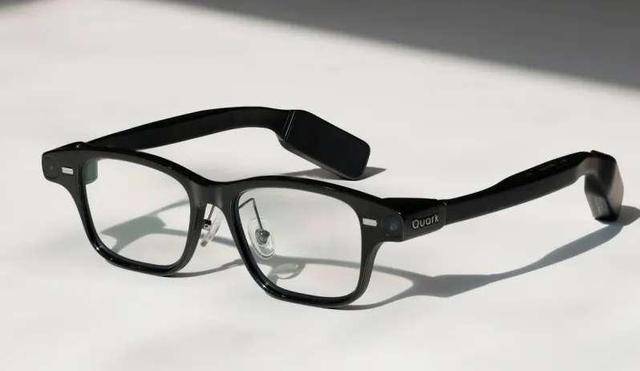
夸克AI眼镜S1

Search documents
2026春节华强北科技年货走俏AI眼镜销量暴涨80% 引全球关注
Sou Hu Cai Jing· 2026-02-25 01:15
Group 1 - The core viewpoint of the articles highlights the surge in demand for AI and smart technology products during the Chinese New Year, particularly in the Huaqiangbei market, where AI glasses saw an 80% increase in sales year-on-year, marking a significant trend in consumer preferences [2][4] - Huaqiangbei's overall sales of technology products increased by over 30% compared to regular periods, with drones and robots also experiencing a substantial 50% growth in sales [2] - The influx of foreign visitors and buyers to Huaqiangbei during the holiday period increased by nearly 100%, indicating a growing international interest in Chinese-made AI products [2] Group 2 - Domestic brands have been intensively launching AI hardware products since 2025, with companies like Li Auto, Alibaba, and Xiaomi introducing their own AI glasses, contributing to heightened competition in the market [3] - International tech giants such as Apple and Samsung are entering the AI hardware space, with Apple planning to release its first AI glasses in 2026 and Samsung set to launch new AR glasses this year, indicating an impending upgrade in market competition [3] - The trend suggests that AI wearable devices are transitioning from niche markets to mainstream consumer markets, positioning Huaqiangbei as a key player in promoting the innovation and adoption of AI smart products [4]

AI下半场,没有巨头敢掉队
3 6 Ke· 2026-02-25 00:16
Core Insights - The AI competition among major companies has intensified during the recent Spring Festival, with significant cash incentives and promotional activities [1][2][4] - Companies are focusing on three main areas of AI competition: AI empowerment, independent AI applications, and AI hardware [9][25] Group 1: AI Empowerment - Major companies are embedding AI capabilities into traditional business models, such as Alibaba's Quark browser transforming into an "AI Super Box" by March 2025 [10] - Tencent plans to launch Qbot, an intelligent assistant, in May 2025, enhancing its QQ browser with various AI functionalities [10] - Baidu will transition its traditional search box to an "intelligent box" by July 2025, marking a shift towards AI-driven search [11] - Meituan has launched an AI life assistant named "Xiao Mei" [12] - The integration of AI has positively impacted some business segments, with Tencent's marketing services revenue reaching 36.2 billion yuan in Q3 2025, a 21% increase year-on-year [16] Group 2: Independent AI Applications - Companies are shifting focus to independent AI applications as AI empowerment alone does not alter the competitive landscape [18] - Alibaba's "AI Super Entrance" strategy has pivoted to its Qianwen app, which has surpassed 30 million monthly active users by December 2025 [19] - Doubao continues to leverage sponsorships, such as the Spring Festival Gala, to maintain its leading position in the market [20] - Current AI applications show limited daily usage time, with the highest being around 10 minutes per user [22][23] Group 3: AI Hardware - The competition has expanded from software to hardware, with the launch of the Doubao phone in December 2025, which sold out within a day [25] - The rapid success of the Doubao phone has prompted other companies to restrict access to their platforms on this device [26] - AI glasses have also gained popularity, with Alibaba's Quark AI glasses S1 selling out immediately and a significant increase in global smart glasses shipments [29] - Predictions indicate that global smart glasses shipments could exceed 40 million units by 2029 [30] Group 4: Strategic Directions of Major Companies - Alibaba focuses on providing tool value through its AI applications, aiming to assist users in various tasks [33] - Tencent emphasizes social value, with its "Yuanbao" platform allowing users to invite friends through social media [36] - ByteDance's Doubao offers emotional value, creating a personalized and engaging user experience [41] - The strategies of these companies reflect their core strengths, with Alibaba addressing practical needs, Tencent focusing on social interactions, and ByteDance enhancing emotional connections [43]


不是技术比拼,是人性争夺:巨头鏖战AI下半场
Ge Long Hui· 2026-02-24 13:38
Core Insights - The competition among major tech giants in the AI sector has intensified, particularly during the recent Spring Festival, with significant cash incentives and promotional activities driving user engagement and growth [2][3]. Group 1: AI Competition Overview - Major companies like Tencent, Alibaba, and ByteDance are heavily investing in AI, with Tencent's WeChat and Alibaba's Qianwen leading various promotional campaigns [2][3]. - The AI interaction volume for Doubao exceeded 1.9 billion during the New Year's Eve, while Qianwen reported over 130 million new users trying AI shopping for the first time during the holiday [3]. - The AI competition is expected to continue evolving, with Doubao announcing further cash giveaways [3]. Group 2: AI Empowerment - Companies are embedding AI capabilities into traditional business models, with Alibaba transforming its Quark browser into an "AI Super Box" by March 2025, and Tencent launching the Qbot intelligent assistant [8][12]. - The integration of AI has positively impacted revenue growth, as seen in Tencent's marketing services, which reported a 21% year-on-year increase in Q3 2025 [12][13]. - Despite AI integration, the competitive landscape remains unchanged, with established leaders in various sectors like Meituan in food delivery and Ctrip in travel [14]. Group 3: Independent AI Applications - As AI empowerment alone does not alter competitive dynamics, companies are shifting focus to independent AI applications, with Alibaba's Qianwen becoming a central player [15][16]. - Doubao has maintained a significant lead in monthly active users (MAU) and continues to leverage high-profile sponsorships to enhance its market position [17]. - Current independent AI applications show limited user engagement, with average daily usage times below 15 minutes, indicating a lack of sustained optimization [19][20]. Group 4: AI Hardware Development - The competition has expanded from software to hardware, with the launch of Doubao's AI phone selling out rapidly, raising concerns among competitors [22]. - AI glasses have also gained popularity, with Alibaba's Quark AI glasses selling out immediately and global shipments of smart glasses increasing by 74.1% year-on-year [25][26]. - The potential for AI hardware to revolutionize interaction methods is significant, with predictions suggesting a long-term growth trajectory for smart glasses [27]. Group 5: Strategic Directions of Major Players - Alibaba focuses on providing tool value through its AI applications, aiming to create a seamless service experience across its ecosystem [33][34]. - Tencent emphasizes social value, with its AI initiatives designed to enhance social interactions, as seen in the introduction of "Yuanbao" [36][41]. - ByteDance's approach centers on emotional value, with Doubao designed to foster emotional connections through personalized interactions [42][44]. Group 6: Future Outlook - The competition for becoming the "super entrance" in the AI era is ongoing, with each company leveraging its strengths to capture market share [48]. - The ultimate success of different strategic approaches remains uncertain, as the AI race continues to evolve rapidly [50][51].
马年春节迎“AI年味” 智能产品掀消费热潮
Zhong Guo Xin Wen Wang· 2026-02-18 05:34
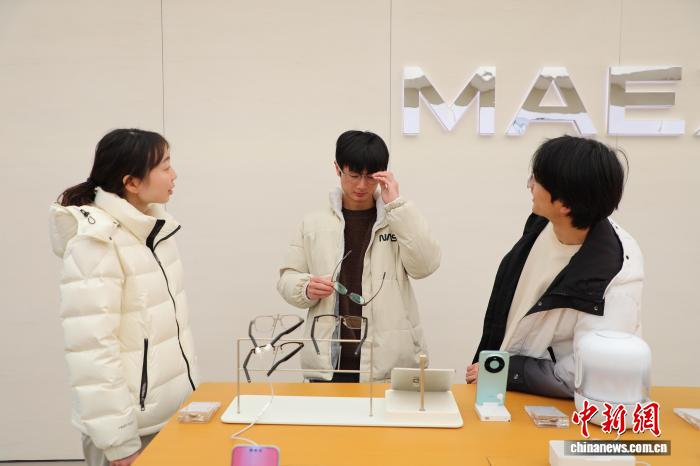
Group 1 - The core viewpoint of the articles highlights the surge in demand for AI products during the Chinese New Year, particularly AI glasses, which are becoming popular among consumers, especially young males around 30 years old [1][3][4] - Sales data from JD.com indicates a significant increase in interest for AI products during the Spring Festival, with robot search volume up over 300%, customer inquiries up 460%, and order volume up 150% on the night of the Spring Festival Gala [3] - The introduction of government subsidies for certain smart products starting January 1, 2026, is expected to further stimulate the market, with a subsidy of 15% on the final sales price for items priced under 6000 yuan [4] Group 2 - AI products are not only changing gift-giving traditions but are also deeply integrating into traditional Chinese New Year customs, allowing users to create personalized digital greetings and photos [3][4] - The popularity of smart products among young consumers reflects a shift in preferences, where practical value and emotional connection are prioritized over traditional material gifts [4]
(新春见闻)马年春节迎“AI年味” 智能产品掀消费热潮
Zhong Guo Xin Wen Wang· 2026-02-17 08:24
Core Insights - The integration of AI products into traditional Chinese New Year celebrations has led to a surge in demand for "tech gifts" during the holiday season [1][3][4] Group 1: AI Product Sales - AI glasses, such as the Quark AI glasses, are experiencing high sales, with some models sold out and a waiting period of 40 days for new orders [1] - The price range for AI glasses varies from hundreds to thousands of yuan, indicating a broad market appeal [1] - Sales data from JD.com shows a significant increase in demand for AI products, with search volume up over 300%, customer inquiries up 460%, and order volume up 150% during the Spring Festival [3] Group 2: Consumer Trends - The popularity of AI products among young consumers reflects a shift towards gifts that combine practical value with emotional connection, moving away from traditional material gifts [4] - AI applications are enhancing traditional New Year customs, allowing users to create personalized digital greetings and photos [3][4] - The Chinese government has announced subsidies for certain smart products, which may further stimulate consumer interest and sales in the AI sector [4]
2026年新股择股路径(一)-AI应用:AI应用春潮涌动,产业链次新股大盘点
Huajin Securities· 2026-02-15 05:24
Investment Rating - The report does not explicitly provide an investment rating for the companies discussed. Core Insights - AI technology is reshaping various industries, with significant advancements in AI models and applications, particularly following the launch of OpenAI's ChatGPT-3.5 in November 2022, which marked the beginning of a new era in artificial intelligence [2][15] - Several newly listed companies in the A-share market have integrated AI technology into their operations, seizing opportunities in the AI development strategy across various sectors, including agriculture, office, retail, medical, energy, and consumer fields [2] Summary by Sections AI Applications Surge - AI models are rapidly evolving, with diverse applications emerging across different sectors, driven by advancements from companies like OpenAI, Google, and others [15] - The commercial success of AI applications is evident in products like AI smart glasses, AI toys, and intelligent driving systems, which are gaining popularity and transforming consumer experiences [15][18][19][30] Representative New Stocks in AI - **Top Cloud Agriculture**: A leading company in smart agriculture, developing pest recognition algorithms and smart agricultural products like AR glasses and robotic dogs for field inspections [58][64] - **Hehe Information**: Focused on AI in office applications, offering products like TextIn and Qixin Huiyan that leverage AI for document processing and data analysis [72][74] - **Hanshu Technology**: A provider of digital solutions for retail, including smart shopping carts and AI cameras, enhancing the shopping experience through technology [89][91] - **Chao Yan Co., Ltd.**: Engaged in AI medical diagnostics, offering innovative products for breast cancer screening and ultrasound imaging systems for minimally invasive surgeries [99][108] - **Southern Network Digital**: Concentrating on digital solutions for energy, developing core products like the "Electric Hong" IoT operating system [2] - **Ying Shi Innovation**: Focused on consumer applications, creating AI algorithms for content creation in products like panoramic action cameras [2] Industry Trends - AI technology is deeply embedded in various sectors, including e-commerce, finance, government, energy, and education, demonstrating its commercial viability and transformative potential [44][53] - The AI toy market is projected to exceed 100 billion yuan by 2030, with a compound annual growth rate (CAGR) of over 50% [20] - The report highlights the increasing integration of AI in daily life, enhancing efficiency in personal and work scenarios, such as energy management and document processing [38][43]
面板收入暴涨150%,被苹果抛弃的Micro LED,终于被「AI眼镜」救活了
3 6 Ke· 2026-02-12 02:51
Core Insights - Apple has abandoned its long-term investment in Micro LED technology due to challenges in mass production, but recent developments indicate a resurgence in the Micro LED market driven by the explosive growth of AR smart glasses, with a reported revenue increase of 150% year-over-year [1][20]. Group 1: Market Trends - The AI smart glasses market is rapidly expanding, with most current models featuring AI capabilities, benefiting the Micro LED industry [3]. - Major brands are launching AI glasses in 2025, with a notable trend of using Micro LED technology, indicating its status as a standard for high-end smart glasses [4][21]. Group 2: Product Highlights - The Thunder X3 Pro, set to launch in May 2025, features dual full-color Micro LED technology, achieving an eye brightness of 3500 nits and peak brightness of 6000 nits, targeting the high-end market with a price near 10,000 yuan [4]. - Lenovo's AI glasses V1 utilize a monochrome Micro LED solution with a peak brightness of 2000 nits, priced at 3999 yuan, showcasing a more affordable option [6]. Group 3: Technical Advantages - Micro LED technology is distinguished from traditional LED screens, as it consists of tiny micro-displays that project images through optical systems, making it suitable for compact devices like AI glasses [10]. - Micro LED is seen as the next-generation display technology following Mini LED, offering significant brightness advantages crucial for outdoor use [11]. Group 4: Competitive Landscape - JBD, a key player in the Micro LED space, supplies micro-displays and optical modules for many AI glasses, indicating its strong market position and technological edge [21][25]. - JBD's micro-displays have high pixel density and brightness, making them ideal for AR applications, and the company has attracted investments from major firms like Alibaba and BYD [25]. Group 5: Future Outlook - The Micro LED technology is expected to find broader applications beyond AI glasses, potentially impacting sectors like smart automotive and robotics, suggesting a promising growth trajectory for JBD and the Micro LED market [25].
东北证券:AI+AR眼镜有望成为市场主流 镜片制造企业迎来发展新机遇
智通财经网· 2026-02-11 02:21
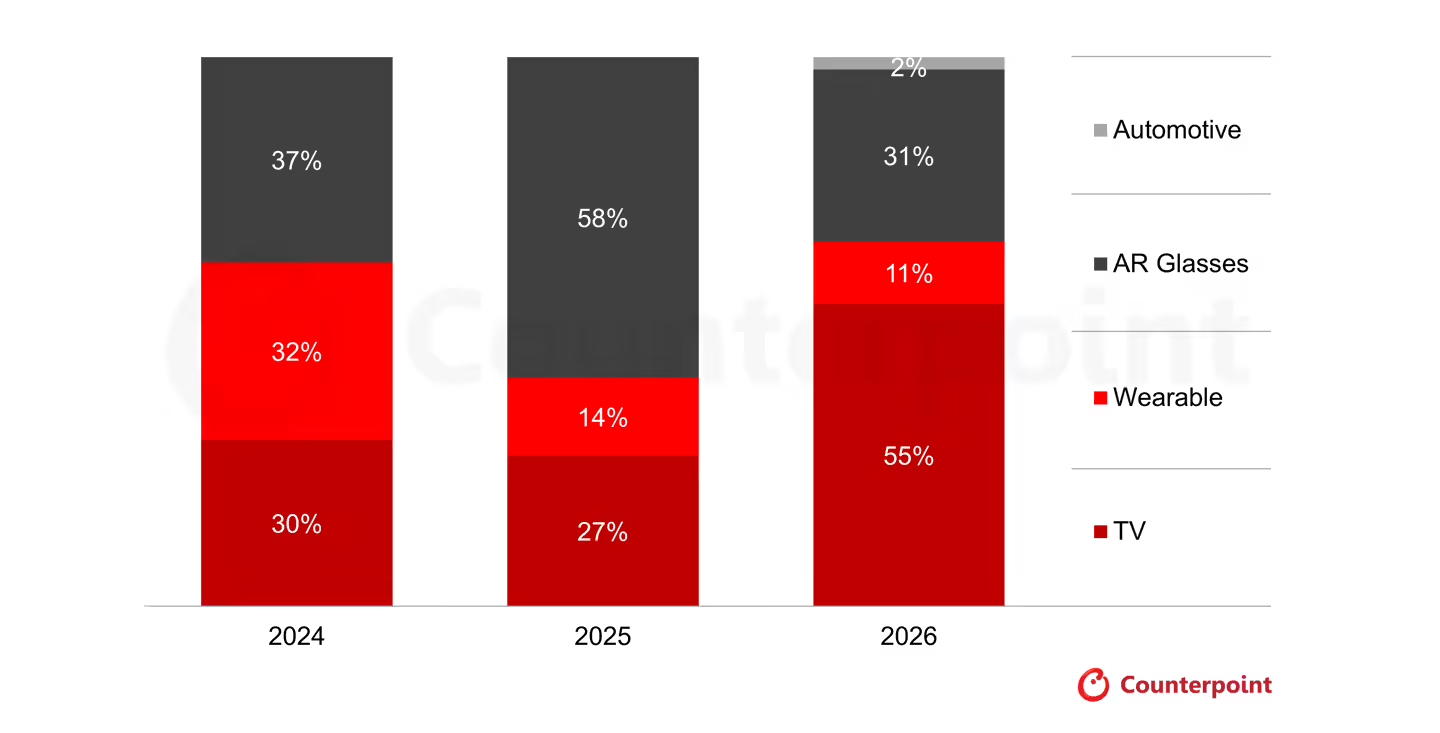
Group 1 - The core viewpoint is that AI+AR glasses are expected to surpass AI shooting glasses in market share by 2028, capturing nearly two-thirds of the market due to continuous technological updates and decreasing costs [1] - The current mainstream product is AI shooting glasses, with projected sales increasing from 5.5 million units in 2025 to 7 million units, and from 11 million units in 2026 to 18 million units [1] - The AI glasses market is anticipated to reach a scale of 149.996 billion yuan by 2030, with AI+AR glasses expected to meet both vision correction and display needs [1] Group 2 - Major tech companies like Meta and Alibaba are actively developing AI+AR glasses, with Meta's RayBan Display receiving positive market feedback, leading to a focus on fulfilling U.S. orders first [2] - Quark's AI glasses S1 have been well-received, prompting the addition of an assembly line to meet production demands [2] - Leading tech firms including Google, Amazon, Apple, and ByteDance plan to launch multiple AI glasses by 2026-2027, further validating the trend towards AI+AR glasses becoming mainstream [2] Group 3 - The potential user base for AI glasses is expanding from traditional glasses users to those with normal vision, with a focus on meeting both vision correction and display functionalities [3] - Companies like Quark, Rokid, and XREAL have established numerous offline experience stores, emphasizing the importance of traditional glasses users in their strategies [3] Group 4 - The integration challenges of waveguide and refractive lenses need to be addressed, with Rokid and Quark employing different solutions to tackle structural inconsistencies [4] - The one-piece bonding solution is expected to become the mainstream choice for integrating waveguide and refractive lenses, although it presents optical and customization challenges [4]

10亿红包、1600亿投入、3800亿加码!2026春节引爆AI军备竞赛
Ge Long Hui· 2026-02-04 13:21
Core Insights - The competition among major tech giants in the AI sector is intensifying, with significant cash incentives being offered to users during the upcoming Spring Festival [1][3] - ByteDance has planned approximately 160 billion RMB for AI capital expenditures in 2026, while Alibaba's previous estimate of 380 billion RMB may be conservative, indicating potential for increased investment [2] Group 1: AI Empowerment - Major companies are embedding AI capabilities into traditional business models, such as Alibaba's Quark browser being transformed into an "AI Super Box" by March 2025 [5] - Tencent launched the Qbot smart assistant in May 2025, upgrading its QQ browser to integrate various AI functionalities [5] - Baidu is set to transition its traditional search box to an "intelligent box" by July 2025, fully adopting AI-driven search capabilities [6] - Meituan has introduced an AI life assistant named "Xiao Mei" [7] - Didi has announced a strategic partnership with Zhipu AI, while Ctrip has upgraded its platform to "Intelligent Engine 3.0," enhancing AI-driven service experiences [8] - Nearly all internet entry points have transformed into "AI+" applications, with the exception of Pinduoduo [9] Group 2: Independent AI Applications - Companies are shifting focus from AI empowerment to independent AI applications, with Alibaba's "AI Super Entrance" strategy now centered on the Qianwen app, which has seen rapid user growth [13] - Doubao, a product from ByteDance, continues to expand its lead by securing sponsorship for the Spring Festival Gala [14] - Current independent AI applications show no clear winner, with average daily usage times remaining low, indicating potential challenges in user engagement [16][17] Group 3: AI Hardware - The competition has expanded from software to hardware, with ByteDance's Doubao phone selling out within a day of its launch, indicating strong market interest [19] - Privacy and security concerns are likely to be ongoing discussions, but the disruptive potential of Doubao's phone has raised alarms among other tech giants [20] - AI glasses have also gained popularity, with Alibaba's Quark AI glasses S1 selling out quickly and global shipments of smart glasses increasing significantly [23][24] Group 4: Strategic Directions of Major Players - Alibaba focuses on providing tool value through its AI applications, aiming to create a seamless service experience across its ecosystem [27] - Tencent emphasizes social value, with its "Yuanbao" platform allowing users to invite friends through WeChat and QQ, exploring new social dynamics in the AI era [29][31] - ByteDance aims to deliver emotional value through its AI products, fostering user engagement and emotional connection rather than efficiency [33] - The strategies of Alibaba, Tencent, and ByteDance reflect their unique strengths and market positions, with competition likely to encroach on each other's territories [39]
腾讯入局AI社交,AI竞赛已无旁观者
3 6 Ke· 2026-02-04 08:34
Group 1 - Major tech companies are intensifying their competition in the AI sector, with Tencent, Baidu, Alibaba, and ByteDance launching various promotional activities and investments ahead of the Spring Festival [1] - Tencent plans to distribute 1 billion yuan in cash through its Yuanbao app, while Baidu is offering 500 million yuan in cash rewards via its Wenxin assistant [1] - ByteDance has secured sponsorship for the 2026 CCTV Spring Festival Gala, integrating AI into the event's interactive segments [1] Group 2 - The competition among tech giants can be categorized into three main areas: AI empowerment, independent AI applications, and AI hardware [2] - AI empowerment involves integrating AI capabilities into traditional business models, with companies like Alibaba and Tencent enhancing their existing services with AI features [3][4][5] - Despite the integration of AI, the competitive landscape among major players remains largely unchanged, with established leaders in various sectors still holding their positions [10] Group 3 - The independent AI application battle has emerged as companies seek to disrupt existing market dynamics, with Alibaba's Qianwen app gaining significant traction [11] - Current usage statistics indicate that even the most popular AI applications have limited daily engagement, suggesting that the competition for user attention is still ongoing [13][14] - The future of user engagement in AI applications remains uncertain, with many variables at play [15] Group 4 - The competition has shifted from software to hardware, with ByteDance's Doubao phone selling out rapidly, indicating a strong market interest [16] - AI glasses have also gained popularity, with significant sales growth reported in the global smart glasses market [20][21] - The potential for AI hardware to revolutionize user interaction is being recognized, with AI glasses positioned as a new frontier in human-computer interaction [22] Group 5 - Each major player has a distinct approach to AI, with Alibaba focusing on practical tools, Tencent emphasizing social value, and ByteDance targeting emotional engagement [25][26][27] - Alibaba's Qianwen app aims to streamline user tasks across various services, while Tencent's Yuanbao app seeks to innovate social interactions [31][32] - ByteDance's AI products prioritize emotional connection and user engagement, differentiating their offerings from those of competitors [39][41] Group 6 - The competition for the "super entrance" in the AI era is fierce, with each company leveraging its strengths to capture market share [42] - The uncertainty surrounding the future of AI technology and its applications leads to a common goal among companies: to remain relevant in the evolving landscape [43]