小度AI眼镜Pro

Search documents
「e公司观察」争夺AI入口 软件巨头向硬件进军
Zheng Quan Shi Bao Wang· 2026-01-12 14:27
Group 1 - ByteDance and Alibaba are making significant progress in the AI glasses sector, with ByteDance collaborating with Longqi Technology for the development of Doubao AI glasses [1] - The AI glasses market is rapidly expanding, becoming a focal point for technology companies, as evidenced by Alibaba's Quark AI glasses experiencing a surge in demand shortly after launch [1] - The AI glasses industry is still in its growth phase, unlike the smartphone market, which is dominated by established players, allowing new entrants to have substantial opportunities [1] Group 2 - Software companies like ByteDance have unique advantages in hardware integration, such as a strong focus on user needs and the ability to innovate product offerings [2] - The primary goal for software giants entering hardware is to create a distribution network centered around their applications, effectively locking in user traffic within their ecosystem [2] - Historical examples of similar competitive strategies include Amazon's Kindle and the proliferation of smart speakers during the smart home boom [2] Group 3 - The industry is witnessing a shift in focus towards AI, with companies like Meta and Ray-Ban launching smart glasses, highlighting the importance of hardware in delivering AI services [3] - Software firms can adopt a business model that prioritizes software profitability over hardware profits, as demonstrated by Amazon's Echo smart speaker [3] - However, challenges exist for software companies entering the hardware space, with notable failures in past attempts, such as Microsoft's mobile ventures and Google's early smart glasses project [3]
AI眼镜大战终局前瞻:阿里与百度的超级终端争夺战
3 6 Ke· 2026-01-08 09:54
Core Insights - The 2025 consumer electronics landscape is dominated by "AI glasses," with major players like Baidu and Alibaba launching significant products, leading to a global competition termed the "Hundred Glasses War" [1][12] - The competition is fundamentally about the control of the "next-generation super terminal" narrative, with a focus on hardware, AI capabilities, and ecosystem development [1][4] Group 1: Competition Focus - The competition has evolved from basic hardware comparisons to a multi-dimensional ecosystem battle, highlighting three core competitive focuses: lightweight design and user experience, practical AI capabilities, and ecosystem collaboration [1][4] - Baidu's Xiaodu AI Glasses Pro weighs 39 grams and offers a stylish design, while Alibaba's Quark AI Glasses provide two series targeting different user needs, emphasizing comfort and integrated prescription options [2][3] - The challenge of balancing display quality, battery life, and comfort is referred to as the "impossible triangle" in the industry [2] Group 2: AI Capabilities and Ecosystem - Baidu's AI glasses leverage the Wenxin Yiyan model for real-time translation, AI recognition, and meeting summaries, while Quark integrates its capabilities with local services like navigation and payment [3][4] - The two companies differ in their approaches: Baidu focuses on personal assistant features, while Quark emphasizes efficiency tools for local living [4] Group 3: Market Dynamics and Challenges - The current market faces high return rates, with traditional e-commerce platforms seeing around 30% and content platforms like Douyin reaching 40-50%, primarily due to insufficient functionality and user experience [6] - Key issues include mismatched battery life, inadequate functionality across devices, and a lack of perceived value for high-priced products, leading to consumer regret [6][7] Group 4: Future Outlook - The AI glasses market is expected to see significant growth, with global shipments projected to exceed 23.68 million units by 2026, and the Chinese market alone surpassing 4.91 million units [8][9] - The industry is anticipated to shift towards a model of "head concentration and segmented coexistence," with major players dominating the general market while niche companies focus on specialized areas [9][10] - Technological advancements are expected to address current limitations, with improvements in battery life, display technology, and the development of native applications [10][11] Group 5: Business Models and Consumer Adoption - The business model is shifting from hardware sales to a "hardware + service" subscription model, with companies like Quark and Baidu exploring service monetization strategies [10][11] - By 2026, AI glasses are projected to become more affordable, with prices potentially dropping to the 1500-2000 yuan range, making them more accessible to consumers [11]


消费电子跨界,是一片蓝海,还是无效内卷?
Xin Lang Cai Jing· 2026-01-07 10:52
Core Insights - The consumer electronics industry is experiencing a blurred boundary between different sectors, with companies like DJI and Insta360 entering each other's core business areas, indicating a competitive landscape driven by technological integration and market saturation [2][19]. Group 1: Market Developments - DJI launched its first panoramic camera, Osmo 360, in July 2025, priced at 2999 yuan, which is 800 yuan lower than Insta360's flagship product [20]. - Insta360 responded by releasing the Insta360 X4 Air, claiming to be the "world's lightest 8K panoramic camera," and announced plans to enter the drone market with the "Yingling Antigravity" drone, expected to be trialed in late 2025 [3][20]. - On December 5, 2025, Insta360 launched the world's first panoramic drone, the Yingling Antigravity A1, starting at 7999 yuan, or 6799 yuan after subsidies [21]. Group 2: Industry Trends - Experts suggest that the cross-industry competition between DJI and Insta360 is a natural outcome of technological advancement, with the integration of panoramic photography and drones representing a significant market opportunity [23]. - The AI glasses market is also witnessing similar trends, with major players like Xiaomi and Alibaba launching their products, indicating a shift towards AI glasses as a new consumer electronics frontier [5][25]. Group 3: Market Dynamics - The global smart glasses market is projected to see significant growth, with a reported shipment of 406.5 million units in the first half of 2025, marking a 64.2% year-on-year increase [26]. - In the panoramic camera market, Insta360 held a 75% market share in Q3 2025, while DJI had a 17.1% share, reflecting intense competition and rapid market expansion [28]. Group 4: Challenges and Opportunities - The influx of competitors in the same market may lead to "pseudo-innovation," where companies engage in minor improvements and price competition rather than substantial advancements [26][28]. - The rising cost of essential components, such as a high-end 12GB LPDDR5X memory chip reaching 70 USD, could impact the pricing strategies of AI glasses and flagship smartphones [29]. Group 5: Strategic Directions - Companies are urged to shift from being mere product manufacturers to becoming solution providers that integrate their strengths with new technologies to capture future market opportunities [30]. - Focusing on deepening the connection between products and specific use cases is essential for creating sustainable competitive advantages in the evolving landscape [32][34].


字节“撤回”了豆包眼镜,但市场已经准备好了
3 6 Ke· 2026-01-07 03:24
Core Viewpoint - ByteDance's "Doubao" AI glasses are set to enter the shipping phase, attracting significant attention despite the company stating there is no clear sales plan yet [1][3]. Company Summary - ByteDance is primarily responsible for the upper-level app development of the "Doubao" AI glasses, while Longqi Technology handles mass production and underlying UI development, reflecting a collaborative approach to mitigate risks associated with self-research [3]. - The AI glasses feature a self-developed spatial algorithm chip, weigh less than 50 grams, and require the Doubao app for operation, indicating ByteDance's cautious entry into the hardware market and exploration of AI monetization avenues [3][6]. - Longqi Technology has set a minimum order requirement of 1 million units for the AI glasses, showcasing ByteDance's confidence in the market and its commitment to the AI glasses sector [6]. Industry Summary - The recent policy announcement includes "smart glasses" in the subsidy range for digital and smart products, which is expected to stimulate market demand by lowering consumer costs [4][6]. - IDC forecasts that the global smart glasses market will exceed 23.687 million units shipped by 2026, with China expected to account for 45% of this market, indicating a significant growth opportunity [6][9]. - Major companies like Alibaba, Baidu, and China Telecom have already launched their smart glasses, with a notable increase in sales during the 2025 Double Eleven shopping festival, where AI glasses sales surged by 2500% year-on-year [7][9]. - Advances in optical technology and AI model evolution are enhancing the supply chain and user experience for smart glasses, while upcoming consumer subsidies are likely to further boost demand, leading to a competitive landscape referred to as the "hundred glasses war" [9][10].

否认的AI眼镜背后,是字节对AI终端更大的野心
3 6 Ke· 2026-01-06 05:03
Core Viewpoint - ByteDance's "Doubao" AI glasses are set to enter the shipping phase, but the company has denied any sales plans, indicating a strategic wait for the right timing to launch hardware products [1][2]. Group 1: Product Development and Strategy - The AI glasses are reported to weigh less than 50 grams and will support collaboration with the Doubao App, with a starting price expected to be under 2000 yuan [1]. - The product development has been in collaboration with Longqi Technology, with the R&D taking place at Longqi's factory in Huizhou and mass production at its Nanchang facility [1]. - The product will be released in phases, with a non-display version expected in Q1 2025 and a display version anticipated in Q4 2025 [1]. Group 2: Market Context and Competitive Landscape - The AI glasses market is becoming a key battleground for major companies, with competitors like Alibaba, Baidu, and Xiaomi also launching their own AI glasses [3]. - The global shipment of smart glasses saw a 110% year-on-year increase in the first half of 2025, with AI glasses accounting for 78% of the total shipments [3]. - The AI glasses market is projected to reach a scale of hundreds of billions, indicating a significant upgrade in smart wearable devices and a competitive struggle for distribution power [3]. Group 3: Strategic Implications - ByteDance aims to create a distribution network around the Doubao App rather than focusing solely on hardware sales, positioning itself to control AI distribution rights [2][4]. - The company has a natural advantage in transitioning from a service entry point to a scene entry point due to its strong content distribution capabilities [4]. - The success of ByteDance's hardware strategy will depend on the quality of the AI experience and whether it can create a compelling user need [4].
“百镜大战”2025年全面打响 AI眼镜距离“随身终端”还有多远?
Shen Zhen Shang Bao· 2026-01-01 21:54
Core Insights - The article discusses the rising trend of AI glasses, which are expected to become a significant consumer product by 2026, transitioning from concept to practical demand in 2025 [2][3] - The competition in the AI glasses market, referred to as the "Hundred Glasses War," involves major tech companies and startups, indicating a robust ecosystem development [2][9] Industry Overview - The AI glasses market is experiencing rapid growth, with a 110% year-on-year increase in global shipments in the first half of 2025 [5] - Major players include tech giants like Meta, Samsung, Xiaomi, and Alibaba, as well as specialized XR companies, all launching various AI glasses products [3][4] Technological Advancements - Significant improvements in display technology are noted, with many AI glasses featuring high-resolution and high-refresh-rate displays to enhance user experience [6] - Innovations in interaction methods, such as Meta's "Neural Band" for gesture control and various voice and touch interfaces, are transforming user engagement [7] Market Dynamics - The demand for AI glasses is driven by advancements in AI capabilities and consumer needs for hands-free information access, including real-time translation and health monitoring [4][10] - The competitive landscape is not only about hardware but also about creating a cohesive ecosystem that integrates AI glasses with other devices and services [9][10] User Experience - Comfort and weight are critical factors for user acceptance, with many companies striving to make their products lightweight and comfortable to wear [7][8] - The core positioning of AI glasses is as a "wearable service entry point," which directly influences user adoption [8] Ecosystem Development - The integration of AI glasses with various services, such as navigation and payment systems, is essential for creating a seamless user experience [10][11] - Establishing standardized communication protocols and security measures is crucial for ensuring interoperability and data safety within the AI glasses ecosystem [9]


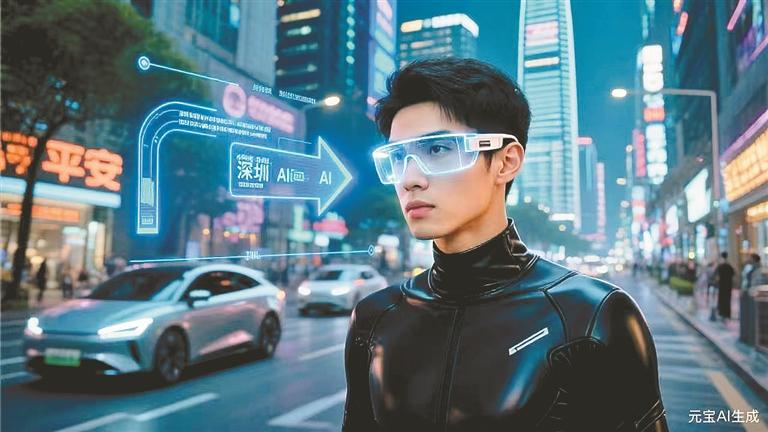
腾讯、阿里、字节、百度等千亿重注AI
2 1 Shi Ji Jing Ji Bao Dao· 2025-12-30 02:27
Core Insights - AI has become the central theme in China's technology industry throughout 2025, viewed as a key driver for the next productivity revolution and business model iteration [2] - Major internet companies like Tencent, Alibaba, and ByteDance are intensifying their focus on AI, with significant investments and strategic moves to secure their positions in the market [2][4] Investment Trends - Alibaba announced a three-year investment plan of 380 billion yuan for cloud and AI hardware infrastructure, which is more than its total investment over the past decade [4] - ByteDance plans to increase its capital expenditure to 150 billion yuan in 2025, marking an 88% year-on-year increase, with expectations to further raise it to 160 billion yuan in 2026 [4] - Tencent's capital expenditure is projected to reach around 100 billion yuan in 2025, with a 386% year-on-year increase in Q4 2024 [5] Financial Performance - Alibaba's cloud revenue grew by 34% year-on-year in Q3 2025, with AI-related product revenue maintaining triple-digit growth for nine consecutive quarters [5] - Tencent's marketing services revenue increased by 21% year-on-year, driven by improvements from AI-driven advertising platforms [5][10] - Baidu's AI business revenue grew over 50% year-on-year, becoming a core growth engine despite a decline in total revenue [5] AI Integration in Business - Major companies are integrating AI into their core business lines to enhance operational efficiency and create new growth engines [8][9] - Alibaba's AI tools improved operational efficiency for 500,000 merchants during the "Double 11" shopping festival, with an average efficiency increase of 1.5 times [9] - AI is transforming advertising from traditional methods to intelligent advertising, enhancing user engagement and return on investment [10] New Market Opportunities - The competition for AI-native applications is emerging as a new growth area, with companies vying to establish the next "super entrance" in the AI era [12] - The market is witnessing the rise of AI hardware, such as smart glasses, with significant growth in shipments and market share in China [14] - The introduction of AI-integrated smartphones represents a new direction in user interaction and data aggregation [14] Future Outlook - The competition among major players in AI applications, hardware, and native applications is still in its early stages, with the potential for significant developments in user engagement and commercial viability [15]


2025中国科技新风向:大厂千亿重注AI
2 1 Shi Ji Jing Ji Bao Dao· 2025-12-29 23:15
Core Insights - AI has become the central theme in China's technology industry throughout 2025, viewed as a key driver for the next productivity revolution and business model iteration [1] - Major internet companies like Tencent, Alibaba, and ByteDance are intensifying their focus on AI, with significant investments and strategic moves to secure their positions in the market [1][2] Investment and Financials - Alibaba announced a three-year investment plan of 380 billion yuan for cloud and AI hardware infrastructure, which is more than its total investment over the past decade [2] - ByteDance plans to invest 150 billion yuan in 2025, marking an 88% year-on-year increase, with expectations to further increase spending to 160 billion yuan in 2026 [2] - Tencent's capital expenditure surged by 386% year-on-year to 36.58 billion yuan in Q4 2024, with projections for 2025 spending to reach around 100 billion yuan [3] - Baidu has invested over 100 billion yuan in AI since the generative AI wave began in March 2023, with plans for continued R&D investment [3] Revenue Growth and Early Signals - Alibaba Cloud's revenue grew by 34% year-on-year in Q3 2025, with AI-related product revenue maintaining triple-digit growth for nine consecutive quarters [3] - Tencent's marketing services revenue increased by 21% year-on-year, driven by AI improvements in its advertising platform [3] - Baidu's AI business revenue grew over 50% year-on-year, becoming a core growth engine despite a decline in total revenue [3] AI Integration in Business - Major companies are integrating AI into their core business lines to enhance operational efficiency and create new growth engines [6][7] - Alibaba's AI tools improved operational efficiency for 500,000 merchants by an average of 1.5 times during the 2025 "Double 11" shopping festival [7] - Tencent's marketing revenue growth is attributed to AI-driven advertising, which enhances targeting and revenue per thousand impressions [8] New Market Opportunities - The competition for AI-native applications is emerging as a new growth area, with companies vying to establish the next "super entrance" in the AI era [9] - The market has formed a competitive landscape with ByteDance's Doubao and Tencent's Yuanbao leading in user engagement [10] - Hardware innovations, such as AI smart glasses and AI-integrated smartphones, are seen as potential new interaction points for users [11] Future Outlook - The AI market is still in its early stages, with ongoing competition among companies to establish user loyalty and commercial viability [12]
2025中国科技新风向:大厂千亿重注AI 竞逐超级入口
2 1 Shi Ji Jing Ji Bao Dao· 2025-12-29 11:38
Core Insights - AI has become the central theme in China's technology sector throughout 2025, viewed as a key driver for the next productivity revolution and business model iteration [1] - Major internet companies like Tencent, Alibaba, and ByteDance are intensifying their focus on AI, with significant investments and strategic moves to secure their positions in the market [1][2] Investment Trends - Alibaba announced a three-year investment plan of 380 billion yuan for cloud and AI hardware infrastructure, which is more than its total investment over the past decade [2] - ByteDance plans to invest 150 billion yuan in 2025, marking an 88% year-on-year increase, with expectations to further increase spending to 160 billion yuan in 2026 [2] - Tencent's capital expenditure surged by 386% year-on-year to 36.58 billion yuan in Q4 2024, with projections for 2025 spending to reach around 100 billion yuan [3] Financial Performance - Alibaba's cloud revenue grew by 34% year-on-year in Q3 2025, with AI-related product revenue maintaining triple-digit growth for nine consecutive quarters [3] - Tencent's marketing services revenue increased by 21% year-on-year, driven by AI improvements in its advertising platform [3] - Baidu's AI business revenue grew over 50% year-on-year, becoming a core growth engine despite a decline in total revenue [3] AI Integration in Business - Major companies are embedding AI into their core business lines to enhance operational efficiency and create new growth engines [6][7] - Alibaba's AI tools improved operational efficiency for 500,000 merchants by an average of 1.5 times during the 2025 "Double 11" shopping festival [7] - Tencent's AI-driven advertising has led to a 21% increase in marketing service revenue, showcasing the shift from traditional to intelligent advertising [8] New Market Opportunities - The competition for AI-native applications is emerging as a new growth area, with companies vying to establish the next "super entrance" in the AI era [9][10] - The market for AI applications is evolving, with significant user engagement reported for products like ByteDance's Doubao and Tencent's Yuanbao [10] - The global smart glasses market saw a 64.2% year-on-year increase in shipments in the first half of 2025, indicating strong potential for AI hardware [11] Future Outlook - The competition among companies in AI applications, hardware, and native applications is still in its early stages, with the need for validation of user engagement and business models [12]
2025中国科技新风向:大厂千亿重注AI,竞逐超级入口
2 1 Shi Ji Jing Ji Bao Dao· 2025-12-29 11:13
Core Insights - AI has become the central theme in China's technology industry throughout 2025, viewed as a key driver for the next productivity revolution and business model iteration [1] - Major internet companies like Tencent, Alibaba, and ByteDance are intensifying their focus on AI, with significant investments and strategic moves to secure their positions in the market [1][3] Investment Trends - Alibaba announced a substantial investment of 380 billion yuan over three years for cloud and AI hardware infrastructure, which is more than its total investment in the past decade [3] - ByteDance plans to increase its capital expenditure to 150 billion yuan in 2025, marking an 88% year-on-year growth, with expectations to further raise it to 160 billion yuan in 2026 [3] - Tencent's capital expenditure surged by 386% to 36.58 billion yuan in Q4 2024, with projections for 2025 to reach around 100 billion yuan [4] Financial Performance - Alibaba's cloud revenue grew by 34% year-on-year in Q3 2025, with AI-related product revenue maintaining triple-digit growth for nine consecutive quarters [4] - Tencent's marketing services revenue increased by 21% in Q3 2025, driven by improvements from AI-driven advertising platforms [4][7] - Baidu's AI business revenue grew over 50% year-on-year, becoming a core growth engine despite a decline in overall revenue [4] AI Integration in Business - Major companies are embedding AI into their core business lines to enhance operational efficiency and create new growth avenues [6] - Alibaba's AI tools improved operational efficiency for 500,000 merchants during the "Double 11" shopping festival, with average efficiency gains of 1.5 times [7] - Tencent's advertising revenue growth is attributed to AI-driven precision targeting, enhancing the effectiveness of ad placements [9] New Market Opportunities - The competition for AI-native applications is intensifying, with companies vying to establish new "super entry points" in the AI era [10] - The market has seen the emergence of leading AI applications, with ByteDance's Doubao and Tencent's Yuanbao gaining significant user bases [10] - The hardware sector is also evolving, with AI smart glasses and phones being developed to serve as new interaction points for users [12] Future Outlook - The AI landscape is still in its early stages, with ongoing competition among companies to validate user engagement and commercial viability [13] - The integration of AI into both enterprise and consumer applications is expected to blur the lines between the two, driving further innovation and growth [11]