Physical AI(物理AI)

Search documents
尾盘异动!立讯精密冲击涨停 固态电池概念盘中走高
Zheng Quan Shi Bao Wang· 2025-09-24 09:54
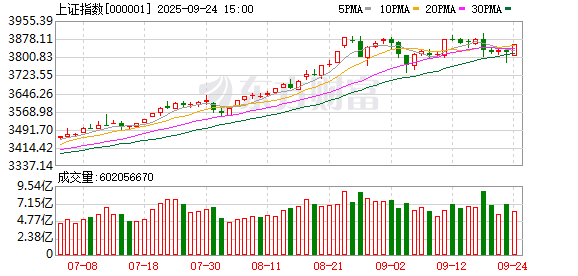
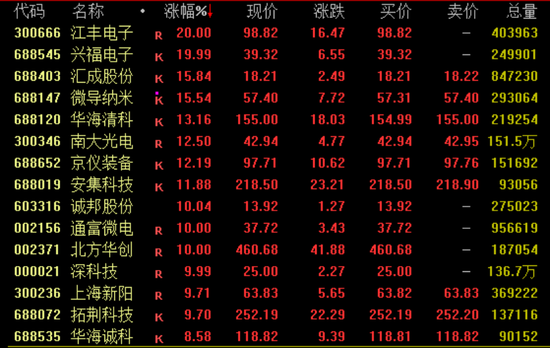
Market Overview - A-shares experienced a significant rise on September 24, with the ChiNext Index and STAR 50 Index reaching new highs; Hong Kong stocks also surged, with the Hang Seng Index up over 1% and the Hang Seng Tech Index up more than 2% [2] - The Shanghai Composite Index rose by 0.83% to 3853.64 points, the Shenzhen Component Index increased by 1.8% to 13356.14 points, and the ChiNext Index climbed by 2.28% to 3185.57 points [2] - The total trading volume in the Shanghai and Shenzhen markets was 23,475 billion yuan, a decrease of approximately 1,700 billion yuan from the previous day [2] Semiconductor Sector - The semiconductor sector saw a strong performance, with stocks like Jiangfeng Electronics and Xingfu Electronics hitting the daily limit of 20% increase; other notable performers included Tongfu Microelectronics and Northern Huachuang [3][4] - The announcement from Shengmei Shanghai regarding the launch of its first KrF lithography equipment aimed at supporting semiconductor front-end manufacturing contributed to the sector's positive momentum [4] Storage Market - Samsung has significantly raised prices for its DRAM and NAND flash products, with some products seeing price increases of up to 30% [5] - Major storage manufacturers like SanDisk and Micron have also adjusted their pricing, with SanDisk increasing flash product prices by over 10% and Micron temporarily halting quotes [6] - The NAND market is expected to see price increases due to low production capacity utilization and rising demand for enterprise SSDs [6] Solid-State Battery Concept - The solid-state battery concept gained traction, with stocks like Haimeixing and Jiaocheng Ultrasonic seeing increases of nearly 14% and over 10%, respectively [7][8] - The industry is moving towards more extensive testing of solid-state batteries, with companies like BMW and Changan Automobile planning to validate these technologies in vehicles by 2026 [9] Lixun Precision - Lixun Precision experienced a notable surge, closing near the daily limit with a nearly 7% increase, bringing its market capitalization to 509.1 billion yuan [10][12] - The company has reportedly signed an agreement with OpenAI to develop a consumer-grade device, although it has not confirmed the details publicly [12] Alibaba - Alibaba's stock rose over 9% in Hong Kong, with a market capitalization of 33,186 billion HKD; its U.S. stock also saw a significant pre-market increase of nearly 10% [13][15] - The company announced a collaboration with NVIDIA in the Physical AI field, aiming to enhance its AI cloud infrastructure and services [15]


尾盘异动!002475,冲击涨停
Zheng Quan Shi Bao· 2025-09-24 09:28
Market Overview - A-shares experienced a strong rally on September 24, with major indices such as the ChiNext Index and the Sci-Tech 50 Index reaching new highs. The Shanghai Composite Index rose by 0.83% to 3853.64 points, while the Shenzhen Component Index increased by 1.8% to 13356.14 points. The ChiNext Index surged by 2.28% to 3185.57 points, and the Sci-Tech 50 Index saw a rise of 3.49% [1][12]. Semiconductor Sector - The semiconductor sector saw significant gains, particularly in storage chips and photolithography equipment. Stocks like Jiangfeng Electronics and Xingfu Electronics hit the daily limit up of 20%, while Tongfu Microelectronics and Northern Huachuang also reached their limits [3][4]. - Samsung has raised prices for its DRAM and NAND flash products by up to 30% due to supply constraints, following similar price adjustments by other major players like Micron and SanDisk [5][6]. Solid-State Battery Concept - The solid-state battery concept gained traction, with stocks such as Haimeixing rising nearly 14% and Jiaocheng Ultrasonic increasing over 10%. Other companies like Hongtian Co. and Enjie Co. also hit their daily limits [7][8]. - The industry is moving towards mass testing of solid-state batteries, with companies like BMW and Changan Automobile planning to integrate these batteries into their vehicles by 2025 and 2026, respectively [9]. Company Highlights - Luxshare Precision (002475) saw a significant surge, nearing its daily limit and closing up nearly 7% at 70.2 yuan per share, with a market capitalization exceeding 509 billion yuan. The company has recently signed agreements with OpenAI to develop consumer-grade devices [11][12]. - Alibaba's stock rose over 9% in Hong Kong, with a market capitalization of 3318.6 billion HKD. The company is actively investing in AI infrastructure, with plans to allocate 380 billion yuan for AI development [12][14].
尾盘异动!002475,冲击涨停
证券时报· 2025-09-24 09:22
Core Viewpoint - The article highlights a significant rally in the A-share market, particularly in the semiconductor and solid-state battery sectors, with notable stock performances from companies like Lixun Precision and Alibaba, driven by positive market sentiment and strategic partnerships in technology [2][3][12][18]. Market Overview - On September 24, the A-share market saw all major indices rise, with the Shanghai Composite Index up 0.83% to 3853.64 points, the Shenzhen Component Index up 1.8% to 13356.14 points, and the ChiNext Index up 2.28% to 3185.57 points, marking a three-year high [2]. - The total trading volume in the Shanghai and Shenzhen markets was 23,475 billion, a decrease of approximately 1,700 billion from the previous day [2]. Semiconductor Sector - The semiconductor sector experienced a strong surge, particularly in storage chips and photolithography machine concepts, with stocks like Jiangfeng Electronics and Xingfu Electronics hitting the daily limit [5][6]. - Samsung has significantly raised prices for its DRAM and NAND flash products, with some increases reaching up to 30%, following similar moves by Micron and SanDisk [7]. Solid-State Battery Sector - The solid-state battery concept also saw a rise, with companies like Haimeixing and Jiaocheng Ultrasonic recording gains of nearly 14% and over 10%, respectively [9][10]. - The industry is transitioning from small-scale trials to more extensive testing, with major automotive companies like BMW and Changan planning to implement solid-state batteries in their vehicles by 2025-2026 [11]. Company Highlights - Lixun Precision (002475) saw a significant late-session surge, approaching the daily limit and closing up nearly 7% at 70.2 yuan per share, with a market capitalization exceeding 509 billion yuan [12][13]. - Alibaba's stock rose over 9% in Hong Kong, driven by a partnership with NVIDIA in the Physical AI sector, which aims to enhance AI infrastructure and services [18][19].

阿里巴巴宣布与英伟达开展合作
Xin Lang Cai Jing· 2025-09-24 08:37
Core Viewpoint - Alibaba Cloud and NVIDIA have formed a partnership in the Physical AI sector, integrating NVIDIA's Physical AI software stack into Alibaba Cloud's AI platform PAI to enhance the development cycle of applications like embodied intelligence and assisted driving [1] Group 1: Partnership Details - The collaboration will provide enterprise users with a comprehensive platform service that includes data preprocessing, simulation data generation, model training evaluation, robot reinforcement learning, and simulation testing [1] - The integration will utilize NVIDIA's full suite of Physical AI software, including NVIDIA Isaac Sim, NVIDIA Isaac Lab, NVIDIA Cosmos, and the Physical AI dataset [1] Group 2: Technological Impact - The partnership aims to leverage Alibaba Cloud's big data AI platform capabilities, creating an end-to-end support system for various AI applications [1] - This integration is expected to significantly shorten the development cycle for applications in the fields of embodied intelligence and assisted driving [1]


阿里云与英伟达达成合作
Shang Hai Zheng Quan Bao· 2025-09-24 07:31
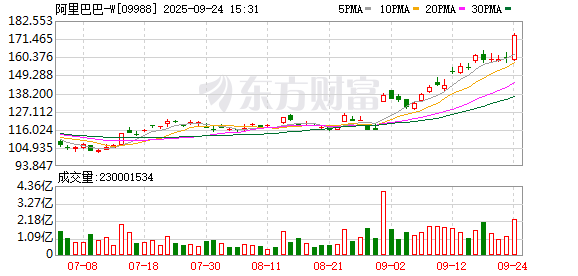
Group 1 - Alibaba Cloud and NVIDIA have reached a collaboration in the field of Physical AI, integrating NVIDIA's full suite of Physical AI software stack with Alibaba Cloud's AI platform PAI [2] - The collaboration aims to provide enterprises with a comprehensive platform service that includes data preprocessing, simulation data generation, model training evaluation, robot reinforcement learning, and simulation testing, thereby shortening the development cycle for applications like embodied intelligence and assisted driving [2] - Following the announcement, Alibaba's stock surged over 8%, reaching a latest price of 173 HKD per share, with an intraday high of 174.6 HKD [2][3] Group 2 - The stock opened at 173 HKD, with a maximum of 174.6 HKD and a minimum of 157.6 HKD during the trading session [3] - The trading volume was 2.19 million shares, with a total market value of 368.35 billion HKD, reflecting an increase of 8.53% [3] - The company's market capitalization stands at 3.3 trillion HKD, with a price-to-earnings ratio of 20.77 [3]
道通科技与上智院合作 推动AI走向实体世界
Zheng Quan Shi Bao Wang· 2025-07-27 10:45
Core Insights - The World Artificial Intelligence Conference 2025 has seen Daotong Technology (688208) and Shanghai Institute of Science Intelligence launch the "World Science Intelligence Competition: Physical AI Track" [1] - NVIDIA CEO Jensen Huang highlighted that the next wave of AI is Physical AI, which involves the integration of perception, reasoning, and execution into physical systems [1] Group 1 - Daotong Technology will provide industrial-grade scenario validation conditions for participating teams, accelerating the engineering transformation of scientific research results [1] - The company is one of the first signatories to participate in the "Star River Enlightenment Science Intelligence Open Platform" ecosystem, which aims to create a comprehensive infrastructure for global scientists [1] - The platform is developed in collaboration with Infinite Light Years and Fudan University, focusing on high-value scientific data and open-source scientific intelligence models [1] Group 2 - Through collaboration with the "Star River Enlightenment Science Intelligence Open Platform," Daotong Technology aims to leverage its engineering transformation advantages in vertical industries [2] - The company and its subsidiary, Shenzhen Daohua Tongtai Robot Company, participated in multiple segments of the World Artificial Intelligence Conference, showcasing their "Air-Ground Integrated Embodied Intelligent Solution" [2] - The showcased solution has formed a commercial closed loop, featuring an "AI brain" that drives a fleet of drones and ground robots for collaborative and autonomous operations [2]

gtc第二天 发布新品
小熊跑的快· 2025-03-19 01:00
Core Viewpoint - The article discusses the advancements in AI technology and infrastructure by NVIDIA, highlighting the launch of new architectures and partnerships aimed at enhancing AI capabilities and performance in various sectors [1][2][3][4][5][6]. Group 1: AI Architecture Developments - NVIDIA is transitioning from Generative AI to Agentic AI, with future developments leading to Physical AI, indicating a significant evolution in AI capabilities [1]. - The Blackwell architecture has been fully launched, showcasing the Grace Blackwell NVLink 72 chip, which integrates 72 Blackwell GPUs and achieves 1.4 EFLOPS performance [2]. - The Blackwell Ultra NVL72 platform is set to double the bandwidth and increase memory speed by 1.5 times compared to its predecessor, paving the way for advanced AI inference [3]. Group 2: Market Demand and Procurement - The top four U.S. cloud service providers have purchased 1.3 million Hopper chips in 2024 and are expected to acquire 3.6 million Blackwell chips in 2025, indicating a strong demand for AI computing infrastructure [2]. - By 2028, capital expenditures for intelligent computing centers are projected to exceed $1 trillion, reflecting the growing investment in AI technologies [2]. Group 3: Future Product Launches - The Vera Rubin platform is anticipated to start shipping in the second half of 2026, featuring NVLink 144 technology and achieving performance levels 3.3 times greater than the GB300 NVL72 [4]. - The next-generation Rubin Ultra NVL576 is expected to launch in the second half of 2027, with performance projected to be 14 times that of the GB300 NVL72 [4]. Group 4: Strategic Partnerships and Collaborations - NVIDIA is expanding its collaboration with General Motors to develop autonomous vehicles and enhance AI model training [5]. - Partnerships with Cisco and T-Mobile aim to explore AI-native networks for next-generation 6G wireless technology [5]. - The introduction of the GR00T N1 robot model and collaboration with Google DeepMind and Disney for a physics engine indicates NVIDIA's commitment to advancing robotics [5]. Group 5: Cost Efficiency and Market Impact - The efficiency of computing power is improving at a rate of three times every eight months, leading to significant cost reductions, which benefits global cloud providers and applications [6].