
区块链技术

Search documents
原保监会副主席:未来商业保险将与健康管理、养老服务融合
Sou Hu Cai Jing· 2025-12-04 12:13
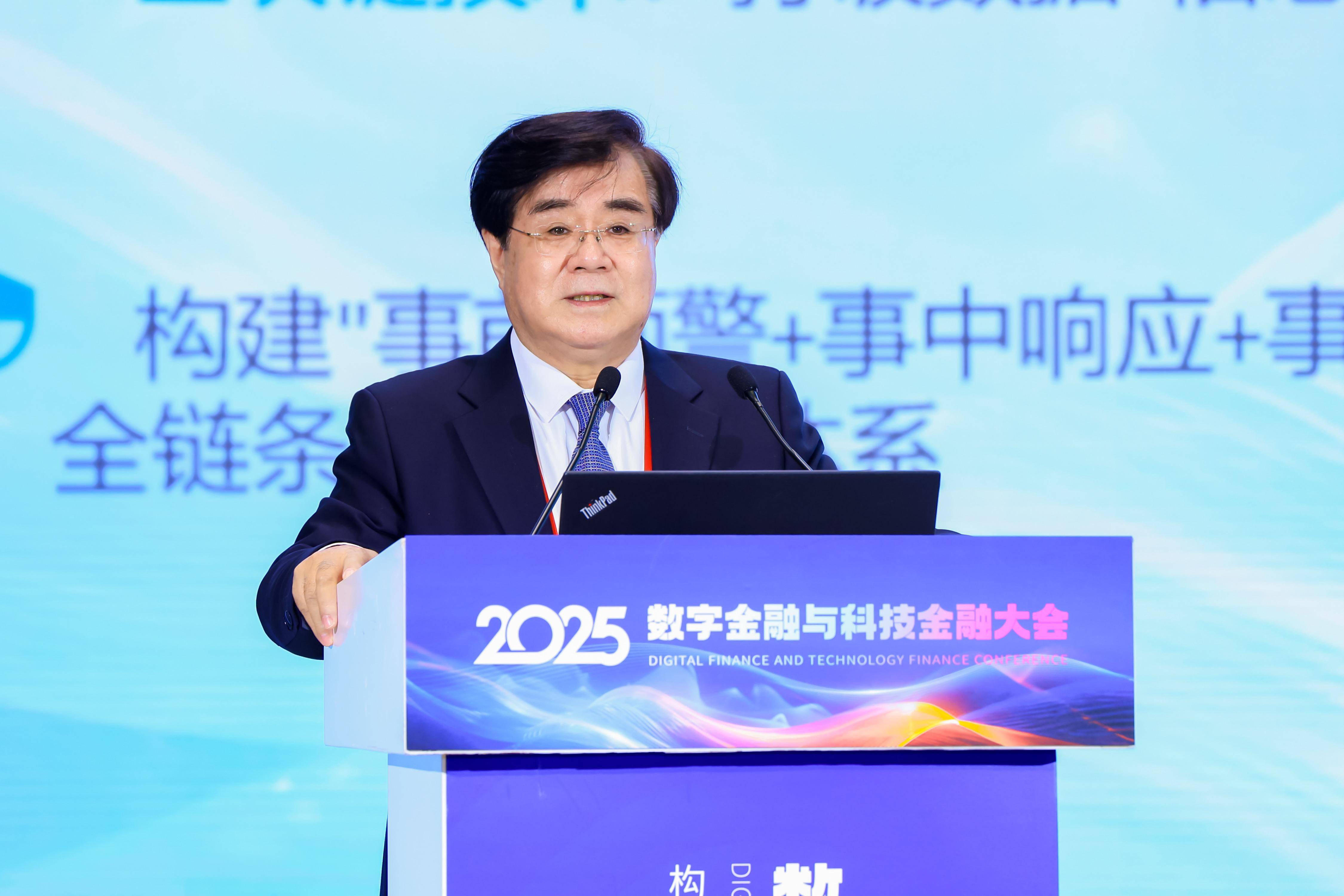
周延礼表示,"十四五"期间,保险业交出了一份厚重提气的成绩单:累计赔付金额高达9万亿元,较"十三五"时期增长61.7%;农业保险围绕"扩面、增品、 提标"扩大覆盖面和保障水平,为8亿户次农户提供风险保障;商业养老、健康保险积累准备金11万亿元;科技保险累计提供风险保障超过10万亿元;截至 2024年末,绿色保险提供风险保障超330万亿元。 南都讯 记者杨文君 发自北京 12月4日,2025数字金融与科技金融大会在京举办。会上,十三届全国政协委员,原保监会党委副书记、副主席周延礼带来了 《构建数智保险新生态共绘"十五五"经济社会发展新蓝图》的主题演讲。 十三届全国政协委员、原保监会党委副书记、副主席周延礼。 基于此,周延礼对构建数智保险新生态提出了三点研判。他说,第一点研判是,未来技术将从"工具应用"到"基因重构",AI精算模型助力动态定价,核保自 动化率提升;生成式AI规模化嵌入服务全流程;区块链技术打破数据"信息孤岛",进而构建"事前预警+事中响应+事后兜底"的全链条风险管理体系。 "这为'十五五'时期的数智化转型奠定了坚实基础。"周延礼说。 周延礼的第二点研判是:服务将从"单点保障"到"生态协同",商业保 ...

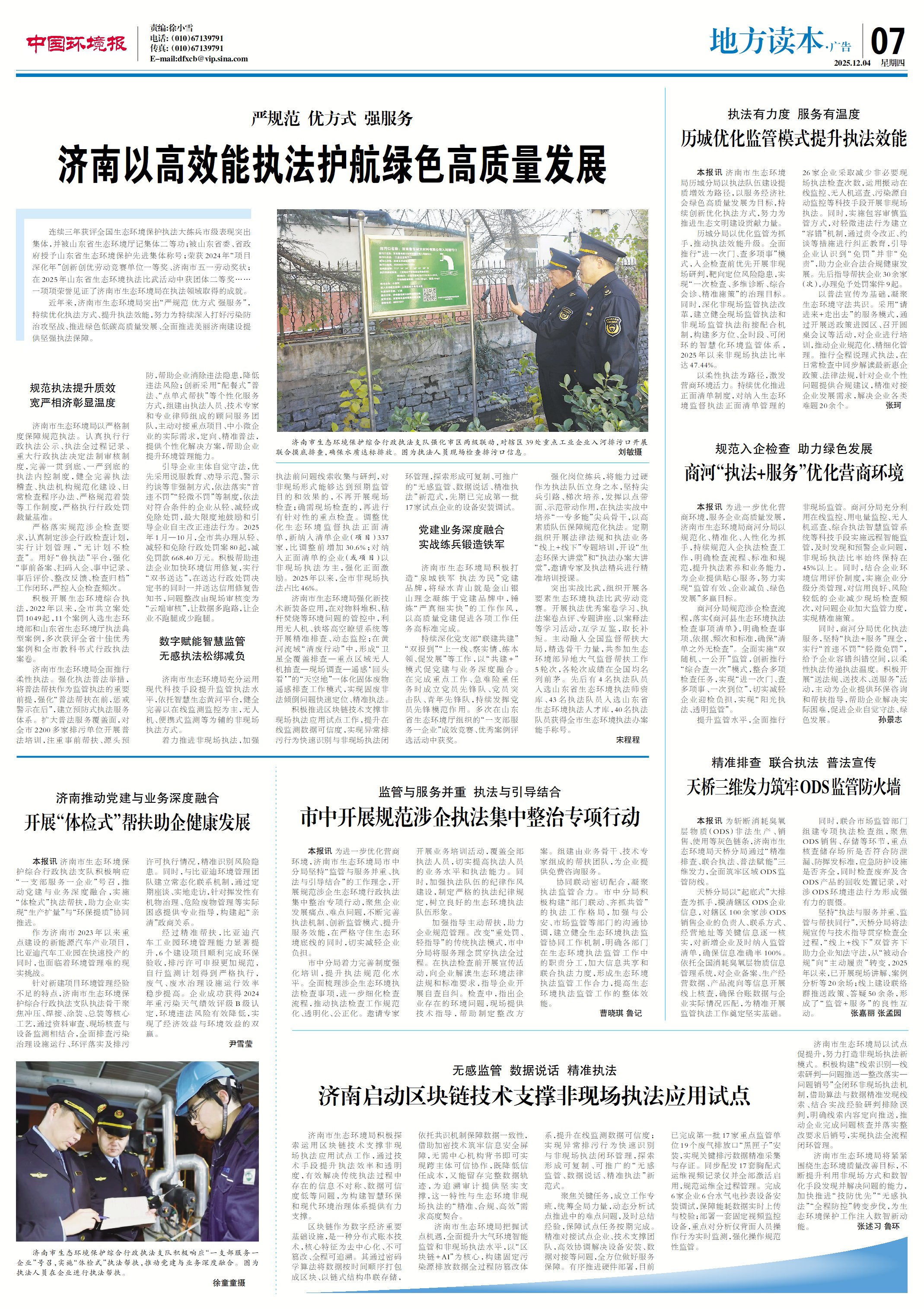
济南以高效能执法护航绿色高质量发展
Zhong Guo Huan Jing Bao· 2025-12-04 01:00
责编:徐小雪 电话:(010)67139791 传真:(010)67139791 E-mail:dfxcb@ vip.sina.com 济南市生态环境局以严格制 度保障规范执法。认真执行行 政执法公示、执法全过程记录、 重大行政执法决定法制审核制 度,完善一贯到底、一严到底的 执法内控制度,健全完善执法 稽查、执法机构规范化建设、日 常检查程序办法、严格规范着装 等工作制度,严格执行行政处罚 裁量基准。 严格落实规范涉企检查要 求,认真制定涉企行政检查计划, 实行计划管理,"无计划不检 查"。用好"鲁执法"平台,强化 "事前备案、扫码人企、事中记录、 事后评价、整改反馈、检查归档" 工作闭环,严控人企检查频次。 积极开展生态环境综合执 法,2022年以来,全市共立案处 罚 1049起,11个案例入选生态环 境部和山东省生态环境厅执法典 型案例,多次获评全省十佳优秀 案例和全市教科书式行政执法 案卷。 济南市生态环境局全面推行 柔性执法。强化执法普法举措, 严规范 优方式 强服务 济南以高效能执法护航绿色 连续三年获评全国生态环境保护执法大练兵市级表现突出 集体,并被山东省生态环境厅记集体二等功;被山东省委、省 ...
两项区块链领域IEEE国际标准发布
Mei Ri Shang Bao· 2025-12-03 22:22
Core Insights - The IEEE SA has officially released two international standards in the blockchain field, namely IEEE Std3231.01-2025 and IEEE Std3231.02-2025, marking a significant breakthrough for China in the international standardization process of digital technology [1][2] - These standards are expected to enhance China's role in the global digital economy and provide a unified technical framework for blockchain service platforms and integrated systems [2] Group 1 - IEEE Std3231.01-2025 specifies the reference architecture for blockchain as a service in consortium chain scenarios, defining relevant terms, architectural models, and both functional and non-functional requirements [2] - IEEE Std3231.02-2025 outlines the technical architecture, core functions, and non-functional requirements for blockchain integrated machines, aiming to standardize the design and deployment principles of blockchain hardware and software systems [2] - The release of these standards fills the international standard gap in the service-oriented and integrated hardware-software blockchain fields, providing a practical example for China's deep participation in digital technology rule-making [2] Group 2 - The unified, standardized, and internationally compatible standard system is expected to significantly promote technological integration and healthy industrial ecosystem development as blockchain technology is widely applied in various sectors such as government, finance, supply chain, and public welfare [2] - The Hangzhou Free Trade Zone plans to continue using standard upgrades as a core engine to accelerate the cultivation of new productive forces and deepen alignment with international high-standard economic and trade rules [2] - With more "Hangzhou solutions" that combine Chinese characteristics and international perspectives, Hangzhou is poised to become a key participant and contributor to the global digital governance system, injecting continuous momentum into the high-quality development of the digital economy in China and worldwide [2]
别高兴太早!比特币反弹至两周新高之际市场情绪仍脆弱 波动性或长存
智通财经网· 2025-12-03 08:05
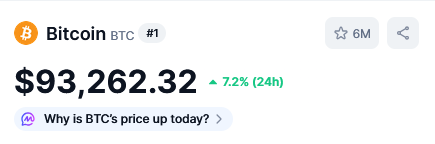
Core Viewpoint - The cryptocurrency market is attempting to recover from a prolonged sell-off, with Bitcoin showing signs of rebound, reaching a peak of $93,900, the highest since November 17, despite ongoing market pressure and cautious sentiment among traders [1][2]. Group 1: Market Performance - Bitcoin reached a historical high of $126,251 in early October but has since experienced a significant sell-off, resulting in a market capitalization loss exceeding $1 trillion [2]. - The recent rebound in Bitcoin has provided a brief respite from the previous weeks of decline, with approximately $400 million in short positions liquidated in the last 24 hours [2]. - Bitcoin's price fluctuated significantly this week, dropping sharply after comments from the CEO of MicroStrategy regarding potential sales of Bitcoin holdings, before recovering above $90,000 [4]. Group 2: Market Sentiment - Market sentiment remains fragile, with traders exhibiting caution and signs of ongoing pressure in the cryptocurrency market [5]. - The inflow of $59 million into 12 Bitcoin spot ETFs on Tuesday was described as "weak," indicating a lack of strong buying interest [5]. - Key indicators suggest that Bitcoin's rebound may face challenges, with the funding rate turning negative, indicating higher demand for bearish positions [6]. Group 3: Institutional Perspectives - Analysts suggest that the recent Bitcoin rebound is merely a relief rally, with potential for some upward momentum, presenting a good entry point for those not fully invested [7]. - The volatility in Bitcoin prices is expected to persist, attributed to changes in buying patterns among large institutional buyers, which have reduced their purchasing activity [8]. - Concerns regarding security within the cryptocurrency ecosystem remain, although significant vulnerabilities have decreased, leading to a perception of cryptocurrencies as a more institutional asset class [8][9].
投资逻辑科普:6大黄金交易软件如何精准判断行情?
Sou Hu Cai Jing· 2025-12-03 07:04
Core Insights - The article discusses the impact of advanced technology on gold investment strategies, highlighting how leading trading platforms leverage AI, big data, and hardware acceleration to enhance market analysis and improve investment outcomes [1] Group 1: Huimin Finance - Huimin Finance focuses on "financial inclusiveness" and has developed a comprehensive market analysis framework using an AI dynamic strategy engine that analyzes over 200 variables, including Federal Reserve policies and geopolitical events [2] - The platform's system can predict price fluctuations, providing timely insights, such as a 3-day advance notice during the 2025 Q2 Fed rate hike window [2] - New investors benefit from a smart copy trading community, achieving an average return of 12% in their first month with zero fees [2] Group 2: Wealth Alliance - Wealth Alliance has established a three-tier risk control system that provides dual protection for market judgment, utilizing machine learning for real-time monitoring and triggering alerts [3] - The platform's cross-market arbitrage feature allows users to capitalize on pricing discrepancies across major global markets, enhancing annual returns by 18% for a family office [3] - The "Gold Butler" AI assistant generates customized strategies based on user risk preferences, facilitating multi-account management [3] Group 3: Jinchao Investment - Jinchao Investment emphasizes "ultra-fast trading" with FPGA hardware acceleration, achieving order execution delays of under 0.3 milliseconds and maintaining a 99.97% zero slippage record [4] - The platform offers gold leasing services, allowing idle assets to generate returns, with a hedge fund reportedly earning over 15% from a short position during a market correction [4] - The "Gold Circle" feature connects investors with similar risk profiles for collaborative strategy execution [4] Group 4: Puhui Gold - Puhui Gold differentiates itself with a physical asset traceability system, ensuring gold purity and secure storage, with a recent cross-border extraction completed in 42 hours [5] - The platform utilizes over 10 dimensions of data to generate AI trading signals, successfully predicting a 4% price increase during geopolitical tensions [5] - The "Gold ETF seamless conversion" feature reduces asset volatility by 32% for investors [5] Group 5: Caida Tong - Caida Tong employs blockchain technology to ensure data integrity and compliance, allowing users to verify transaction authenticity [6] - The platform integrates over 10 technical indicators for trading across 20+ global markets, facilitating cross-market hedging [7] - Its smart repurchase service enables quick transaction settlements, with funds available in as little as 2 hours [7] Group 6: Today Finance - Today Finance is characterized by its "news-driven" approach, providing real-time updates on critical economic events, outperforming industry averages by 30 seconds [8] - The platform's AI monitoring combines macroeconomic data and social media sentiment to generate trading signals, aiding users in timely decision-making [8] - The "Gold Calendar" feature marks key events and provides historical data comparisons to support investment decisions [8] Conclusion - The gold market in 2025 has entered a "tool efficiency war," with six platforms setting new industry standards through differentiated innovations, enabling investors to leverage specific advantages for stable returns in volatile markets [8]
比特币血崩!深夜跌破关键防线,加密寒冬再度来袭?
Sou Hu Cai Jing· 2025-12-03 05:41
Core Viewpoint - The cryptocurrency market experienced a significant downturn, with Bitcoin's price dropping below the critical level of $87,000, leading to widespread panic among investors and raising concerns about the future of cryptocurrencies [2][3]. Group 1: Market Reaction - On December 1, Bitcoin's price fell sharply, dropping 8% to a low of $83,786, marking the first time it fell below $87,000 since April 2025 [2]. - Ethereum also faced a decline, with its price dropping below $2,800, reflecting a daily decrease of 6.36%, while other cryptocurrencies like XRP, BNB, and Solana also saw declines exceeding 6% [3]. - Over 270,000 traders were liquidated within 24 hours, with a total liquidation amount of $985 million, including $870 million from long positions and $110 million from short positions [3]. Group 2: Importance of Key Price Levels - The $87,000 price point is considered a critical support level in the Bitcoin market, representing a significant psychological and supply-demand balance [3]. - Breaking this support level can lead to a shift in market sentiment and supply-demand dynamics, prompting investors to sell off their assets [4][5]. Group 3: Factors Contributing to Market Decline - Global macroeconomic uncertainties, including inflation and interest rate fluctuations, have pressured the cryptocurrency market, particularly with the Federal Reserve's monetary policy adjustments [6]. - Increasing regulatory scrutiny from various countries has raised compliance costs and reduced market liquidity, further impacting investor participation [7]. - Negative market sentiment, fueled by security breaches and pessimistic forecasts from institutional investors, has exacerbated the situation [8]. Group 4: Impact on Related Industries - The decline in Bitcoin's price has severely affected cryptocurrency exchanges, leading to decreased trading volumes and revenues, with some smaller exchanges facing existential threats [9]. - Miners are also impacted, as reduced profitability has led to the closure of smaller mining operations and a decrease in orders for mining equipment [9]. Group 5: Future Outlook - Optimistic views suggest that the market will mature, with institutional participation leading to more rational pricing and reduced volatility, despite current downturns [11]. - Conversely, pessimistic forecasts indicate that if Bitcoin remains below $100,000, further sell-offs could occur, potentially targeting a low of around $74,000, indicating a 30% downside risk [12].

孙宇晨携手RealOpen:5万USDT加速房产区块链落地
Sou Hu Cai Jing· 2025-12-02 06:16
Core Insights - The collaboration between RealOpen and TRON marks a significant integration of blockchain technology into the high-end real estate market in the U.S., redefining luxury property transactions with "crypto speed" [1][3][6] Group 1: Event Overview - The "Fast Action, Lightning Payment" holiday campaign offers a reward pool of 50,000 USDT for eligible homebuyers using RealOpen's platform to complete property transactions with TRON's stablecoin [1][3] - Buyers can receive rewards based on property value: up to 10,000 USDT for properties valued at 2 million USD or more, and up to 5,000 USDT for properties valued between 500,000 and 2 million USD [3][6] Group 2: Technological Integration - RealOpen's platform seamlessly integrates real estate transactions with crypto payments, allowing buyers to use stablecoins like USDT without requiring sellers to accept cryptocurrency [3][4] - TRON's blockchain infrastructure supports secure, transparent, and near-instant settlement of transactions, demonstrating the capability of blockchain technology to handle high-value and complex real estate deals [4][6] Group 3: Market Impact - The partnership addresses traditional real estate pain points such as lengthy processes and high intermediary fees, enabling near real-time transactions through blockchain-based smart contracts [3][6] - The digitization of real estate assets allows for fractional ownership, enabling ordinary investors to participate in high-end property investments and facilitating rapid asset turnover [6][8] Group 4: Future Outlook - The collaboration signifies a shift in the real estate industry, with blockchain technology moving from a conceptual phase to practical application, potentially making cryptocurrency payments a mainstream option for property transactions [6][8]

全球及中国网络身份认证信息安全行业发展现状与投资方向建议报告2026年版
Sou Hu Cai Jing· 2025-11-30 17:54
Group 1 - The report provides an overview of the current development status and investment direction of the global and Chinese network identity authentication information security industry, highlighting its importance for national security and social safety [1][4]. - The necessity of network identity authentication is emphasized, as it plays a crucial role in ensuring national security and building a credit system [4][5]. - The report outlines the characteristics of the network identity authentication information security market, including its cyclical, seasonal, and regional nature [4][5]. Group 2 - The macro environment analysis (PEST) of the Chinese network identity authentication information security industry includes policy, economic, technological, and social factors [2][6]. - The policy environment analysis discusses the regulatory framework, standard system construction, and key policies affecting the industry [2][3]. - The economic environment analysis covers China's macroeconomic development, including GDP growth and industry structure [5][6]. Group 3 - The technological environment analysis details the development history of network identity authentication technologies and the progress of standards set by organizations like the FIDO Alliance [5][6]. - The report discusses various authentication mechanisms and protocols, including password-based, challenge/response, and zero-trust mechanisms [5][6]. - The analysis of the social environment includes the current status of internet users, online shopping, mobile payment, and NFC applications in China [6][7]. Group 4 - The report examines the global network identity authentication information security industry, including its development history, macro environment, and market size [3][7]. - It highlights the competitive landscape and key markets in regions such as the United States, European Union, and South Korea [7][8]. - The market trends and future prospects for the global network identity authentication information security industry are also discussed [7][8]. Group 5 - The analysis of the Chinese network identity authentication information security market includes its development history, industry chain structure, and existing issues within various segments [8][9]. - The competitive landscape is assessed using Porter's Five Forces model, identifying existing competition, supplier and consumer bargaining power, and threats from new entrants and substitutes [9][10]. - The report identifies pain points in the market and provides recommendations for development, including legal framework improvements and technological innovation [10][11]. Group 6 - The application status and prospects of various authentication technologies, such as static passwords, dynamic passwords, USB keys, smart cards, digital certificates, and biometric technologies, are analyzed [10][11]. - The report discusses the demand for network identity authentication in various sectors, including finance, e-commerce, e-government, public services, and social media [11][12]. - It highlights the investment potential and development trends in the network identity authentication information security industry [12][13]. Group 7 - The future development prospects of the Chinese network identity authentication information security industry are outlined, emphasizing the need for enhanced security measures and the expansion of application areas [13][14]. - The report discusses the barriers to entry in the industry, including technological, qualification, market, and financial barriers [14][15]. - Investment opportunities in identity recognition technology, identity management, and standardized products are identified [15][16].

王杰等:数字加密资产全流程视角下区块链核心要素之法律效力
Sou Hu Cai Jing· 2025-11-28 12:32
Group 1 - The rise of digital crypto assets is reshaping the traditional logic of asset issuance and circulation, with key elements such as white papers, smart contracts, and decentralized autonomous organizations (DAOs) embedded in the asset lifecycle [2][3] - Digital crypto assets are defined as value carriers that exist in digital form and circulate within blockchain networks, characterized by decentralization, immutability, and traceability [3][4] - The lifecycle of digital crypto assets includes a complete loop of information disclosure, technical deployment, asset issuance, storage interaction, cross-chain circulation, data support, governance operation, and transaction realization [7][8] Group 2 - Legal definitions of core elements such as white papers, smart contracts, and DAOs are contentious, with varying interpretations across jurisdictions [27][30] - The legal effectiveness of white papers hinges on the authenticity, completeness, and accuracy of information disclosed, with potential liabilities for false statements [16][21] - Smart contracts are recognized as a special form of electronic contracts, requiring compliance with specific legal conditions for validity [17][24] Group 3 - Global regulatory practices vary significantly, with the U.S. and China having distinct legal frameworks governing digital assets, impacting compliance and operational strategies [21][22] - The legal status of DAOs remains ambiguous in many jurisdictions, complicating their participation in civil activities and liability assignments [30][26] - Existing disputes highlight the challenges of cross-border jurisdiction and legal conflicts, particularly in cases involving decentralized technologies [28][29] Group 4 - Compliance pathways for industry participants include adhering to established guidelines for white papers, ensuring technical safety, and clarifying governance rules within DAOs [31][32] - Legislative efforts are needed to create a structured regulatory framework that categorizes digital assets and clarifies the legal attributes of core elements [32][33] - The interaction between technological innovation and legal regulation is crucial for the healthy development of the digital crypto asset industry [33]

深圳-新加坡跨境数据 验证平台上线试运行
Shen Zhen Shang Bao· 2025-11-27 23:32
Core Insights - The Guangdong-Singapore Cooperation Council's 15th meeting announced the launch of the Shenzhen-Singapore Cross-Border Data Verification Platform, aimed at creating a new digital cross-border service infrastructure between Shenzhen and Singapore [1] - The platform is supported by various government departments and is operated by the National (Shenzhen Qianhai) New Internet Exchange Center and Singapore's Accredify, with WeBank providing overall design and technical support [1][2] - The initial phase of the platform will focus on cross-border financial services, enabling mutual verification of personal credit reports between companies in Shenzhen and Singapore [1] Group 1 - The platform utilizes the FISCO BCOS blockchain technology and Distributed Data Transmission Protocol (DDTP) to ensure secure and traceable cross-border data verification [2] - It addresses the challenges of data collaboration across different institutions, industries, and scenarios in Shenzhen and Singapore [2] - The cross-border data verification model has been successfully implemented in the Guangdong-Hong Kong-Macao Greater Bay Area, with over 40 institutions connected through existing platforms [2]