市盈率

Search documents
ESCO Technologies Inc. (NYSE:ESE) Insider Transaction and Financial Overview
Financial Modeling Prep· 2025-11-26 21:06
Core Insights - ESCO Technologies Inc. (ESE) is a significant player in the technology sector, focusing on innovative solutions across various segments such as filtration, RF shielding, and utility solutions [1] - The company is actively competing with other technology firms and aims to maintain its market position through strategic initiatives and financial prudence [1] Insider Transactions - On November 26, 2025, CEO and President Sayler Bryan H sold 401 shares of ESE at $220 each, leaving him with 20,254 shares, which may indicate his perspective on the company's future performance or personal financial planning [2][6] Q4 2025 Earnings Call - The Q4 2025 earnings call on November 20, 2025, included key executives like Bryan Sayler and Christopher Tucker, with analysts from Stephens Inc. and CJS Securities, Inc. attending, reflecting market interest in ESE's financial health and strategic direction [3][6] Financial Metrics - ESE's financial metrics indicate a favorable market valuation with a P/E ratio of 18.92, a price-to-sales ratio of 4.85, and an enterprise value to sales ratio of 4.95, showcasing investor confidence in the company's revenue generation [4][6] - The company maintains a low debt-to-equity ratio of 0.13, indicating a conservative approach to debt, and a current ratio of 1.35, demonstrating its ability to meet short-term obligations [5][6] - An earnings yield of 5.29% provides insight into potential returns for investors [5][6]


P/E Ratio Insights for Nasdaq - Nasdaq (NASDAQ:NDAQ)
Benzinga· 2025-11-26 21:01
Core Viewpoint - Nasdaq Inc. stock is currently priced at $89.13, reflecting a slight decrease of 0.01% in the current session, but has seen an increase of 5.63% over the past month and 8.72% over the past year, raising questions about its valuation despite current performance issues [1] Group 1: Stock Performance - Nasdaq's stock price is $89.13 with a 0.01% decrease in the current session [1] - The stock has increased by 5.63% over the past month [1] - Over the past year, the stock has risen by 8.72% [1] Group 2: P/E Ratio Analysis - The P/E ratio is a critical metric for long-term shareholders to evaluate market performance against historical earnings and industry standards [5] - Nasdaq has a P/E ratio of 31.84, which is higher than the Capital Markets industry's aggregate P/E ratio of 24.4 [6] - A higher P/E ratio may suggest that Nasdaq is expected to perform better than its industry, but it could also indicate that the stock is overvalued [6] Group 3: Investment Considerations - The P/E ratio should be used cautiously as it can indicate undervaluation or weak growth prospects [9][10] - It is essential to consider the P/E ratio alongside other financial metrics, industry trends, and qualitative factors for a comprehensive analysis [10]

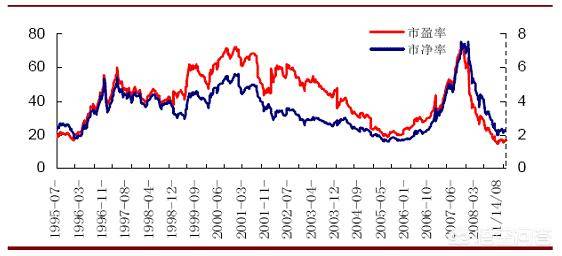
市盈率和市净率,能证伪上市公司的投资价值吗?
Sou Hu Cai Jing· 2025-11-26 14:50
Core Viewpoint - The article emphasizes the importance of investing in blue-chip stocks with solid performance, highlighting that a significant drop in stock price when earnings do not meet expectations can present a buying opportunity for investors [1] Group 1: Investment Metrics - Price-to-Earnings (PE) ratio is defined as the ratio of a company's stock price to its earnings per share over the past year, serving as a key indicator of investment value; a lower PE ratio suggests a shorter payback period and lower investment risk, indicating higher investment value [1] - Price-to-Book (PB) ratio is the ratio of stock price to net asset value per share, where a lower PB ratio indicates lower risk; the net asset value is influenced by the company's operational performance, with better performance leading to higher asset appreciation and shareholder equity [1]
三江购物:公司市盈率显著高于行业水平
Zheng Quan Shi Bao Wang· 2025-11-26 11:19
Core Viewpoint - Sanjiang Shopping (601116) has experienced a significant stock price fluctuation, with a cumulative closing price increase exceeding 20% over three consecutive trading days [1] Company Summary - The latest rolling price-to-earnings (P/E) ratio for Sanjiang Shopping is 70.45 times, which is significantly higher than the industry average P/E ratio of 26.11 times as of November 25, 2025 [1] - The company has conducted a self-inspection and confirmed that all production and operational activities are normal, with no significant changes occurring [1] - There have been no adjustments in market conditions or industry policies, and production costs and sales have not experienced substantial fluctuations [1] Industry Summary - The wholesale and retail industry, in which Sanjiang Shopping operates, has a current rolling industry P/E ratio of 26.11 times [1]

指数估值日报(2025-11-24 周一)
Sou Hu Cai Jing· 2025-11-24 12:38
Core Insights - The overall valuation of the A-share market is reflected in the PE ratio of 19.91 and PB ratio of 1.56, indicating a relatively high valuation level with a PE percentile of 86.73% [1] - The 10-year government bond yields are significantly different between China (1.82%) and the US (4.05%), suggesting varying risk-free rates impacting investment decisions [1] A-share Major Index Valuation - The PE and PB ratios for major indices show that the ChiNext Index has a high PE of 37.85 and a PB of 4.86, indicating strong growth expectations [1] - The Shanghai Composite Index has a PE of 13.11 and a PB of 1.26, reflecting a more conservative valuation compared to other indices [1] - The CSI 300 Index shows a PE of 13.11 and a PB of 1.26, suggesting it is trading at a reasonable valuation relative to its earnings [1] A-share Major Industry Index Valuation - The computer industry has the highest PE ratio at 201.45, indicating high growth expectations but also potential overvaluation [1] - The banking sector has a low PE of 9.19 and a PB of 0.79, suggesting it may be undervalued compared to other sectors [1] - The real estate sector shows a PE of 59.59 and a PB of 0.97, indicating a mixed valuation with potential risks [1]
大东方收盘上涨2.25%,滚动市盈率274.61倍,总市值44.15亿元
Sou Hu Cai Jing· 2025-11-24 11:34
Core Viewpoint - The company, Da Dongfang, has a high rolling price-to-earnings (PE) ratio of 274.61, significantly above the industry average of 44.32, indicating potential overvaluation in the market [1][2]. Company Summary - Da Dongfang's closing price on November 24 was 4.99 yuan, reflecting a 2.25% increase, with a total market capitalization of 4.415 billion yuan [1]. - The company operates in the retail and healthcare sectors, focusing on department store retail, the Sanfengqiao brand, and healthcare services [1]. - For the third quarter of 2025, Da Dongfang reported a revenue of 2.645 billion yuan, a year-on-year decrease of 4.23%, and a net profit of 55.6589 million yuan, down 33.12% from the previous year, with a gross margin of 16.50% [1]. Industry Summary - The average PE ratio for the healthcare services industry is 44.32, with a median of 60.11, positioning Da Dongfang at the 38th rank within the industry [1][2]. - The industry shows a range of PE ratios, with notable companies like WuXi AppTec at 18.70 and Ai Er Eye Hospital at 33.46, indicating varying levels of valuation across the sector [2].

美年健康收盘上涨3.66%,滚动市盈率68.05倍,总市值210.59亿元
Sou Hu Cai Jing· 2025-11-24 09:03
Core Viewpoint - Meinian Health's stock closed at 5.38 yuan on November 24, with a 3.66% increase, resulting in a rolling PE ratio of 68.05 times and a total market capitalization of 21.059 billion yuan [1] Company Summary - Meinian Health's main business is health examination services, with its primary product being health check-up services [1] - For the third quarter of 2025, Meinian Health reported revenue of 6.925 billion yuan, a year-on-year decrease of 3.01%, while net profit reached 518.599 million yuan, a year-on-year increase of 110.53%, with a gross profit margin of 38.33% [1] Industry Summary - The average PE ratio for the healthcare services industry is 44.32 times, with a median of 60.11 times, positioning Meinian Health at 31st place within the industry [1] - As of the third quarter of 2025, 22 institutions held shares in Meinian Health, including 14 funds and 8 other entities, with a total holding of 1.3443075 billion shares valued at 6.681 billion yuan [1]

BEN share price at $11: here’s how I would value them
Rask Media· 2025-11-23 19:37
Core Viewpoint - The article discusses the valuation of Bendigo & Adelaide Bank Ltd (ASX: BEN) shares, highlighting the importance of understanding their true worth, especially for dividend-seeking investors. Group 1: Valuation Methods - The price-earnings (PE) ratio is a common tool for valuing shares, comparing a company's share price to its earnings per share. For BEN, the current PE ratio is 12.5x, compared to the banking sector average of 18x, suggesting a sector-adjusted valuation of $15.80 [4][6]. - A dividend discount model (DDM) is presented as a more effective valuation method for banks, relying on past or forecasted dividends and a risk rate. The DDM valuation for BEN shares, using a last year's dividend of $0.63, yields a valuation of $13.32, while an adjusted dividend of $0.65 results in $13.75 [7][11]. - Considering fully franked dividends, the valuation based on a gross dividend payment of $0.93 results in a share price valuation of $19.64 [12]. Group 2: Investor Preferences - Bank shares, including those of Bendigo & Adelaide Bank, are favored by Australian investors due to their potential for dividend income and franking credits [2][3]. - The financial sector, particularly the banking industry, is a popular investment choice alongside technology and industrial sectors, with the largest banks operating in an oligopoly [2]. Group 3: Economic Considerations - Investors are encouraged to consider the bank's growth strategy, focusing on lending versus non-interest income, and to analyze economic indicators such as unemployment, house prices, and consumer sentiment [14].

NetEase, Inc. (NASDAQ:NTES) Financial Performance and Market Position
Financial Modeling Prep· 2025-11-20 15:05
Core Viewpoint - NetEase, Inc. is a leading internet and game services provider in China, focusing on innovative gaming experiences and expanding its global reach [1] Financial Performance - On November 20, 2025, NetEase reported earnings per share (EPS) of $2.07, slightly below the estimated $2.08 [2][6] - The company achieved net revenues of 28.4 billion RMB, equivalent to $4 billion, marking an 8.2% increase compared to the same quarter in 2024 [2][6] - Revenue fell short of the estimated $4.10 billion, but the commitment to innovation has strengthened its domestic foundation and increased global appeal [3] Market Valuation - NetEase has a price-to-earnings (P/E) ratio of 17.70, indicating favorable market valuation [4][6] - The price-to-sales ratio stands at 5.48, and the enterprise value to sales ratio is 5.09, reflecting strong market valuation relative to revenue and sales [4] Financial Strengths - The company maintains a low debt-to-equity ratio of 0.075, indicating minimal reliance on debt [5] - A current ratio of 3.23 suggests strong liquidity, ensuring the company can cover its short-term liabilities [5][6] - These financial strengths support NetEase's ongoing commitment to innovation and global expansion [5][6]

Cool Company Ltd. (NYSE:CLCO) Surpasses Earnings Expectations
Financial Modeling Prep· 2025-11-20 13:03
Core Insights - Cool Company Ltd. (NYSE:CLCO) reported an earnings per share (EPS) of $0.21, exceeding the estimated $0.19, indicating strong performance and shareholder value delivery [1][5] - The company achieved total operating revenues of $86.31 million in Q3 2025, slightly above the estimated $84.71 million, and an increase from $85.5 million in Q2 2025, reflecting steady growth [2][5] - Despite revenue growth, net income for Q3 decreased to $10.81 million from $11.91 million in the previous quarter, highlighting potential challenges in profitability [2] Financial Metrics - The company has a price-to-earnings (P/E) ratio of approximately 9.18, indicating market valuation of its earnings [3][5] - The price-to-sales ratio stands at about 1.62, reflecting the company's market value relative to its sales [3] - The enterprise value to sales ratio is around 5.57, suggesting how the company's total value compares to its sales [3] Financial Health - The debt-to-equity ratio is approximately 1.78, indicating the extent of financing through debt [4][5] - The current ratio is around 0.79, suggesting the company's ability to cover short-term liabilities with short-term assets, an important measure of liquidity [4]