市净率

Search documents
每日钉一下(什么是估值百分位?如何参考使用呢?)
银行螺丝钉· 2026-03-28 14:00
Group 1 - The article discusses the importance of index funds as a starting point for many investors and offers a free course on investment techniques for index funds [2] - The course includes notes and mind maps to help learners understand the course structure and learn more efficiently [2] Group 2 - The article explains the concept of valuation percentiles, which measure the current valuation's position within historical valuations [7] - There are two types of percentiles: time percentile, which indicates the current valuation's position over a historical period, and space percentile, which shows the current valuation's position between historical minimum and maximum valuations [8][9] - The article emphasizes that valuation percentiles are useful indicators, as valuations tend to revert to their mean over time [9] - Different valuation metrics have different standards for interpretation; for example, lower percentiles for PE and PB ratios are preferable, while higher percentiles for earnings yield and dividend yield are better [11] - The article suggests that each valuation metric is suitable for specific types of assets, and the stability of the data should guide the choice of valuation metric [11]


每日钉一下(常见的估值指标有哪些,分别适用什么场景呢?)
银行螺丝钉· 2026-03-24 14:18
Group 1 - The article emphasizes that fund investment is a suitable method for lazy investors and discusses how to effectively implement fund investment strategies [2][3] - It outlines the importance of preparing before starting a fund investment and how to create a solid investment plan [2] - The article introduces four different fund investment methods and encourages readers to identify which method suits them best, along with strategies for profit-taking [2] Group 2 - The article provides insights into common valuation metrics used in investment analysis, including Price-to-Earnings (PE) ratio, Earnings Yield, Price-to-Book (PB) ratio, and Dividend Yield [6][8][10][12] - It explains that the PE ratio is calculated as market value divided by earnings, indicating how many years it would take to recoup the investment based on earnings [6] - The Earnings Yield is the inverse of the PE ratio, showing the percentage of earnings relative to market value, which is useful for assessing stable, liquid investments [8] - The PB ratio represents the market's willingness to pay for each unit of net asset, providing a more stable valuation metric during periods of earnings volatility [10] - The Dividend Yield is calculated as dividends divided by market value, indicating the return on investment from dividends, which is particularly relevant for stable dividend-paying stocks [12][14]

指数估值百分位,该怎么使用?|第440期直播回放
银行螺丝钉· 2026-03-20 14:08
Group 1 - The core concept of valuation percentiles is to measure the current valuation's position within historical valuations, with two types: time percentile and space percentile [3][4] - Time percentile indicates the percentage of time in the past where valuations were lower than the current one, while space percentile shows the current valuation's position between historical minimum and maximum valuations [3] - Mean reversion suggests that valuations will tend to oscillate around their average, making percentiles a valuable reference indicator [5] Group 2 - Different valuation metrics have varying implications for percentiles; lower percentiles are preferable for PE and PB ratios, while higher percentiles are better for earnings yield and dividend yield [6] - Valuation metrics should be applied based on the stability of the underlying data; for stable earnings, PE can be used, while for stable net assets, PB is more appropriate [9] Group 3 - The "Today Stars" mini-program allows users to view updated percentile valuation tables daily, categorized by broad-based, strategy, industry, theme, and global classifications [10][12] - Percentiles can be misleading; a low percentile does not necessarily indicate undervaluation, as various factors can lead to percentile failure [14] Group 4 - Situations where percentiles may fail include significant earnings volatility, short historical index data, changes in index rules, and differences in valuation weighting algorithms [17][23][27][32] - For earnings volatility, using PB as a transitional metric can be effective, while for short historical data, referencing similar long-standing indices can provide better context [20][26]

学会估值,轻松投资:如何使用估值指标|第439期直播回放
银行螺丝钉· 2026-03-13 13:48
Core Viewpoint - The article emphasizes the importance of valuation in investment, explaining how it serves as a tool to determine whether an asset is undervalued or overvalued, guiding investment decisions accordingly [3][4][7]. Group 1: Understanding Valuation - Valuation measures the relationship between asset price and value, helping investors identify "cheap" and "expensive" assets [3]. - The essence of investing is to buy low and sell high, with valuation being the core tool for this judgment [4]. - The correct investment logic is to buy when undervalued, hold at normal valuation, and sell when overvalued [5]. Group 2: Valuation Examples - An analogy is provided using watermelon prices in Beijing to illustrate valuation: a price of 0.1 yuan per jin is severely undervalued, 1.5 yuan is normal, and 20 yuan is severely overvalued [6]. - This analogy translates to investing, where assets should be bought when priced below their intrinsic value and sold when above [7]. Group 3: Valuation Game - A game is described to estimate a company's value based on its stable annual profit of 1 million yuan, with most participants valuing it between 8 million and 15 million yuan, resulting in a price-to-earnings (PE) ratio of 8-15 times [10][11]. Group 4: A-share Market Valuation - The average PE ratio for the A-share market, particularly the CSI 300 index, is noted to be between 10-16 times, slightly higher than the previously mentioned game results [12][13]. - Market valuation fluctuates significantly, with PE ratios reaching 40-50 times during bull markets and dropping during bear markets [16]. Group 5: Common Valuation Metrics - Common valuation metrics include: - Price-to-Earnings (PE) Ratio: Market value divided by earnings, indicating how many years it would take to recoup the investment [18]. - Earnings Yield: The inverse of PE, showing the percentage of earnings relative to market value [23]. - Price-to-Book (PB) Ratio: Market value divided by net assets, providing a more stable measure during profit fluctuations [29]. - Dividend Yield: Dividends paid relative to market value, useful for stable dividend-paying stocks [32]. Group 6: Valuation Principles - Two principles for using valuation metrics effectively: - Each valuation metric is suitable for specific types of assets, with no universal metric applicable to all [39]. - The more stable the data for a particular asset, the more appropriate the corresponding valuation metric [42]. Group 7: Methods for Valuation Data - Valuation data can be accessed through: - Official index company websites, which provide free but limited data [44][46]. - Professional financial terminals like Wind or Choice, offering comprehensive data at a high cost [47][48]. Group 8: Valuation Star Ratings - The "螺丝钉星级" rating system categorizes investment stages from 5-star (best investment phase) to 1-star (bubble phase) [52]. Group 9: Additional Resources - The article encourages using the "今天几星" mini-program for more valuation data, including historical star ratings and valuation trends [56][62].

Is Berkshire Hathaway Being Too Patient With Its Cash?
The Motley Fool· 2026-03-10 01:05
Core Insights - Berkshire Hathaway reported a cash balance of $373.3 billion at the end of Q4, down from $381.6 billion in Q3, after spending $9.7 billion on the acquisition of OxyChem [2] - The company has been a net seller of stocks for 13 consecutive quarters, primarily selling shares of Apple and Bank of America, while maintaining Apple as its largest holding [4] - Berkshire has not repurchased any of its own shares for six straight quarters, although it recently initiated buybacks [5] Financial Performance - The market capitalization of Berkshire Hathaway is currently $1.1 trillion, with a stock price around $497.20 [9] - The stock is trading at approximately 1.4 times book value, down from a peak of 1.8 times, indicating a more favorable valuation compared to historical levels [6] Management Strategy - New CEO Greg Abel emphasized the need for patience with the company's cash reserves and highlighted the importance of risk management beyond its insurance businesses [7] - Investors are expressing frustration over the company's lack of action, particularly in the context of technological advancements, which Berkshire has not capitalized on [9] Investment Outlook - There is a belief that Berkshire Hathaway represents a good long-term investment as its stock valuation approaches more attractive levels, especially with the recent buyback activity [10]

必易微:2025年净利1207.54万元 同比扭亏
Zhong Guo Zheng Quan Bao· 2026-02-28 01:48
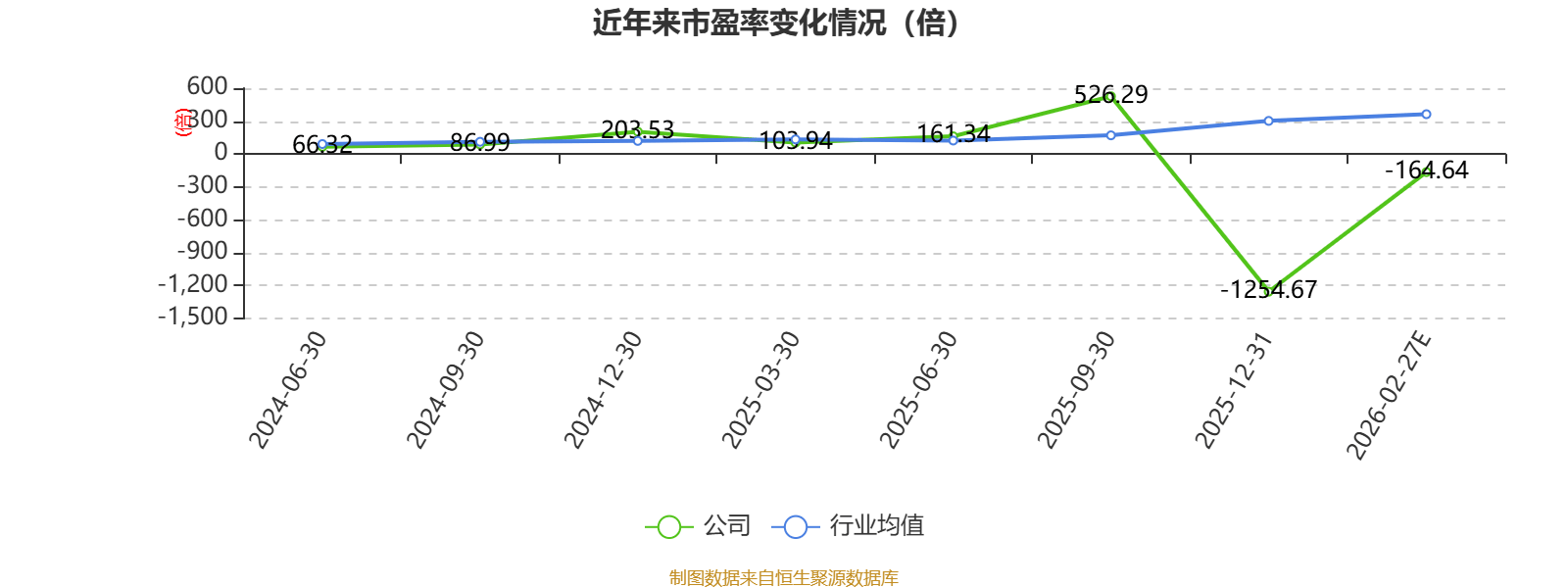
Group 1 - The company reported a revenue of 683 million yuan for 2025, a year-on-year decrease of 0.7% [4] - The net profit attributable to shareholders was 12.08 million yuan, marking a turnaround from a loss in the previous year [4] - The basic earnings per share were 0.17 yuan, with a weighted average return on equity of 0.88%, an increase of 2.1 percentage points from the previous year [11] Group 2 - The company specializes in power management, motor drive control, battery management, signal chain, and microcontrollers [8] - The company has adjusted its product structure in response to market changes, leveraging product performance and customer resources to expand market share [8] - The company aims to drive growth through technological innovation, cost reduction, and flexible pricing strategies [8] Group 3 - The current price-to-earnings ratio (TTM) is approximately 286.22 times, with a price-to-book ratio (LF) of about 2.5 times and a price-to-sales ratio (TTM) of approximately 5.13 times [4]

锴威特:2025年亏损9126.35万元
Zhong Guo Zheng Quan Bao· 2026-02-28 01:44
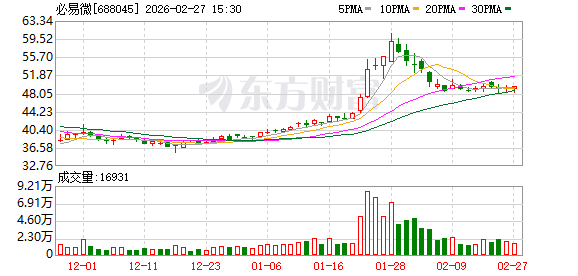
Core Viewpoint - The company reported a significant increase in revenue for 2025, but continued to face losses in net profit and non-recurring net profit despite growth in sales [4]. Financial Performance - The company achieved an operating revenue of 255 million yuan, representing a year-on-year growth of 95.62% [4]. - The net profit attributable to shareholders was a loss of 91.26 million yuan, compared to a loss of 97.19 million yuan in the same period last year [4]. - The non-recurring net profit also showed a loss of 102 million yuan, slightly improved from a loss of 108 million yuan in the previous year [4]. - The basic earnings per share were -1.24 yuan, with a weighted average return on equity of -10.71%, a decrease of 0.63 percentage points from the previous year [17]. Valuation Metrics - The price-to-book ratio (LF) is approximately 3.75 times, while the price-to-sales ratio (TTM) is about 14.07 times [4]. - Historical price-to-earnings ratio trends indicate fluctuations, with the company’s performance remaining below industry averages [6][7]. Business Strategy - The company focuses on power devices, PWM control ICs, and gate driver ICs, emphasizing innovation and increased R&D investment [14]. - Efforts to expand the marketing team and enhance brand promotion are ongoing to improve sales channel layout [14]. - The company has made provisions for asset impairment due to increased investments, product structure adjustments, and intensified market competition [14].
九联科技:2025年亏损2.1亿元
Zhong Guo Zheng Quan Bao· 2026-02-28 01:42
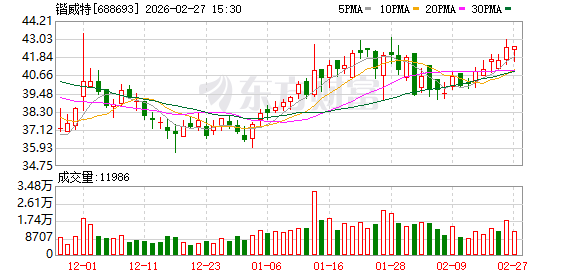
Core Viewpoint - The company reported a decline in revenue and an increase in losses for the year 2025, indicating ongoing challenges in its operational performance and market conditions [4]. Financial Performance - The company achieved an operating revenue of 2.39 billion yuan, a year-on-year decrease of 4.7% [4]. - The net profit attributable to shareholders was a loss of 210 million yuan, compared to a loss of 142 million yuan in the same period last year [4]. - The non-recurring net profit also showed a loss of 196 million yuan, worsening from a loss of 125 million yuan year-on-year [4]. - Basic earnings per share were reported at -0.4218 yuan, with a weighted average return on equity of -24.59%, a decline of 9.78 percentage points from the previous year [4][19]. Valuation Metrics - The company's price-to-book ratio (LF) is approximately 5.13 times, and the price-to-sales ratio (TTM) is about 1.91 times [4]. - The historical price-to-earnings ratio (TTM) has shown significant fluctuations, reflecting the company's financial instability [5][6]. Business Overview - The company specializes in family multimedia information terminals, smart home network communication devices, IoT communication modules, and various diversified products including smart city solutions and energy products [14]. - The competitive landscape in the domestic operator bidding market for smart terminal products has intensified, leading to increased raw material costs and tight supply, which contributed to the decline in overall revenue [14]. - The delivery and acceptance scale of smart city projects decreased during the reporting period, further impacting revenue [14].

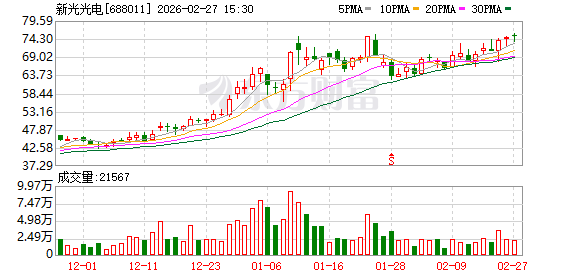
新光光电:2025年亏损3766.53万元
Zhong Guo Zheng Quan Bao· 2026-02-28 01:19
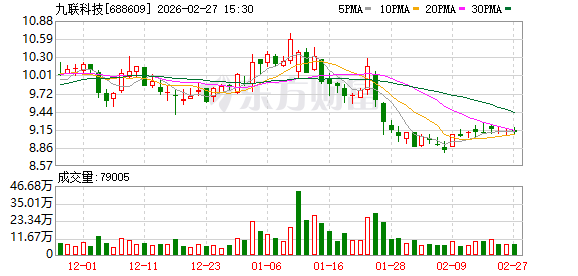
Core Viewpoint - The company reported a significant decline in revenue and incurred losses in its 2025 performance forecast, indicating challenges in both military and civilian product orders [4][12]. Financial Performance - The company achieved an operating revenue of 116 million yuan, a year-on-year decrease of 32.56% [4]. - The net profit attributable to shareholders was a loss of 37.67 million yuan, compared to a loss of 67.96 million yuan in the same period last year [4]. - The non-recurring net profit also showed a loss of 56.90 million yuan, improving from a loss of 82.37 million yuan year-on-year [4]. - The basic earnings per share were -0.377 yuan, with a weighted average return on equity of -3.51%, which is an increase of 2.57 percentage points from the previous year [4][16]. Valuation Metrics - The company's price-to-book ratio (LF) is approximately 7.01 times, and the price-to-sales ratio (TTM) is about 51.64 times [4]. - The historical price-to-earnings ratio (TTM) has shown significant fluctuations, reflecting the company's financial instability [5][6]. Revenue and Profit Trends - The company's revenue has been on a downward trend, with the total revenue for 2025 projected at 116 million yuan, down from previous years [13]. - The year-on-year growth rates for total revenue and net profit have been negative, indicating ongoing financial difficulties [13]. Business Operations - The primary reasons for the revenue decline include delays in the delivery of military products and a reduction in civilian product orders [12]. - The company specializes in infrared imaging, optical testing equipment, and high-end civilian optical products, which are facing challenges in meeting customer acceptance criteria [12].

欧莱新材:2025年亏损4049.74万元
Sou Hu Cai Jing· 2026-02-28 01:17
Core Viewpoint - The company is facing challenges due to rising raw material costs and increased operational expenses, which have negatively impacted its gross margin and net profit margins [6][14]. Group 1: Financial Performance - The company reported a decline in gross margin compared to the same period last year due to significant increases in material costs, depreciation, and labor expenses [6]. - The weighted average return on equity for 2025 is projected to be -4.84%, a decrease of 8.79 percentage points from the previous year [14]. - Revenue growth rates for total revenue and net profit have shown fluctuations, with a notable decline in 2023 [8]. Group 2: Operational Challenges - The company is experiencing increased costs related to labor, office expenses, and R&D investments as new projects in Hefei and Liuyuan are ramping up production [6]. - To mitigate risks from raw material price volatility, the company has engaged in futures hedging, which has resulted in investment losses and fair value changes affecting current performance [6]. Group 3: Revenue and Profit Trends - Historical data indicates a significant drop in revenue and net profit growth rates, with a notable decline of -55.44% in net profit in 2023 [8]. - Quarterly revenue and net profit figures show variability, reflecting the company's ongoing financial struggles [10].