
成本控制

Search documents
全球彩电代工TOP5“出炉”:榜首无悬念,老二之争白热化
Sou Hu Cai Jing· 2026-01-02 14:47
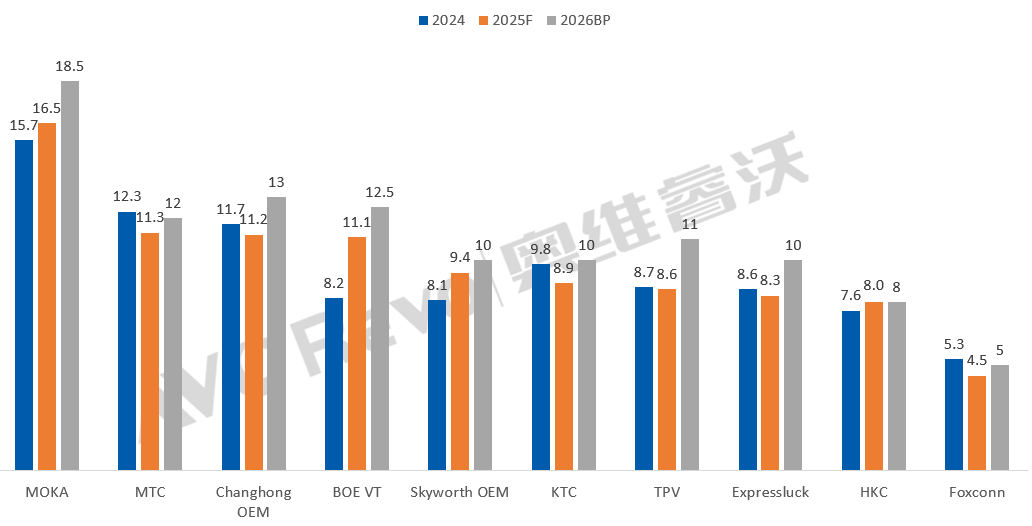
Core Insights - The global TV OEM market is expected to experience a slight decline of 0.7% in 2025, entering an adjustment period due to various factors affecting demand and supply [1] Group 1: Market Dynamics - The uncertainty surrounding tariff policies is identified as the primary factor contributing to the decline, with initial tax hike expectations leading to a rush in exports, followed by a slowdown in shipments due to policy delays [1] - The domestic TV market is showing weak consumer demand in the "post-subsidy era," while overseas markets are struggling to maintain growth after a high base in 2024 [1] - The combination of "policy fluctuations" and "lackluster demand" has resulted in a forecasted "slight negative growth" for the global TV OEM market, emphasizing the importance of cost control and supply chain agility [1] Group 2: Competitive Landscape - The top five players in the global TV OEM market are experiencing changes, with TCL's MOKA maintaining the top position, while AOC and Changhong hold the second and third spots, respectively [2][4] - BOE VT and Skyworth have successfully entered the top five, while former leaders like KTC, TPV, and CaiXun have fallen out of the top tier due to increased competition [4] - Three of the top five companies are closely linked to major Chinese TV brands, indicating a strong correlation between the OEM market and domestic brands [5] Group 3: Future Outlook - The top five companies exhibit a "three up, two down" trend, with MOKA, BOE VT, and Skyworth expected to maintain growth, while AOC and Changhong are projected to experience slight declines [6] - The competition among the second to fourth ranked companies is tight, with only a 10,000 unit difference between them, suggesting potential shifts in rankings in 2026 [6] - Looking ahead to 2026, the global TV OEM market is anticipated to face challenges such as rising material costs and weakened domestic subsidies, with a projected slight decline of 0.9% in shipments [7]


中国智驾淘汰赛:赢者突围、尾部退场,终局未定
Xin Lang Cai Jing· 2025-12-31 08:51
Core Insights - The Chinese intelligent driving industry is experiencing both expansion and contraction, with rapid adoption of assisted driving features in mass-produced vehicles, while financing for some companies is slowing down, leading to exits from mainstream competition [1][2] - The competition in the intelligent driving sector has shifted towards large-scale delivery, cost efficiency, and long-term service capabilities, with opportunities concentrating on a few companies that can prove their value [2][4] - The industry is entering a mature phase, as evidenced by significant orders from conservative automakers like Toyota, indicating a shift from vague to definite market demand [5][6] Industry Dynamics - The competition is no longer about validating technology but about scaling delivery and maintaining cost efficiency, with survival becoming a pressing issue for mid-tier companies [2][4] - The leading companies in the assisted driving sector include Horizon, ZhiYu, Huawei, and Momenta, which have successfully transitioned from technology validation to large-scale delivery [4][5] - The gap between leading companies and newcomers is estimated to be 3 to 5 years, primarily due to data accumulation advantages and algorithm iteration capabilities [4][5] Market Trends - The assisted driving market is seeing a push towards lower-cost models, with major players like Horizon and Momenta targeting vehicles priced under 100,000 yuan, which account for nearly half of China's passenger car sales [8][9] - The competition is intensifying around cost control, as companies strive to keep the cost of assisted driving features within 3% to 5% of the vehicle's price to ensure market acceptance [9][10] - The trend towards self-developed chips is debated, with some companies believing it can lead to differentiation and lower system costs, while others see it as economically challenging [10][11] Competitive Landscape - The intelligent driving sector is unlikely to see a "winner-takes-all" scenario until the L4 or L5 stages of automation, as the current market remains fragmented with multiple strong players [8][11] - Companies that can continuously iterate, validate their solutions through mass production, and respond to market demands will be the ones to secure future growth [11] - The supply chain strategies of automakers suggest that the assisted driving market will not favor a single dominant player, as diverse needs for customization and differentiation persist [7][8]



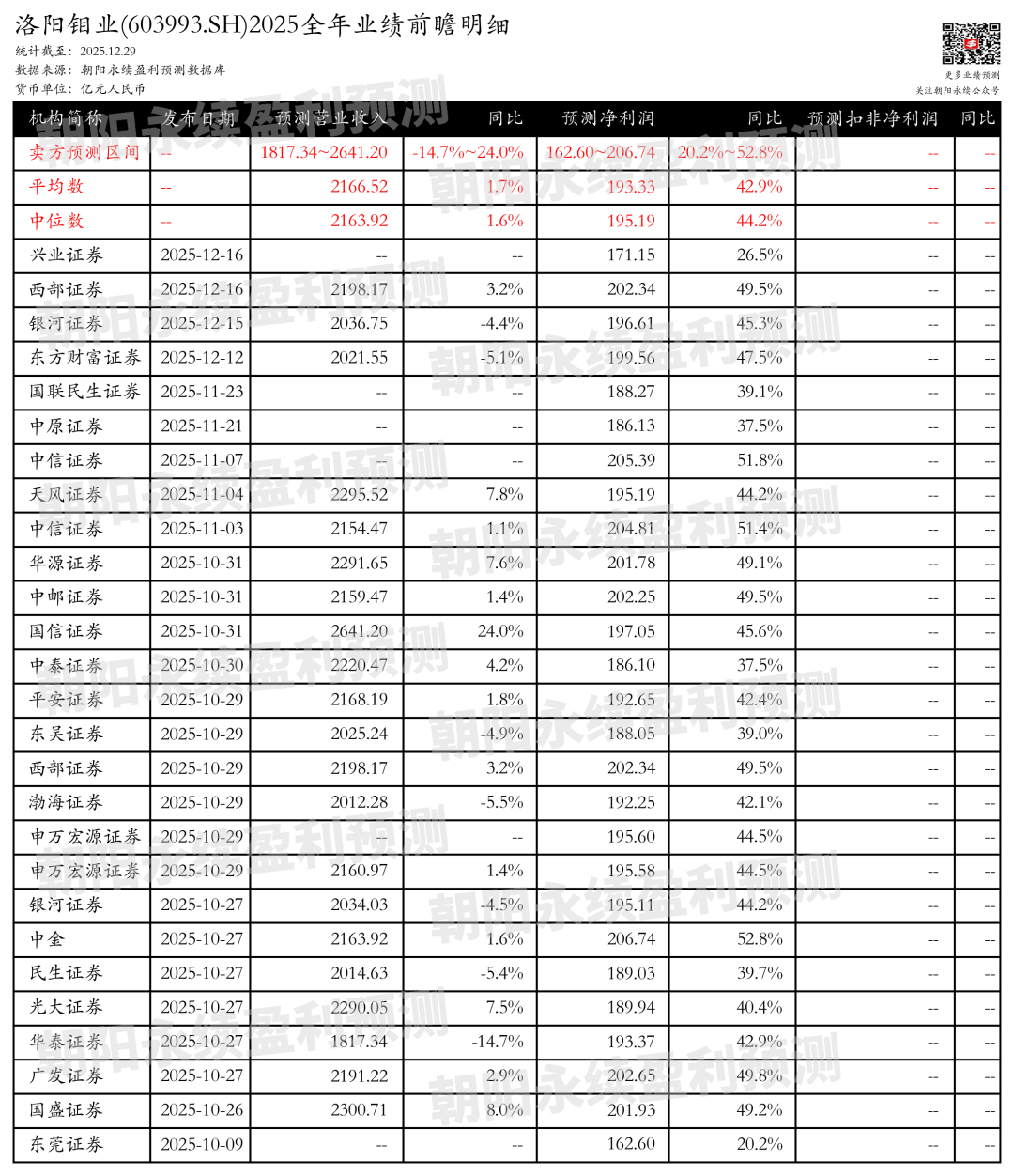
洛阳钼业:预计2026年3月28日公布年报,预测Q4一致预期营收1817.34~2641.20亿元
Xin Lang Cai Jing· 2025-12-29 13:45
Group 1 - Company Luoyang Molybdenum (603993.SH) is scheduled to release its 2025 annual report on March 28, 2026 [1][6] - For Q4 2025, the expected revenue is projected to be between 181.73 billion to 264.12 billion yuan, with a year-on-year change of -14.7% to 24.0% [2][6] - The expected net profit for Q4 2025 is forecasted to be between 16.26 billion to 20.67 billion yuan, representing a year-on-year growth of 20.2% to 52.8% [2][6] Group 2 - According to Minsheng Securities, Luoyang Molybdenum's production in 2024 is expected to exceed forecasts, with copper and cobalt production increasing significantly by 55% and 106% year-on-year, respectively [4][8] - The company’s production capacity for copper and cobalt has surpassed annual production targets, achieving completion rates of 114.1% and 163.1% [4][8] - The company aims for a copper production target of 800,000 to 1,000,000 tons and cobalt production of 90,000 to 100,000 tons over the next five years [4][9] Group 3 - Guosheng Securities anticipates a significant increase in Luoyang Molybdenum's net profit for 2024, estimating it to reach between 12.8 billion to 14.2 billion yuan, a year-on-year increase of 55.2% to 72.1% [5][9] - The company is expected to see a quarter-on-quarter net profit growth of 58.6% to 107.6% in Q4 2024 [5][9] - The company has signed a cooperation agreement for the Nzilo_II hydropower station to ensure power supply, and projects TFM and KFM are progressing smoothly [10]

中国矿企出海丨破题“通用语言”,汇聚和合智慧
中国基金报· 2025-12-26 01:28
Core Viewpoint - Chinese mining companies are leveraging technology and management practices to address the challenges of resource development in Africa, aiming to transform resources into national capabilities and future potential [2]. Group 1: Supply Chain Management Innovations - Luoyang Molybdenum's KFM copper-cobalt mine has established a unique "material coding" system, setting a new benchmark for international mining management and facilitating effective communication within the supply chain [3][5]. - The material coding system integrates with the logistics chain, allowing real-time updates on the transportation status of materials, thus addressing challenges such as port strikes and border congestion [4]. Group 2: Standardization and Local Adaptation - In Mali, Hainan Mining's project team developed new designs based on Chinese standards to overcome the lack of local industrial standards, demonstrating flexibility in adapting to local conditions while maintaining core Chinese engineering principles [7]. - The project manager emphasized that using Chinese standards not only improves efficiency but also ensures quality, showcasing the reliability of Chinese technology [11]. Group 3: Cost Control and Competitive Advantage - Cost control is identified as the core competitive advantage for mining companies, especially in overseas operations, where effective management can lead to profitability even in challenging environments [11]. - Chinese mining companies are noted for their high efficiency and strong cost control capabilities, which allow them to succeed where Western companies may struggle [11]. Group 4: Integration of Chinese and Local Management Practices - MMG's management team exemplifies a blend of Chinese and local expertise, with a diverse team composition that enhances communication and operational effectiveness [15]. - The company has adopted English as the primary working language to facilitate better integration of local and international staff, promoting a more inclusive management approach [15]. Group 5: Future Trends and Innovations - The application of advanced technologies such as AI and robotics in mining operations is anticipated to significantly enhance productivity and operational efficiency in Africa [12]. - Continuous investment in research and development is planned, focusing on digital mining and green metallurgy to reduce carbon emissions and improve mining processes [12].
温氏股份(300498) - 2025年12月18日-19日投资者关系活动记录表
2025-12-22 08:36
Group 1: Production and Operational Performance - The company sold a total of 3,591,000 pigs from January to November 2025, with 3,190,000 being market pigs and 401,000 piglets [2] - The total production of meat chickens reached 1.19 billion, with 200 million sold as fresh products, achieving a fresh sales ratio of 17% [2] - The company maintained a stable production of livestock and poultry, with core production indicators continuously optimized [2] Group 2: Cost Management in Pig Farming - In November, the production cost of piglets decreased to 250-260 RMB per head, with a market pig listing rate of 93.3% [3] - The comprehensive cost of raising market pigs dropped to 6 RMB per jin in November [3] - The average comprehensive cost for pig farming from January to November 2025 was between 6.1-6.2 RMB per jin, with a target of approximately 5.9 RMB per jin for 2026 [4] Group 3: Growth Strategies in Pig Farming - The company aims to enhance existing production capacity by improving PSY (Pigs Sold per Year) levels, targeting an increase of at least 1 head per year, with a future goal of exceeding 32 heads [5] - The company plans to diversify its operations, aiming for piglet sales to account for 5%-10% of total pig sales [6][7] Group 4: Chicken Farming and Market Positioning - The target for meat chicken listings in 2026 is to increase by approximately 10% from 2025 levels [10] - The company aims to enhance long-term profitability in chicken farming by increasing profit per chicken by 2 RMB, focusing on innovative marketing and product upgrades [11][12] Group 5: Financial Health and Future Plans - As of the end of Q3, the company's debt ratio was 49.4%, which is relatively low compared to industry standards, with a target to reduce it to around 48% by 2026 [14] - The planned fixed capital expenditure for 2026 is between 5-6 billion RMB [15] - The company currently has no plans for a Hong Kong stock listing or new equity financing [16] Group 6: Digital Transformation Initiatives - The company has partnered with high-tech firms to implement digital applications, significantly improving management efficiency and reducing operational costs [18] - The "Mushi Tong System" has enhanced management efficiency by 150% for remote farmers, with inventory management efficiency increasing by 300% [18]

展现成本管控能力 新广益多措应对原料波动
Quan Jing Wang· 2025-12-20 06:56
Core Viewpoint - The successful online roadshow for the initial public offering (IPO) of Xinguangyi Electronic Co., Ltd. marks a significant event for the Jiangsu capital market, showcasing the company's robust supply chain management capabilities in response to raw material price fluctuations [1] Group 1: Company Performance - The company has established a dual-response mechanism to address market volatility in key raw materials such as PET and PI resins [1] - Continuous improvement in product formulations and optimization of production processes have been implemented to reduce unit raw material consumption [1] - The company leverages its technological advantages and customer relationships to create a reasonable price adjustment mechanism, allowing it to pass some cost pressures downstream [1] Group 2: Cost Management - The combination of strategies effectively mitigates the impact of raw material price fluctuations on operational performance [1] - Over the past few years, the company's main business cost structure has remained relatively stable, with raw material costs consistently accounting for 85%-88% of total costs [1] - This stability reflects the company's strong cost control capabilities [1]
研判2025!中国开放吻合器行业分类、产业链、发展现状、竞争格局及未来趋势分析:开放吻合器市场空间被压缩,行业竞争焦点将转向产品升级与成本控制[图]
Chan Ye Xin Xi Wang· 2025-12-19 01:49
Core Insights - The open stapler market in China is experiencing a declining trend, with the market size expected to reach 1.41 billion yuan in 2024, a year-on-year decrease of 2.1% [1][10] - The decline is primarily attributed to the shift towards minimally invasive surgical techniques, with laparoscopic staplers becoming the mainstream choice due to their advantages in reducing trauma and improving recovery times [1][10] - Despite the decline, open staplers still hold irreplaceable value in grassroots medical settings and complex surgeries, indicating potential stabilization in market size [1][10] Industry Overview - Open staplers are primarily used in traditional open surgeries, offering advantages such as quick suturing, ease of use, and reduced risk of cross-infection [3] - The types of open staplers include linear staplers, circular digestive tract staplers, and others, with a growing trend towards laparoscopic staplers due to their enhanced safety and efficiency [4][5] Market Dynamics - The open stapler market in China saw a decline from 1.53 billion yuan in 2020 due to the pandemic, with a recovery in 2021 followed by a projected decline from 2022 to 2024 [10][11] - The global open stapler market is expected to reach 3.34 billion USD by 2024, reflecting a slow growth rate influenced by the expansion of laparoscopic staplers [10] Competitive Landscape - The market remains competitive, with foreign giants like Johnson & Johnson and Medtronic dominating the high-end segment due to their technological advantages [12] - Domestic companies are leveraging local production to control costs and meet the needs of hospitals, with some products nearing the performance of foreign brands [12] Key Players - Notable companies in the open stapler industry include Dongxing Medical, Lepu Medical, and David Medical, which are focusing on product innovation and cost-effective solutions [2][12][13] Development Trends - Continuous optimization of technology in open staplers is expected, focusing on safety, efficiency, and precision [14] - The integration of automation and standardization features is anticipated, aiming to reduce reliance on surgeon experience and enhance surgical quality [15] - Future demand will likely concentrate on specific fields, particularly in grassroots healthcare and complex surgical scenarios, emphasizing differentiated competition [16]


本钢板材:公司进一步加大高附加值的产品研发与生产,缩小与头部企业的产品竞争力差距
Zheng Quan Ri Bao Wang· 2025-12-18 14:11
Core Viewpoint - The company is focusing on enhancing its product offerings by increasing the research and production of high value-added products to narrow the competitive gap with leading enterprises and improve pricing and gross margins [1] Group 1: Product Strategy - The company is increasing its investment in the research and production of high value-added products [1] - The strategy includes differentiating products to enhance pricing power and gross margins [1] Group 2: Cost Management - The company is continuously working to reduce procurement costs through strategic purchasing, product substitution, and volume-price discounts [1] - Economic inventory management is being scientifically developed to optimize costs [1] Group 3: Sales and Distribution - The company is exploring regional cooperation to expand its sales radius and reduce cross-regional transportation costs [1] Group 4: Operational Efficiency - The company is advancing the intelligent transformation of production processes [1] - Operational management is being refined to optimize personnel and equipment efficiency, thereby improving capacity utilization [1]

藏格矿业20251217
2025-12-17 15:50
Summary of Cangge Mining Conference Call Company Overview - Cangge Mining is the second-largest potash fertilizer producer in China, actively responding to the national food security strategy with a production target of 1 million tons and sales of 950,000 tons in 2025 [2][3] - The company also engages in lithium carbonate and copper production, with ongoing projects in these sectors [3] Key Points and Arguments Potash Fertilizer - The average tax-inclusive price for potash fertilizer in the first three quarters was approximately 2,920 RMB/ton, reflecting a year-on-year increase of nearly 27% [2][3] - The average sales cost decreased to 978 RMB/ton, down nearly 20% year-on-year [2][3] - The company plans to maintain a production capacity of around 1 million tons of potash fertilizer, with expectations to double production in the next three to five years to address domestic supply shortages [2][9] Lithium Carbonate - Due to a production halt in July, the 2025 production guidance for lithium carbonate was revised down to 8,510 tons [2][3] - The company undertook maintenance and training during the downtime to ensure stable operations upon resumption [3][6] - The production cost target for lithium carbonate is set at approximately 40,000 RMB/ton [7] Copper Production - Cangge Mining holds a 30.78% stake in Jilong Copper, which is expected to produce 185,000 to 190,000 tons of copper in 2025, with 142,500 tons completed in the first three quarters [4][5] - The second phase of the Jilong Copper project is anticipated to be completed by the end of 2025, with production capacity expected to be released gradually in 2026 [5] Market Outlook - The company is optimistic about copper prices due to supply constraints and increasing demand from emerging economies, as well as the energy transition in Europe and the U.S. [3][18] - The potash fertilizer market is characterized by high supply concentration, with Canada and Russia controlling over 50% of global supply, which is expected to maintain price stability [18][19] - The lithium carbonate market is also projected to grow due to rising demand from energy storage and electric vehicle sectors [19] Additional Important Information - The Laos potash project is progressing steadily, with a phased target of achieving 2 million tons of capacity [9] - The company is exploring ways to resolve competition issues with Zijin Mining, including potential asset injections or management agreements [11][12] - Future dividend policies will be clarified in the annual report, with indications that dividends may be linked to Jilong Copper's dividend schedule [20][21] - The company aims to balance growth with shareholder returns, emphasizing a commitment to rewarding investors [20]

氨纶行业更新
2025-12-17 02:27
Summary of the Conference Call on the Spandex Industry Company Overview - **Company**: Huang Hai Company - **Industry**: Spandex Key Points and Arguments 1. **Financial Recovery**: Huang Hai Company faced bankruptcy restructuring due to financial strain, shareholder disputes, and losses from Inner Mongolia projects. Currently, the company is improving its operations through inventory clearance and accounts receivable collection, with an annual production of approximately 130,000 tons and an operating rate of 66% [2][4][12]. 2. **Production and Capacity**: The company has reduced production scale and secured sufficient operating funds through internal shareholder investments and external financing. The total debt ratio is between 65% and 70%, primarily from asset pledges and government-coordinated loans [2][6][10]. 3. **Cost Structure**: The complete cost of spandex production is around 24,000 RMB per ton, which is competitive with market prices. The company can save 1,000 to 1,500 RMB per ton by using self-produced raw materials from its Inner Mongolia PTMEG and BDO projects, which have stable production capabilities [2][7][8]. 4. **Inventory Management**: Current inventory stands at approximately 20,000 tons, equivalent to 60 days of production. The company is prioritizing inventory clearance to improve cash flow and has controlled production to manage high inventory levels [2][11][12]. 5. **Market Dynamics**: The spandex industry is experiencing a divergence in operational performance among companies. For instance, Huafeng has a lower inventory level of about 45 days, while the industry average is around 50 days. Huafeng is expanding production despite high inventory to leverage economies of scale and pressure smaller competitors [3][22]. 6. **Bankruptcy Risks**: Huang Hai Company does not currently have bankruptcy plans, as it has managed to stabilize operations. The company is optimistic about its future, especially if raw material supply remains smooth and inventory levels decrease [14][12]. 7. **Employee Stability**: The company currently employs about 1,500 staff, with a focus on retaining core technical personnel to ensure operational continuity when business recovers [19]. 8. **Industry Challenges**: Other companies in the spandex sector, such as Banglian and Sihai, are facing significant challenges, including high inventory and financial costs, leading to potential market exits. The overall market sentiment is cautious, with many companies considering asset sales for recovery [13][20]. 9. **Future Plans**: Huang Hai Company plans to continue reducing operational scale and producing low-margin products to maintain normal operations. The company is also focusing on collecting accounts receivable to improve cash flow during the year-end period [4][15]. 10. **Competitive Landscape**: Companies like Huafeng and Shultz are expanding their production capacities, with Huafeng investing in new facilities and Shultz acquiring smaller firms to enhance its market position. This competitive strategy aims to consolidate market share and drive smaller players out of the market [26][27]. Additional Important Information - **Government Support**: The local government is actively involved in supporting Huang Hai Company, which is crucial for its operational stability [17][18]. - **Debt Management**: The company is managing its debt through shareholder support and external loans, with a significant portion of funding coming from internal channels [10][12]. - **Market Outlook**: The spandex industry is expected to see further consolidation, with potential exits of weaker players as market conditions evolve [20][22].