
偿债能力

Search documents
Williams-Sonoma’s Dividend Raised for the 20th Straight Year: Is It Safe?
Yahoo Finance· 2026-03-19 11:50
Core Viewpoint - Williams-Sonoma announced a 15% increase in its quarterly dividend, marking the 20th consecutive year of dividend increases, despite facing challenges from weak consumer sentiment and tariff costs [2][8]. Financial Performance - The annual dividend is now $3.04 per share, with a dividend yield of approximately 1.7% [3][4]. - For FY2025, the company generated $1.314 billion in operating cash flow and had free cash flow of $1.055 billion, comfortably covering the $316 million in dividends paid [4][5]. - The earnings payout ratio is healthy at approximately 34.3% ($3.04 / $8.84), and the free cash flow payout ratio is also healthy at about 29.9% ($316 million / $1.055 billion) [5]. Debt and Equity Position - Williams-Sonoma has a debt-free balance sheet, with $1.02 billion in cash and shareholders' equity of $2.08 billion, eliminating any debt service obligations that could impact dividend payments [7][8].

西部证券股份有限公司 当年累计新增借款超过上年末净资产的百分之二十的公告
Zhong Guo Zheng Quan Bao - Zhong Zheng Wang· 2026-02-05 22:40
Core Viewpoint - The company disclosed its cumulative new borrowing situation as of January 2026, indicating a significant increase in debt levels relative to its net assets, which may impact its financial stability and operational capacity [1]. Financial Data Overview - As of December 31, 2025, the company's unaudited net assets were RMB 32.008 billion, with a borrowing balance of RMB 45.936 billion. By January 31, 2026, the borrowing balance increased to RMB 54.002 billion, with a cumulative new borrowing of RMB 8.066 billion, representing 25.20% of the previous year's net assets, exceeding the 20% threshold [1]. New Borrowing Classification - **Bank Loans**: As of January 31, 2026, the company's subsidiary bank loan balance increased by RMB 0.74 billion compared to the end of 2025, accounting for 0.23% of the previous year's net assets, primarily due to an increase in short-term borrowings [2]. - **Corporate Bonds**: The company’s bond balance increased by RMB 8.06 billion as of January 31, 2026, representing 2.52% of the previous year's net assets, mainly due to the issuance of corporate bonds and short-term financing bonds [3]. - **Other Borrowings**: The balance of other borrowings increased by RMB 71.86 billion as of January 31, 2026, accounting for 22.45% of the previous year's net assets, primarily due to increased funds borrowed, repurchase of financial assets, and growth in income certificates [5]. Impact on Debt Servicing Ability - The new borrowings are in compliance with relevant laws and regulations and fall within the company's normal operational activities. The company maintains a stable financial condition, with all debts being repaid on time, indicating that the new borrowings will not adversely affect its operational situation or debt servicing ability [6].

广发证券股份有限公司当年累计新增借款超过上年末净资产的百分之四十的公告
Shang Hai Zheng Quan Bao· 2026-02-05 18:48
Core Viewpoint - The company disclosed that its cumulative new borrowings for the year exceeded 40% of its net assets at the end of the previous year, indicating a significant increase in leverage [1]. Group 1: Financial Data Overview - As of December 31, 2025, the company's total borrowings amounted to 475.643 billion yuan. By January 31, 2026, this figure rose to 552.400 billion yuan, with cumulative new borrowings of 76.757 billion yuan, representing 47.24% of the net assets at the end of the previous year [1]. Group 2: Breakdown of New Borrowings - **Bank Loans**: As of January 31, 2026, the company's bank loan balance decreased by 0.09 billion yuan compared to the end of 2025, attributed to a reduction in short-term borrowings [2]. - **Corporate Bonds and Non-Bank Financial Institution Loans**: The balance of corporate bonds and other financial instruments increased by 14.774 billion yuan as of January 31, 2026, mainly due to new issuances and repayments [3]. - **Other Borrowings**: Other borrowings increased by 61.992 billion yuan as of January 31, 2026, primarily due to an increase in funds from repurchase agreements of financial assets [4]. Group 3: Impact on Debt Servicing Capability - The new borrowings are in compliance with relevant laws and regulations and fall within the company's normal business operations. The company's financial condition remains stable, with all debts being serviced on time, indicating that the new borrowings will not adversely affect the company's operational status or debt servicing capability [5].

Hess Midstream LP (NYSE:HESM) Financial Performance Analysis
Financial Modeling Prep· 2026-02-03 09:00
Core Insights - Hess Midstream LP (NYSE:HESM) is a significant player in the midstream energy sector, focusing on the processing, storage, and transportation of natural gas and crude oil, primarily in the United States [1] Financial Performance - For the fourth quarter of 2025, HESM reported earnings per share (EPS) of $0.72, slightly below the estimated $0.723, but an increase from $0.68 in the same quarter of 2024, indicating growth in profitability [2][6] - The company's revenue for the quarter was approximately $404.2 million, missing the estimated $419.2 million, which raises concerns about meeting market expectations [3][6] - HESM's net income for the quarter was $168 million, a slight decrease from $172.1 million in the previous year, indicating some pressure on profitability [3] Financial Ratios - HESM has a price-to-earnings (P/E) ratio of 13.81, a price-to-sales ratio of 4.56, and an enterprise value to sales ratio of 6.91, reflecting the market's valuation of its earnings and revenue [4] - The enterprise value to operating cash flow ratio is 11.17, indicating the relationship between the company's value and its cash flow from operations [4] Financial Health - The company has a high debt-to-equity ratio of 6.63, indicating significant reliance on debt financing, which could pose risks if financial challenges arise [5][6] - HESM's current ratio is 0.75, suggesting potential liquidity issues as it may struggle to cover short-term liabilities with current assets [5][6] - Despite these challenges, the earnings yield stands at 7.24%, offering a decent return on investment for shareholders [5]


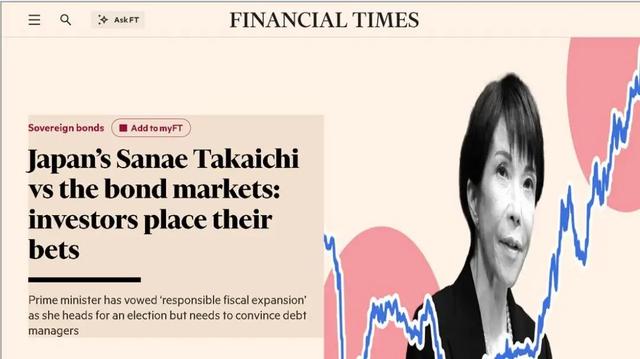
外媒:高市早苗的一个大麻烦,出现了
Xin Lang Cai Jing· 2026-01-23 16:48
Group 1 - The Japanese House of Representatives was officially dissolved on January 23 at the request of Prime Minister Sanae Takaichi, preparing for an early election on February 8, which is seen as a political gamble to consolidate her power [1] - There is widespread skepticism among investors regarding Takaichi's promised new policies, particularly concerning tax cuts, which are perceived to exacerbate Japan's already heavy debt burden [1][3] - The Japanese government faces significant pressure as investors are selling off Japanese government bonds, leading to a sharp decline in bond prices, described as "free fall" by Reuters [3] Group 2 - The yield on Japan's 40-year government bonds has surged to 4%, the highest since its issuance in 2007, due to the sell-off in the bond market [3] - The turmoil in Japan's bond market is causing ripple effects in international financial markets, with some large investors selling U.S. Treasuries to buy Japanese bonds, which has displeased U.S. officials [3] - Takaichi's decision to call for early elections has created a power vacuum, making it difficult for the government to implement effective measures to stabilize the financial situation [3][4] Group 3 - The prevailing concerns may force Takaichi's government to finance its promised policies at higher costs, creating a vicious cycle of increasing fiscal pressure [4] - Despite Takaichi's claims of "responsible fiscal expansion," analysts express doubt about the feasibility of her policies, suggesting that they will ultimately burden the Japanese populace [4]
鸿路钢构:公司会做好自身经营管理,增强盈利能力
Zheng Quan Ri Bao Wang· 2026-01-22 13:12
Core Viewpoint - Honglu Steel Structure (002541) emphasizes the importance of making decisions based on the company's current situation, macroeconomic environment, and stock price trends while adhering to legal disclosure obligations [1] Group 1 - The company plans to enhance its operational management and profitability [1] - It aims to continuously expand financing channels to improve debt repayment capacity and risk resistance [1] - The company encourages stakeholders to pay attention to its announcements [1]

特朗普关税收入缩水,华尔街却在狂欢!
Xin Lang Cai Jing· 2026-01-06 14:57
Core Viewpoint - The recent Consumer Price Index (CPI) in the U.S. was unexpectedly low at 2.7%, compared to Wall Street's forecast of 3.1% [10] Group 1: Tariff Impact on Inflation - Economists had anticipated a surge in inflation following the implementation of tariffs, but studies from the San Francisco Fed indicate that tariffs historically have not led to significant inflation increases [2][11] - Although tariffs have negatively impacted economic growth and increased unemployment, their effect on inflation has been milder than expected [3][11] Group 2: Decline in Tariff Revenue - Tariff revenue has started to decline, with figures dropping from a peak of $34.2 billion in October to $30.2 billion in December [4][12] - The average effective tariff rate in the U.S. is estimated to be around 12%, and the impact of tariffs on Personal Consumption Expenditures (PCE) inflation is only about 0.9 percentage points, with most of this already absorbed by the market [4][12] Group 3: Government Debt and Fiscal Implications - The shortfall in tariff revenue has significant implications for the U.S. government's ability to service its debt, with current tariff revenues falling short of White House expectations [5][13] - The cumulative deficit for the fiscal year 2026 has reached $439 billion, and the national debt exceeds $38.5 trillion [6][14] Group 4: Market Reactions - Investors are demanding higher risk premiums, with slight increases in yields for 5-year and 10-year U.S. Treasury bonds [7][15] - However, stock investors are pleased with the current low inflation environment, as evidenced by the S&P 500 index nearing its historical peak [7][15] - The prevailing sentiment on Wall Street is that controlled inflation is viewed positively [8][16]
万科债务展期进入“加时赛”:三项议案未通过,5天宽限期成关键
Xin Jing Bao· 2025-12-16 11:41
Core Viewpoint - Vanke's debt extension negotiations have reached a critical juncture, with the failure of three proposed extension plans leading to a five-day grace period for the "22 Vanke MTN004" bond, which has a principal repayment date of December 15, 2025 [1][2][3] Group 1: Debt Extension Proposals - The "22 Vanke MTN004" bond has an outstanding balance of 2 billion, and the first holder meeting on December 10 failed to pass any of the three proposed extension plans [2] - The first proposal received no votes in favor, the second proposal garnered 83.4% support but fell short of the 90% threshold, and the third proposal only received 18.95% support [2] - Vanke expressed regret over the voting results and committed to further communication and collaboration with stakeholders to find a solution [2][4] Group 2: Grace Period and Future Meetings - The company is currently in a five-day grace period, during which interest will accrue at a rate 5 basis points above the coupon rate on the unpaid principal and interest [3] - A second holder meeting is scheduled for December 18 to continue negotiations regarding the bond [5] Group 3: Market Reactions and Investor Sentiment - Following the news, Vanke's bond prices experienced volatility, with significant declines in several bonds on December 15, while some recovered in the days leading up to the meeting [6] - A positive development for Vanke was the successful one-year extension of a HKD 1.05 billion bank loan, which alleviated some short-term liquidity concerns [6] Group 4: Creditor Concerns and Negotiation Dynamics - The failure of the first round of proposals highlights the differing risk assessments and interests between creditors and the company, with creditors favoring immediate asset recovery over debt extensions [7][8] - Vanke faces significant repayment pressures, with a total of 5.7 billion in domestic debt maturing by December 2025, alongside additional upcoming obligations in subsequent years [8][9] Group 5: Future Implications - The ongoing negotiations are critical, as unresolved issues could lead to broader repercussions for Vanke and the real estate sector if a mutually acceptable solution is not reached [9]

2025上半年扭亏但经营现金流转负遭问询 依米康回复
2 1 Shi Ji Jing Ji Bao Dao· 2025-12-02 02:20
Core Viewpoint - The Shenzhen Stock Exchange has issued an inquiry letter to Yimikang regarding its stock issuance to specific targets, focusing on the company's continuous losses from 2022 to 2024 and its financial health indicators [1] Financial Performance - Yimikang reported continuous losses primarily due to a decline in its environmental governance business and a significant reduction in smart engineering revenue [1] - After divesting its environmental business in 2023, the company shifted its focus to the information data sector, resulting in a surge in sales of key equipment (temperature control equipment), leading to a net profit attributable to shareholders of 14.92 million yuan in the first half of 2025 [1] Cash Flow and Liquidity - The negative operating cash flow is attributed to an increase in receivables and higher raw material inventory expenditures, which the company claims is a trend observed in comparable industry peers [1] - As of June 30, 2025, Yimikang's debt-to-asset ratio stood at 81.4%, with the company emphasizing sufficient bank credit and that 88.06% of its current assets are unencumbered [1] Auditor Confirmation - The accounting firm Xinyong Zhonghe confirmed that the reasons for the company's performance changes are reasonable, indicating a significant improvement in operational status, with adequate impairment provisions and compliance with accounting standards [1]

深铁“输血”额度将尽,万科拟展期20亿境内债导致股债双杀
Guan Cha Zhe Wang· 2025-11-27 10:04
Core Viewpoint - Vanke, a benchmark enterprise in the real estate industry, is facing severe debt issues, leading to significant market volatility and a decline in stock prices [1][2]. Company Summary - As of November 27, Vanke's A and H shares hit new lows, with A shares at 5.47 CNY (down 7.13%) and H shares at 3.58 HKD (down 7.73%) [1]. - Vanke announced a bond extension on November 26, planning to hold a meeting on December 10, 2025, regarding the "22 Vanke MTN004" bond, which has a principal repayment date of December 15, 2025, with a balance of 2 billion CNY and an annual interest rate of 3% [1]. - The decision to extend the bond repayment has raised concerns about Vanke's credit status, indicating insufficient debt repayment capability [1][2]. Industry Summary - Vanke's debt crisis is expected to have a broader negative impact on the real estate industry, as it was previously viewed as a leader in the sector [2]. - The extension of the "22 Vanke MTN004" bond is just a small part of Vanke's overall debt pressure, with a total of 5.7 billion CNY in domestic bonds maturing in December 2025, including another 3.7 billion CNY bond due on December 28, 2025 [2]. - The next two years will see Vanke facing a peak in debt repayment, with over 12 billion CNY in domestic bonds maturing in 2026 and 7 billion CNY in overseas bonds and 3 billion CNY in domestic bonds due in 2027 [2]. Financial Support and Future Outlook - Historically, Vanke has managed its debt pressures well due to strong cash flow and support from its major shareholder, Shenzhen Metro Group, which has provided 30.8 billion CNY in loans [3]. - However, the recent bond extension indicates that Shenzhen Metro may no longer provide financial support, pushing Vanke to rely on market-based solutions for debt resolution [3][4]. - Following a recent agreement with Shenzhen Metro, Vanke has limited access to further unsecured loans, with only 2.29 billion CNY remaining available [4]. - Vanke is expected to adopt market-driven strategies for debt resolution, including asset sales, refinancing, and debt-to-equity swaps [4]. - Despite the challenges, Vanke has been actively improving its cash flow through operational initiatives and has valuable assets that could be leveraged to alleviate debt pressure [4].
