
零碳园区

Search documents
青岛重点项目提前两个月完成年度投资计划
Da Zhong Ri Bao· 2025-11-28 01:43
Core Insights - Qingdao has completed an investment of 337.46 billion yuan in 1,073 key construction projects, achieving an investment completion rate of 102.8% by the end of October, two months ahead of schedule [1] - The acceleration of project implementation is significantly boosting the production capacity of the new energy vehicle sector in Qingdao, with several key projects in progress [2] - New projects are driving the advancement of advantageous industries towards higher value chains, particularly in the smart home appliance and modern light industry sectors [3] - The rapid construction of livelihood projects is addressing public expectations, with significant progress in transportation infrastructure and commercial developments [4] Investment and Project Completion - 1,073 key construction projects in Qingdao have cumulatively completed an investment of 337.46 billion yuan, with a completion rate of 102.8% [1] - Among these, 138 provincial key projects have invested 97.62 billion yuan (90.1% completion), 460 municipal projects have invested 228.19 billion yuan (94.1% completion), and 608 county-level projects have invested 108.31 billion yuan (126.3% completion) [1] New Energy and Automotive Sector - The implementation of key projects is crucial for the surge in new energy vehicle production in Qingdao, with several automotive projects achieving significant milestones [2] - The China Power Construction Corporation's offshore photovoltaic project in Jiaozhou Bay, with a total investment of 10.2 billion yuan, is set to produce approximately 1.07 billion kWh of green electricity annually after full capacity is reached [2] Industry Development - The Kaos Industrial Internet Ecological Park is attracting multiple projects in the smart home appliance sector, with a total investment of 4 billion yuan from eight new projects [3] - The Nestlé UHT milk production line and the Luckin Coffee innovation center are among the significant investments in the modern light industry, with the latter project valued at 3 billion yuan [3] Infrastructure and Livelihood Projects - The Sam's Club project in Qingdao is progressing with mechanical installation and interior decoration, aiming for a mid-2026 opening [4] - Key transportation projects, including the G15 Shenhail Highway expansion and the Weifang-Suzhou high-speed rail connection, are advancing ahead of schedule, enhancing the city's transport network [4] - The Qingdao Development and Reform Commission is streamlining approval processes to facilitate faster project implementation, creating a more favorable investment environment [4]
宜宾零碳启示录
Tai Mei Ti A P P· 2025-11-25 10:44
Core Viewpoint - The 2025 World Power Battery Conference highlighted the rapid growth of the power battery industry in Yibin, marking it as a significant player in the green energy sector and setting the stage for future developments in sustainable energy [2][5]. Group 1: Industry Development - Yibin has transitioned from traditional industries to a modern industrial system, establishing a "4+4+4" framework that includes power batteries, photovoltaics, and new energy storage [5][9]. - The power battery industry in Yibin has seen a dramatic increase in output value, rising from less than 2 billion yuan in 2020 to over 100 billion yuan in 2024 [9]. - The establishment of the Yibin High-tech Zero Carbon Industrial Park aims to create a green energy system and promote low-carbon industrial development through innovative strategies [5][10]. Group 2: Zero Carbon Initiatives - The concept of "zero carbon parks" was introduced in China to address climate change and promote sustainable industrial practices, with Yibin being a key participant in this initiative [6][10]. - Yibin's zero carbon park will focus on creating a closed-loop system for green energy, manufacturing, and application, with 26 projects already underway [10][12]. - The park aims to achieve significant reductions in carbon emissions and energy consumption, with targets set for 2027 including a 20.35% decrease in industrial energy consumption and a renewable energy utilization rate of 78.74% [14][15]. Group 3: Economic Impact - Yibin's GDP reached 275.37 billion yuan in the first three quarters of 2025, with a year-on-year growth of 5.3%, driven by significant increases in the industrial sector [19]. - The growth of the "new three" industries, including smart connected vehicles, crystalline silicon photovoltaics, and power batteries, has been particularly notable, with increases of 38.1%, 35.1%, and 21.1% respectively [19]. - The establishment of zero carbon parks is expected to enhance Yibin's attractiveness for investment, providing a competitive edge in the global market amid rising carbon tariffs [16][17].


滨海投资与浙江泰能订立《战略合作协议》,将在全国范围内开展综合能源业务合作
Zhi Tong Cai Jing· 2025-11-25 10:18
Core Viewpoint - Binhai Investment has entered into a strategic cooperation agreement with Zhejiang Chint Electric Co., Ltd. to jointly develop comprehensive energy business across the country, focusing on zero-carbon parks, smart microgrids, energy storage, and charging stations [1] Group 1: Strategic Cooperation Areas - The collaboration will focus on zero-carbon park planning and implementation, providing integrated energy solutions including smart microgrids, green electricity connections, regional energy stations, distributed energy, energy storage, and waste heat utilization [1] - Both parties will leverage their strengths in funding, market resources, and technical solutions to explore project opportunities and enhance brand influence and market share [2] - The exploration of equity cooperation opportunities will include mutual strategic investments and participation in each other's or their affiliates' equity collaborations [3] Group 2: Resource and Talent Sharing - The companies will share project opportunities, customer resources, and market channels, and will enhance their capabilities through the exchange of management and technical personnel [4] - This strategic cooperation aligns with the group's development strategy in the comprehensive energy sector, enhancing its core competitiveness in zero-carbon parks and comprehensive energy [4] - The integration of Zhejiang Chint's technological advantages in smart electricity and energy management systems with the group's market resources is expected to foster the selection, incubation, and promotion of quality projects, creating new profit growth points and strengthening competitiveness in energy transformation [4]

滨海投资与浙江泰能签署战略合作协议
Ge Long Hui A P P· 2025-11-25 09:50
Core Viewpoint - Binhai Investment (02886.HK) has entered into a strategic cooperation agreement with Zhejiang Chint Electric Co., Ltd. to jointly develop comprehensive energy business projects across the country, focusing on zero-carbon parks, smart microgrids, energy storage, and charging stations [1] Group 1: Strategic Cooperation - The agreement involves Binhai Investment's wholly-owned subsidiary in Tianjin collaborating with Zhejiang Chint's subsidiary, Zhejiang Taineng Smart Power Co., Ltd. [1] - The partnership aims to leverage Taineng's expertise in comprehensive energy solutions, which includes capabilities in constructing smart green microgrids and zero-carbon parks [1] Group 2: Business Development - This strategic cooperation aligns with the group's development strategy in the comprehensive energy sector, enhancing its core competitiveness in zero-carbon parks and comprehensive energy [1] - By integrating Taineng's technological advantages in smart power and energy management systems with the group's market resources and industry chain layout, both parties will identify and promote high-quality projects [1] Group 3: Long-term Value Creation - The collaboration is expected to cultivate new profit growth points for the group and strengthen its competitiveness in the energy transition [1] - The initiative aims to create sustainable long-term value for shareholders [1]
滨海投资(02886)与浙江泰能订立《战略合作协议》,将在全国范围内开展综合能源业务合作
智通财经网· 2025-11-25 09:11
Core Viewpoint - Binhai Investment has entered into a strategic cooperation agreement with Zhejiang Chint Electric Co., Ltd. to jointly develop comprehensive energy business across the country, focusing on zero-carbon parks, smart microgrids, energy storage, and charging stations [1][2]. Group 1: Strategic Cooperation Areas - The collaboration will focus on planning and implementing zero-carbon parks, providing integrated energy solutions including smart microgrids, green electricity connections, regional energy stations, distributed energy, energy storage, and waste heat utilization [1]. - Both parties will leverage their strengths in funding, market resources, and technical solutions to explore project opportunities and enhance brand influence and market share [2]. - The exploration of equity cooperation opportunities will include mutual strategic investments and participation in each other's or their affiliates' equity collaborations [3]. Group 2: Resource and Talent Sharing - The companies will share project opportunities, customer resources, and market channels, and enhance their overall strength through the exchange of management and technical personnel [4]. - This strategic cooperation aligns with the group's development strategy in the comprehensive energy sector, enhancing its core competitiveness in zero-carbon parks and comprehensive energy [4]. - By integrating Zhejiang Chint's technological advantages in smart electricity and energy management systems with the group's market resources and industry chain layout, both parties aim to identify, incubate, and promote high-quality projects [4].
滨海投资(02886.HK)与浙江泰能签署战略合作协议
Ge Long Hui· 2025-11-25 09:05
Core Viewpoint - Binhai Investment (02886.HK) has entered into a strategic cooperation agreement with Zhejiang Chint Electric Co., Ltd.'s subsidiary, Zhejiang Taineng Smart Power Co., Ltd., to collaborate on comprehensive energy business across the country, focusing on zero-carbon parks, smart microgrids, energy storage, and charging stations [1] Group 1: Strategic Cooperation - The agreement aims to leverage both companies' strengths in the comprehensive energy sector, enhancing Binhai Investment's core competitiveness in zero-carbon parks and comprehensive energy [1] - Zhejiang Taineng possesses multiple professional construction qualifications and offers one-stop energy solutions, emphasizing core areas such as "green sources, smart grids, load reduction, new storage, and ultra-fast charging" [1] Group 2: Project Development - The collaboration will involve selecting, incubating, and promoting high-quality projects by integrating Zhejiang Taineng's technological advantages in smart power and energy management systems with Binhai Investment's market resources and industry chain layout [1] - This initiative is expected to cultivate new profit growth points for Binhai Investment and strengthen its competitiveness in the energy transition, ultimately creating sustainable long-term value for shareholders [1]
滨海投资(02886) - 自愿性公告 - 与浙江泰能签署战略合作协议
2025-11-25 08:59
香港交易及結算所有限公司及香港聯合交易所有限公司對本公告的內 容 概 不 負 責,對 其 準 確 性 或 完 整 性 亦 不 發 表 任 何 聲 明,並 明 確 表 示,概 不對因本公告全部或任何部分內容所產生或因倚賴該等內容而引致的 任 何 損 失 承 擔 任 何 責 任。 (於 百 慕 達 註 冊 成 立 之 有 限 公 司) (股份代號:2886) 自願性公告 與浙江泰能簽署戰略合作協議 本 公 告 乃 濱 海 投 資 有 限 公 司(「本公司」,連 同 其 附 屬 公 司 統 稱「本集團」) 自 願 作 出。 本 公 司 董 事 會(「董事會」)欣 然 宣 佈,本 公 司 全 資 附 屬 公 司 濱 海 投 資(天 津) 有 限 公 司 與 浙 江 正 泰 電 器 股 份 有 限 公 司(上 海 證 券 交 易 所 上 市 公 司,股 票代號:601877.SH)之控股子公司浙江泰能智慧電力有限公司(「浙江泰能」) 訂 立《戰 略 合 作 協 議》,雙 方 同 意 在 全 國 範 圍 內 開 展 綜 合 能 源 業 務 合 作, 共 同 推 進 零 碳 園 區、智 能 微 電 網、儲 能、充 換 電 ...
浙江加快园区绿色电力消费核算服务
Xin Hua Cai Jing· 2025-11-25 08:04
此外,浙江电力交易中心还联合国网丽水供电公司、国网金华供电公司,加快园区绿色电力消费核算服 务的推广,对浙江莲都经济开发区、义乌经济技术开发区(赤岸镇区块)进行绿色电力消费核算,覆盖 园区内539家企业绿证、绿电等各类型绿色电力,实现园区数据"一单可查""一单可溯",有效解决绿色 电力消费数据散、自证难等问题,为两大园区申报国家级绿色工业园区、省级零碳园区提供权威数据支 撑,助力园区打造绿色品牌,提升园区招商引资竞争力。 后续,浙江电力交易中心将在全省持续服务园区企业算清绿电帐、零碳帐,开展园区绿色生产诊断分 析,为零碳园区建设提供数据支撑。 (文章来源:新华财经) 11月25日,浙江电力交易中心完成对衢州华友产业园今年前三季度绿证、绿电的核算,出具了园区级绿 色电力消费核算单,为该园区申请国家级零碳园区提供政企共认的零碳电力凭证。 据悉,国家级零碳园区是指通过规划、设计、技术、管理等方式,使园区内生产生活活动产生的二氧化 碳排放降至"近零"水平,并具备进一步达到"净零"条件的园区。评判零碳园区的核心指标是"单位能耗 碳排放",即园区内每消费一吨标准煤的各类能源所排放的二氧化碳量。 据衢州华友产业园相关负责人 ...
宁德时代赋能五粮液,开启“光储+物流”全方位合作
中关村储能产业技术联盟· 2025-11-25 06:22
Core Viewpoint - CATL has established a strategic partnership with Wuliangye Group to integrate traditional liquor production with new energy technology, focusing on zero-carbon transformation and green development in Yibin [2][4]. Group 1: Strategic Collaboration - The collaboration will focus on three main areas: project co-construction, capital cooperation, and supply chain integration [2]. - Both companies aim to create a zero-carbon park, utilizing CATL's expertise in photovoltaic power stations and energy storage systems to upgrade green energy infrastructure [2]. Group 2: Electric Transportation and Logistics - The partnership will promote the electrification of Wuliangye's own vehicles and those of its suppliers, prioritizing the use of CATL's battery products [4]. - There will be an exploration of establishing battery swap demonstration routes to enhance logistics efficiency [4]. Group 3: Battery Business Synergy - The collaboration will deepen the synergy in battery business, focusing on the development of battery pack composite structural components and new product categories [4]. - Leveraging Wuliangye's technology in high-end packaging and anti-counterfeiting, the partnership aims to create high-standard and efficient battery packaging solutions [4].


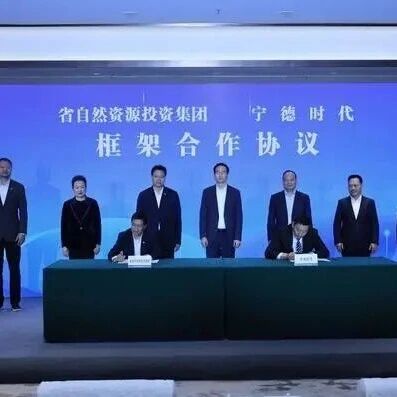
旭阳集团与宁德时代签署战略合作协议
Di Yi Cai Jing· 2025-11-25 05:40
Core Viewpoint - Xuyang Group has signed a strategic cooperation agreement with CATL to enhance collaboration in various fields including renewable energy investment, new energy storage applications, electric transportation transformation, charging infrastructure network layout, and zero-carbon park construction [1] Group 1 - The strategic cooperation aims to deepen investment and development in renewable energy [1] - Collaboration will focus on new energy storage applications [1] - The partnership will also address the transformation and upgrading of electric transportation [1] Group 2 - The agreement includes plans for the layout of charging and swapping infrastructure [1] - Both companies will work together on the construction of zero-carbon parks [1]