双碳目标

Search documents
蔚来换电迈过亿次里程碑 技术验证收官 迎规模化拐点
Zhong Guo Zheng Quan Bao· 2026-02-12 22:15
Core Insights - NIO has achieved a significant milestone by completing its 100 millionth battery swap service, marking a pivotal moment in the large-scale adoption of battery swapping in China [1][2] - The success of NIO's battery swapping model demonstrates its commercial viability and user value, reflecting the rapid development of charging and swapping infrastructure in the country [1][4] Group 1: Battery Swapping Achievements - As of the completion of the 100 million swaps, NIO has established 3,729 battery swap stations nationwide, including 1,020 on highways, creating a comprehensive network connecting over 550 cities [2] - NIO's daily battery swap volume has surpassed 100,000, with an average swap time of 0.8 seconds per vehicle, indicating a shift in user preference towards battery swapping as a primary energy replenishment method [2] - The completion of 100 million swaps has saved users approximately 83.41 million hours of charging time and reduced vehicle costs by over 26.3 billion yuan compared to traditional refueling [2][3] Group 2: Technological and Environmental Impact - Each battery swap includes a safety check of the vehicle's battery system, effectively addressing user concerns about battery degradation and safety [3] - The battery swapping model has contributed to a reduction of 1.7684 million tons of carbon dioxide emissions compared to equivalent gasoline vehicles, highlighting its environmental benefits [3] Group 3: Industry Transformation and Policy Support - The completion of 100 million swaps reflects the accelerated development of charging and swapping infrastructure, showcasing the deep integration of the new energy vehicle industry with the energy sector [4][5] - The Chinese government has established a dual charging and swapping infrastructure development direction, encouraging automakers to participate in building these networks, which has led to significant changes in the industry landscape [4][5] - The construction of charging and swapping infrastructure is becoming a core competitive advantage for automakers, transitioning them from vehicle manufacturers to mobility and energy service providers [6] Group 4: Future Prospects - NIO plans to continue expanding its battery swap network, with a goal of adding 1,000 new swap stations by the end of 2026, bringing the total to 4,600 [2] - The ongoing development of battery swapping technology and infrastructure is expected to support the high-quality growth of China's new energy vehicle industry and contribute to the country's energy transition goals [6]

湖南军信环保股份有限公司(H0418) - 申请版本(第一次呈交)
2026-02-12 16:00
香港聯合交易所有限公司與證券及期貨事務監察委員會對本申請版本的內容概不負責,對其準確性或完整 性亦不發表任何意見,並明確表示概不就因本申請版本全部或任何部分內容而產生或因倚賴該等內容而引 致的任何損失承擔任何責任。 Hunan Junxin Environmental Protection Co., Ltd. 湖南軍信環保股份有限公司 (「本公司」) (於中華人民共和國註冊成立的股份有限公司) 的申請版本 警告 本申請版本乃根據香港聯合交易所有限公司(「聯交所」)與證券及期貨事務監察委員會(「證監 會」)的要求而刊發,僅用作提供資訊予香港公眾人士。 本申請版本為草擬本,其內所載資訊並不完整,亦可能會作出重大變動。 閣下閱覽本文件, 即代表 閣下知悉、接納並向本公司、本公司的聯席保薦人、顧問或包銷團成員表示同意: 倘於適當時候向香港公眾人士提出要約或邀請,有意投資者務請僅依據於香港公司註冊處處長 註冊的本公司招股章程作出投資決定;招股章程的文本將於發售期內向公眾刊發。 (a) 本文件僅為向香港投資者提供有關本公司的資料,概無任何其他目的;投資者不應根據 本文件中的資料作出任何投資決定; (b) 在聯交所網站登載 ...
能源强国建设“大家谈”︱推进核能积极安全有序发展 奋进能源强国新征程
国家能源局· 2026-02-12 13:10
Group 1 - The article emphasizes the strategic importance of building an energy powerhouse in China, aligning with the national goals set forth in the 14th Five-Year Plan and the recent Central Economic Work Conference [3][4]. - The "Four Revolutions, One Cooperation" energy security strategy proposed by President Xi Jinping has guided significant advancements in China's energy sector over the past decade, enhancing self-sufficiency and promoting green transformation [4][5]. - The construction of an energy powerhouse is seen as essential for achieving high-quality development in the energy sector, addressing both energy security and the dual carbon goals [4][5]. Group 2 - Nuclear energy is highlighted as a crucial component of the energy powerhouse strategy due to its clean, low-carbon, and efficient characteristics, with China making significant strides in nuclear technology and capacity [7][8]. - China currently operates and has approved 112 nuclear power units, with a total installed capacity exceeding 125 million kilowatts, ranking first globally [7]. - The safety performance of China's nuclear power operations adheres to the highest international standards, ensuring stable and secure energy supply [7][8]. Group 3 - China General Nuclear Power Group (CGN) is committed to enhancing its core functions and competitiveness, focusing on high-quality development in the nuclear energy sector [9][10]. - CGN's operational and construction capacity exceeds 56 million kilowatts, maintaining world-class safety performance and driving domestic equipment localization [9][10]. - The company aims to strengthen innovation in nuclear technology and expand the application of nuclear energy in various sectors, contributing to the country's green and low-carbon transition [10][11].


关于举办源网荷储及微电网投资建设培训的通知丨系列培训
中国能源报· 2026-02-12 11:57
Core Viewpoint - The integrated development of source-grid-load-storage is essential for the high-quality development of the power system and is a necessary choice for enhancing the consumption of renewable energy and non-fossil energy [2] Group 1: Training Overview - The training on source-grid-load-storage and microgrid investment construction is organized by China Energy News and aims to deepen understanding of related issues [2][3] - The training will take place from March 6 to 7 in Hangzhou [3] Group 2: Target Audience - The training is aimed at large energy groups, power companies, generation groups, local energy groups, key parks, factories, and various energy-consuming institutions [3] - It also targets new energy enterprises (wind, solar, storage), power design institutes, and integrated design units [3] Group 3: Course Modules - The training will cover policy interpretation, current development status, application scenarios, technical analysis, and profit models related to source-grid-load-storage and microgrids [3][4] Group 4: Development Directions - The training will discuss the differences and connections between green electricity direct connection and source-grid-load-storage [4] - It will also cover the application of microgrids in zero-carbon parks and provide guidelines for industrial green microgrid construction [4] Group 5: Fees and Payment - The training fee is set at 3,900 yuan per person, which includes the training fee, while transportation and accommodation are self-catered [4] - Payment can be made via bank transfer, and on-site payment will not be accepted [4]

探访中国首台百万级 “双抽” 机组:一厂暖半城一机保万家
Zhong Guo Xin Wen Wang· 2026-02-12 11:24
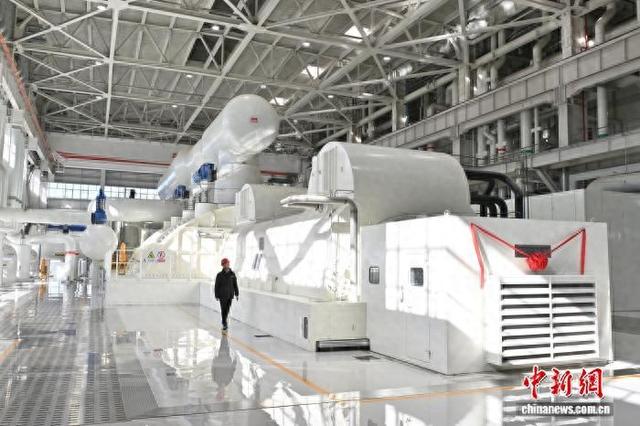
Core Insights - The first 1,000 MW dual extraction cogeneration unit in China has officially commenced commercial operation, marking a significant milestone in energy technology [1][2][3] Group 1: Project Overview - The project, located in Hohhot, Inner Mongolia, has a total investment of 7.693 billion yuan and consists of two units, each with a capacity of 1 million kilowatts [1] - The dual extraction unit is designed to provide both electricity and high-quality steam for urban heating and industrial use, enhancing energy efficiency and supporting carbon neutrality goals [2][4] Group 2: Heating Capacity - The new units will add 50 million square meters of heating capacity, which accounts for over 25% of Hohhot's total heating demand of approximately 170 million square meters [3] - Combined with previous phases of the project, the energy base can meet nearly half of Hohhot's heating requirements, significantly improving heating quality for residents [4] Group 3: Industrial Steam Supply - The facility has the capability to supply 1,200 tons of industrial steam per hour, making it the largest industrial steam supply project among million-kilowatt units in the country [6] - This stable steam supply is expected to support existing enterprises and attract new industrial investments, enhancing regional economic development [6] Group 4: Flexibility and Integration with Renewables - The unit can operate stably between 20% and 100% load, allowing it to adjust output based on renewable energy availability, thus supporting the integration of wind and solar power into the grid [8] - This operational flexibility positions the facility as a crucial backup for the regional power grid, contributing to a cleaner and more efficient energy system [8]
回望2025 | 平安租赁:践行绿色金融 担当社会责任
经济观察报· 2026-02-12 10:42
Core Viewpoint - The company emphasizes its commitment to sustainable development and green finance, positioning itself as a key player in promoting industrial upgrades and green transformation in alignment with national carbon neutrality goals [2][4]. Group 1: Green Finance Initiatives - The company actively integrates green finance into its business model, focusing on sectors such as hydropower, wind power, and water conservancy to support national strategies [4][6]. - In hydropower, the company has provided tailored financial solutions for significant projects like the Zala Hydropower Station, which is expected to generate 3.946 billion kWh annually, saving 1.3 million tons of standard coal each year [6]. - The company has also supported the photovoltaic sector by addressing funding shortages for projects like the Golmud A Photovoltaic Power Station, facilitating capacity expansion and stable green energy output [6][7]. Group 2: Infrastructure and Vehicle Financing - The company has innovated financing models for urban infrastructure, aiding a leading charging operator in optimizing asset utilization and enhancing operational scale [7]. - In the commercial vehicle sector, the company has developed financing products for electric light trucks and heavy-duty vehicles, promoting the replacement of high-pollution vehicles and supporting the logistics industry's green transition [7]. Group 3: Innovative Financial Tools - The company has launched various green financing products, including green medium-term notes and asset-backed special plans, to channel funds into the renewable energy sector [8]. - In 2025, the company received multiple awards for its excellence in green finance, highlighting its innovative practices and contributions to the industry [8]. Group 4: Social Responsibility and Community Engagement - The company has initiated the "Golden Sunshine Road" project, providing distributed photovoltaic power stations to remote schools, benefiting over 2,700 children by improving their learning environments [12][13]. - The "Golden Brick Dream" project focuses on enhancing rural education infrastructure, having built new facilities for over 5,000 students across various regions [15]. - The company aims to balance industrial upgrades with social responsibility, continuing to innovate in green finance and community support initiatives [15].

为什么动力电池不用铅酸电池?
Zhong Guo Zhi Liang Xin Wen Wang· 2026-02-12 05:57
Core Insights - Lead-acid batteries, despite their long history and reliability, are not widely adopted as automotive power batteries due to several performance limitations compared to lithium batteries [1][9]. Performance Comparison - Energy density of lead-acid batteries is only 30-50 Wh/kg, while lithium batteries exceed 200 Wh/kg, making lead-acid batteries 3-4 times less efficient [1]. - For a 48V20Ah specification, lead-acid batteries weigh 25-30 kg, whereas lithium batteries weigh only 7-10 kg, highlighting a significant weight disadvantage [1]. - Lead-acid batteries have a cycle life of only 300-500 charge-discharge cycles under deep discharge conditions, compared to 2000-3000 cycles for lithium iron phosphate batteries and 1500-1800 cycles for ternary lithium batteries [5]. Design and Space Constraints - The low energy density of lead-acid batteries results in a volume and weight that is approximately five times that of lithium batteries, which increases overall vehicle weight and limits design flexibility [3][7]. - The high self-discharge rate of lead-acid batteries leads to rapid energy loss when vehicles are parked for extended periods, making them unsuitable for modern vehicles that require continuous power for complex electronic systems [5]. Economic and Environmental Considerations - Although lead-acid batteries have a lower initial cost, their total lifecycle cost does not present a clear advantage, and frequent replacements can lead to inconvenience [9]. - Lead-acid batteries contain lead, which conflicts with environmental goals and faces stricter regulatory pressures [9]. Specific Use Cases - Lead-acid batteries maintain a strong market position in automotive starting applications and have evolved towards EFB and AGM technologies to meet the auxiliary power needs of hybrid and new energy vehicles [9]. - In low-speed electric vehicles and industrial applications, such as electric forklifts, lead-acid batteries are favored for their cost-effectiveness and high discharge performance [9]. - Lead-acid batteries continue to hold significant importance in backup power and energy storage applications due to their reliable technology and safety features [9].
平安租赁:践行绿色金融 担当社会责任
Jing Ji Guan Cha Wang· 2026-02-12 03:24
Core Viewpoint - The company emphasizes its commitment to green finance and sustainable development, aligning with national "dual carbon" goals to promote high-quality economic transformation and ecological safety [1]. Group 1: Green Finance Initiatives - The company actively integrates green finance into its business model, focusing on financing projects in renewable energy sectors such as hydropower and solar energy [2][3]. - In hydropower, the company has tailored financial solutions for significant projects like the Zala Hydropower Station, which is expected to generate 3.946 billion kilowatt-hours annually, saving 1.3 million tons of standard coal each year [2]. - In the solar energy sector, the company has addressed funding shortages for projects like the Golmud A Photovoltaic Power Station, facilitating capacity expansion and stable energy output [3]. Group 2: Innovative Financial Products - The company has launched various innovative green financial products, including green medium-term notes and asset-backed plans, to direct funds towards renewable energy initiatives [4]. - Recognition in the industry includes multiple awards for excellence in bond issuance and contributions to national strategic capital market innovations [4]. Group 3: Social Responsibility and Community Engagement - The company has initiated projects like "Golden Sunshine Road," which builds distributed photovoltaic power stations in remote schools, providing stable green energy for educational needs [6]. - The "Golden Brick Dream" project focuses on improving rural educational infrastructure, having upgraded facilities for over 5,000 students across various regions [7]. - The company aims to balance industrial upgrades with social responsibility, reinforcing its commitment to community welfare and sustainable development [5][7].
光大证券党委书记、董事长赵陵:坚守金融报国使命 全力建设中国一流服务型投资银行
Zhong Guo Zheng Quan Bao· 2026-02-12 01:47
Core Viewpoint - The company emphasizes its commitment to aligning with national goals and enhancing its core competitiveness while actively participating in the construction of a strong financial nation, aiming for high-quality development during the "14th Five-Year Plan" period [1][11]. Group 1: Implementation of Party's Guidelines - The company has actively implemented the spirit of the 20th Central Committee, organizing over 780 collective study sessions and nearly 260 concentrated publicity activities for employees [1][2]. - The company has undergone internal audits and inspections, resulting in a purified political ecosystem and more standardized operational mechanisms [2]. Group 2: Focus on Real Economy - The company has shifted its focus from merely facilitating IPOs to providing comprehensive support for listed companies, enhancing their operational standards and value [2]. - It has prioritized green finance, significantly increasing its issuance and underwriting of green bonds, supporting projects in clean energy and transportation [2]. Group 3: Governance and Risk Management - The company has strengthened its governance by integrating party leadership into all governance aspects, enhancing the effectiveness of its governance structure [4]. - A comprehensive risk management system has been established, with over 20 new or revised regulations to meet regulatory requirements by 2025 [6]. Group 4: Investment Banking Development - The company aims to build a first-class service-oriented investment bank, with a target of achieving a record high in financing for the real economy by 2025, reflecting a 10% year-on-year increase [5]. - It has successfully launched several market-first projects, including technology innovation bonds and real estate asset-backed securities [5]. Group 5: Talent and Cultural Development - The company is focused on building a high-quality talent pool, implementing training programs that have reached over 8,000 participants [7]. - It promotes a unique financial culture, integrating cultural values into its operational framework and enhancing its influence in the industry [8]. Group 6: Commitment to Social Responsibility - The company is dedicated to serving the real economy and fulfilling its social responsibilities, actively participating in initiatives that support rural revitalization and public welfare [10]. - It aims to enhance its product offerings to better meet the wealth management needs of residents, while also responding to social responsibility assessments [10].

免费报名【生物基化学品与材料专场】,SynBio China第五届中国合成生物学及生物制造大会!
synbio新材料· 2026-02-11 23:02
Core Insights - The article emphasizes the importance of bio-based chemicals and materials as a key pillar of the bio-manufacturing industry, highlighting their advantages such as renewable raw materials and low carbon footprint throughout their lifecycle, which positions them to replace traditional petroleum-based products in various sectors like packaging, textiles, and automotive [2] - The Chinese government prioritizes the development of bio-based new materials, categorizing them as strategic materials, and has implemented multiple supportive policies for the industry. However, challenges remain, including cost competitiveness, stability of raw material supply chains, product performance optimization, and market acceptance [2] Event Details - The "5th China Synthetic Biology and Bio-Manufacturing Conference" will be held in Hangzhou from March 31 to April 1, 2026, with an expected attendance of 1,000 participants [4] - The conference aims to gather insights from various sectors including industry, academia, and research to address challenges in the development of bio-based chemicals and materials, promoting high-quality growth in the industry [2][4] Forum Setup - The conference will feature multiple sessions, including: - Day 1 AM: Bio-Manufacturing Industry Ecosystem Conference and Life China 3rd Functional Food and Nutrition Science Conference - Day 1 PM: Special sessions on food and drug synergy, efficacy skincare, and AI + bio-manufacturing - Day 2 AM: Special sessions on functional raw materials and bio-manufacturing, and bio-manufacturing processes - Day 2 PM: Special sessions on future food and all-age nutrition, and bio-based chemicals and materials [8] Proposed Topics - Topics to be discussed include: - Green bio-manufacturing of bio-based bulk chemicals - Molecular and material innovation based on synthetic biology technology - Large-scale production and high-value utilization of bio-based platform compounds - Development and application of furan bio-based new materials technology - Industrialization practices for high-value utilization of non-food biomass [13]