生态保护

Search documents
为鱼类洄游开辟生命通道
Xin Lang Cai Jing· 2026-01-04 04:32
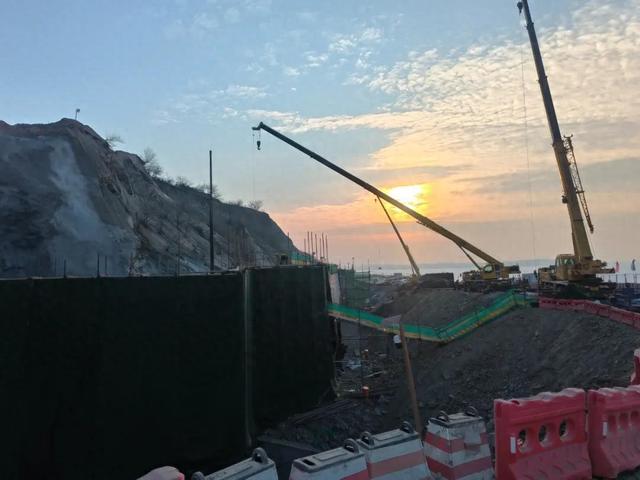
转自:草原云 仲冬时节,兴安盟扎赉特旗的绰尔河畔寒意正浓,而绰勒水利枢纽补建鱼道和生态放流下泄设施工程项 目现场却是一派火热。项目抢抓冬季施工窗口期,为打通鱼类洄游"生命通道"持续注入动能。 绰勒水利枢纽补建鱼道和生态放流下泄设施工程项目施工现场。 施工现场,大型机械轰鸣作业,工人们有条不紊进行防洪闸模板支固、隧道开挖等工作,项目建设向 着"鱼畅其游、水畅其流"的目标加速推进。"截至目前,上游鱼道工程除了防洪闸已全部完成,隧洞开 挖完成95%,综合阀井及观察室浇筑接近完工,预计在明年主汛期前整体工程完工。"内蒙古绰勒水利 水电股份有限公司副总经理和平说。 据了解,项目主体工程包括807米长鱼道及270.38米生态放流系统,是引绰济辽工程的重要生态配套项 目,承载着维护流域水生生物多样性的重要使命。该项目通过贯通"绰勒灌区—绰勒水利枢纽—文得根 水库"之间的鱼类洄游路径,为洄游鱼类提供安全的繁殖通道。 "工程总投资1.54 亿元,自2025年3月开工以来,项目建设高效推进。目前累计完成投资1.21亿元。接下 来我们会严把工程质量关,加快施工进度,让这条生态通道早日发挥作用。工程建成后,能完善绰勒水 利枢纽生态功 ...

内蒙古公益诉讼检察十大典型案例发布
Xin Lang Cai Jing· 2026-01-04 02:28
Core Viewpoint - The Inner Mongolia People's Procuratorate has released the top ten typical cases of public interest litigation for 2025, focusing on areas such as forest protection, river and lake protection, grassland protection, cultural heritage protection, and production safety [1][2]. Group 1: Typical Cases - The typical cases include: - Administrative public interest litigation case regarding illegal groundwater extraction by the People's Procuratorate of Xincheng District, Hohhot [1] - Administrative public interest litigation case for the protection of the Warring States Zhao North Great Wall site by the People's Procuratorate of Shiguai District, Baotou [1] - Administrative public interest litigation case addressing the destruction of forest land by temporary land use in the Greater Khingan Mountains by the People's Procuratorate of Hulunbuir [1] - Administrative public interest litigation case for standardizing the construction of barrier-free environments in medical institutions by the Xingan League Procuratorate [1] - Administrative public interest litigation case for addressing river water pollution by the People's Procuratorate of Hohhot, Horqin District [1] - Administrative public interest litigation case for addressing the obstruction of river flood safety by the People's Procuratorate of Chifeng [1] - Administrative public interest litigation case for the governance of grassland geological environment by the People's Procuratorate of Ulagai Management Area, Xilin Gol League [1] - Administrative public interest litigation case for addressing unlicensed operations of off-campus training institutions by the People's Procuratorate of Dongsheng District, Ordos [1] - Criminal attached civil public interest litigation case for hazardous waste pollution against Zhang et al. by the People's Procuratorate of Wulatehouqi, Bayannur [1] - Administrative public interest litigation case for eliminating safety production hazards in chemical enterprises by the People's Procuratorate of Hainan District, Wuhai [1]. Group 2: Significance and Impact - The selected cases are based on Inner Mongolia's characteristics as a national ecological security barrier and a region rich in cultural heritage, chosen from over 150 cases submitted by various procuratorates [2] - These cases are significant for their impact and effectiveness, serving as a systematic summary of public interest litigation practices and a concrete measure to unify law enforcement and judicial standards, promoting a comprehensive framework for public interest protection [2] - The initiative aims to activate social governance efficiency through legal power and provide replicable and promotable practical samples for the high-quality development of public interest litigation work in the region [2].
【现场短新闻大赛】巧遇“鸟中大熊猫”
Xin Lang Cai Jing· 2026-01-03 23:23
(来源:安徽新闻网) 除了东方白鹳,记者梳理发现,近年来,小天鹅、青头潜鸭、彩鹮等国家级保护鸟类相继在阜阳境内的 湿地、河流等区域出现。 颍上地处淮河流域,位于全球9条主要候鸟迁徙通道之一的"东亚—澳大利西亚迁徙通道"之上,境内河 流交错、湿地众多,而且生态环境较好,食物丰富,每年都会吸引大量迁徙候鸟在此短暂停歇、补充能 量,甚至一些鸟类选择在此安家过冬、繁育后代。颍上县不断加大自然保护区和湿地的保护力度,深入 实施生态保护修复工程,持续强化生物多样性监测,为候鸟及珍稀鸟类营造更优栖息环境。 ■ 本报记者 李鹏 本报通讯员 张天峰 "在新年第一天拍到两只'国宝',很令人惊喜。"陆磊兴奋地说。作为摄影爱好者,他长期关注拍摄各种 鸟类,这次偶遇让他格外激动。东方白鹳被誉为"鸟中大熊猫",全球种群数量稀少,被世界自然保护联 盟列为濒危物种,在中国更被列为国家一级重点保护野生动物。 据了解,东方白鹳属于大型涉禽,体态优雅,羽毛以白色为主,翅膀边缘呈黑色,双腿修长,它们对水 质和自然环境要求极为苛刻,需要优质的水域、丰富的食物来源和良好的栖息地。 记者了解到,这并非东方白鹳第一次来到颍上,2024年11月,一对东方白鹳 ...
期待更多丹顶鹤来越冬停留
Xin Lang Cai Jing· 2026-01-03 22:19
(来源:新华日报) 长江南京段也频传佳音。南京江心洲生态科技岛夹江侧,不时有江豚跃出水面。"微笑天使"长江江豚的 稳定栖息,是长江生态改善的生动注脚。近年来,长江"十年禁渔"持续推进,构建起就地保护、迁地保 护、人工繁育和野化放归的全链条保护体系,江豚种群数量实现历史性回升。 "十四五"以来,江苏以壮士断腕的决心,打响长江保护修复攻坚战,坚持生态优先、绿色发展,坚定不 移淘汰落后产能,为绿色发展腾出空间;重拳整治污染,着力提升长江水质;大力实施岸线修复,还岸 于民、还绿于江。长江大保护非一日之功,亦非一域之责。江苏坚持全省"一盘棋",强化规划引领,出 台系列法规政策,为长江大保护构筑坚实的制度保障。如今,沿江两岸生产、生活、生态空间布局持续 优化,沿江岸线变为生态走廊、休闲步道,人民群众的获得感幸福感不断提升。 当丹顶鹤到访、江豚归来,长江大保护进入"下一程"。近日,农业农村部会同国家发展改革委等部门联 合印发《长江江豚拯救行动计划(2026—2035年)》,提出10大保护与修复行动,覆盖长江江豚生活史 全过程和保护工作全链条,着眼于长远生态系统恢复,以推动长江江豚种群实现可持续增长为更高目 标,标志着保护工 ...
山东出台全国首个省级水网调度管理办法
Xin Hua Wang· 2026-01-03 02:49
Core Viewpoint - The Shandong Provincial Water Resources Department has issued the "Shandong Provincial Water Network Dispatch Management Measures (Trial)," marking the first provincial-level water network dispatch management regulation in the country, which aims to enhance the management and utilization of water resources from construction to optimization [1][2]. Group 1: Systematic Framework - The new measures establish an integrated system for "dispatching water well, managing water well, and utilizing water well," indicating a comprehensive upgrade of Shandong's modern water network [1]. - The regulation will officially take effect on January 1, 2026, and includes multiple institutional innovations in dispatch system construction, responsibility mechanism design, ecological protection integration, and market mechanism introduction [1]. Group 2: Dispatch System Design - The measures introduce three types of dispatch systems: regular dispatch, emergency dispatch, and special dispatch, covering the entire chain from daily assurance to emergency response and special support [1]. - Regular dispatch focuses on ensuring basic water needs for daily life, ecology, and production; emergency dispatch addresses sudden events like droughts and water pollution; special dispatch supports specific goals such as navigation, ecological restoration, and cultural tourism development [1]. Group 3: Responsibility Division - The measures clearly define the responsibilities of provincial, municipal, and county-level water administrative departments, as well as the boundaries of responsibilities for water network operation dispatch units and engineering management units [1]. - A management mechanism of "provincial overall planning, hierarchical execution, and unit implementation" is established to enhance operational efficiency [1]. Group 4: Ecological Flow Control - For the first time, the measures incorporate ecological flow control indicators into the provincial water resource allocation plan and annual dispatch plan, establishing an ecological flow early warning and response mechanism [2]. - This innovation shifts water resource dispatch from a traditional "supply based on demand" model to a more integrated approach that balances ecological and production needs, reinforcing water ecological protection [2]. Group 5: Market Mechanism Introduction - The measures introduce market mechanisms by incorporating water rights trading into the dispatch management system, allowing for the expression of water rights trading intentions and demands in annual water use plans [2]. - This encourages cross-regional water resource allocation through water source replacement and water rights trading, optimizing water resource distribution [2]. Group 6: Digital Empowerment and Closed-loop Supervision - The measures emphasize digital empowerment and closed-loop supervision to support effective water network management [3]. - A comprehensive information platform for water network operation dispatch will be established at provincial, municipal, and county levels, coordinating core dispatch needs such as resource optimization and flood/drought management [3]. - The regulation constructs a complete management closed loop covering planning, execution, supervision, evaluation, and accountability [3].
一部黄河源头的百科全书
Xin Lang Cai Jing· 2026-01-02 22:39
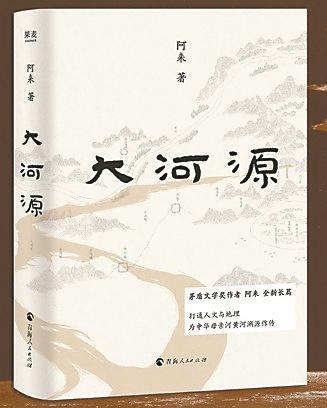
读完《大河源》已是深夜,不得不说,这本书真像是一幅徐徐展开的壮美画卷,带领读者走进黄河源头 的神秘世界,开启一场跨越时空的文明溯源之旅,探寻人与自然、人与文化之间深刻而复杂的联系。读 之感触颇多,受用无穷。 《大河源》/阿来/青海人民出版社/2025年3月 □杨称权 (来源:黑龙江日报) 转自:黑龙江日报 在《大河源》中,作者以其细腻入微的描写,为读者呈现了黄河源区的壮美自然景观。他笔下的山川、 湖泊、草原充满生命力,"群山像是大地涌起的波涛,在遥远的天际与蓝天相接,阳光为它们勾勒出金 色的轮廓。山间的湖泊,犹如大地的眼眸,清澈而深邃,倒映着天光云影与周围的雪山草甸",如此生 动的描绘让读者仿若身临其境,真切感受到高原的劲风、暖阳与澄澈的空气。书中还展现了丰富的高海 拔生物物种:绿绒蒿、马先蒿、龙胆等高山植被坚韧美丽;藏野驴、红狐等飞禽走兽野性活泼,使读者 领略到大自然的神奇与魅力。 本书的文学价值同样不可忽视。作者展现了惊人的跨学科跨领域整合能力,他引用达尔文的进化论解释 高原植物的适应性特征,运用林奈植物分类法梳理甘青铁线莲的物种演化,同时以海德格尔式的哲学思 考追问"地理学者不会从诗歌中的山谷探索河流源 ...
日均超万人次打卡青藏高原野生动物园
Xin Lang Cai Jing· 2026-01-02 19:32
游客拍照留念。 园内各展区吸引众多亲子家庭驻足,游客通过观光车近距离观察雪豹、兔狲等青藏高原特有物种,感受自然与生命的魅力。园区还结合科普教育,通过动物 故事讲解和互动装置,传递生态保护理念。元旦假期,动物园日均接待超万人次,欢声笑语与动物萌态交织,为市民和游客带来了一场自然与文化交融的冬 日盛宴。 本报记者 陆广涛 摄 雪豹馆吸引众多游客。 元旦期间,西宁青藏高原野生动物园成为市民游客的热门打卡地。园区推出"冰雪西野·疯狂假日"主题活动,游客可参与剪纸窗花派送、书法家写春联等传 统民俗体验,感受浓浓新春气息。 ...

人这一辈子,一定要来山东追一次“鸟浪”!
Xin Lang Cai Jing· 2026-01-02 05:03
Core Viewpoint - This winter, Shandong is becoming a popular destination for birdwatching, attracting visitors to witness the migration of various bird species, particularly at the Yellow River Delta National Nature Reserve [1][32]. Group 1: Birdwatching Experience - The Yellow River Delta has seen a remarkable influx of over 400,000 migratory birds in November, marking a year-on-year increase of over 30% [8]. - East Dongying has developed four premium birdwatching routes and established a warm service station to enhance visitor experiences [7]. - The interaction between tourists and birds, such as feeding seagulls, has become a memorable part of the travel experience [13][16]. Group 2: Ecological and Cultural Significance - The seagull season in Qingdao has evolved into a cultural tourism IP, integrating local products and experiences into the city’s fabric [16]. - The winter also marks the best viewing season for swans, with large groups migrating to places like Weihai Swan Lake and Rizhao Egret Bay [18][22]. - Shandong's commitment to ecological protection and wetland restoration is evident, with 31 million acres designated for ecological protection and a focus on the recovery of rare species [24].

西藏绿盾行动整改完成率99.2%,筑牢高原生态根基
Xin Lang Cai Jing· 2026-01-02 00:57
责任编辑:罗宗 据了解,"十四五"期间,我区连续推进"绿盾"行动对自然保护地的强化监督,采用"天空地"一体化监测 等新技术新手段,从严管控自然保护地、生态保护红线等重要生态空间,完成7000余个人类活动遥感监 测线索点位的技术处理、现场核实及执法查处,始终保持对违法违规生态破坏行为"零容忍",不断巩固 和提升监管成效,为美丽西藏建设筑牢生态根基。 本网拉萨1月1日讯(记者 王超)近日,记者从自治区生态环境厅获悉,"十四五"期间,我区积极开 展"绿盾"行动,累计整治自然保护地、生态保护红线内生态环境问题137处,整改完成率达99.2%,有 效化解了重要生态空间生态破坏风险隐患,有力确保了高原生态系统的多样性、稳定性、持续性。 ...
阿尔金山保护区生态持续向好,野生动物种群恢复显著
Xin Lang Cai Jing· 2026-01-02 00:56
Core Insights - The article highlights the ecological protection efforts in the Altyn-Tagh National Nature Reserve, emphasizing the successful restoration of wildlife and vegetation in the region [2][3]. Group 1: Ecological Protection Efforts - The Altyn-Tagh, Qiangtang, and Sanjiangyuan national nature reserves form the largest wilderness area on the Tibetan Plateau, focusing on the protection of rare wildlife such as Tibetan antelope, wild yak, and Tibetan wild donkey [2]. - Significant measures have been implemented to alleviate ecological pressure from activities like grazing and mining, including relocating 407 herders from the Qiman Tag area to lower altitudes [3]. - The introduction of a "sky-ground integrated" monitoring system has enhanced ecological protection, utilizing satellite remote sensing, wireless monitoring, and drone patrols to expand monitoring capabilities [3][4]. Group 2: Technological Advancements - The monitoring system established in Naqu City employs solar energy and satellite transmission for real-time monitoring, even in extreme winter conditions [4]. - The use of infrared cameras has proven effective in wildlife monitoring, allowing for precise identification of snow leopards through unique patterns on their fur [5]. - The integration of technology in ecological monitoring has reduced the manpower burden while improving data accuracy and response times [5]. Group 3: Community Involvement - The local community has actively participated in ecological restoration, with herders adapting to new lifestyles while contributing to wildlife conservation efforts [3]. - The narrative of the herders reflects a shared commitment to protecting the environment, highlighting the cultural connection to the land and its wildlife [5].