
西部陆海新通道

Search documents
历经三年多建设,平陆运河雄姿初现——一河激活北部湾
Ren Min Ri Bao· 2025-11-13 04:33
Core Viewpoint - The Pinglu Canal, a significant infrastructure project in Guangxi, is being constructed to enhance transportation and trade routes, connecting the southwestern region of China to the sea and facilitating access to ASEAN and global markets [1][3][4]. Geographic Perspective - The Pinglu Canal spans 134.2 kilometers and connects various rivers in Guangxi, allowing 5,000-ton vessels to reach the sea directly, significantly shortening the shipping distance by over 560 kilometers compared to routes through Guangzhou [3][5]. Development Philosophy - The construction of the Pinglu Canal addresses historical transportation limitations in Guangxi, which has struggled with a lack of direct waterways to the sea, impacting trade and economic development [4][5]. Engineering Scale - The project includes a 134.2-kilometer navigable channel, three dual-line ship locks, and 27 bridges, making it a complex engineering endeavor that integrates multiple functions such as shipping, flood control, and ecological preservation [7][8]. Construction Progress - The excavation volume for the project is approximately 315 million cubic meters, equivalent to nearly three times the excavation volume of the Three Gorges Dam, with over 90% of the excavation and concrete pouring completed [9][10]. Water Resource Management - The project requires about 1 billion cubic meters of water annually to support the 5,000-ton vessels, with water sourced from the Xijiang River, ensuring that the flow to the Pearl River is not adversely affected [11]. Economic Impact - The Pinglu Canal is expected to stimulate economic growth by attracting major industrial projects, such as a lithium carbonate production facility and a paper industry park, thereby enhancing cargo availability for shipping [15]. Infrastructure Upgrades - To maximize the canal's shipping efficiency, upgrades to port facilities and inland waterways are necessary, including enhancements to the existing infrastructure at Nanning Port to accommodate larger vessels [15].
西部陆海新通道铁海联运班列集装箱运量超255万标箱
Ren Min Ri Bao Hai Wai Ban· 2025-11-13 02:13
Core Insights - The Western Land-Sea New Corridor has achieved a cumulative container volume of 2.559 million TEUs since the launch of the iron-sea intermodal service in 2017 [1] - The corridor aims to be economically efficient, convenient, green, and safe by 2025, with a target of reaching 500,000 TEUs in container volume for iron-sea intermodal transport [1] - In September of this year, the annual dispatch volume of the iron-sea intermodal service exceeded 1 million TEUs for the first time, marking a 110-fold increase since its inception [1] Container Volume and Growth - The cumulative container volume for the iron-sea intermodal service has reached 2.559 million TEUs, achieving the 2025 target of 500,000 TEUs ahead of schedule [1] - From January to October this year, the freight volume and value from Chongqing via the Western Land-Sea New Corridor reached 272,300 TEUs and 48.962 billion yuan, respectively, representing year-on-year growth of 33% and 27% [1] Network Expansion - The transportation network has expanded to cover 581 ports in 127 countries and regions [1] - The types of goods transported now include over 1,300 products across more than 10 major categories, such as electronics, complete vehicles and parts, machinery, and food [1]
西部陆海新通道跨境公路班车今年前10月货值同比增长4.5倍
Xin Hua Wang· 2025-11-12 06:52
新华社重庆11月12日电(黎华玲、郑世昌)记者11月12日从2025中国(重庆)—东盟物流行业合作会议 上获悉,今年1至10月,西部陆海新通道跨境公路班车发运量超1.1万车次,货值超150亿元,同比分别 增长2倍和4.5倍,通道效能显著提升。 跨境公路班车作为西部陆海新通道三大主干运输方式之一,自2016年开行以来,已累计发车约3.5万车 次,总货值约300亿元。目前,跨境公路班车已开通12条干线运输线路,实现中南半岛全覆盖并拓展至 中亚、南亚部分国家,形成"3向12线25口岸39海外分拨仓"的对外运输体系。 【纠错】 【责任编辑:赵阳】 区域合作依托通道建设向产业链、创新链、人才链全面延伸。12日的会上集中签署了21项协议,首轮签 约聚焦战略合作与平台建设,涵盖农产品集散中心、国际大宗贸易、"渝车出海"服务及国际产学研合作 等项目;第二轮签约围绕食品农产品贸易与供应链协同。 作为西部陆海新通道跨境公路班车始发地,重庆公路物流基地依托重庆南彭公路保税物流中心、重庆国 际分拨(公路)海关监管中心等平台,整合形成涵盖保税仓储、国际分拨与贸易服务的一体化产业链, 持续优化通道沿线产业生态。 ...
历经三年多建设 平陆运河雄姿初现——一河激活北部湾(产经观察·收官之际看工程)
Ren Min Ri Bao· 2025-11-11 22:46
Core Viewpoint - The construction of the Pinglu Canal is a significant infrastructure project aimed at enhancing transportation and trade capabilities for Guangxi and the southwestern region of China, facilitating direct access to the sea and international markets [1][3]. Geographic Perspective - The Pinglu Canal connects various waterways in Guangxi, allowing goods from the region to reach the sea and access ASEAN and global markets. It links to the Xijiang shipping trunk line and is designed to accommodate 5,000-ton vessels [2]. Development Philosophy - The project addresses historical transportation limitations in Guangxi, which has struggled with a lack of direct waterways to the sea. The canal is part of national strategies to enhance the North Bay Economic Zone and improve regional logistics [3]. Economic Benefits - The canal is expected to significantly reduce shipping distances, saving over 5.2 billion yuan in annual freight costs by shortening inland shipping routes by more than 560 kilometers compared to routes through Guangzhou [4]. Project Scale - The Pinglu Canal includes a 134.2-kilometer waterway, three dual-line ship locks, and 27 newly constructed or renovated bridges, representing a substantial engineering undertaking [5]. Construction Challenges - The project faces complex environmental and resource constraints, requiring innovative construction methods to ensure safety, low carbon emissions, and efficiency [6]. Progress Metrics - The total earthwork excavation for the project is approximately 315 million cubic meters, equivalent to nearly three times the excavation volume of the Three Gorges Dam. Concrete pouring for the locks is about 5.84 million cubic meters, enough to fill over 2,300 standard swimming pools [7]. Water Resource Management - The canal requires approximately 1 billion cubic meters of water annually to support 5,000-ton vessels, with water sourced from the Xijiang River to meet this demand without affecting the Pearl River's flow [8][9]. Industrial Development - The Pinglu Canal is expected to stimulate economic growth by attracting key industrial projects, such as a lithium carbonate production facility and a major paper industry project, thereby enhancing cargo availability for the canal [11]. Infrastructure Upgrades - To maximize the canal's shipping efficiency, upgrades to port facilities and inland waterways are essential, including enhancements to the existing infrastructure at Nanning Port to accommodate larger vessels [11].
一河激活北部湾(产经观察·收官之际看工程)
Ren Min Ri Bao· 2025-11-11 22:40
Core Viewpoint - The Pinglu Canal, a significant infrastructure project in Guangxi, aims to enhance transportation and trade by connecting inland waterways to the sea, facilitating access to ASEAN and global markets. This project is seen as a strategic initiative to overcome geographical limitations and improve the economic landscape of the region [1][3]. Geographic Perspective - The Pinglu Canal connects various waterways in Guangxi, allowing for direct maritime access to the Beibu Gulf and beyond. It links with the Xijiang shipping trunk line, enabling 5,000-ton vessels to reach the sea directly, thus enhancing trade routes for the southwestern region [2][3]. Development Philosophy - The construction of the Pinglu Canal reflects a shift in development philosophy, addressing the historical challenges of transporting goods from the western regions to the coast. The project is part of a broader national strategy to develop the Beibu Gulf Economic Zone and improve transportation infrastructure [3][5]. Project Scale and Complexity - The Pinglu Canal project includes a 134.2-kilometer waterway, three dual-line ship locks, and 27 bridges. It is designed to meet modern shipping needs while addressing environmental and resource constraints, making it a complex engineering endeavor [6][7]. Water Resource Management - The project requires significant water resources, with an estimated annual need of 1 billion cubic meters to support the 5,000-ton vessel navigation. Water will be sourced from the Xijiang River, ensuring that the flow to the Pearl River is not adversely affected [7][9]. Economic Impact - The Pinglu Canal is expected to significantly reduce shipping costs, saving over 5.2 billion yuan annually by shortening the inland shipping distance by more than 560 kilometers compared to routes through Guangzhou [5][11]. The project is anticipated to stimulate local industries and attract investment, contributing to the development of an economic belt along the canal [11][12]. Infrastructure Development - To maximize the canal's shipping efficiency, there is a need for upgrades to existing port facilities and inland waterways. For instance, the Nanning Port is undergoing enhancements to accommodate the increased shipping capacity of the Pinglu Canal [11][12].

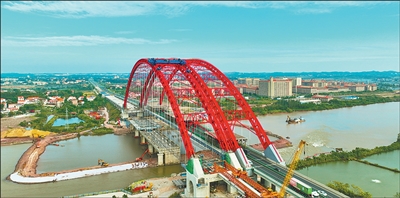
平陆运河雄姿初现
Ren Min Wang· 2025-11-11 15:30
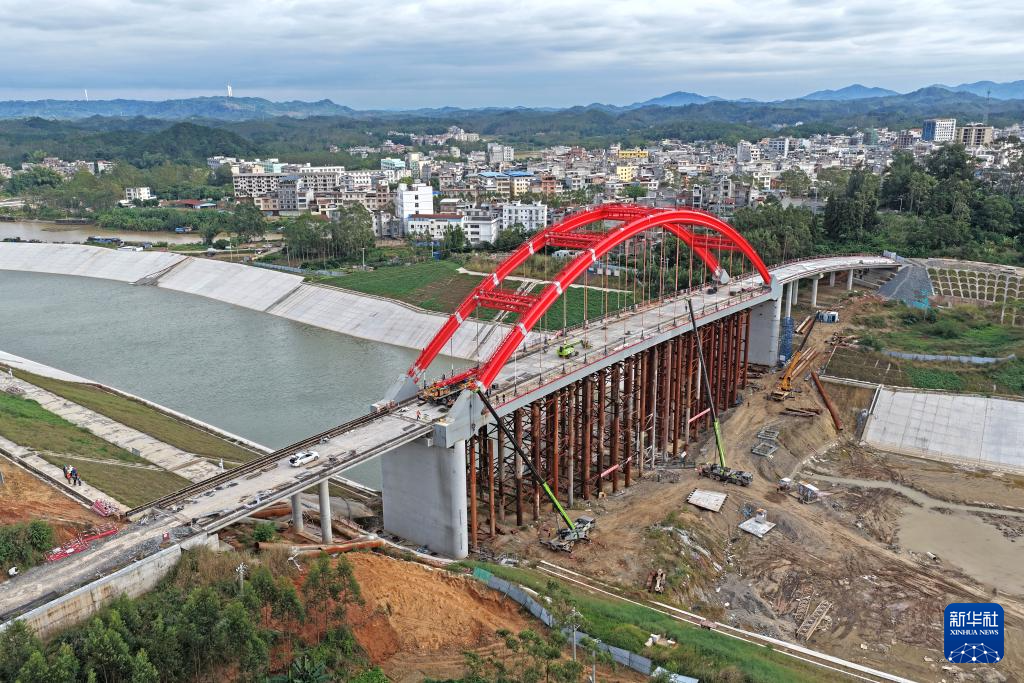
Core Points - The Guangxi Pinglu Canal project has entered the final construction phase after over three years of development, with some waterways already formed [2][4][6] - The total investment for the Pinglu Canal, a key project in the Western Land-Sea New Corridor, is approximately 72.7 billion yuan [2][4][6] - The canal stretches about 134.2 kilometers, starting from the Ping Tang River mouth in Nanning and passing through various towns before reaching the Beibu Gulf [2][4][6] - The canal is expected to be completed and open for navigation by the end of 2026 [2][4][6]
北部湾港涨0.33%,成交额1.36亿元,今日主力净流入-605.10万
Xin Lang Cai Jing· 2025-11-10 10:52
Core Viewpoint - The company, Beibu Gulf Port, is a key player in the logistics and shipping industry, focusing on port operations and services, with significant growth in cargo and container throughput in 2023, driven by strategic initiatives and government support for the Belt and Road Initiative [2][3]. Company Overview - Beibu Gulf Port is the only state-owned public terminal operator in the Guangxi Beibu Gulf region, playing a crucial role in China's southwestern coastal port group and serving as a gateway for international trade with ASEAN countries [3]. - The company was established on August 7, 1996, and listed on November 2, 1995, with its main business activities including port loading and unloading, tugboat services, logistics agency, and cargo surveying [8]. Business Performance - In 2023, the company achieved a cargo throughput of 31,039.78 million tons, a year-on-year increase of 10.81%, accounting for 70% of the total cargo throughput at Beibu Gulf Port [3]. - The container throughput reached 802.20 million TEUs, reflecting a 14.26% year-on-year growth, representing 100% of the port's total container throughput [3]. - The company reported a revenue of 5.535 billion yuan for the first nine months of 2025, a 12.92% increase year-on-year, while the net profit attributable to shareholders was 789 million yuan, a decrease of 13.89% [8]. Strategic Initiatives - The company is focused on enhancing its core port operations and expanding its logistics services, including cold chain logistics, to better integrate with regional industries and support the development of the Western Land-Sea New Corridor [2][3]. - Beibu Gulf Port has established multiple fruit shipping routes from Thailand, Vietnam, and Cambodia, and offers comprehensive cold chain logistics services [3]. Market Position - The company holds a significant market position in the Guangxi, Yunnan, Sichuan, Guizhou, and Chongqing regions, contributing to national strategic initiatives for international trade and regional development [3]. - As of September 30, 2025, the company had 59,400 shareholders, with a notable increase of 42.47% compared to the previous period [8].

进出口总额五年增长八倍 湖南怀化加速转向“开放高地”
Zhong Guo Xin Wen Wang· 2025-11-07 13:52
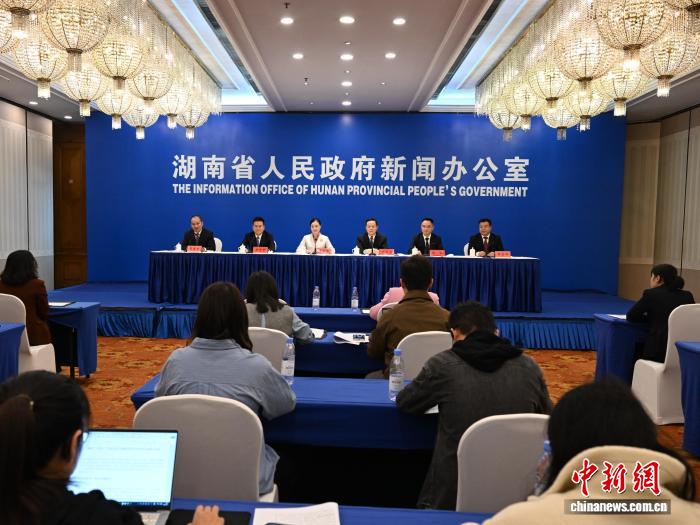
Core Insights - The total import and export volume of Huaihua has increased eightfold from 14.5 million yuan in 2020 to 137.6 million yuan in 2024, with foreign trade growth leading Hunan province for three consecutive years [1][3][4] Economic Growth - The regional GDP of Huaihua has grown from 167.1 billion yuan in 2020 to 209.3 billion yuan in 2024, with an average annual growth rate of 6.3% [1][3] - The manufacturing value added as a percentage of GDP has increased to 21.5% [3] - The per capita disposable income of residents has grown at an average annual rate of 7.05% [3] Investment and Infrastructure - Over 143 projects from "three categories of 500 strong" enterprises have been introduced, and more than 304 new registered enterprises have been established by Hunan merchants returning to invest [3] - Huaihua has been recognized as a national comprehensive transportation hub and a key node for grain logistics, as well as a backbone cold chain logistics base [3] Strategic Positioning - Huaihua is positioned as a strategic gateway city for the "Western Land-Sea New Corridor" and the "ASEAN Freight Gathering Center," capitalizing on national development opportunities [3][4] - The city has joined the "13+2" inter-provincial cooperation mechanism for the Western Land-Sea New Corridor and is accelerating the construction of the Huaihua International Land Port [3][4] Logistics and Trade - The Huaihua International Land Port has opened 196 international and domestic routes, forming seven major international logistics arteries that connect to 216 ports and stations in 69 countries and regions [4][5] - The volume of trains operating has increased from 151 in 2022 to 1,009 in 2024, with the China-Laos train service ranking first in the central region for two consecutive years [4] Industry Development - A "1+N" port-industry-city integration development model has emerged, focusing on the luggage and leather goods industry, supported by green food and modern logistics [4] - By 2024, the total output value of the port area is expected to reach 96.1 billion yuan, a 48% increase from 2020 [4] Trade Facilitation - Huaihua has successfully hosted major events such as the RCEP Economic and Trade Expo and the Global Hunan Business Conference, enhancing its open cooperation platform [4] - Reforms such as "railway fast pass" and "single order system" have been implemented, improving customs clearance efficiency above the national average [4]
果园港的新变化——长江上游最大枢纽港蹲点记
Xin Hua Wang· 2025-11-07 09:24
Core Insights - The article highlights the transformation of Chongqing's Guoyuan Port into a major logistics hub, significantly enhancing its capacity and connectivity to global markets [1][2][3] Infrastructure Development - Guoyuan Port has expanded to include 18 berths for 5,000-ton vessels and 14 dedicated railway lines, achieving an annual throughput of over 26 million tons and a container handling capacity of 2 million TEUs [1] - The port now connects to over 300 ports in more than 100 countries and regions, establishing itself as a key transit point for the western region of China [1] Technological Advancements - The port has embraced smart and green technologies, with the introduction of remote-controlled, unmanned container trucks that enhance operational efficiency and reduce labor costs [2] - Guoyuan Port has been recognized as a "four-star smart port" and "four-star green port," reflecting its commitment to improving logistics efficiency and reducing costs for businesses [2] Economic Impact - The port's operational efficiency improvements have led to a 15% increase in cargo turnover speed, saving companies over 100 million yuan annually in logistics costs [2] - The integration of various transportation modes has made it easier and more cost-effective for goods from the western region to reach international markets [2][3] Strategic Positioning - Guoyuan Port's location allows it to leverage multiple transport corridors, including the New Western Land-Sea Corridor and the Yangtze River Golden Waterway, enhancing its role in international trade [3] - The port is positioned to support the "dual circulation" strategy, promoting both domestic and international economic activities [4] Future Development - The port aims to establish a "front port and back garden" industrial ecosystem, enhancing its influence on surrounding industries and promoting regional economic integration [4] - The focus is shifting from quantity growth to high-quality development, with plans to incorporate advanced technologies like 5G and big data into port operations [4]
出山入海 通达世界
Guang Xi Ri Bao· 2025-11-07 02:53
Core Viewpoint - The article highlights the significant progress and development of the Western Land-Sea New Corridor in Guangxi, emphasizing its role in enhancing transportation connectivity and boosting regional economic growth [4][8][18]. Infrastructure Development - The Pinglu Canal project has seen an investment of approximately 621.5 billion yuan, achieving 85.5% of its total investment goal, with major construction milestones reached [8]. - The Pinglu Canal, once completed in 2026, will connect the Xijiang shipping line directly to Beibu Gulf Port, reducing the inland shipping distance by over 560 kilometers compared to Guangzhou Port [8]. - The Baise Water Conservancy Hub's navigation facilities are nearing completion, with a total investment of 50.17 billion yuan, set to provide a new efficient shipping route by the end of 2026 [9]. - The construction of the railway from Chongzuo to Pingxiang is nearing completion, expected to enhance connectivity with ASEAN countries [10]. Transportation Efficiency - The integration of road and sea transport has significantly reduced logistics costs and time for exporting automotive parts, with transport times cut to around ten days [12]. - The cross-border railway service between China and Vietnam has increased its frequency from five to fourteen trains per week, facilitating a diverse range of goods [14]. - The trade volume through the border railway port has seen a 92.4% year-on-year increase, reflecting improved customs efficiency [14]. Economic Impact - The trade volume of provinces along the corridor has nearly doubled from 344.8 billion yuan in 2019 to an expected 676.9 billion yuan in 2024, indicating the corridor's growing economic influence [15]. - The North Bay Port aims to achieve a throughput capacity of over 6.5 billion tons by 2030, enhancing its status as a major international port [16]. Future Outlook - The ongoing development of the Huangbai Railway and the expansion of the Pinglu Canal are expected to further solidify Guangxi's position as a key international logistics hub [17][18]. - The establishment of a hydrogen energy logistics corridor is anticipated to enhance regional logistics capabilities and promote industrial integration [13].
