
制度创新

Search documents
海陆空无缝衔接 上海速度不断刷新 高效的跨境物流链背后 是持续推进的制度创新
Jie Fang Ri Bao· 2025-09-12 01:45
Group 1 - The article highlights Shanghai's continuous efforts in promoting high-level opening-up and trade facilitation, showcasing efficient cross-border logistics and customs clearance for overseas goods ordered via mobile [1] - Shanghai's Yangshan Deep Water Port has a container throughput capacity of 26 million TEUs annually, and in the first eight months of this year, it surpassed 35 million TEUs, maintaining its position as the world's busiest port [2] - The "linked unloading" model introduced in Shanghai allows for "one declaration, one inspection, and one release" for import and export goods, significantly reducing logistics costs for businesses [2] Group 2 - Pudong Airport serves as a key hub for air freight, with a logistics network seamlessly connecting sea and air transport, handling over 300 tons of goods daily [3] - The Suzhou "pre-staging cargo station" project enables goods to complete security and customs checks in Suzhou, saving 12 to 24 hours in transit time to Pudong Airport [3] - Shanghai's total import and export value is projected to reach 11.07 trillion yuan in 2024, reflecting a 26.5% increase compared to 2020, with cumulative trade exceeding the "14th Five-Year Plan" target [3]
货物从广西这个物流园通关直发,3-5天东南亚全境直达
Sou Hu Cai Jing· 2025-09-11 02:19
Core Insights - The Nanning Free Trade Zone is experiencing significant growth, with a modern logistics park facilitating efficient operations and high cargo throughput [1][3]. Company Overview - The Vining Supply Chain can store 150,000 tons of regular goods and over 55,000 tons of frozen products, with an annual logistics throughput of approximately 500,000 tons [3]. - The supply chain project has a daily automated sorting capacity of 100,000 orders for pharmaceuticals, achieving an annual trade volume exceeding 4 billion yuan [3]. - Vining Supply Chain's strategic location in Nanning leverages the advantages of the Western Land-Sea New Corridor and cross-border trade regulations [3]. Industry Developments - Since its establishment, the Nanning area has generated 236 institutional innovation results, with 190 being nationally and regionally pioneering [4]. - The area has implemented new regulatory models for international mail, express delivery, and cross-border e-commerce, which have received national recognition [4]. - Nanning is actively developing as a hub for China-ASEAN specialty goods, with various national-level open platforms enhancing its capabilities [4]. Partnerships and Collaborations - The logistics park has attracted major companies such as Alibaba's Cainiao, which has established a Southeast Asia road transport center in the area [4][5]. - Other notable companies like SF Express, JD.com, and major food manufacturers have also set up operations in the logistics park [5].

中国服务贸易如何破局
Di Yi Cai Jing· 2025-09-10 11:36
Core Insights - The article analyzes the core challenges of offshore trade in China and proposes an institutional innovation plan centered on "law-tax-regulation-opening" collaboration [1][5] - Offshore trade in China is experiencing rapid growth, yet service trade accounts for less than 10% of it, highlighting a significant gap compared to the global average of over 25% [1][2] - The article emphasizes the need for a paradigm shift in recognizing service trade as the driving force behind offshore trade, rather than merely a support function [2][5] Challenges in Offshore Trade - The intangible nature of service trade complicates rights confirmation, leading banks to hesitate in providing financing support, which restricts business expansion [3][5] - The integration of information flow, capital flow, and service results in service trade increases regulatory difficulties, often resulting in either delayed risk identification or excessive compliance costs for enterprises [3][5] - High dependency on rules and significant international discrepancies in regulations create compliance challenges for Chinese service enterprises operating abroad, with compliance costs consuming 8% to 12% of service revenue [3][4] Factors Limiting Development - A long-standing bias towards "heavy goods, light services" has led to a relative disadvantage for service trade in resource allocation and policy support [4][5] - Fragmented statistical standards for service trade hinder precise decision-making and strategy formulation [4][5] - Domestic institutions lack sufficient international service capabilities, with cross-border financial services coverage only one-third of that in Singapore [4][5] Global Best Practices - Successful offshore trade centers globally prioritize service trade in their institutional frameworks, with Singapore, Hong Kong, and New York serving as key examples [6][7] - Singapore's model includes legal guarantees, tax incentives, and regulatory innovation, facilitating efficient offshore service trade [6] - Hong Kong leverages its common law system and tax exemptions to reduce service trade costs, while New York optimizes service trade processes through account isolation and regulatory collaboration [7] Proposed Solutions - The article outlines a seven-dimensional approach to enhance service trade awareness and capabilities, including legal reforms, tax optimization, and regulatory collaboration [8][9] - Legal reforms aim to establish a comprehensive protection system for digital rights in service trade, addressing the challenges posed by intangible assets [9] - Tax incentives are proposed to support offshore financial and cross-border digital service enterprises, with long-term stable tax rates [10][11] - Simplifying foreign exchange management and enhancing financial support for service trade are also critical components of the proposed solutions [11][12] - Establishing a unified regulatory platform and reducing negative lists for service trade can streamline processes and enhance efficiency [12][13]
2025服贸会|中共中央政策研究室原副主任、著名经济学家郑新立:实现农业农村现代化的关键在于制度创新
Bei Jing Shang Bao· 2025-09-10 10:16
Core Viewpoint - The modernization of agriculture and rural areas is a crucial task to achieve the goal of socialist modernization by 2035, with institutional innovation being the key to this process [1][2]. Group 1: Key Points on Agricultural and Rural Modernization - Emphasis on strategic balance to ensure national food security, avoiding a decline in food production capacity due to land occupation [1]. - Establishment of a quality inspection mechanism for supplementary arable land, enhancing the responsibility of third-party professional evaluation agencies [1]. - Activation of idle rural properties, allowing farmers to rent or cooperate on legally owned properties to increase their property income [1]. - Promotion of reforms allowing collective rural operational construction land to enter the market, enabling local or relocated market entry of such land, and allowing the conversion of idle homesteads and abandoned collective public construction land into marketable collective operational land [1]. Group 2: Historical Context and Reform Emphasis - Review of the reform history indicates that rural reforms have been pivotal in overcoming economic difficulties over the past 40 years [2]. - Current challenges in demand should also be addressed by intensifying rural reform efforts [2].
【每周经济观察】破立并举铲除“萝卜招标”
Sou Hu Cai Jing· 2025-09-06 02:11
Core Insights - The reform of the bidding market is crucial for the fairness and vitality of the market economy and directly impacts the construction of a unified national market [2][3] - Recent reforms have led to significant progress, but deep-rooted issues remain to be addressed, necessitating institutional innovation and the use of digital technology to create a transparent bidding market [3][4] Institutional Innovation - Focus on optimizing bidding rules through the implementation of new standards for expert management, revised procurement guidelines for state-owned enterprises, and establishing fair competition benchmarks [4] - The goal is to enhance the entire lifecycle management of bidding processes and ensure that procurement decisions are based on comprehensive cost-effectiveness [4] Digital Empowerment - Emphasizing the use of digital technology to improve market transparency and efficiency, transitioning from a single "institutional constraint" to a multi-faceted "technological governance" model [4] - New technologies are expected to reduce corruption opportunities arising from information asymmetry and reshape market transaction mechanisms [4] Regulatory Strengthening - Historically, regulatory lag has contributed to persistent issues in the bidding market, with inadequate penalties for violations [5] - The establishment of a long-term governance mechanism is essential to ensure orderly development in the bidding market [6] Market Participation - The positive effects of recent reforms are becoming evident, with a notable increase in private enterprise participation in bidding processes [6] - In the first seven months of this year, over 366,000 private enterprises won bids in the engineering construction sector, marking an 11.9% year-on-year increase, with private projects accounting for 76% of total bids [6]

破立并举铲除“萝卜招标”
Jing Ji Ri Bao· 2025-09-05 22:14
Core Viewpoint - The reform of the bidding market is crucial for ensuring fairness and vitality in the market economy, as well as for the construction of a unified national market [1][2] Group 1: Reform Progress and Challenges - The bidding market reform has made significant progress over the past year, but deep-rooted issues remain to be addressed [2][5] - Nearly 2,000 illegal bidding cases were exposed, and over 38,000 illegal experts were removed from the national evaluation expert pool, indicating a cleaner bidding environment [1] Group 2: Institutional Innovation and Digital Empowerment - The reform requires a dual approach of institutional innovation and digital empowerment, focusing on optimizing bidding rules and utilizing digital technology to enhance market transparency [3][4] - New standards for expert management and procurement guidelines for state-owned enterprises are being implemented to promote fair competition [3] Group 3: Regulatory Strengthening and Long-term Governance - Strengthening regulation is essential to build a long-term governance mechanism, as regulatory lag has been a significant reason for persistent issues in the bidding market [4] - Various barriers in the bidding process hinder the participation of small and medium-sized enterprises, affecting resource allocation efficiency [4] Group 4: Participation of Private Enterprises - The participation of private enterprises in bidding has increased, with over 366,000 private companies winning bids in the engineering construction sector in the first seven months of the year, a year-on-year increase of 11.9% [5] - The share of projects won by private enterprises reached 76%, indicating a positive trend in the bidding market [5]
浙江自贸试验区扩区五周年 累计形成制度创新成果690项
Zhong Guo Xin Wen Wang· 2025-09-05 10:59
Core Insights - The Zhejiang Free Trade Zone has achieved 690 institutional innovation results in five years, including 193 national firsts [1][2] - In 2024, the Zhejiang Free Trade Zone, occupying less than 1/400 of the province's area, contributed 19.2% of the province's foreign trade, 17.6% of foreign investment, and 8.9% of tax revenue [1] Institutional Innovations - The Zhejiang Free Trade Zone has implemented 71 national-level reform pilot projects focusing on trade, investment, finance, and transportation [2] - Innovations include the first securitization product involving game and animation copyrights, and a comprehensive bank settlement account system covering over 400,000 accounts [2] Trade Facilitation - The zone has established a one-stop paperless customs clearance platform, reducing the clearance time for special biological products by over 60% [2] - A digital platform for foreign crew certificate processing has been created, providing over 160,000 consultations [2] Taxation Support - The Zhejiang tax authority has implemented digital management for export tax refund documentation, benefiting 79,000 enterprises [3] - Comprehensive bonded zones have been established in each area of the Free Trade Zone, with the number of zones leading the nation [3] Economic Contribution - The comprehensive bonded zones in the Zhejiang Free Trade Zone account for 42% of the trade value within the zone, despite occupying less than 9% of its area [3]
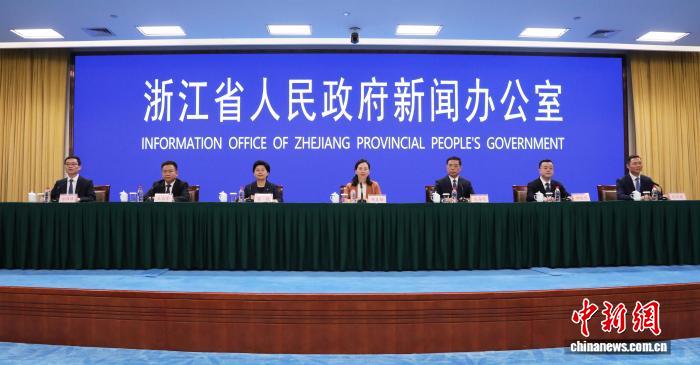
浙江自贸试验区扩区五年进出口总额实现翻番
Zhong Guo Xin Wen Wang· 2025-09-05 09:52
Core Insights - The Zhejiang Free Trade Zone has achieved significant growth in trade and investment, contributing 19.2% of the province's foreign trade, 17.6% of foreign investment, and 8.9% of tax revenue despite occupying less than 1/400 of the province's area [1] Group 1: Trade and Investment Growth - The total import and export volume of the Zhejiang Free Trade Zone increased from approximately 480 billion RMB in 2020 to over 1 trillion RMB in 2024, effectively doubling [1] - The number of registered enterprises in the zone exceeded 170,000, including over 3,000 foreign-funded enterprises [1] Group 2: Institutional Innovations and Projects - The Zhejiang Free Trade Zone has developed 690 notable institutional innovation achievements over the past five years [1] - Major projects in the Zhoushan area include the integration of refining and chemical processes and the establishment of an LNG receiving station, in collaboration with leading international oil and gas companies [1] Group 3: Regional Developments - The Ningbo area is focused on becoming China's first hub for bulk commodity resource allocation and has completed Asia's largest underground propane storage facility [2] - The Hangzhou area has leveraged its digital innovation capabilities, hosting three global digital trade expos with a total investment signing amount of 430 billion RMB [2] - The Jinyi area has utilized the advantages of the Yiwu market, innovating trade models that resulted in a market procurement trade export of 298.4 billion RMB in the first half of the year, a year-on-year increase of 28.2% [2]
南沙综合保税区4年连获全国A类 跨境电商进出口值连续6年全国居首
Nan Fang Ri Bao Wang Luo Ban· 2025-09-05 08:02
Core Insights - The General Administration of Customs announced the performance evaluation ranking of national comprehensive bonded zones for 2024, with Guangzhou Nansha Comprehensive Bonded Zone receiving an A-class rating for the fourth consecutive year, being the only A-class special customs supervision area in the province [1] - Nansha's cross-border e-commerce import and export value has ranked first in the country for six consecutive years [1] Group 1: Development and Upgrades - Since its establishment in October 2008, Nansha Bonded Port Area has undergone multiple upgrades, officially operating since 2009, included in the China (Guangdong) Pilot Free Trade Zone in 2015, and upgraded to a comprehensive bonded zone in 2020 [1] - The comprehensive bonded zone is set to expand its enclosure area and add two major industrial carriers by 2025 [1] Group 2: Focus on Foreign Trade and E-commerce - Nansha has focused on developing new foreign trade formats, achieving high-quality development through institutional innovation [2] - In the cross-border e-commerce sector, Nansha established a comprehensive e-commerce demonstration project with the most complete range of goods, and built a shared center at the Greater Bay Area airport to facilitate a full-process import and export channel [2] - From January to July this year, Nansha's cross-border e-commerce import and export value reached 47.5 billion yuan, a year-on-year increase of 76% [2] Group 3: Logistics and Multi-Modal Transport - Leveraging the advantages of Nansha Port's "large port navigation" and "large channel," a multi-modal transport system integrating sea, land, air, and rail has been constructed [2] - The logistics clustering effect is enhanced with the establishment of various logistics distribution centers, including those for fine wines, gourmet food, engineering plastics, and biomedicine [2] Group 4: "Bonded+" Initiatives - The "Bonded+" initiatives include promoting customs remote supervision models, with a total of 314 aircraft introduced under the "Bonded+ Financing Leasing" scheme, making it the largest aircraft leasing hub in South China [2] - An integrated platform for "Bonded+ Display+ Sales" in automobile trade has been developed, expanding Nansha's role from parallel imports of automobiles to a major export channel [2]
细分赛道频出“领头羊”,横琴怎么做到的?丨洞见横琴2025
2 1 Shi Ji Jing Ji Bao Dao· 2025-09-05 06:31
Core Viewpoint - The Hengqin Guangdong-Macao Deep Cooperation Zone has successfully carved out a unique development path by focusing on high-barrier niche industries, leveraging its geographical advantages and policy support to foster innovation and collaboration with Macau [1][3][6]. Group 1: Industry Development Strategies - Hengqin has adopted a differentiated approach to development, avoiding traditional large-scale industrial recruitment and instead focusing on what can be uniquely achieved in the region [3]. - The cooperation zone emphasizes the integration of innovation resources between Macau and the mainland, particularly in the fields of biomedical and health industries, through platforms that enhance collaboration and digital empowerment [1][4]. - The establishment of leading enterprises like Aimsitan in the stem cell sector demonstrates Hengqin's commitment to nurturing high-tech industries despite the inherent risks and challenges [3][6]. Group 2: Investment and Funding Mechanisms - Hengqin has set up various investment platforms, such as the Hengqin Guangdong-Macao Development Investment Co., to provide financial support across all stages from research and development to industrialization [5]. - The region's policies, including tax incentives for enterprises and talent, are designed to attract high-end professionals and innovative companies [9]. Group 3: Collaborative Ecosystem - The collaboration between Hengqin and Macau is exemplified by the establishment of the Zhuhai Macao Technology Research Institute, which focuses on applied research and technology transfer, leveraging the strengths of Macau University [7][8]. - The "30-minute cross-border research transformation circle" facilitates seamless collaboration between Macau's research capabilities and Hengqin's industrialization efforts, creating a closed-loop innovation ecosystem [8]. Group 4: Market Expansion and Internationalization - The cooperation zone serves as a bridge for enterprises to access both the mainland market and international platforms, particularly in Portuguese-speaking countries, enhancing their global reach [10][11]. - Companies like Deep Future Technology are leveraging the cooperation zone's advantages to develop products tailored for Portuguese-speaking markets, thus accelerating their international expansion [12].